

Checking accounts are designed for everyday transactions, including paying bills, receiving direct deposits, and making debit card purchases. Savings accounts are meant for money you want to set aside for emergencies, planned expenses, or future goals, often while earning interest. Using both can help Missouri households keep everyday spending separate from money they want to save.
Although checking and savings accounts both provide a place to keep your money, they differ in how you access funds, earn interest, and manage transactions. Knowing what each account offers can help you avoid unnecessary fees and make better use of your money.
How Checking and Savings Accounts Compare
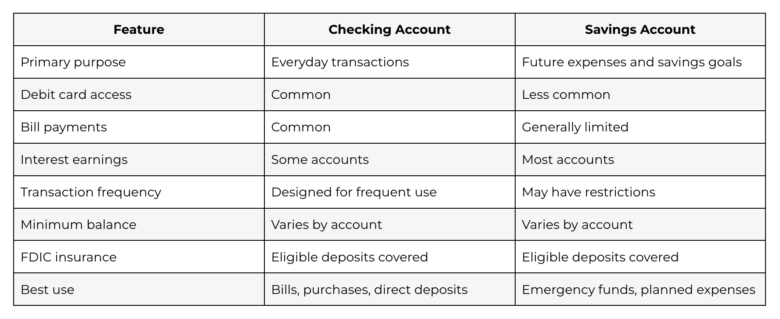
The main difference is how you use the money. Checking accounts accommodate frequent transactions, while savings accounts are designed to hold funds you don’t expect to spend regularly. Both can be insured by the Federal Deposit Insurance Corporation when held at an FDIC-insured bank.
Checking Accounts Are Designed for Everyday Spending
Checking accounts handle the money you use regularly, from paychecks and grocery purchases to rent, utilities, and other recurring bills. Most offer debit cards, electronic transfers, ATM withdrawals, and online banking. Because money moves in and out frequently, access and fees deserve close attention.
When comparing checking accounts in Missouri, look at monthly service charges, minimum opening deposits, ATM availability, and overdraft policies. The Consumer Financial Protection Bureau also recommends considering branch access, online banking, and customer service. An account advertised as having no monthly fee may still carry charges for certain transactions or services.
Savings Accounts Help You Prepare for Future Expenses
A savings account gives you a place to keep money for expenses that aren’t part of your regular monthly spending. Emergency repairs, medical bills, vacations, and home improvements are common reasons to save. Keeping that money separate from checking also makes it less likely to be spent on routine purchases.
Most savings accounts earn interest, but the amount varies by institution and account type. Compare annual percentage yields (APYs), minimum balances, withdrawal rules, and fees before opening an account. A higher interest rate can be attractive, but not if account requirements make the money difficult or expensive to access when you need it.
How Do Checking and Savings Options Compare at TBO Bank?
TBO Bank offers personal checking and savings accounts for different banking needs. Basic Checking provides an account for everyday transactions, while Checking Plus adds the ability to earn interest. Statement Savings is intended for money customers want to set aside.
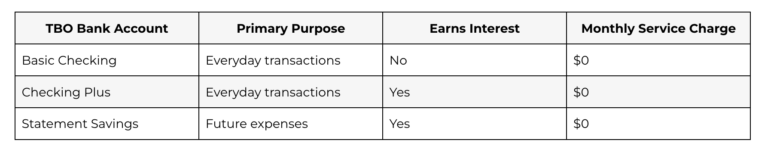
TBO Bank’s personal checking accounts and personal savings accounts have no monthly service charges for these products, although opening deposits, interest requirements, transaction limits, and other fees may apply. Reviewing the account disclosures will help you understand the differences before opening an account.
What Fees and Requirements Should You Compare?
Monthly service charges are only one part of the cost of a bank account. Depending on the institution, you may encounter minimum balance requirements, out-of-network ATM fees, overdraft charges, or fees for certain withdrawals and account services. Some banks waive charges when customers meet specific conditions, such as maintaining a required balance or receiving direct deposits.
Consider how those requirements match the way you bank. If your balance changes significantly throughout the month, an account with a minimum balance requirement may be less appealing than one without it. Reading the fee schedule before opening an account can prevent surprises later.
Can You Manage Checking and Savings Through Mobile Banking?
Most banks offer mobile tools that allow customers to check balances, review transactions, transfer money, and manage account activity. Some apps also support mobile check deposits, bill payments, and debit card controls. Features vary, so it’s worth confirming that the services you use most are available.
TBO Bank offers mobile banking for eligible accounts, including balance information, transfers, and other digital services. The bank has served the Orrick, Missouri, community for more than 120 years and continues to offer both local banking services and digital account access. Customers should verify which features are available with their accounts.
Should You Have Both a Checking and Savings Account?
Many households use checking for regular expenses and savings for money they want to leave untouched until it’s needed. For example, a paycheck might go into checking to cover bills and groceries, while a portion is transferred to savings for car repairs or other future costs. This arrangement makes it easier to see how much is available to spend without dipping into money reserved for another purpose.
Having both accounts can make budgeting easier by giving money for everyday expenses and future needs separate places to live. Even small, regular transfers into savings can help you build a financial cushion over time.
Frequently Asked Questions About Checking and Savings in Missouri
Choosing between checking and savings isn’t always an either-or decision. You may have questions about keeping accounts at different banks, earning interest, or how often you can withdraw money. Here are answers to a few common questions worth considering before opening an account.
Can You Have Checking and Savings Accounts at Different Banks?
Yes. You can keep checking and savings accounts at separate banks. Compare transfer times, fees, interest rates, and account access before deciding.
Do All Checking Accounts Earn Interest?
No. Some checking accounts pay interest, while others do not. Interest-bearing accounts may have additional requirements, so review the terms before opening one.
Are Checking and Savings Accounts Equally Protected by FDIC Insurance?
Yes. Eligible checking and savings deposits at FDIC-insured banks receive the same protection. Standard coverage is generally $250,000 per depositor, per insured bank, for each account ownership category. The total amount of eligible deposits and how accounts are owned determine coverage.
Do Savings Accounts Still Have a Six-Withdrawal Limit?
The Federal Reserve removed the mandatory six-transfer limit under Regulation D in 2020. Individual banks may still set withdrawal restrictions or charge fees for certain transactions, so check your account agreement.
Should I Open a Checking or Savings Account First?
If you need somewhere to receive income, pay bills, and make purchases, checking is usually the place to start. If you’re primarily setting money aside for future expenses, savings may be more useful. You can open both as your needs change.
Making the Most of Your Bank Accounts
Checking and savings accounts work best when each has a clear purpose. Keeping money for bills and everyday purchases in checking, while setting aside funds for unexpected expenses or future plans in savings, can make your finances easier to manage.
Before opening either account, compare fees, interest rates, and access to your money. Those details matter more than the number of features a bank advertises.
Ask us! What questions do you have about content, strategy, pop culture, lifestyle, wellness, history or more? We may use your question in an upcoming article!
Like MediaFeed’s content? Be sure to follow us.
This article originally appeared on TBO Bank and was syndicated by MediaFeed.co.