Thanksgiving side dishes we make out of obligation for our Boomer relatives
Every family has at least one dish that nobody particularly wants, and everybody expects. It shows up because it always has, and the year somebody skips it is the year somebody notices.
What is strange is how recent most of these traditions are, and how many of them started as advertising rather than cooking.
Eight of them follow, with each tradition’s real origin.
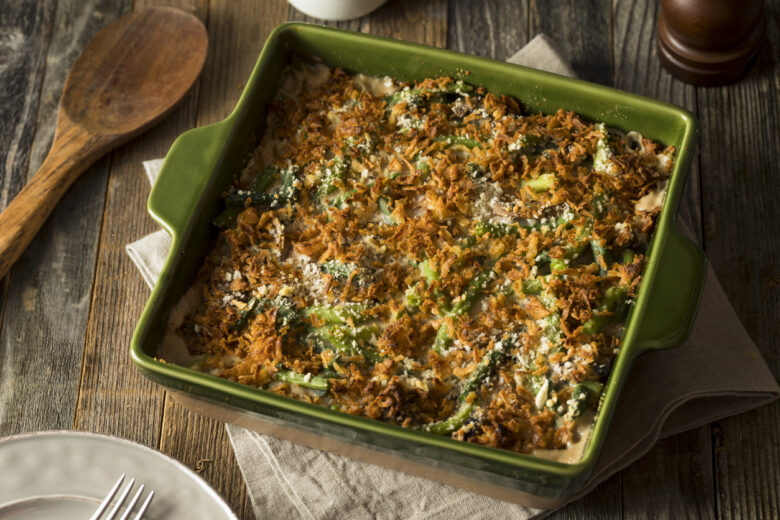
Green bean casserole
Dorcas Reilly invented it in 1955, working in what was then Campbell’s Home Economics Department in Camden, New Jersey. Her brief was to create something using condensed cream of mushroom soup. She called it Green Bean Bake.
Her original recipe card now sits in the National Inventors Hall of Fame in Akron, Ohio, and Campbell’s says the recipe gets viewed around 4 million times every Thanksgiving Day. Reilly died in 2018.
Midwestern cooks had a nickname for the soup that binds it: the Lutheran binder.

Sweet potato casserole with marshmallows
Not your grandmother’s recipe. In 1917, the Angelus Marshmallow company, which had just worked out how to mass-produce marshmallows, hired Janet McKenzie Hill, founder of the Boston Cooking-School Magazine, to write a booklet persuading Americans to use them as an everyday ingredient.
One recipe in that booklet is the earliest known print record of mashed sweet potatoes baked under a marshmallow topping. The company later became Campfire and kept publishing the idea in its 1930 and 1950 booklets.
The casserole predates the Girl Scouts’ s’mores recipe by nearly a decade, which makes it, technically, the more traditional marshmallow dish.
Jellied cranberry sauce from the can
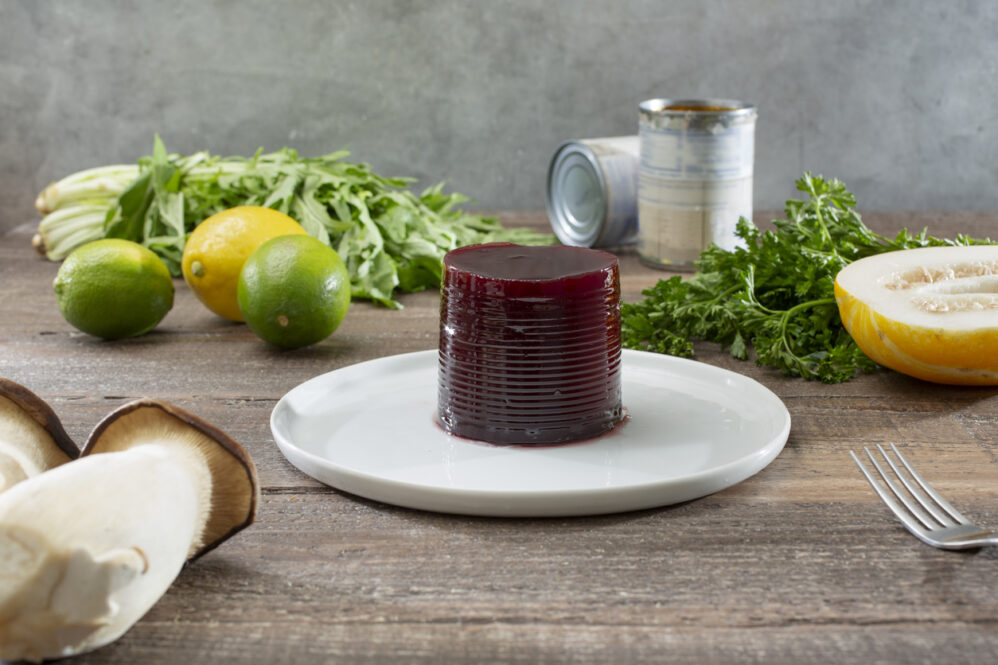
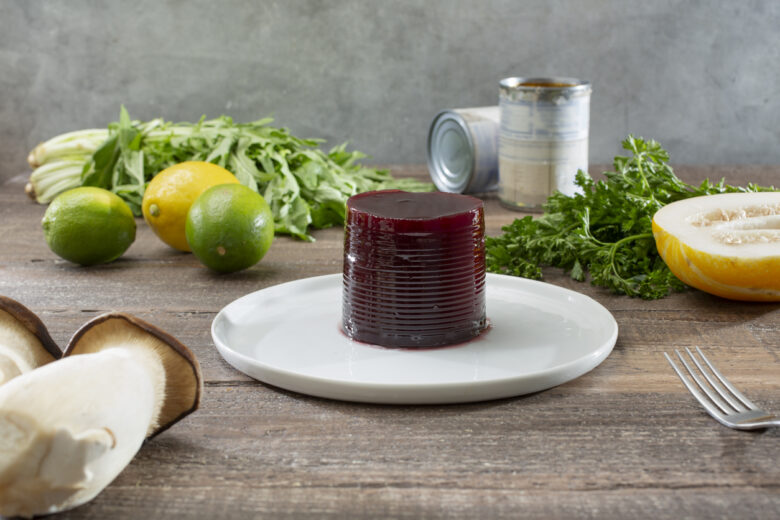
The ridged cylinder that holds the shape of the tin. Marcus Urann began canning cranberries in 1912 and helped build the cooperative that became Ocean Spray, and the sauce was selling nationally by 1941.
Somebody at your table insists on it, and somebody else makes the fresh version nobody touches.

Ambrosia
Mandarin oranges, pineapple, coconut and mini marshmallows, bound with sour cream or whipped topping. It was once read as a symbol of luxury, back when canned tropical fruit counted as a splurge.
Younger guests find it genuinely confusing, since it sits somewhere between a salad and a candy, and it gets served alongside the turkey rather than after it.
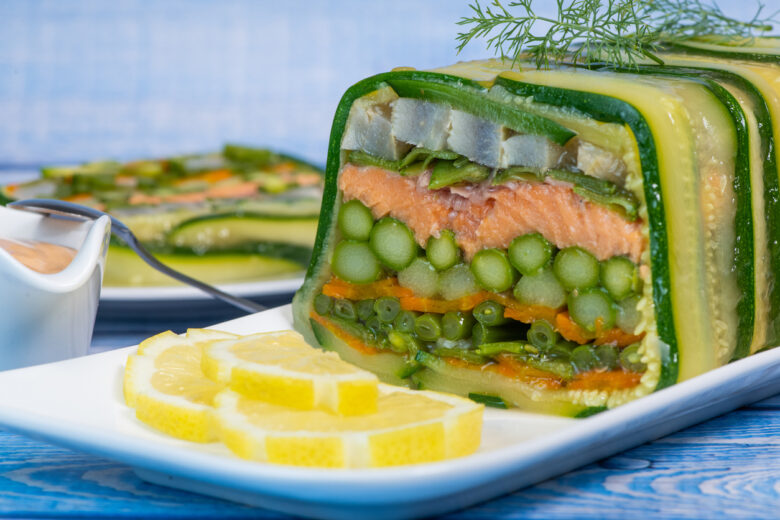
The gelatin salad
The 1964 Joy of Cooking gave whole sections to savory gelatin salads, which tells you how ordinary this was. Jell-O even sold celery and mixed vegetable flavors through the 1960s.
Jell-O discontinued those flavors by the mid-1970s. The sweet versions held on at exactly one occasion a year, which is where you still find them.
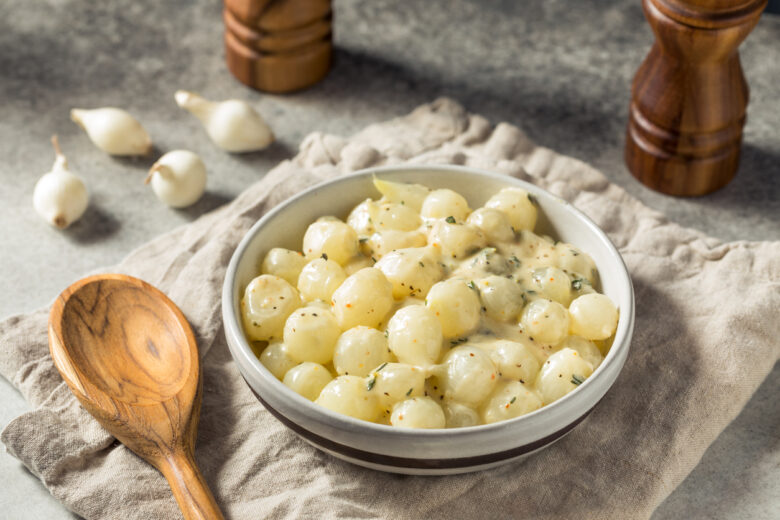
Creamed pearl onions
Small white onions in a butter-and-cream sauce, a fixture in New England and the Midwest.
The dish is genuinely good. The problem is upstream: peeling a mountain of tiny onions isn’t a pleasant holiday morning, and frozen pearl onions only partly solve it.
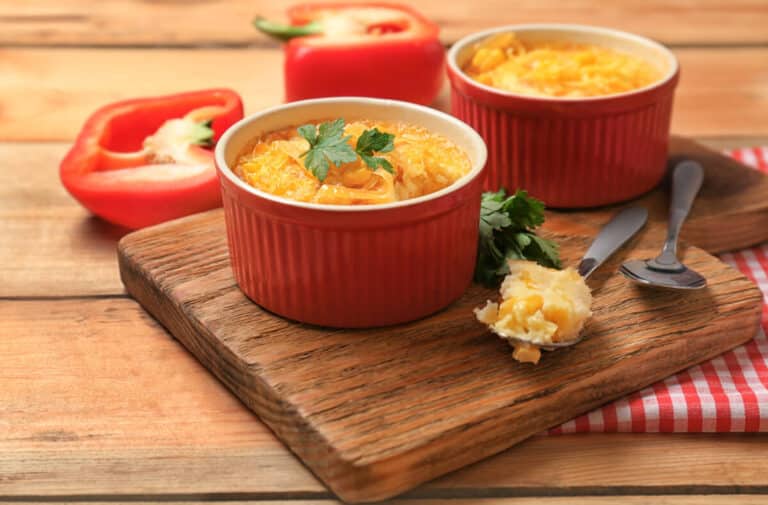
Corn pudding
Corn, eggs, cream, and butter baked into a custardy dish that lands between cornbread and creamed corn. Nobody has ever objected to corn pudding. Nobody has ever requested it either.

The bottom line
Dorcas Reilly created green bean casserole in a Campbell’s test kitchen in 1955, and her recipe card is now in the National Inventors Hall of Fame. The marshmallow-topped sweet potato arrived in 1917 in a booklet paid for by a marshmallow company.
Ask us! What questions do you have about content, strategy, pop culture, lifestyle, wellness, history or more? We may use your question in an upcoming article!
Related:
- Household rules from the ’40s that sound unbelievable now
- 8 places and discoveries where exploration has limits
Like MediaFeed’s content? Be sure to follow us.
This article was syndicated by MediaFeed.co.