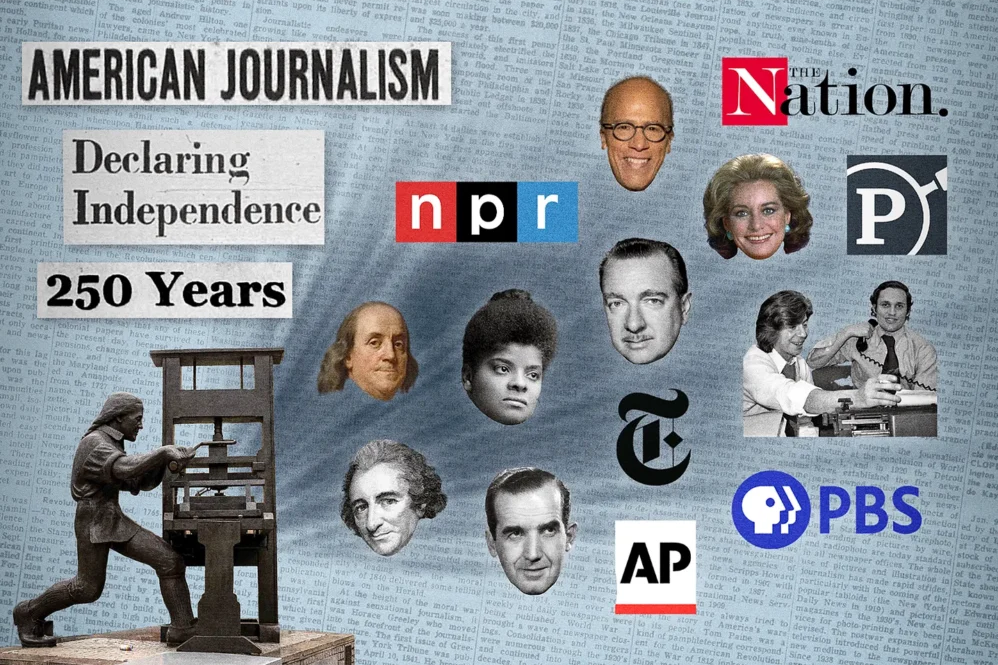
A free press ignited the American Revolution
History matters, especially when it informs the present.
As we reflect on the 250 years since the birth of America, the historic role that a free press played in that founding narrative should be remembered as it feels more relevant than ever.
In the decade that led up to the signing of the Declaration of Independence on July 4, 1776, the free press in the colonies was finding its voice, particularly in the centers of the revolutionary movement that was stirring in cities like Boston and Philadelphia.
These early American news organizations were covering thorny issues that would open the path toward liberty. There was spirited debate that centered around freedom from control of the Crown which effectively oversaw the press in the 13 colonies; freedom from the influence of the King’s taxes on business interests; and freedom to establish a voice that would be by the people and for the people. Primary among these issues was a growing resistance to what was known as The Stamp Act of 1765, which imposed a tariff on paper used for everything but most particularly used by the nascent press in the new country.
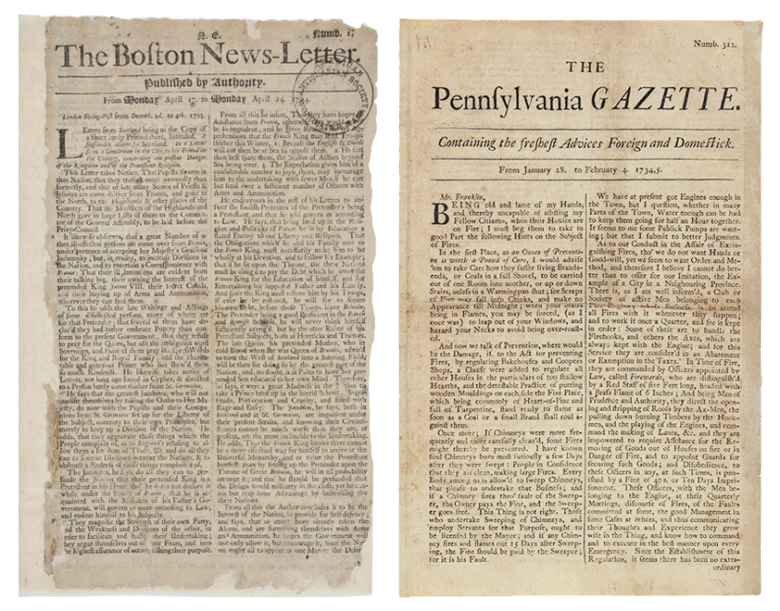
The tariff was undercutting the financial sustainability of the press, and the founding fathers knew that the Crown had every intention of weakening the independent voices of newspapers like the Boston News-Letter, the first continuously published newspaper in the country, and the Pennsylvania Gazette, published by Ben Franklin himself and the most widely read paper at the time.
The British Stamp Act, which required all printed paper to have an official stamp from the Crown proving the tax had been paid, severely impacted the free press through the tariff on newspapers, pamphlets, and advertisements. Colonists saw this as a deliberate attempt to cripple the independent press, limit public discourse, and curb mounting dissent. Printers actively protested the financial burden, which many feared could signal a crib death for colonial liberty. And it was not lost on anyone that the tax was being used to support the presence of British troops in cities like Boston which was increasingly restive and weary of taxes imposed through a parliamentary system where they had little say. Heavy criticism produced the rallying cry: “no taxation without representation.”
The resulting protests and boycotts of British goods fueled the broader ideological movement that led to the American Revolution. This resistance ultimately forced Parliament to repeal the Stamp Act on March 18, 1766. Among the owners of the printing presses who had found a sense of confidence in winning their fight against the Stamp Act, there was an emerging market for so-called “pamphlets.” These were essentially long essays bound up as small publications that could easily fit in a pocket and be hidden from the British soldiers, or Red Coats, who were increasing in number in Boston and beyond and seeking to quell a revolutionary spirit in the air.
The most famous author of these pamphlets was Thomas Paine who wrote “Common Sense” in January of 1776. The 47-page pamphlet argued for American independence from Great Britain using clear, persuasive language accessible to common people. It attacked the monarchy and presented a compelling case for a republican government, becoming an instant bestseller and galvanizing public opinion towards revolution.
Okay, that is definitely a truncated history of the American Revolution which requires a wider aperture than I have space to share here, but that was the essence of the time in which the revolution unfolded and our fledgling republic was born on July 4, 1776 with the Declaration of Independence. The document states the purpose and the promise of a revolutionary movement that sought to forge a new, independent nation: “We hold these truths to be self-evident, that all men are created equal, that they are endowed by their Creator with certain unalienable Rights, that among these are Life, Liberty and the pursuit of Happiness.”
Thomas Paine was essentially an early prototype of what these days we might call “influencers” or “creators” who are increasingly rising up as independent voices. It is worth noting that the era of pamphleteers in the run-up to the revolution had a spirit that was partisan and divided and that would not feel unfamiliar to us today.
Despite the raucous tone, Paine embodied the fact that the founding fathers believed deeply that a free press was the cornerstone of a democracy, and they asserted that the republic could not survive without it. Throughout our history, strong, independent journalists — from Ida B. Wells to Edward R. Murrow and Walter Cronkite to Woodward & Bernstein — have all proven that to be the case. They held us together when the country felt like it might be coming apart, and they reminded us that it needed to come back together.
Now it comes as no surprise to the readers of this newsletter that the free press in America is in jeopardy as perhaps never before in our history. There are titanic shifts in the business models brought on by technology in the digital age, and we live in a time of great ferment and uncertainty about where journalism is headed.
Local news organizations are suffering and closing their doors in far too many corners of the country. Major news organizations like CBS News have found themselves under the heavy thumb of an autocratic president in the White House. Oligarchs like the billionaire Jeff Bezos, the owner of the Washington Post, are facing critics who feel he has used his vast wealth to shape the legendary watchdog newspaper in a way that will favor his own corporate interests. There is no question these are tough days for an independent press.
So on this 250th birthday of our nation, while a deeply divided country tries to come together around the shared ideals that are articulated on that yellow parchment paper dated July 4, 1776, we should remember this part of our history and that it was journalism that helped shape the ideas that lead to the cry for independence and ultimately led to the Revolutionary War and yielded the constitution that still frames our democratic republic. After the Revolutionary War, when the Constitutional Congress was assembled in Philadelphia, the very First Amendment of that constitution, which was adopted in 1791, enshrined the role of a free press:
“Congress shall make no law respecting an establishment of religion, or prohibiting the free exercise thereof; or abridging the freedom of speech, or of the press; or the right of the people peaceably to assemble, and to petition the Government for a redress of grievances.”
Let’s not forget that our shared history is alive with ideals and lessons learned that can help us navigate through the difficult era in which we find ourselves. There is much hard work needed for us to live up to the ideals of the revolution that gave birth to America, and there needs to be a concerted effort to remember just how central journalism is in sustaining our democracy.
Happy 250th birthday to America, and hoping everyone had a happy 4th of July.
Join the GroundTruth community
Related:
- The presses keep rolling in Small Town America
- A journey chronicling press freedom locally and globally
Ask us! What questions do you have about content, strategy, pop culture, lifestyle, wellness, history or more? We may use your question in an upcoming article!
Like MediaFeed’s content? Be sure to follow us.
This article originally appeared on Ground Truth and was syndicated by MediaFeed.co.