
On the morning of January 13, 2018, residents and visitors across Hawaii received a chilling emergency alert on their phones and televisions. “BALLISTIC MISSILE THREAT INBOUND TO HAWAII. SEEK IMMEDIATE SHELTER. THIS IS NOT A DRILL,” the message read. For the next 38 minutes, the state was gripped by fear, confusion, and uncertainty as people believed a nuclear missile attack was imminent.
The alert was sent shortly after 8 a.m. local time by the Hawaii Emergency Management Agency (HI-EMA). At the time, tensions between the United States and North Korea were high following a series of missile tests and aggressive rhetoric throughout 2017. Because of this context, many residents assumed the threat was real.
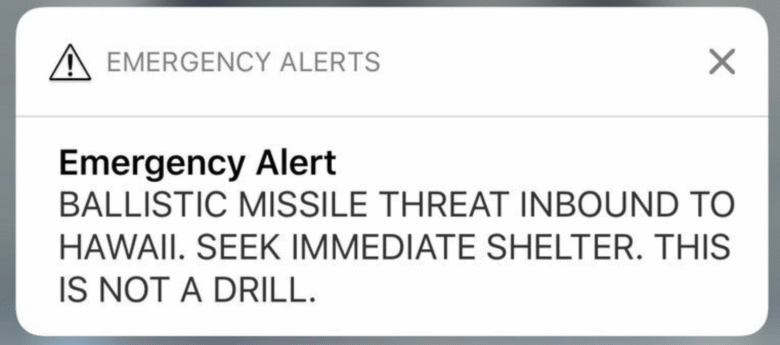
Families scrambled to find shelter, some crowding into basements, bathrooms, or storm drains. Parents rushed to pick up children. Tourists unfamiliar with civil defense procedures searched online for guidance or called loved ones on the mainland to say goodbye. Social media quickly filled with panicked posts, photos, and videos documenting the chaos.
Despite the severity of the message, no immediate clarification followed. Emergency sirens were not activated, and officials at the state and federal levels were initially slow to respond publicly. It was not until 38 minutes later that a follow-up alert was issued stating that the missile warning had been sent in error and that there was no threat to Hawaii.
Subsequent investigations revealed that the false alert was caused by human error during a routine shift change and drill at the emergency operations center. An employee mistakenly selected the live alert option instead of a test message, and there were insufficient safeguards in place to quickly cancel or correct the alert once it was sent. At the time, the system required a separate, cumbersome process to issue a retraction.
The incident prompted widespread criticism of Hawaii’s emergency alert procedures and sparked national debate about the reliability of public warning systems. In response, HI-EMA implemented changes to prevent a similar mistake, including clearer labeling of test and live alerts, additional confirmation steps, and faster methods for issuing corrections.
The Federal Communications Commission also launched an investigation, concluding that while no federal rules were broken, the event highlighted serious flaws in emergency preparedness and communication.
The false missile alert remains one of the most alarming emergency communication failures in U.S. history. Though no physical harm occurred, the psychological impact was profound, underscoring how critical accuracy, clarity, and speed are when governments communicate during potential crises.
Related:
- Take a brain break & guess the names of these 1981 songs with just one lyric
- The Victorian-era parenting practices that were even worse than the 1950s
Like MediaFeed’s content? Be sure to follow us.
This article was syndicated by MediaFeed.org.