
Why was long hair on a man considered wrong before the 1900s?
A reader wrote in with a genuinely good question: why does long hair on a man still read as unusual today, even decades removed from any actual rule enforcing it? Turns out the answer traces back roughly two thousand years, at least within the Western tradition, through a tangle of religious doctrine, military discipline, and outright political rebellion. This isn’t a global history. Plenty of other cultures had very different, sometimes opposite, relationships with long hair on men across the same stretch of time. But within the specific lineage running from ancient Rome through Christian Europe to Victorian Britain, every era had its own particular reason for drawing the line exactly where it did.
Historians and cultural researchers tracking this exact history keep landing on the same recurring turning points, each one reshaping what counted as acceptable for a man’s hair well before the twentieth century ever arrived.

Ancient Greece and Rome
Even the idealized Greek philosopher, bearded and long-haired in statuary, existed alongside a culture where women’s hair still ran noticeably longer as a rule. Roman women wore theirs long, parted down the center, and a man who devoted too much attention to his own hair risked open scorn for appearing effeminate, a judgment that had nothing to do with hygiene and everything to do with gender signaling.

Paul’s letter to the Corinthians
The New Testament didn’t invent the idea. It codified it. First Corinthians 11 declares that long hair is a shame to a man, building directly on how the surrounding culture already read effeminate hair on men. One biblical scholar has argued the passage draws specifically on associations between long hair and disgrace that were already common in Hellenistic and Roman culture at the time, though interpretations of exactly what Paul meant have varied for centuries since. For nearly two millennia of Christian teaching afterward, the passage itself carried enormous weight regardless.
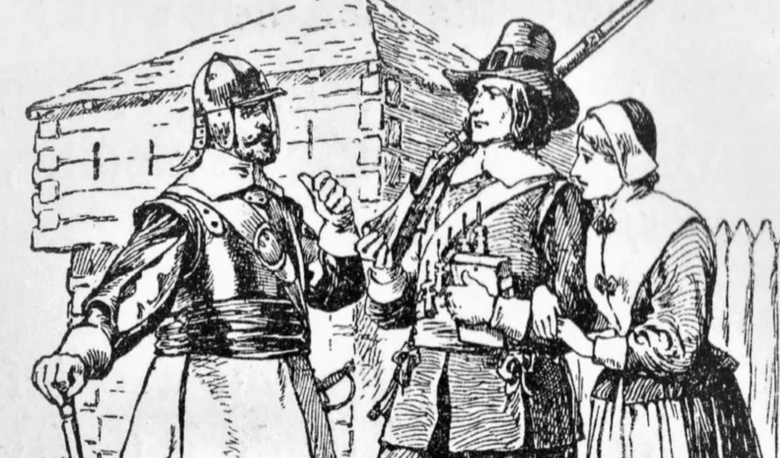
The Puritans
By the 1640s, hair had become an actual battle line, literally. English Puritans cropped their hair short and mocked the flowing curls of the royalist Cavaliers as vain and morally suspect. The label “Roundhead” itself came from exactly that contrast, first hurled as an insult during the buildup to civil war, and Puritan writer William Prynne devoted an entire 63-page pamphlet to condemning long hair as sinful, unmanly, and an open invitation to wickedness.

Wigs
Then Louis XIV’s own hair began thinning, and he started wearing increasingly elaborate wigs to compensate. The fashion spread through the French court, crossed the Channel once Charles II returned from exile, and by the late 1600s elaborate, elongated hair had become the actual mark of nobility rather than its opposite. The old association had inverted itself almost completely, at least among the aristocracy who could afford the upkeep.
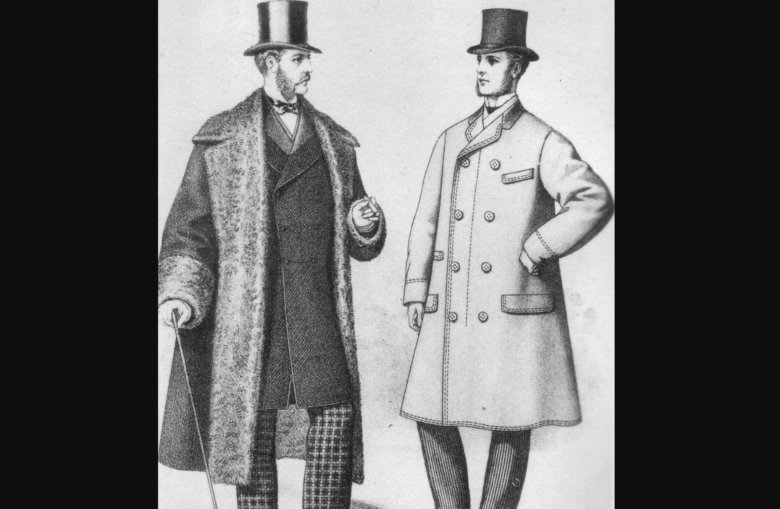
The Victorians
Wigs fell out of fashion, and by the mid-1800s, short, neatly groomed hair had become the clear signal of respectability, order, and professional discipline. Industrialization played a real role here too. Long hair increasingly read as impractical or bohemian, out of step with a rapidly modernizing, efficiency-obsessed society, while military grooming standards quietly bled into ordinary civilian expectations.

Military discipline
Soldiers wore their hair short for practical reasons, hygiene, uniformity, ease of maintenance in the field, and that standard steadily filtered outward into civilian life throughout the nineteenth century. By the century’s final decades, a clean, cropped cut had become the default marker of masculinity and social standing across most of Western society, closing out a debate that had run, in one form or another, since antiquity.

The bottom line
None of this was ever really about hair itself. It was about what hair signaled: gender, religion, class, discipline, rebellion, depending entirely on which century happened to be doing the judging. The rule kept changing. The certainty that there was a correct answer somehow never did.
Ask us! What questions do you have about content, strategy, pop culture, lifestyle, wellness, history or more? We may use your question in an upcoming article!
Related:
- Cocaine, opium & child labor: The secrets of Victorian life
- The Victorian-era parenting practices that were even worse than the 1950s
Like MediaFeed’s content? Be sure to follow us.
This article was syndicated by MediaFeed.co.