

Reader question: Why do I feel more tired than I used to?
Three o’clock. You’ve had your coffee. You’re still staring at the same email.
If that sounds familiar, you’re in huge company. In 2024, only 54.8 percent of American adults said they woke up feeling well rested, and nearly a third slept fewer than seven hours a night, the CDC reports. It can feel like everyone you know is asking the same question: why am I so tired?
Social media has a few hypotheses. One goes like this: Earth’s axis has shifted, time has sped up, and that’s why the days feel short, and we feel drained. A related claim, that a 24-hour day now “feels like” 16, has been fact-checked, per Snopes.
Earth’s axis really has, in fact, moved about 30 feet over the past 120 years. Days are also getting longer, by about 1.33 milliseconds per century, a NASA-funded study found. That’s roughly a thousandth of a second. A few days last summer ran about a millisecond short, CNN reported. Nobody can feel that.
But the tiredness is real. So the better question is what’s behind it.
We went to the sources doctors use and put together a list of things worth asking about.
One thing before we start: this isn’t medical advice or a diagnosis. If you’ve been exhausted for more than a week or two, check in with your doctor.
Part of it is just aging
Your sleep changes after 50. You get sleepy earlier and wake earlier. The nights run lighter, with more wake-ups, the National Institute on Aging says. The need doesn’t change: seven to nine hours.
Here’s the catch. Aging trims sleep only a little. Across 169 studies of healthy adults, total sleep time slipped about 10 minutes per decade, per UnitedHealthcare. That’s a 20-minute difference between 30 and 50. Not enough to explain dragging.
Rule out sleep apnea first
Your breathing stops, over and over, while you sleep. You don’t notice. Your body does.
Nearly 30 million U.S. adults have sleep apnea, and about 23.5 million of them haven’t been diagnosed, the American Academy of Sleep Medicine reports. The risk climbs with age. Women face higher odds after menopause.
Women also tend to underreport snoring. They’re more likely to say “fatigue” or “insomnia.” Morning headaches and a dry mouth are other clues, Ohio State’s sleep doctors note. Sleeping eight hours and waking up wrecked? Ask about it.

The thyroid question
An underactive thyroid slows everything down. It affects nearly 5 in 100 Americans, more often after 60, per the NIH. Fatigue is one symptom.
But fatigue is also just common. The NIH says as much: it doesn’t necessarily mean thyroid trouble. And up to 15 percent of adults over 70 have an underactive thyroid with few or no symptoms. Many don’t need treatment, Health in Aging says. A blood test shows where you stand.

B12 and the stomach-acid problem
B12 helps build red blood cells. If you run low, you can develop anemia and fatigue, the NIH Office of Dietary Supplements notes.
Older adults absorb less B12 from food because stomach acid drops with age. Long-term metformin or acid-reducing drugs can lower it further. Ask for the blood test. Don’t start supplements on a hunch.

Menopause and the 3 a.m. wake-ups
Night sweats. Hot flashes. Between 40 and 60 percent of women report sleep problems during the menopausal years, Mayo Clinic Press says. You may not even remember waking.
If your nights fell apart around the time your periods changed, say so. It changes what your doctor looks for.
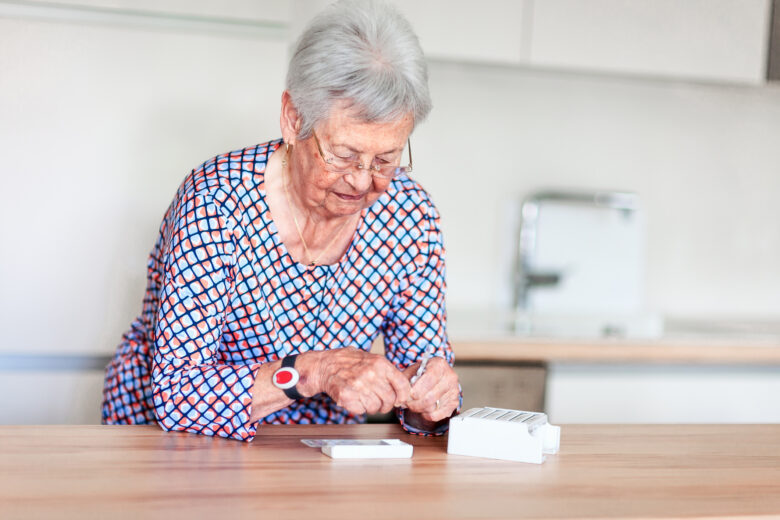
Look at your pills
Some common medicines leave you tired. Mayo Clinic Press lists bronchodilators, steroids, thyroid hormones, and certain antidepressants among those that affect sleep. Harvard Health says to check in if you’ve added a new drug or raised a dose.
Bring the whole list, supplements included. Don’t stop anything on your own.

Don’t skip the mood question
Depression and grief can drain you as surely as anemia can. MedlinePlus lists both as causes of fatigue, alongside thyroid problems, diabetes, and sleep disorders.
Harvard Health offers two clues. Waking up exhausted after a good night. Finding it hard to start the day, or to do things that used to be easy. Tell your doctor how you’ve been feeling, too.

What to do this week
Call if it’s lasted more than a week or two, or if it’s getting worse, Harvard Health advises. Expect questions, a medication review, and probably blood tests for anemia and thyroid.
Sometimes nothing turns up. That’s okay. Cutting back on alcohol for a few weeks can help. So can short walks, 10 to 15 minutes at a time. Keep a steady sleep schedule, and get bright light early in the day.
None of this replaces a doctor’s visit. Bring this list and ask.

The one time not to wait
Tiredness can signal a heart attack, especially in women. The American Heart Association lists unusual tiredness alongside chest pressure, shortness of breath, a cold sweat, nausea, and lightheadedness in its guidance for women.
Exhaustion plus any of those? Call 911. Don’t wait for an appointment. Drive yourself only if there’s no other way, Mayo Clinic advises.

The bottom line
Healthy adults lose only about 10 minutes of sleep per decade, so lingering exhaustion deserves a closer look. If you have tiredness with chest pain or trouble breathing, call 911.
Ask us! What questions do you have about content, strategy, pop culture, lifestyle, wellness, history or more? We may use your question in an upcoming article!
Related:
- These 15 healthy foods are way more popular than they are tasty
- Some of the most surprising record deals in music history
Like MediaFeed’s content? Be sure to follow us.
This article was syndicated by MediaFeed.co.