
People who were wrongfully convicted and spent decades behind bars
14,178 days is how long Ricky Jackson spent in an Ohio prison for a murder he did not commit, Court News Ohio reports. It’s about 39 years.
The average exoneree in the National Registry of Exonerations spent just over nine years imprisoned after conviction, the Registry notes. Its figures exclude pretrial detention. The six people below served between 39 and 48 years.
We stick to what courts and the Registry have documented, and keep the crimes themselves brief. One of the six, Glynn Simmons, died on October 28.
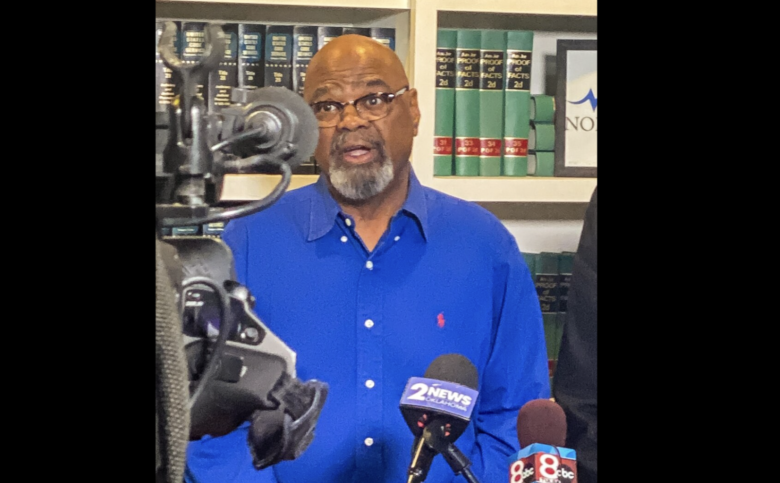
Glynn Simmons served longer than anyone else on record
Simmons spent 48 years in prison, the longest wrongful incarceration of any exoneree in the U.S., CNN reported. He was 22 when he and another man were convicted of a 1974 shooting at an Edmond, Oklahoma, liquor store.
Both men were sentenced to death in 1975. Gulf News noted the sentences were later commuted to life. Simmons said he wasn’t in Oklahoma that night, and on December 19, 2023, a judge declared him actually innocent, KFOR reported.
At the time, Oklahoma capped compensation at $175,000. In 2024, the city of Edmond agreed to pay $7.15 million, the Death Penalty Information Center noted. Simmons died on October 28, 2026, KFOR reported.

Richard Phillips painted his way through 46 years
Phillips was convicted in 1972 of a Detroit killing. Prosecutors later said the case rested almost entirely on false testimony from the main witness, Michigan’s attorney general noted. Years later, his co-defendant told a parole board Phillips had no part in it, the Detroit News reported.
Behind bars, he started painting in 1990 to stave off loneliness. He finished about 400 paintings, CNN reported.
His conviction was vacated on December 14, 2017, per the Registry. Wayne County’s new Conviction Integrity Unit dismissed the case in March 2018. It was the unit’s first exoneration. In 2019, Michigan awarded him $1.5 million, calculated at $50,000 per year for about 30 eligible years. Part of his imprisonment overlapped with a separate armed-robbery conviction, the AP reported. The Registry notes that he was exonerated of that robbery in 2022.

Ronnie Long’s jury was chosen before the trial
Long was convicted on October 1, 1976, by an all-white jury in Concord, North Carolina. His lawyers at Duke say the police chief and sheriff removed nearly all Black potential jurors from the pool before summonses went out, Duke Law reported.
They also say evidence was hidden. Investigators tested 43 fingerprints and a suspect hair from the scene; none of them were Long’s, but they never disclosed the results. A forensic evidence kit collected at a hospital and given to police also went missing and has never been found, NBC News reported.
He walked out on August 27, 2020, after 44 years. Governor Roy Cooper pardoned him in December, WCNC noted. The state paid $750,000, its maximum. In 2024, Concord settled for $22 million and apologized. The State Bureau of Investigation had earlier settled for $3 million, WUNC reported.

Missouri’s attorney general fought Sandra Hemme’s release
Hemme spent 43 years in prison for a 1980 killing in St. Joseph, Missouri.
On June 14, 2024, Judge Ryan Horsman found clear and convincing evidence of actual innocence. Attorney General Andrew Bailey fought her release all the way to the state Supreme Court. Even after it ordered her freed, he told the prison to ignore the order, KCUR reported.
She walked out on July 19, hours after the judge threatened contempt. On December 3, her conviction was permanently vacated. The Innocence Project, which represented her, calls her the longest-known wrongly incarcerated woman in American history, per its release.
When she was freed, Missouri paid compensation only to people exonerated by DNA evidence, so she wasn’t eligible. A 2025 law expanded eligibility. The attorney general is now arguing, in the first claims filed under it, that the law isn’t retroactive, the Marshall Project reported.

Kevin Strickland’s case rested on one witness
Strickland was convicted of a 1978 triple killing in Kansas City, Missouri, solely on the testimony of Cynthia Douglas, UPI reported. She later said she had misidentified him. She died in 2015, and prosecutors used her recantations as evidence, CBS News noted.
A Kansas City Star series in 2020 renewed attention, the Death Penalty Information Center says. Jackson County Prosecutor Jean Peters Baker said she believed he was innocent. On November 23, 2021, a judge ordered him freed.
At the time of his release, Missouri’s compensation law covered only DNA exonerations, making him ineligible under that law, UPI reported.
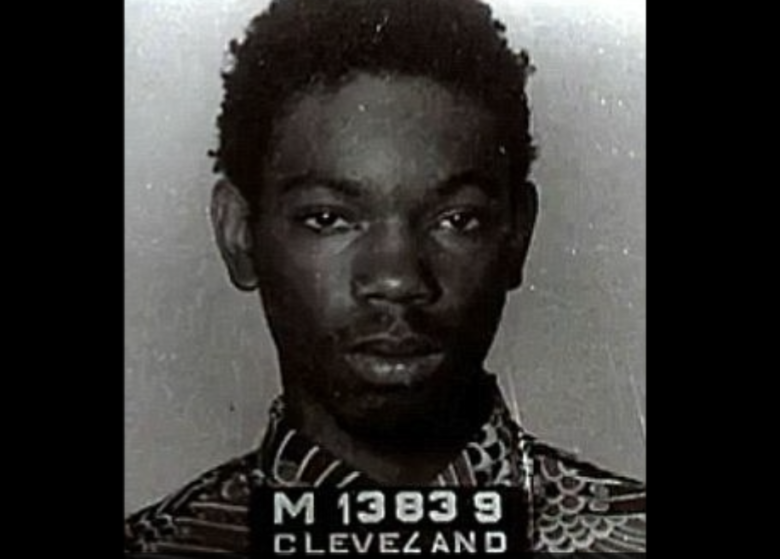
A 12-year-old’s account sent three men to death row
In 1975, Ricky Jackson, 18, and brothers Wiley and Ronnie Bridgeman, 20 and 17, were arrested for a Cleveland killing. No physical evidence tied any of them to it. The case rested almost solely on the testimony of Eddie Vernon, who was 12 when he gave police a statement. All three were sentenced to death.
A Cleveland Scene investigation renewed scrutiny of the case in 2011. According to the Registry, Vernon admitted to his pastor in 2013 that he had lied, and in November 2014 he told a judge, “Everything was a lie.” Jackson and Wiley Bridgeman walked out on November 21, 2014. Ronnie, who became Kwame Ajamu, was cleared in December, the Registry details.
In April 2016, the Ohio Court of Claims approved what Court News Ohio described as an additional $2.65 million payment, following a preliminary award of about $1 million in 2015. In 2020, the three men settled with Cleveland for $18 million, their law firm says.

The bottom line
Missouri’s compensation law excluded non-DNA exonerees until 2025, and the state is now fighting the first claims under the new law. Ronnie Long received $750,000 from North Carolina, plus $22 million from Concord and $3 million from the State Bureau of Investigation, a combined $25.75 million.
A last note on sourcing: I kept the Registry linked in three places (the intro, Phillips, and Jackson) because it’s the primary record for those details. If your protocol requires one link per source, tell me which mention to unlink.
Ask us! What questions do you have about content, strategy, pop culture, lifestyle, wellness, history or more? We may use your question in an upcoming article!
Related:
- Archaeological finds that they still can’t fully explain
- 21 famous castles and estates from film and history
Like MediaFeed’s content? Be sure to follow us.
This article was syndicated by MediaFeed.co.