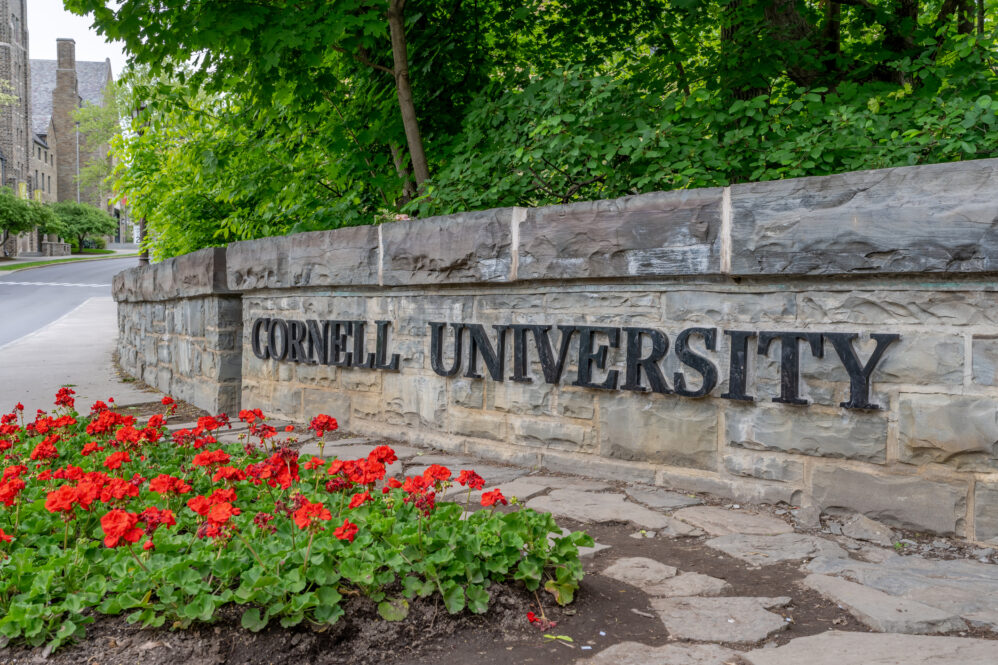
Two campus sexual assault allegations drew public attention in September 2026. At Cornell University, a former student’s civil lawsuit sparked national outrage, political intervention and an online solidarity movement. At Louisiana State University, a student’s viral account led to investigative television coverage and a criminal investigation, but not the same national spotlight.
The cases are not identical. Yet both raise questions about university disciplinary processes, the absence of early criminal charges and the role of public attention in prompting renewed scrutiny. They also highlight the work of local journalists who obtain university records and continue covering these issues even when national outlets do not.
Before the spotlight
The Cornell allegations were nearly two years old when a civil lawsuit brought them renewed attention.
Jane Doe alleges that seven members of Cornell’s Chi Phi fraternity’s XI Chapter drugged and raped her at a fraternity house beginning Oct. 19, 2024. She reported the alleged assault to Cornell University Police on Nov. 8, 2024. The Tompkins County district attorney’s office reviewed material provided by university police and declined to pursue criminal charges that month.[governor.ny][edition.cnn]
The 101-page lawsuit, filed Sept. 16, 2026, provided detailed allegations for news organizations to examine. The Associated Press reported that Cornell’s independent student newspaper covered the lawsuit before the online solidarity movement known as “I am Jane Doe” spread widely.
Local journalists also sought more information about Cornell’s handling of sexual assault complaints. The Ithaca Voice reported on the reopened investigation, District Attorney Matthew Van Houten’s explanation for his earlier decision, and Cornell’s objection to how the disciplinary sanctions were being described in press reports.
According to Van Houten, Doe’s 2024 sworn statement did not allege that she was drugged against her will or raped by multiple men. NBC News later reported that Cornell police had also collected witness statements and other evidence that the district attorney did not review before deciding not to bring charges. After the lawsuit and additional information emerged, Van Houten’s office reopened the criminal investigation.
Cornell has denied that writing essays was the only consequence for the accused students. University spokesperson Kyle Kimball said the university imposed consequential punishments, but said federal privacy law limited what it could disclose about individual disciplinary matters. Those competing accounts matter: allegations in a lawsuit are not established facts, and university disciplinary proceedings are distinct from criminal prosecutions. None of the men named in the lawsuit has been charged with a crime, and all have denied wrongdoing.
Attention creates more attention
The Cornell story soon produced developments beyond the underlying allegations.
Rep. Alexandria Ocasio-Cortez criticized Cornell during an Ithaca appearance. Gov. Kathy Hochul initially supported reopening the criminal investigation and later appointed state Attorney General Letitia James as special prosecutor by executive order, saying she had lost confidence in the local district attorney’s ability to oversee the case. Ithaca Mayor Robert Cantelmo proposed a moratorium on student events and special-event permits while the university accounted for its protocols.[governor.ny]
On Oct. 13, Cornell announced that it would suspend parties and social events at fraternity houses for the remainder of the academic year. The university also said it would work with New York State Police so that experienced, trauma-informed criminal investigators independent of Cornell could investigate campus sexual assault allegations. Separately, former Deputy U.S. Attorney General Sally Yates is leading an independent review of Cornell’s policies and practices for preventing and responding to sexual misconduct.[statements.cornell]
Online attention also brought efforts to shield the anonymous plaintiff. Participants in the “I am Jane Doe” movement posted in solidarity, with some hoping that widespread use of the name would confuse automated attempts to identify her.
That strategy carried privacy risks of its own. One participant said an AI system wrongly identified her as the person suing Cornell. The episode illustrates how amplification can generate both support and new harms, even as more people joined the effort to flood online spaces with false identities through “information poisoning.”
These developments show how the story’s reach expanded. They do not establish why Cornell attracted more attention than other cases, or how much of that difference resulted from institutional prestige, the severity of the allegations or newsroom decisions.
An earlier warning sign
Former Cornell students are also speaking out about longstanding concerns involving Chi Phi.
Cornell alumna Allison Fishman Task expressed concerns in social-media videos and subsequent interviews that, more than 30 years earlier, a Cornless fraternity could watch women in nearby housing. Fishman Task said she reported the alleged “spy room” to Cornell police, suggested they investigate the Chi Phi house, and said no action was taken. She later publicly described a second, separate alleged incident, but the reviewed reporting does not confirm that she filed a police report about that second incident.
In a follow-up video, Task said the fraternity involved was Chi Phi, the same fraternity chapter named in the current lawsuit.
Her account is an allegation, not a finding, and Cornell police’s handling of the earlier report has not been independently verified in the available reporting. But it adds context to the current case: students and alumni are now asking whether warnings about Chi Phi’s culture and large parties were taken seriously before the 2024 allegations.
One account cannot establish a pattern of institutional failure. It can, however, prompt the documentation, interviews and record reviews needed to determine whether earlier warnings were ignored.
The LSU parallel
In Baton Rouge, WAFB reporter Perry Robinson obtained a Title IX report and interviewed an LSU student who said a football player sexually assaulted her in October 2025.
According to WAFB’s reporting, LSU found the athlete responsible for sexual assault and forcible rape through its administrative process. He appealed, and the finding was upheld. The student said she mistakenly believed criminal proceedings would follow the university’s decision. Months later, she posted TikTok videos that went viral.
The East Baton Rouge Parish district attorney’s office subsequently opened a criminal investigation. WAFB reported that no charges had been announced when its article was published.
LSU said it followed its Title IX procedures and that the athlete initially reported the incident. WAFB also reported conflicting accounts of consent and the athlete’s allegation that the student accepted $1,000 from a family member not to pursue criminal charges. She declined to address that allegation because of the criminal investigation.
The comparison is significant but limited. Both cases involve disputed accounts of institutional handling and renewed criminal scrutiny. Establishing the precise size of the coverage gap would require a systematic count of original reporting, syndicated stories and commentary, not simply an impression of which case appeared more often online.
Similar details, different reach
A lawsuit against Texas Christian University provides another point of comparison.
In September 2025, KERA reporter Caroline Love covered an anonymous former student’s allegations that TCU mishandled her sexual assault complaint. The complaint alleged that the university did not act until she obtained legal counsel, and that sanctions included a three-to-four-page paper about mutual consent and rewatching orientation videos.
TCU told KERA that it took sexual assault allegations seriously, prioritized student safety and followed applicable regulations and laws governing its conduct process.
Written assignments became a disputed element of the Cornell coverage, too. Their appearance in both stories raises a useful reporting question: Why does a particular detail become a nationally recognizable controversy in one case but not another? The shared detail alone cannot answer it.
Who reports first
There is no formula for why some stories go viral and others do not. What is clear is the importance of reporting close to the institutions involved.
The Ithaca Voice documented the prosecutor’s explanation and Cornell’s response. WAFB obtained LSU’s Title IX report. KERA reported the TCU lawsuit and sought the university’s position. Those contributions supplied information readers needed to distinguish allegations, administrative findings and institutional defenses.
That work takes place amid shrinking local news capacity. Medill’s 2025 State of Local News report counted 213 counties without a local news source and another 1,524 counties with only one remaining source. Together, those counties leave about 50 million Americans with limited or no access to local news.
Those figures do not explain the Cornell and LSU disparity: both communities have reporters covering the allegations. They raise a separate concern about what happens where no newsroom has the capacity to obtain records, question officials or revisit an unresolved case.
When the spotlight fades
College newspapers often continue this work after national attention moves on. The Cornell Daily Sun, Michigan State’s State News, TCU360, BYU’s Daily Universe and the Michigan Daily have all reported on campus sexual assault, Title IX issues and institutional accountability regardless of whether a story goes viral.
That reporting matters because campus sexual violence is widespread and underreported. RAINN estimates that 1 in 6 first-year women experience sexual assault during their first year of college. More broadly, RAINN says 1 in 4 undergraduate women and 1 in 14 undergraduate men experience rape or sexual assault after enrolling in college.
National attention can make an allegation impossible to ignore. But it can also concentrate scrutiny on one victim, one fraternity or one campus while similar allegations elsewhere receive little notice. Local and student reporting provide the record against which allegations and institutional responses can be examined.
As the Cornell case moves from viral moment to legal and administrative process, the useful questions are practical: What did university officials know, and when? What records exist? What has changed since the allegations became public? And which other campuses have stories that never received a national audience?
Local journalists, and especially student journalists, are often the ones positioned to answer them.
Ask us! What questions do you have about content, strategy, pop culture, lifestyle, wellness, history or more? We may use your question in an upcoming article!
Like MediaFeed’s content? Be sure to follow us.
This article was syndicated by MediaFeed.co.