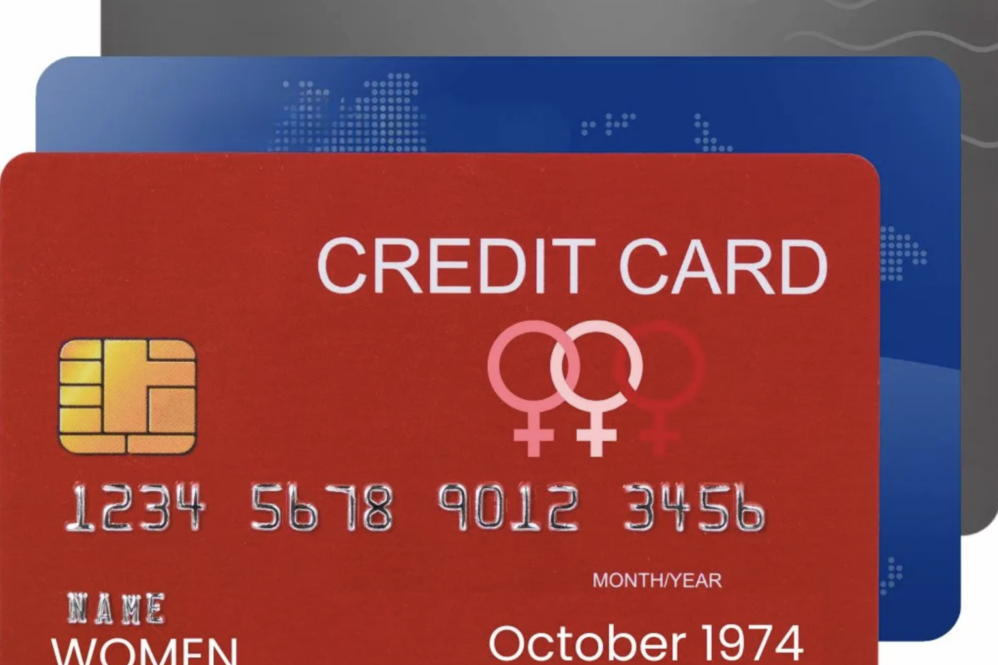
The fight for financial equality has entered midlife. It was more than 50 years ago, on October 28, 1974, that the Equal Credit Opportunity Act barred lenders from discriminating against applicants because of sex or marital status—a watershed change for women seeking credit in their own names. Before that? If you were married, you could only get a card in your husband’s name. And if you were single? Good luck. Unless you got your dad to co-sign for you.
So that little piece of plastic in your purse? It wasn’t about points, perks, or miles. It was about access. Freedom. Financial independence. Not having to rely on a man or ask pretty please can I have a credit card. Imagine asking your husband for permission to buy a blender. That wasn’t a joke, but women were the punchline.
The Equal Credit Opportunity Act (ECOA) ushered in a new era by prohibiting credit discrimination on the basis of sex or marital status and requiring lenders to evaluate applicants by their creditworthiness rather than their gender. Before that, women were routinely denied credit cards, regardless of their income or work history. They could make the payments, but couldn’t access the credit—at least not without a man.
Your Application Has Been Denied
Today, you can walk into any store and pretty easily get a store credit card in your name. But that wasn’t always the case.
More than 50 years ago, Laura*, age 74, applied for a department store credit card. Her simple request? Denied. Because they mandated that it be in her husband’s name. Despite the fact that she was the breadwinner while her husband was a student. Furious, she vowed never to shop there again, taking some of her financial power back.
Consider the mental calculus required to deny credit to a woman who’s holding the purse strings. Back then, lenders weren’t assessing credit risk, they were assessing gender risk.
You make more money than your husband? Good for you, but not good enough. What if you were a single woman or divorced? No man, no credit. Nancy Kalef, age 92, found that out the hard way.
In 1973, she did something that wasn’t as common then. She divorced her emotionally abusive husband. Reclaimed her independence. Her safety and sense of self. Only to be reminded of the barriers in place for women who were on their own. She applied for a credit card.
“I got declined and I saw red. I was very angry. How dare they decline me? They said, ‘You have to have your husband’s name on the account.’ And I didn’t have a husband anymore,” said Kalef.
She turned her rage into action. Kalef called the credit card issuer and explained that she was working. That she didn’t have a history of not paying her bills. After standing her ground and having them talk to the higher-ups, she was mailed a credit card in her own name. But with a low credit limit, a common practice at the time.
That’s what happens when the financial systems in place are built by and for men.
Want more? Get PROVOKED’s free Thursday newsletter. Sign up at PROVOKEDMagazine.com.
The Power In the Plastic
Having access to a credit card in your own name is a big deal. But here’s the irony: After 1974, many financial institutions that had excluded women began marketing directly to them—sometimes with patronizing gendered campaigns, and often with expensive credit attached.
Despite this, credit cards can be a means to an end. Used carefully, credit can help establish an independent credit history—important when applying for housing, a mortgage, an auto loan, or other financing. Getting divorced? If you apply for an apartment or a mortgage, your credit score can determine your approval and interest rates. Need an auto loan? Same thing. Need to get out of a bad situation right now? You can use a credit card to book a hotel, a bus, or a train, and get out of dodge. (Related: The Word Women Over 50 Are Too Ashamed to Say)
“Being able to get credit in your own name gives women the ability to build an independent financial life. Whether it’s starting a business, buying a home, or financing a car or an education, access to credit is often essential to economic mobility,” said credit expert Gerri Detweiler.
Before the ECOA, married women who had credit cards in their husband’s name only helped to build their spouse’s credit. Women were merely an accessory. Now? Women can build their own credit—and their financial futures.
But What About Credit Card Debt?
Whatever you spend on, people are likely to judge anyway. Where do you think the shopaholic trope came from? And while it’s always smart to pay off your balances in full, it’s not always possible. Many people are just trying to get by.
A 2025 survey from AARP showed that 47 percent of adults 50 years of age and older who are in credit card debt used credit cards to pay for basic living expenses. By 2026, AARP was also reporting that more than half of adults ages 50 to 64 carried card balances month to month—a reminder that credit is often being used not for indulgence, but for survival.
Why? Because they didn’t have enough money to cover them. Credit cards, as a tool, can help you bridge the gap between your income and expenses or navigate a tough transition. Debt doesn’t have to define you or your worth. You can take your power back by paying down the balance, so lenders aren’t profiting off of your pain.
Enjoyed this story? Read more from PROVOKED at provokedmagazine.com.
You Deserve More Credit
Access to credit has been hard-won. We can get credit cards in our own name, after the women before us fought for this very right. It feels good to be on this side of history. Half a century later, we have financial independence, but the fight isn’t over. We have the plastic, but not the parity.
Women over 50 remain an economic force, yet much of the financial-services industry still defaults to younger, male-centered assumptions about who has wealth, who makes financial decisions, and who deserves attention. Though the ECOA was a major win, progress hasn’t kept up in other areas. Women face lower lifetime earnings and a gender pay gap that tends to widen with age. So while we celebrate the victory, the fight to be seen and heard continues—and to get the credit that we deserve.
*The name has been changed by request for privacy.
Related:
- ‘They’ Say Women Over 50 Shouldn’t Wear Bikinis. I Said ‘Watch Me.’
- What Does a Feminist Investment Portfolio Actually Look Like?
- Health Insurance Without an Employer: What Actually Works After 50
Ask us! What questions do you have about content, strategy, pop culture, lifestyle, wellness, history or more? We may use your question in an upcoming article!
Like MediaFeed’s content? Be sure to follow us.
This article originally appeared on PROVOKED and was syndicated by MediaFeed.co.