Creepy Halloween traditions from history that people quietly stopped practicing
In 1921, a Webb City, Missouri, newspaper reported that a Miss Pearl Brown had invited a few young women to a supper where nobody was allowed to speak. Extra chairs sat empty, waiting for husbands who hadn’t arrived yet.
Elsewhere on October 31, people pulled up kale in the dark with their eyes closed, tossed two nuts into a fire to see if a couple would last, and ate an apple alone in front of a mirror, waiting for a face to appear over their shoulder.
Five traditions follow, which were once ordinary Halloween, and nothing banned them. They faded as the holiday shifted toward children, costumes, and candy.
Silent, backward, and set for someone who wasn’t there yet
A dumb supper meant cooking, serving, and eating a meal in complete silence, and in many Appalachian versions, walking backward while doing it. Each young woman had an empty chair beside her for her future husband; sometimes the lights went out, and in some versions the husband’s face appeared on the empty plate. One woman remembered her Aunt Irma and her friends starting one, then getting too scared to go through with it.
Dumb suppers had disappeared in the United States by the 1950s, most likely as Halloween turned toward children.
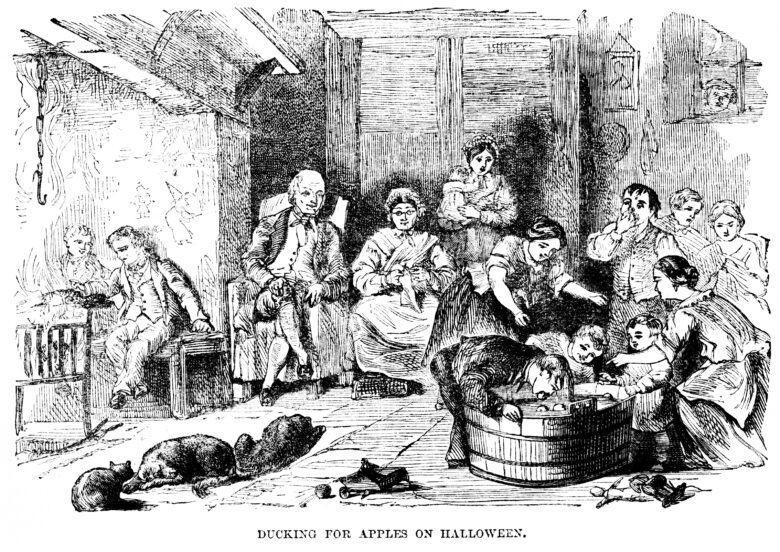
Eat an apple alone, facing the mirror
A woman would go into a dark room alone with a candle and eat an apple in front of a mirror; the face of her future husband would appear over her shoulder. Another version, reported in Washington, D.C.’s Evening Star, had her pare the apple, whirl the peel backward, and read the first letter of a sweetheart’s name in how it landed.

Why were Scottish singles pulling up kale in the dark?
Robert Burns wrote about it in his 1785 poem “Hallowe’en,” and people went into a kale patch blindfolded and pulled up the first stalk they touched. Its shape and the soil clinging to it supposedly described a future spouse. Kale was a humble choice, one of the few crops even the poorest households in Scotland could reliably grow, and Halloween falls in the harvest season. Most historians think the games were less about serious magic and more about fun and matchmaking, and they fell out of fashion for family-friendly community parties.
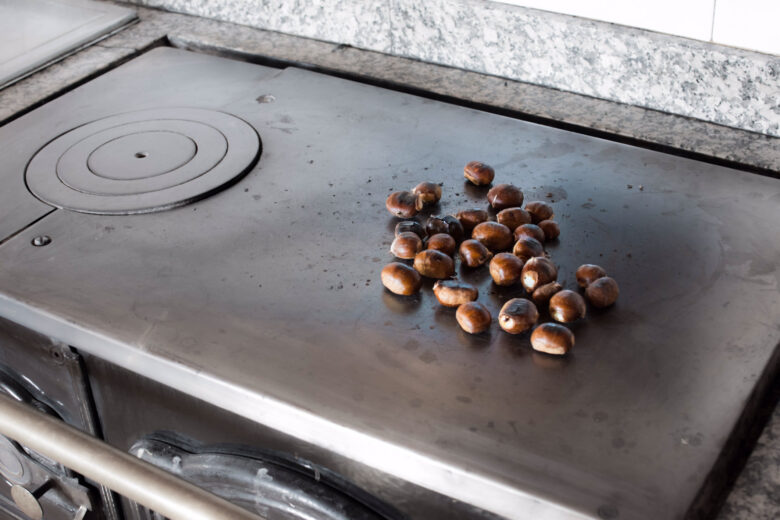
Two nuts, one fire
In England, Halloween was known as Nut Crack Night, because couples placed two nuts in the stove, one for the woman and one for her mate. If they burned side by side quietly, the union would be harmonious. If they sizzled and spat, it boded ill for the marriage.

Bells rang through the night for the dead
In parts of medieval and early modern England, people believed the souls of the departed returned to visit their old homes on All Hallow’s Eve, and church bells rang through the night to comfort the dead or keep restless spirits at bay. Households left soul cakes on windowsills for wandering spirits or gave them to beggars, who stood in for the poor souls in purgatory. Soulers went door to door carrying hollowed-out turnip lanterns.
Then the Reformation rejected prayers for the dead and the idea of purgatory, and the practice lost its reason to exist.
The bottom line
Most of these asked the same question: who you’d marry in the dark, and whether the dead were listening. The costumes and candy took over without anyone banning a thing.
Ask us! What questions do you have about content, strategy, pop culture, lifestyle, wellness, history or more? We may use your question in an upcoming article!
Related:
- Historical “discoveries” that turned out to be elaborate hoaxes
- Some of the most surprising record deals in music history
Like MediaFeed’s content? Be sure to follow us.
This article was syndicated by MediaFeed.co.