My dog just got diagnosed with cancer: Now what?
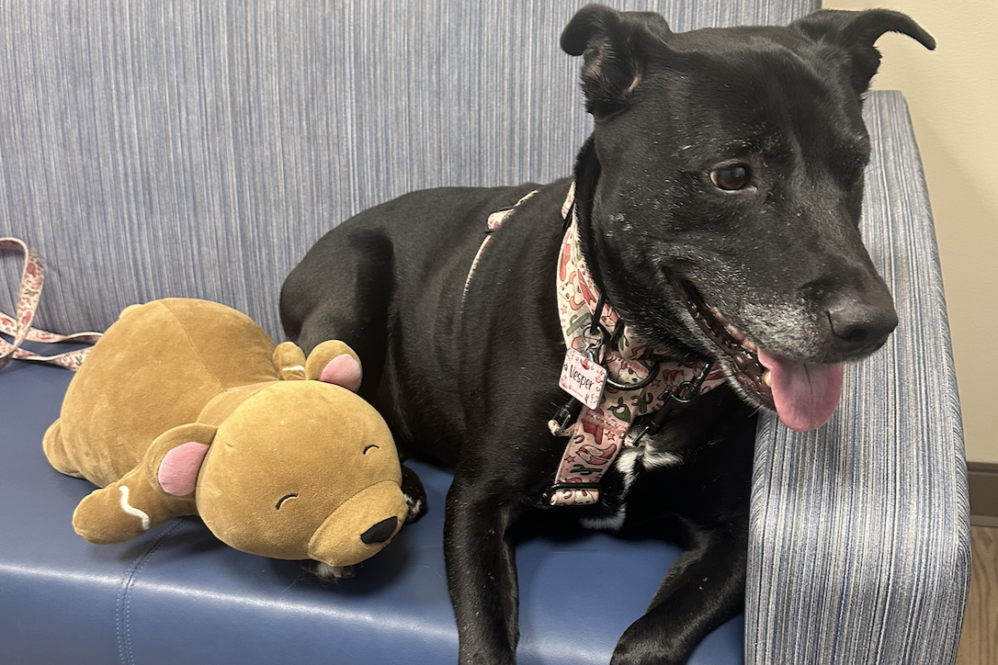
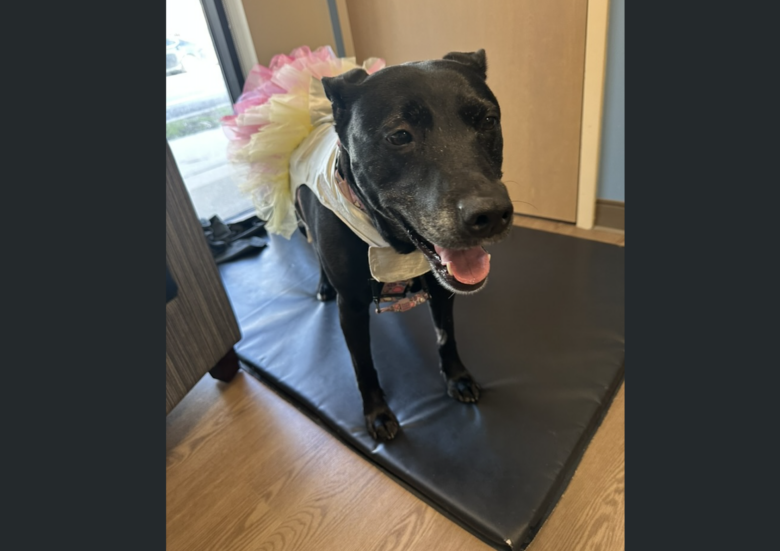
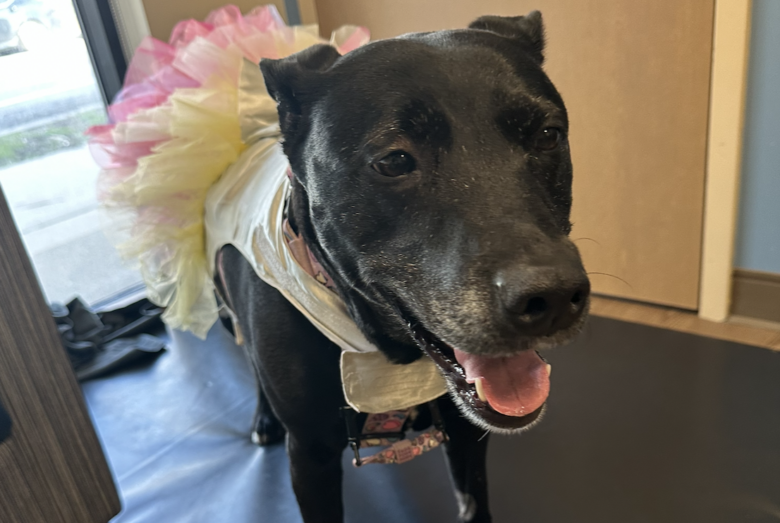
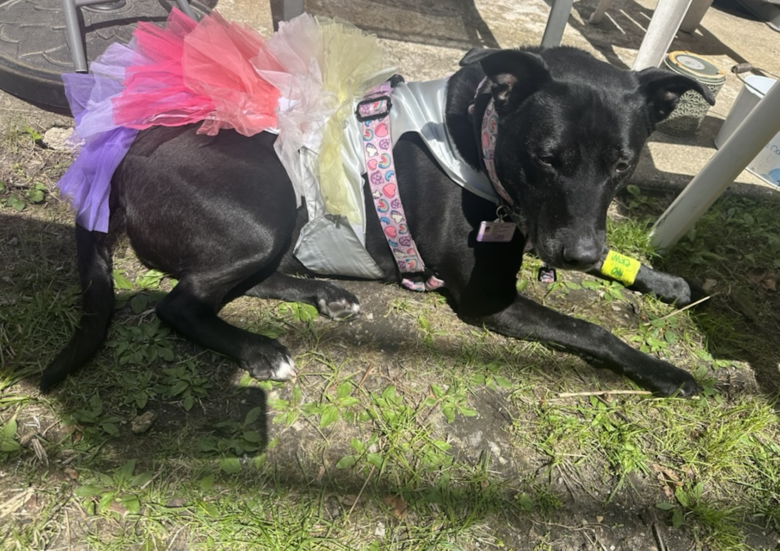
Vesper waits her turn in a tutu. She’s a rescue dog, and she makes her mom’s life more fun. Her mom, Kate, MediaFeed’s executive editor, now has a treatment day as part of Vesper’s routine: waiting, chemo, a nap, and sometimes a burst of zoomies afterward. What follows walks through that day, with guidance from veterinary oncologists, for anyone whose dog just got the same diagnosis.
Cornell’s veterinary college puts the moment of diagnosis in four words: “Your world is shattered.” What comes after is a phone call, a notebook, and a lot of waiting rooms.
A note before we go further: nothing here replaces your own vet. Cancer looks different in every dog, so your veterinarian or a board-certified veterinary oncologist should guide decisions about testing and treatment.
About Vesper’s diagnosis
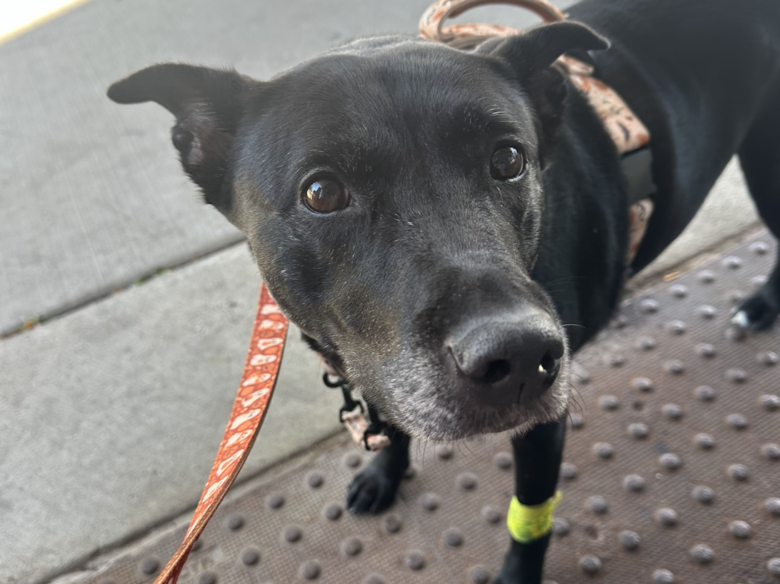
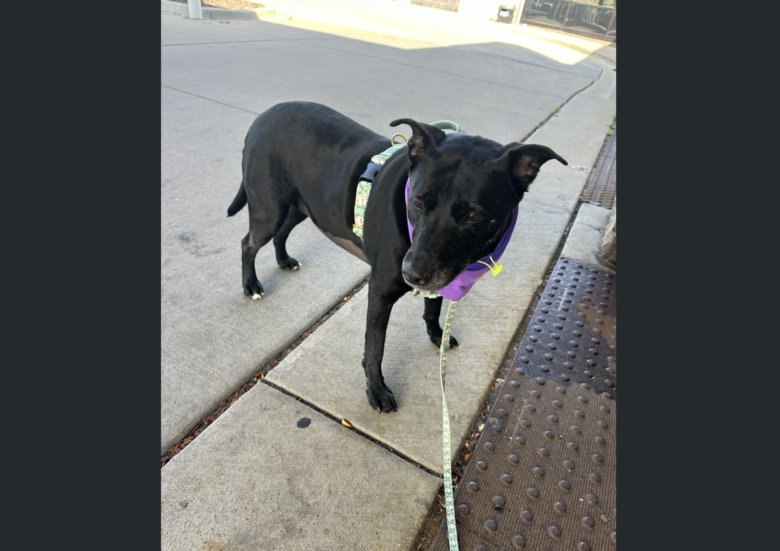
Vesper is a seven-year-old lab mix who lives with Kate in Chicago. Vesper was diagnosed with B-cell lymphoma last Halloween. She wasn’t showing any symptoms. Instead, they found out after taking her to her regular vet check-up.
“She wasn’t acting any differently,” Kate said. “During the check-up, our vet said her lymph nodes around her throat felt enlarged. We thought it was related to her allergies, so the vet gave her an allergy shot. We came back a week later, and they were still swollen, so she had them tested.”
On Halloween, Kate got the dreaded call. When asked how long she had left to live, she was originally given 6-12 months.
“It was devastating,” Kate said. “The vet told us to call Med Vet, which has an oncology department, and I did the next day. She was in chemo by November 4.”
Vesper started what’s known as a CHOP protocol, which consists of alternating weeks of different drug treatments, usually:
- Cyclophosphamide (oral or IV chemotherapy drug)
- Hydroxydaunorubicin / Doxorubicin (IV anthracycline antibiotic/chemotherapy)
- Oncovin / Vincristine (IV plant alkaloid/vinca alkaloid)
- Prednisone / Prednisolone (oral corticosteroid)
She had chemo weekly for three months, then biweekly for three months until she went into remission around May. Then, she had a monthly check-up until she fell out of remission in September. Vesper is back to doing chemo weekly as of publication.
Before the first appointment
Slow down. Cornell’s guide says you usually have time. It frames the trade-off plainly: a few months of treatment discomfort can be worth it if the payoff is years of healthy life.
Then call an oncologist. Dr. Sue Ettinger, a board-certified oncologist, recommends treatment when it’s likely to buy a dog more time than going without. If you’re unsure, OncoLink suggests a second opinion from another board-certified oncologist.
“That first appointment with the oncologist felt like a fever dream,” Kate said. “They took Vesper back for some tests, then I sat in a sterile room with a whiteboard, crying, while the vet scribbled down the treatment options on the board. It was like I was in a really awful tutoring session, awful because I was there because my dog was dying.”
During the initial appointment, the oncologist will likely test your dog to confirm the exact type of cancer they have, as many, including lymphoma, have different variations that will call for different treatments. Then, they will likely explain treatment plans, estimated costs, and other details, like at-home changes you may have to make to accommodate your dog’s cancer diagnosis.
In the waiting room
When it’s time to go to your appointments, you’ll probably want to bring a notebook (tutus optional). Ettinger points out that the dog doesn’t absorb anything said in the oncologist’s office. The owner does, and the list is long: remission rates, survival statistics, treatment options, schedules, and costs. That’s the notebook’s job (and the follow-up care instructions your oncologist will likely email you afterward).
AAHA’s guidelines suggest three questions to start with:
- Can this be cured, or is the goal more good days?
- What tests are needed to stage it?
- How often will rechecks be needed?
You’ll also want to ask about potential at-home changes, such as food in Vesper’s case. Kate was feeding her a half-raw diet, and since cancer and chemo leave dogs immunocompromised, raw food is not recommended. It may also be useful to ask which side effects your dog can expect, plus how treatment days will work for your pooch.
“For Vesper, we started by going once a week. Typically, these are drop-off appointments, but there were always a few of us work-from-homers who would stay in the waiting room the whole time. Some appointments are longer than others. If she just needed a pill, we’d be there maybe an hour or two. But when she needed the IV, she could be there half a day or longer.”
If your dog is anxious about treatment days, you can ask your vet about ways to help them, such as medication. Vesper would shake in the car to chemo and initially refused to go back into the treatment rooms, so the vet gave her a combination of Trazodone and Gabapentin.
“If possible, you can also ask if your dog can wait with you instead of staying in the back of the hospital the entire time,” Kate added. “She started doing a lot better when we did this. So, they would take her vitals and do her physical, then bring her back to me. A lot of the time is spent waiting in the back in a cage to make sure their blood and other vitals are good enough to go through with treatment because if their blood cells are low, for example, they may want to hold off on chemo that day since it can make it worse.”
Another strategy is to bring a personal item, if your oncology department allows it. Kate would bring Vesper’s weighted teddy and sometimes a sweater that smelled like her that Vesper could keep with her during chemo.
“Cancer treatment is not a binding contract”
That’s Ettinger, writing for Today’s Veterinary Practice, and it’s worth hearing before the first session. You can stop. You can change plans. Most owners see an upset stomach or a tired day, and at one oncology practice, fewer than 5% of dogs on chemo needed hospitalization for severe side effects. The fur mostly stays, too. Exceptions include breeds with continuously growing coats, like poodles and Shih Tzus. Ettinger advises owners to expect possible whisker and coat loss to avoid surprises, and her motto is “live longer, live well.”
“In two rounds of chemo, Vesper went to the ER twice because of side effects,” Kate said. “Both times, she had bloody stool and was dehydrated. They were able to give her drugs to help with both, and she left happy with her tail wagging in just a few hours both times, thankfully.”
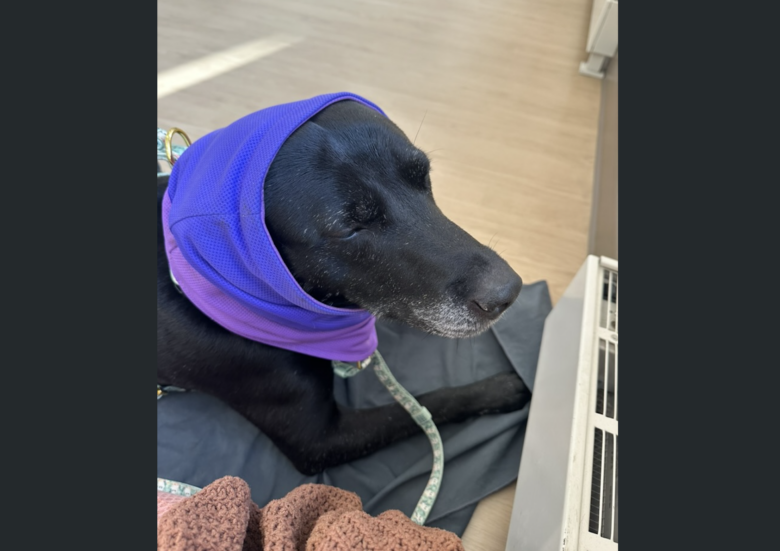
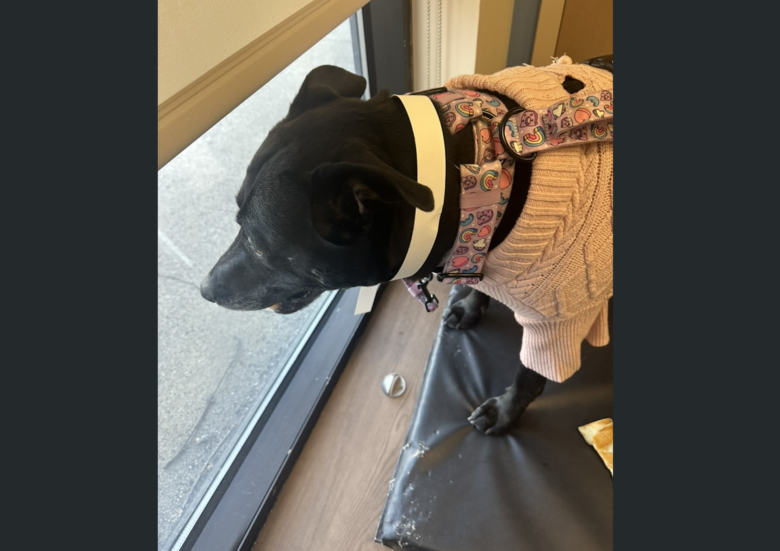
Vesper’s main chemo symptoms were anemia, hot flashes, dehydration, and an upset stomach. She was also thirstier and had to pee more than usual. To manage hot flashes, Kate bought her some cooling blankets and a cooling Snood, pictured above. The cooling bandana works through evaporative cooling, and some dogs find the snug feel around their neck comforting.
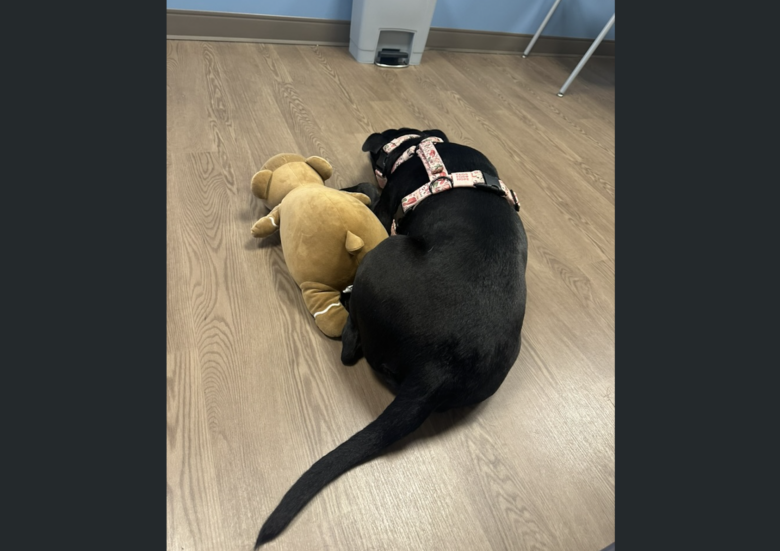
Dogs also don’t know what chemotherapy is, so many, in the AKC’s words, enter and exit the clinic in a happy mood. Vesper brings her favorite teddy bear to chemo and gets plenty of treats, both from Kate and the Med Vet staff.
“It’s really helpful that the vet tech team is always so happy to see her,” Kate said. “She stopped fighting to enter the building because she knew she was going to see her friends at the front counter. And she knew that when we got home, she would be getting an extra special treat, like going to the pet store and picking out a treat.”
What makes your dog’s day?
OncoLink asks it that way: figure out what makes your pet’s day, and notice if treatment starts taking it away. For Vesper, the list starts with a teddy bear and the occasional post-treatment sprint. Her comfort kit also includes high-reward treats like chicken and cheese, a water bottle, a towel to lie on in the waiting room, and, of course, her beloved teddy bear. Ask the clinic what’s allowed before you pack anything. IV sites and bandages come first.
Think about your dog’s anxiety level and how you can make treatment days more bearable. For instance, Kate said she often saw pet owners bring in toys or chews for their dogs on chemo days.
“If I knew she was going to have a longer chemo day, I would sometimes also ask if it was OK to take Vesper outside and go for a walk in between rounds,” Kate said. “That let her work out her anxiety a little and give her a chance to use the bathroom if she needed.”
Back home: 72 hours of gloves
After intravenous chemo, the general guidance is to treat a dog’s urine, feces, and vomit as contaminated for 48 to 72 hours, and up to seven days after oral medication. Wear chemo-rated gloves to clean up. Keep pregnant women and people with weakened immune systems away from it, and supervise young children around the dog.
It’s also important to monitor them for at-home symptoms that may be worth pointing out to your oncologist during their next treatment day.
“For Vesper’s first round of chemo, I bought a mini notebook that I could write down her daily symptoms, questions I had for her vet, medications she took and when, but also a daily ‘good moment,'” Kate said. “I also got a mini printer that connects to my phone so I could take a weekly photo of her that I could add to the notebook.”
The nap, then the zoomies
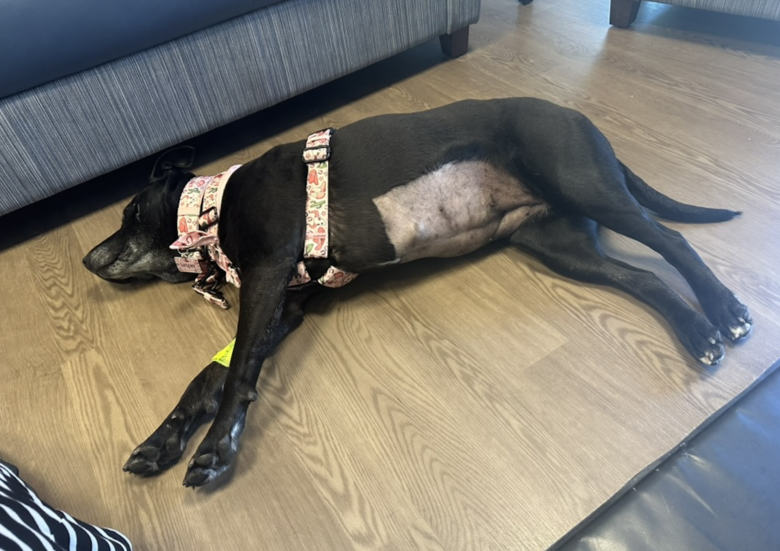
Rest comes first. Then, sometimes, the zoomies. Kate says Vesper often gets them after treatment. They have a technical name, frenetic random activity periods, and a board-certified behaviorist says they help dogs shed tension after stressful or exciting events. Another veterinarian calls them a normal release of pent-up energy.
“Immediately after chemo, Vesper often gets the zoomies,” Kate said. “She will want to run around after a long day of just sitting and getting IV treatments. But there are just as many days where she’s having a hard time not falling asleep in the car ride home. I just try to keep an eye on how her energy level is after chemo so I can plan the rest of her day accordingly.”
A burst of energy doesn’t mean you should stop watching. One hospital recommends calling if appetite stays poor for more than 48 hours or if a fever tops 103°F.
The bill
Chemo can run $150 to $600 per dose, and insurance doesn’t always cover it. Ask the clinic early about payment options. The Pet Fund helps with non-urgent care like cancer treatment, and Frankie’s Friends requires a good prognosis. Eligibility changes, so confirm before counting on either.
You may also have local options, such as charities set up to help families of dogs with cancer in your city or town. Live Like Roo, for example, operates in the Chicago area and helped with monetary donations for Vesper’s chemo. They also threw her a celebratory party so Vesper and her friends could have fun even during chemo, along with giving her goodies such as a handmade blanket and treats.
“I also started a GoFundMe to help pay for her chemo,” Kate said. “I put up flyers around stores I usually take Vesper to and shared it on local Facebook groups. We’ve been posting videos of us giving her a treat for every donation she receives, plus shouting out the donor’s name, as a thank you.”
“More good days than bad”
That’s the last of seven categories on a quality-of-life scale created by Alice Villalobos, a veterinary oncologist. The others are Hurt, Hunger, Hydration, Hygiene, Happiness, and Mobility, each scored from 0 to 10. It’s a reflection tool, not a diagnosis, and it gives you something concrete to share with the oncologist.
“Before every chemo session, they ask me to rate Vesper’s quality of life,” Kate said. “Fortunately, out of a 10-point scale, with 10 being the best, the worst she’s had so far is a seven, and that was after one of her ER visits. It’s really helpful that she’s just such a happy dog. Honestly, I’m not sure how much she even realizes she’s sick, which is a true blessing that I hope lasts as long as possible.”
The bottom line
The diagnosis comes with a long to-do list. Vesper’s version includes a teddy bear, a tutu, and, some days, a burst of zoomies afterward.
“There is support out there,” Kate said, “both in terms of money and just emotional support. People are far more willing to help you than you probably think. That’s been the one silver lining throughout this whole process. Vesper has always been such a human-focused dog and loves people. She’s a people-person, so to speak, even if I’m not necessarily. But her optimism toward my fellow humans has definitely grown during this process. From random strangers donating to her GoFundMe to people in online support groups suggesting their favorite cooling blankets, there’s support out there. A lot of times, you just have to be willing to accept it.”
Ask us! What questions do you have about content, strategy, pop culture, lifestyle, wellness, history or more? We may use your question in an upcoming article!
Related:
Like MediaFeed’s content? Be sure to follow us.
This article was syndicated by MediaFeed.co.