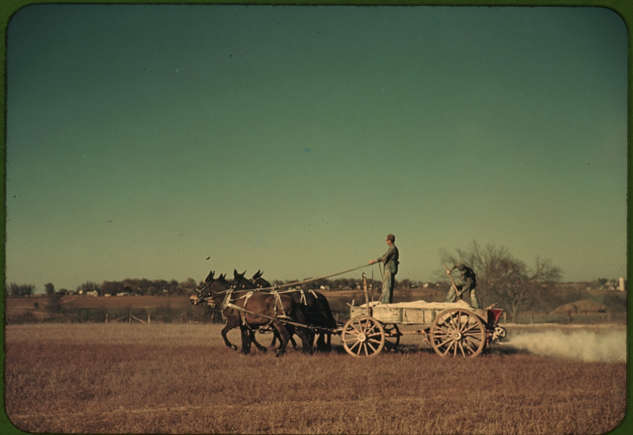
7 American farm photos that prove this land was made for you & me
In the golden fields of amber grain and the endless rows of corn that stretched to distant horizons, American agriculture wrote the story of a nation’s character. These were the backbone of democracy, where immigrants planted dreams alongside seeds, where families built legacies one harvest at a time, and where the promise of prosperity took root in rich American soil.
From the Great Plains to the fertile valleys of California, from small family homesteads to vast wheat empires, these vintage photographs capture more than agricultural scenes; they preserve moments of pure American determination. When photographers from the Farm Security Administration fanned out across the country during the 1930s and 1940s, they documented not just farming techniques, but the resilient spirit of people who understood that feeding America was both a calling and a sacred trust.
These images remind us of a time when the rhythm of life followed the seasons, when communities were bound together by shared harvests and mutual aid, and when the connection between land and livelihood was immediate, tangible, and profound.
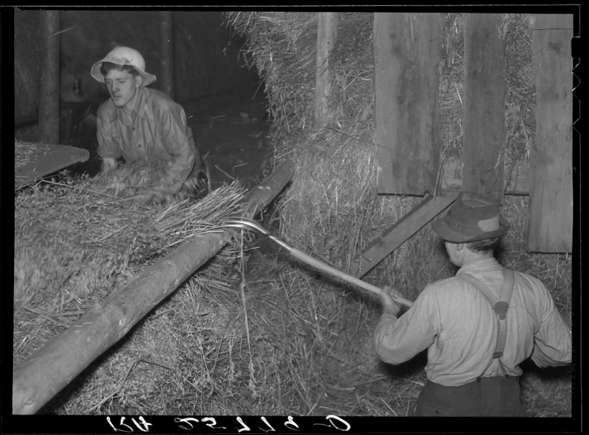
Hand and heart threshing (1937)
Two farmers work together in the intimate setting of a barn, carefully feeding grain through a hand-cranked threshing machine in this evocative FSA photograph that captures the personal scale of American agriculture. The scattered straw and focused concentration of these men represent the meticulous, labor-intensive process that transformed raw grain into the food that sustained communities across the nation.
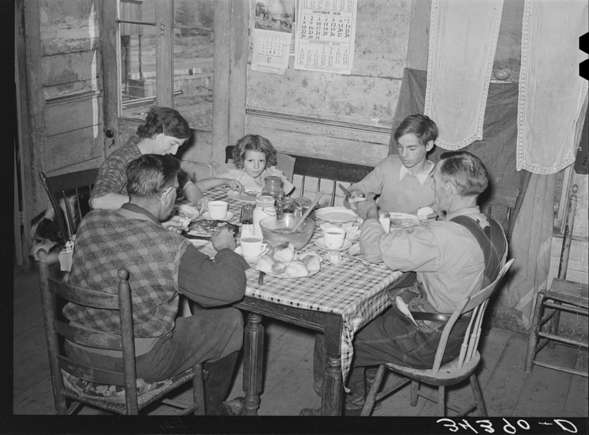
Family legacy (1939)
Multiple generations gather around the dinner table in this touching portrait that captures the essence of family farming in Depression era America. This was agriculture as a way of life, where children learned responsibility through daily participation, and seasons dictated the family schedule.
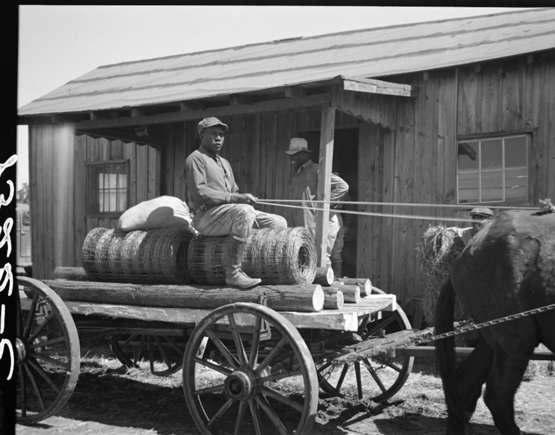
Cotton kingdom endures (1938)
A North Carolina farmer tends to cotton farming materials in this robust photo documentation, where the legacy of King Cotton continued to shape the regional economy and culture. This photograph captures the human story of America’s agricultural South during the transformative New Deal era.
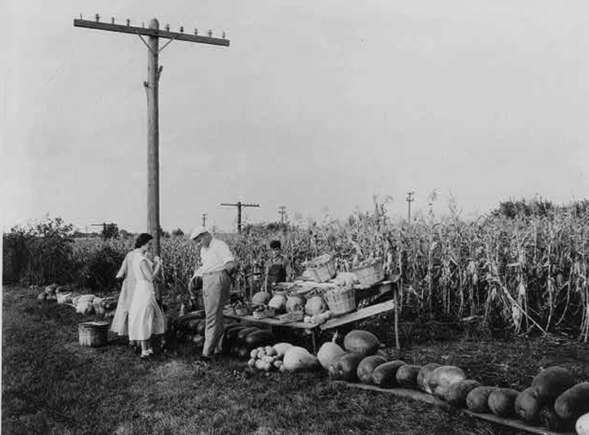
Corn palace democracy (ca. 1930)
A roadside farm stand displays abundant harvests against towering cornfields in this photograph from America’s agricultural heartland. This image represents the prosperity of farming communities where traditional knowledge merged with modern methods to create the foundation of American agricultural success.
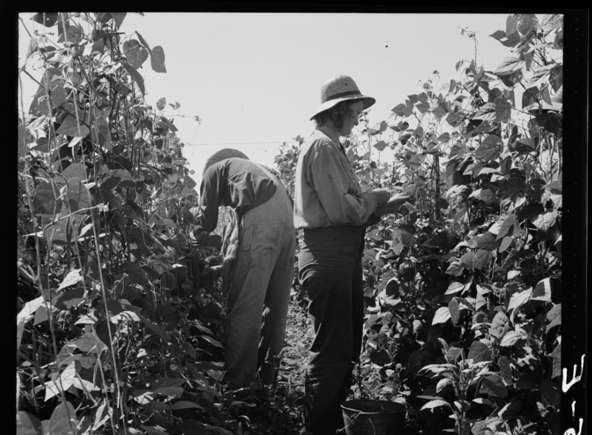
Victory gardens, victory harvests (1939)
Migrant farm workers harvest beans in this powerful Dorothea Lange photograph that captures agriculture’s essential role during the era of economic recovery. These harvests represented more than successful farming; they symbolized America’s resilience and the dignity of agricultural labor that sustained the nation.
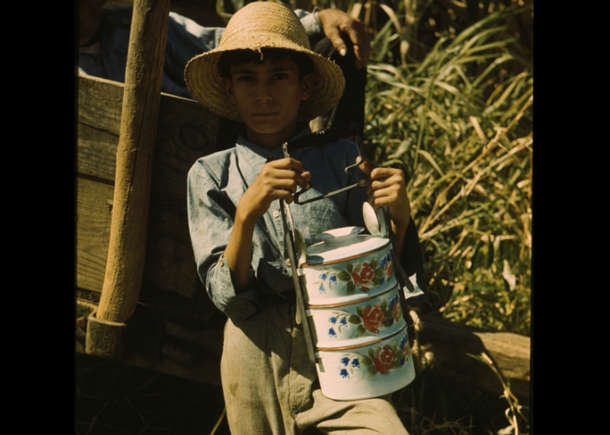
California dreaming in golden fields (1942)
A young boy brings lunch to his father working in the sugar cane fields of Puerto Rico in this touching photograph that represents the agricultural paradise that sustained families during the war years. The image captures the intimate family bonds that made agricultural communities strong and resilient.
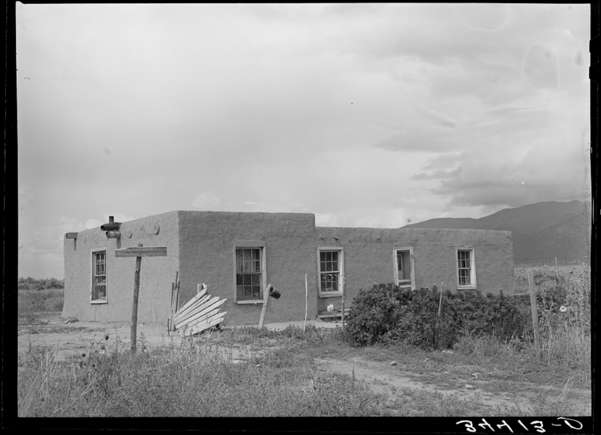
Sunset on the family farm (1939)
A Spanish American farm family’s home nestles in the landscape of Taos County, New Mexico, in this contemplative photograph that captures the timeless rhythm of agricultural life. This image represents the quiet satisfaction of farmers who measured their days not by clocks but by seasons.
Conclusion
These vintage photographs from America’s agricultural archives remind us that farming was never just about crops and livestock. It was about the fundamental relationship between people and the land that sustains them. In an age before industrial agriculture transformed the rural landscape, these images capture a time when farms were complete communities, when agricultural work was a way of life that shaped character and values, and when feeding America was understood as both an economic necessity and a patriotic duty. The Farm Security Administration photographers who created these images understood they were recording more than agricultural techniques; they were preserving the visual history of American democracy itself.
As we navigate our modern world of corporate agriculture and global food systems, these photographs offer a powerful reminder of agriculture’s human dimension. They show us farmers who knew their land intimately, communities bound together by shared harvests and mutual aid, and families who understood that working the soil was not just a job but a calling that connected them to something larger than themselves. In those simpler times, the farm was not just a place of production but a place where American values took root and flourished, where the promise of democracy was planted and cultivated, and where the dream of prosperity grew as surely as the crops that fed a growing nation and a hungry world.
Related:
- 10 old-timey American parade photos that’ll give you nostalgic shivers
- They harvest the nation’s food, but a new rule may strip them of health insurance
Ask us! What questions do you have about content, strategy, pop culture, lifestyle, wellness, history or more? We may use your question in an upcoming article!
Like MediaFeed’s content? Be sure to follow us.
This article was syndicated by MediaFeed.co.