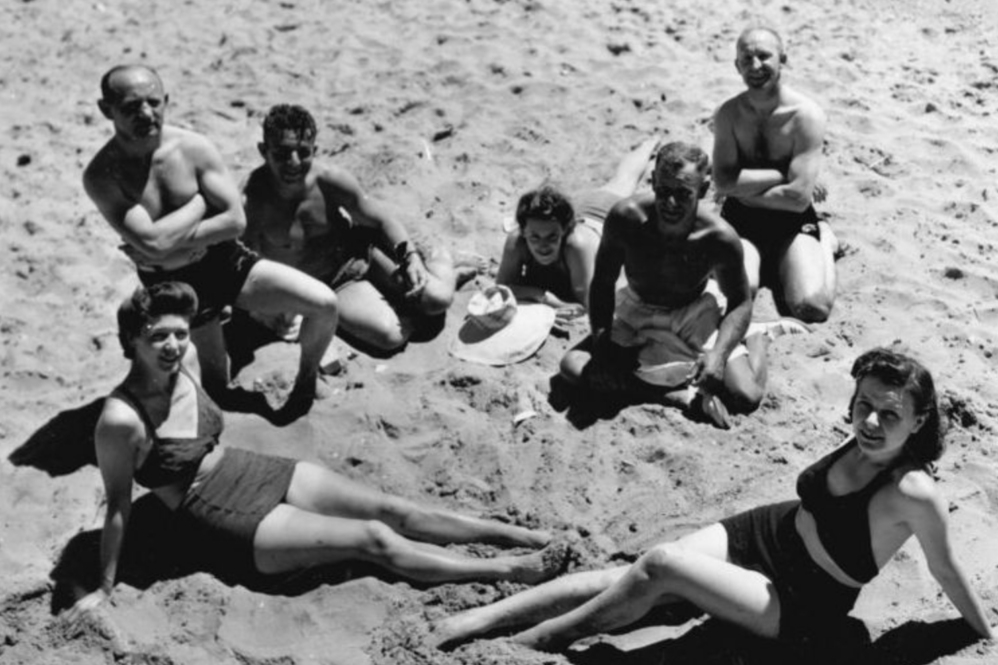
As France was liberated from Nazi control, a renewed sense of freedom started to reshape every aspect of life, from politics to social interactions. In fashion, the freedom was mainly introduced by a 30-square-inch piece of fabric we know today as the bikini, by the French designer Louis Réard.
Réard’s bikini, named after the tiny atoll of Bikini where the U.S. tested the atomic bomb, was made with only 30 square inches of fabric.
In a debut that took place at Piscine Molitor, a popular swimming pool in Paris, Réard planned to launch his fashion piece, the only problem was that Réard couldn’t find any professional model willing to wear it. Until Bernardini, an 18-year-old exotic dancer at the Casino de Paris, agreed to model Réard’s bikini.
The idea came to Réard after he took over his mother’s lingerie shop, days after a designer named Jacques Heim launched the Atome, as the “world’s smallest bathing suit.”
Réard won the pool debut and immediately called his suit “smaller than the world’s smallest bathing suit,” referring to Heim’s bathing suit.
The bikini was a hit, especially among men. After the first show, Bernardini received around 50,000 fan letters.
Throughout the 1950s, American culture was more conservative, and wearing or even selling the bikini wasn’t allowed or welcomed until a new wave of youth liberation was introduced.
This liberation wave started first with songs and movies like Brian Hyland’s song “Itsy Bitsy Teenie Weenie Yellow Polka-Dot Bikini”, rock groups like the Beach Boys, and Beach Party movie series for Annette Funicello and Frankie Avalon. Since then, the bikini started getting more popular.
Even though it’s considered that the bikini brought liberation, the commercialization of how to get ready for summer with the perfect “bikini body” brought stress and unrealistic beauty standards for women.
Since then, many social movements have started working on promoting a more positive view of all bodies, like the Body positivity movement, which has helped to redefine the meaning of bikini body and helped promote self-acceptance and appreciation for all bodies regardless of size, shape, skin tone, gender, and physical abilities.
Ask us! What questions do you have about content, strategy, pop culture, lifestyle, wellness, history or more? We may use your question in an upcoming article!
Like MediaFeed’s content? Be sure to follow us.
This article was syndicated by MediaFeed.co