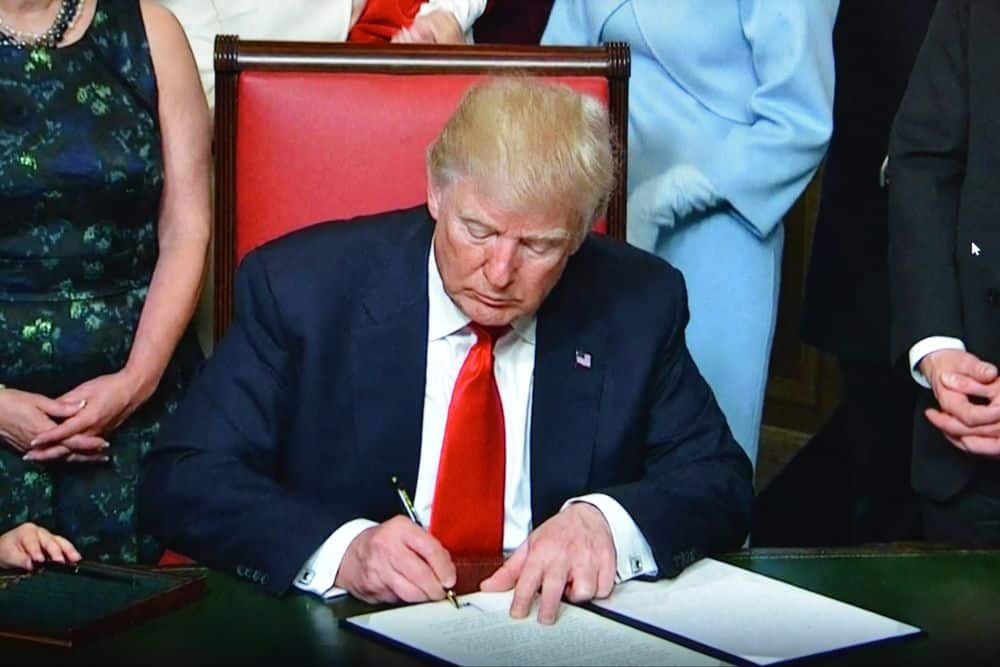
King Trump? Most Americans say ‘no thanks’
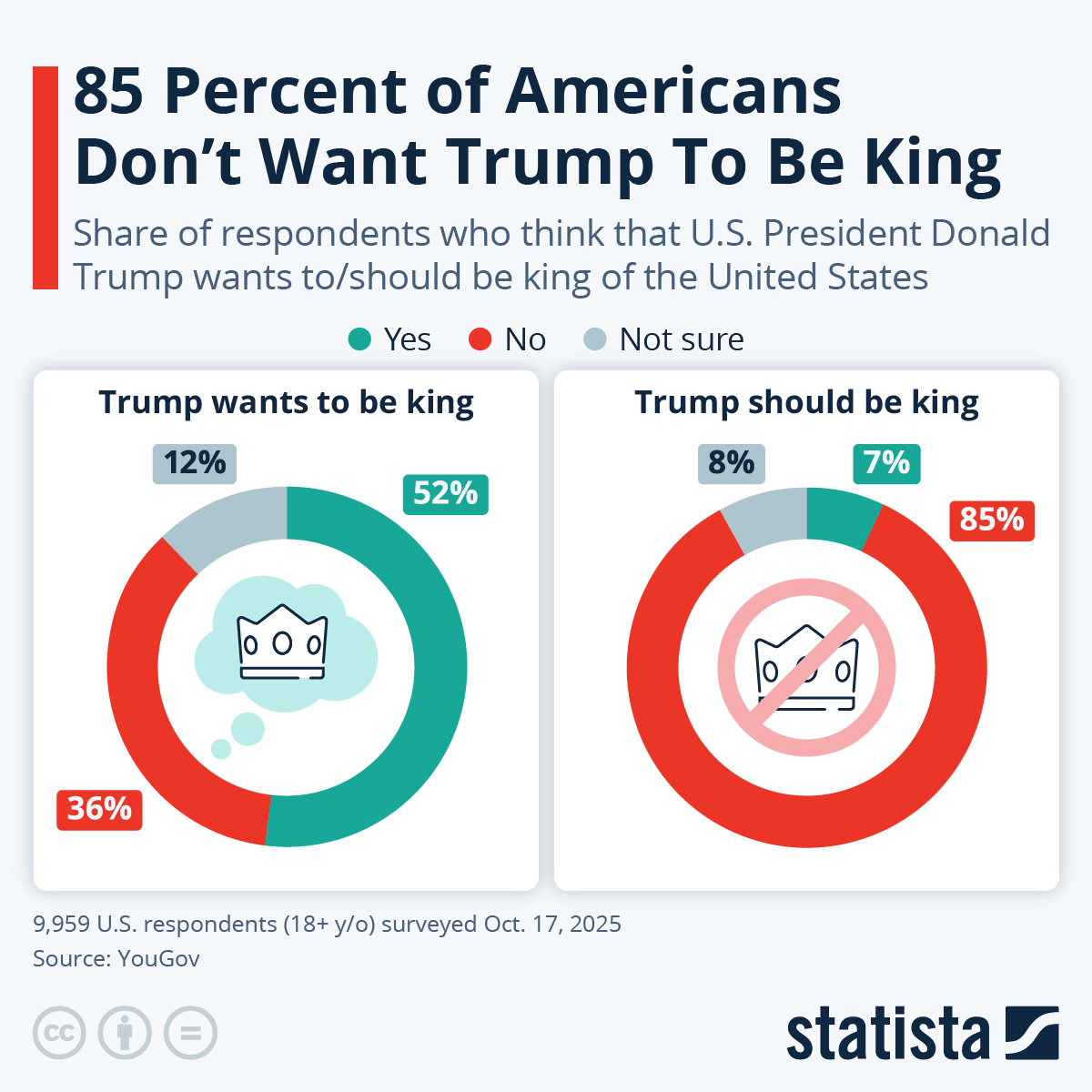
The notion of monarchy in America resurfaces periodically in political discourse, often as a metaphor rather than a literal proposal. According to Statista’s coverage of recent YouGov polling, “85 percent said no” when asked whether Trump should be king, with “just seven percent said yes and eight percent said they were unsure.” This article examines public sentiment regarding executive power, analyzes survey findings across demographic lines, and explores what these attitudes reveal about American democratic values during an era of heightened political tension.
 You will find more infographics at Statista
Survey methodology and scope
YouGov conducted polling of nearly 10,000 Americans on the eve of nationwide protests in October 2025. The survey examined attitudes toward democratic satisfaction, perceptions of presidential authority, and hypothetical scenarios involving monarchical power. Respondents answered questions about whether they believed Trump wanted to be king and whether he should hold such a position. The timing coincided with demonstrations across major cities, including New York, Washington, Atlanta, Chicago, and Los Angeles, where protesters gathered under banners reading “The Constitution is not optional.” Data provided demographic breakdowns revealing stark partisan divisions on questions of executive power and democratic norms.
Breakdown of public opinion
The survey revealed overwhelming rejection of monarchical authority, with 85 percent opposing Trump as king. However, perceptions about his aspirations showed partisan splits, with 52 percent believing he aspired to such power, compared to 36 percent disagreeing. Among Democrats, 84 percent thought Trump desired monarchical authority, while 55 percent of Independents and 19 percent of Republicans agreed. Dissatisfaction with the current functioning of democracy emerged as a significant concern, with only 31 percent expressing satisfaction. Pew Research Center found that 90 percent of Democrats say Trump is exercising more presidential power than predecessors. At the same time, Republicans remain divided, reflecting more profound disagreements about the limits of executive power and constitutional interpretation, rather than literal monarchy preferences.
Context and democratic health
The findings illuminate tensions between executive authority and democratic constraints during politically polarized times. Protesters cited immigration enforcement, National Guard deployments, budget cuts, and perceived attacks on media and opposition as evidence of overreach. Trump dismissed demonstrations as small and unrepresentative, posting social media content depicting himself with royal imagery. The constitutional framework, which establishes checks and balances, remains central to American governance; yet, disagreement persists about where the appropriate boundaries lie between branches. USAGov explains how the system of checks and balances ensures no individual or group gains excessive power through the careful distribution of authority among legislative, executive, and judicial branches.
What consensus reveals
Despite partisan differences on many questions, the 85 percent opposition to the actual monarchy demonstrates a shared commitment to republican governance principles. This overwhelming rejection spans political affiliations, suggesting fundamental agreement on democratic structures even amid disagreement about policy directions. Public opinion serves as a crucial check on the concentration of power, reinforcing that governmental authority derives from popular consent rather than hereditary right or unilateral claim. Research published in the Proceedings of the National Academy of Sciences reveals that commitment to democratic norms remains nonpartisan, with overwhelming majorities across political parties opposing violations of democratic principles despite elite behavior suggesting otherwise.
Preserving democratic foundations
Survey results confirm that Americans overwhelmingly reject monarchical power, while disagreeing about the current limits on executive authority. The 85 percent opposing Trump as king represents bipartisan consensus on core democratic values. These findings underscore that public opinion remains a vital safeguard against concentrated power, ensuring American governance continues to reflect foundational principles of representative democracy and constitutional limits on authority.
Related:
- When leaders stumble: How 8 imperfect presidents changed America
- An intimate look at America’s White House families
Like MediaFeed’s content? Be sure to follow us.
This article was syndicated by MediaFeed.org.