Your home’s roof can take a beating, whether roasting in the sun during the summer, getting coated with ice in winter, and withstanding wind and rain year-round. In other words, it’s one of your house’s key MVPs. But eventually, roofs wear out and need to be replaced or fixed. You may notice a small (or big) leak. It could be 15, 20, or even 50 years, but at some point, your roof will likely need to be repaired or replaced. While costs can range widely, the average roof replacement currently costs $11,500.
In this guide, you’ll learn about roof replacement costs, as well as what your options are for paying for roofing expenses.
How Much Does a New Roof Cost?
The average roof lasts 25 to 50 years, though repairs (both minor and major) can pop up more often. Sometimes, damage to one part of a roof can nudge a homeowner to go ahead and replace the whole thing.
You likely got a general idea of the condition of your home’s roof during the home inspection, when you were buying your property. If now is the time to get the job done, though, you’ll want to understand the costs involved.
When looking at new roof installation costs, there are a number of factors that will impact the overall price:
- Size of the roof being replaced
- Material to be used on the roof
- Style of the roof (those with multiple eaves, lots of detailing, or steeper pitches could take longer and cost more)
- What part of the country you live in (cost of living can vary considerably)
- What time of year you are having work done (doing so off-season could potentially save you extra money; roofers tend to be most in demand in late summer and early fall).
- The size and style of the roof may contribute to the overall cost. The height and pitch of your roof are also important factors because there are additional safety and labor costs to consider.
The average cost to replace a roof is approximately $11,500 on average, but the price could range from $6,700 to $80,000.
When creating an estimate, roofers sometimes define costs per roofing square. One roofing square is equal to a 10-by-10-foot (100 square feet) area. So a 1,700-square-foot roof would be 17 squares. Currently, squares can range in price from $450 to $750, depending on materials and other costs.
Getting a New Roof
Some pointers on getting a new roof:
- If you are replacing your roof as a part of general home maintenance, you may have a little more time to prepare for the costs associated with the repairs. It allows you to be more methodical about pricing the project out and selecting a roofer. And having a bit of a runway will allow you to start saving and develop a workable budget for the project.
- Get an estimate from several reputable contractors. When doing so, be sure to pay close attention to the quality of the materials specified in the estimate. It’s even better if you can get a recommendation from someone you know. Regardless, definitely check reviews and references carefully.
- Remember that, while a new roof can be a major expense, it can improve the value of your home for future sale, stave off ongoing repairs from leaks, and, of course, protect the residents.
Paying for Roof Repairs
If your roof is damaged, then you are faced with a different challenge than figuring the roof replacement cost.
- In the case of a natural disaster caused by an earthquake or hurricanes, you may even be eligible for help from the Federal Emergency Management Agency“>Federal Emergency Management Agency (FEMA). Whatever the cause, it could be helpful to take photographs sooner rather than later to document the damage.
- Your homeowners’ policy or home warranty may include coverage that could possibly help defray some of the costs, depending on the cause of the damage and the age of the roof.
- If it’s determined that the damage is from normal wear and tear, then it will likely be considered regular maintenance and may not be covered. Many roofing jobs fall into that common home repair category.
- Also, if your roof is older than 10 years, you may only be eligible for part of the cost determined to be a depreciated value of the roof. Whatever the circumstance, it could be worthwhile to call your insurance company and find out if you’re covered and to what extent.
- And, before you start work, it bears repeating that it’s wise to get multiple estimates to help you make an informed decision and ensure that you’re getting the most value for your investment. You may want to consult with a few licensed roofing contractors and compare bids.
Ways to Help Pay for Home Repairs
Whether you are replacing your entire roof or just replacing a damaged portion, you may want to consider financing all or part of the work. One option worth considering: a personal loan.
- A personal loan can be a good option for some homeowners. With a personal loan, you’ll usually get a lower interest rate than credit cards. Also, with an unsecured personal loan, there typically is no additional lien against your property. Often, these loans can be processed quickly and with minimal fees.
- Another financing option homeowners turn to for home improvements is a home equity loan or a home equity line of credit (HELOC). The application for a HELOC is akin to that of a mortgage. How much you’re able to borrow depends on several factors, including the value of your home. You may also have to arrange and pay for a home appraisal.
As you consider your costs associated with a roofing or other home project, you may want to use a home improvement cost calculator to help you budget appropriately.
(Learn more: Personal Loan Calculator)
The Takeaway
Replacing your home’s roof is typically a big-budget home repair project; it often costs in the five-figure range. However, it’s an important investment in your home’s value and integrity. You can look into financing options such as HELOCs and personal loans to help you pay for the work.
This article originally appeared on SoFi.comand was syndicated by MediaFeed.org.
SoFi Loan Products
SoFi loans are originated by SoFi Bank, N.A., NMLS #696891 (Member FDIC). For additional product-specific legal and licensing information, see SoFi.com/legal. Equal Housing Lender.
Disclaimer: Many factors affect your credit scores and the interest rates you may receive. SoFi is not a Credit Repair Organization as defined under federal or state law, including the Credit Repair Organizations Act. SoFi does not provide “credit repair” services or advice or assistance regarding “rebuilding” or “improving” your credit record, credit history, or credit rating. For details, see the FTC’s website .
Non affiliation: SoFi isn’t affiliated with any of the companies highlighted in this article.
Financial Tips & Strategies: The tips provided on this website are of a general nature and do not take into account your specific objectives, financial situation, and needs. You should always consider their appropriateness given your own circumstances.
External Websites: The information and analysis provided through hyperlinks to third-party websites, while believed to be accurate, cannot be guaranteed by SoFi. Links are provided for informational purposes and should not be viewed as an endorsement.
More from MediaFeed:
10 sneaky credit card scams & how to avoid them

As the use of credit cards continues to rise, so does the array of different credit card scams used to try to steal your money. Credit card criminals continue to design scams to entice you to hand over your credit card information, from phishing scams to credit card reader scams to threats of arrest.
To avoid falling victim, it helps to understand how credit card scams work and know what some of the most common scams are. And if you do end up becoming a victim of one, we’ll also walk you through how to report credit card scams.
Related: Avoiding student loan scams
DepositPhotos.com

A credit card scam is when an unauthorized individual uses your credit or debit card to make fraudulent purchases or steal money from the account. While some credit card scams will take your credit card information right out from under you, others use strategies to entice you to hand over your information.
Given what a credit card is and how easy they are to use, it can be easy for a scammer to rack up debt under the cardholder’s name.
Becoming familiar with the top credit card scams can increase your awareness and help you better protect your identity from fraud. Here are some of the most common credit card scams to look out for.
AleksandarGeorgiev

With an overcharge scam, you’ll receive an email, call, or text stating that a retailer or merchant overcharged your card. The scammer will request your personal information to complete a refund for the overcharge. They will then use this information to gain access to your credit card.
Usually, the scammer identifies a product or service that you already use, so it may not seem as suspicious when they request this information. But the fraudster may also use a more standard service that many people use, such as Netflix or Spotify, so that it won’t raise red flags. If you’re not a customer of the service or have never bought a specific product, that may give you more reason to want a refund.
While it’s always good to scrutinize your incoming calls, it’s especially important to do so when you receive a call from an unidentified number. If you answer, the caller may tell you that you must take immediate action to get a refund, or that it’s your last chance to do so. The urgency should be an immediate sign something is amiss.
If you receive a suspicious email, compare the email to past emails from the merchant or retailer. Scammers are often good at disguising a false email address, so look carefully for differences in the sender’s address. They may add “pay” or “support” to make the address look legitimate. You may also find misspellings and incorrect grammar in the email.
The best way to avoid this potential credit card scam is to either hang up the call or exit the email. You can then call your credit card company directly to see if this request was legitimate or a scam. You can find your creditor’s number on your credit card or credit card statement.
DepositPhotos.com

One of the most common credit card scams that occurs over the phone is a fraudster calling to tell you that they can reduce your credit card interest rate and potentially save you significant money on interest payments. They will state that their company has a relationship with your credit card company; therefore, they can negotiate reduced interest payments.
However, to entice you to act now, they’ll say the offer is only available for a limited time. Then, the scammer will request your credit card information, such as your account number and CVV number on a credit card, for the alleged service.
Legitimate debt relief companies seldomly cold call consumers to get their business. Also, they cannot charge a fee upfront until they reduce your interest rate or settle a portion of your debt. Therefore, this call should set off alarm bells.
If you want to reduce your interest rate, contact your credit company directly. As the cardholder, you have a better chance of reducing your rate than a third-party company with no relationship with the creditor. If you do receive this call, simply ignore it like you would other credit card scams.
B4LLS / iStock

Scammers can use credit card skimmers to lift your credit card information at gas stations. They do so by attaching an external device to the credit card machine at a pump. When you swipe your card, the device can save your information instantly.
So, before you swipe your card, check to see if the credit card reader you’re using at the pump looks the same as all the other ones. If it doesn’t, that can be a tipoff. You also can tug at the reader to see if it easily detaches.
Since skimmers are temporary, they’re usually only attached with double-sided tape, making them easy to remove. Don’t insert your card if you can remove the skimmer with little effort. Instead, go to another gas station to get your gas.
Make sure to inform authorities about the skimmers so they can handle it accordingly.
DepositPhotos.com
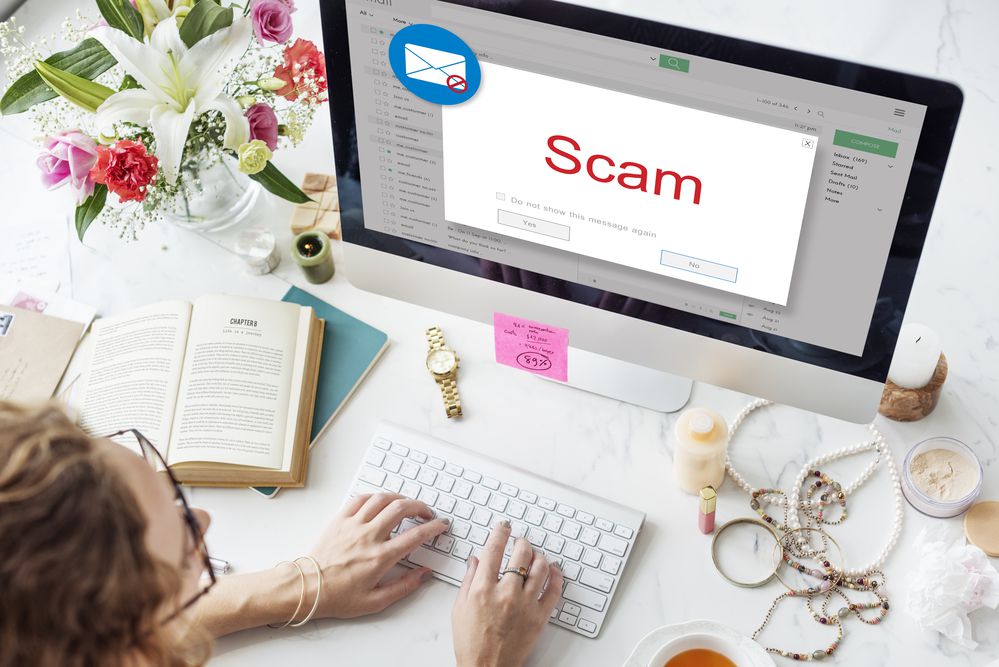
Prepaid credit cards, also known as prepaid debit cards, allow you to load money onto them and make purchases. When prepaid credit card funds are depleted, you can no longer use them (unlike credit cards, there is no credit card limit for prepaid cards). You can usually purchase prepaid credit cards at retail stores or online.
Scammers use prepaid credit cards in many different ways to take your money. For example, a scammer may call and say you won the lottery. However, to get your winnings, you must pay the taxes. They may tell you that you can do so by loading a prepaid credit card with a certain amount of funds and sending the card number to the caller. After this is done, they promise to send you your winnings — but, in this case, the scammer may take the card money and never be seen again.
If someone is requesting a prepaid credit card, that’s a red flag. It’s best not to proceed with this transaction as it may be a prepaid credit card scam.
DepositPhotos.com

This scam takes place in a hotel room, where the scammer will call up stating they are a hotel employee. They will inform you that there is an issue with your credit card, and you must verify your credit card information. Usually, these calls take place early in the morning or late at night so that you will be thrown off guard.
If this happens to you, it’s best to handle the matter in person. You can hang up and then visit the front desk to ensure your credit information isn’t exposed to the wrong person.
DepositPhotos.com

The objective of this scam is to solicit you to give out your personal credit card information to pay off a debt, fine, penalty, or ticket. While arrest scams may seem unrealistic, the scammer relies on scare tactics to try to get the target to hand over their credit card information.
Usually, the scammer claims they are from a federal agency like the IRS, FBI, or other government agency that suggests there’s a connection to law enforcement. Then, they threaten that if this bill, fee, or ticket goes unpaid, you will be arrested, or other legal action will be taken immediately.
It’s doubtful that actual law enforcement or federal agencies would request sensitive information during a phone call, especially an abrupt one. Another sign that this is a scam is that the call may sound like a robot or like it’s pre-recorded. The caller may also use vague references that don’t coincide with the way legitimate law enforcement would communicate.
Even if you do owe outstanding fees, have a ticket, or were a part of some criminal activity recently, authorities or federal agencies wouldn’t request payment information over the phone in this manner. Therefore, don’t share any personal information with the caller. Just like with other scams, the best way to address your concerns is to hang up and call the agency directly to get any information straight from the source.
DepositPhotos.com

When nonprofit organizations ask for donations, it may pull at your heartstrings. But scammers can use this strategy to swipe your credit card information right out from under you.
Scammers who use this strategy usually call you pretending to be a part of a nonprofit or other charitable organization. They will then request donations using everyday anecdotes or narratives designed to influence their targets. It’s also common for scammers to use this tactic when a natural disaster strikes or another current event requires aid.
Although it’s common for nonprofits to solicit donations over the phone, you should still feel uneasy when receiving one of these calls. If you want to give to the organization, jot down information from the caller, such as their phone number and financial information. Then, you can look up the phone number online to determine if it’s already identified as a scam. If it isn’t, you can visit the IRS’s Tax Exempt Organization Search and CharityNavigator.org to research the organization to determine its legitimacy.
Overall, it’s wise to avoid donating to unsolicited callers. Instead, consider visiting an organization’s actual website to determine the best way to donate.
photosbyhope / istockphoto

Whether you’re connecting to a public Wi-Fi hotspot via your phone or on your computer, scammers can try to access your credit card information when you sign on. In fact, they may prompt you to enter your credit card information to access a particular hotspot. Given how credit cards work, this is very risky.
So, when attempting to access the internet in public, look out if you’re asked to enter your credit card information. Instead, if you’re at a restaurant or retail location, ask an employee to share their hotspot information. This way, you’ll know you’re not exposing yourself to credit card fraud.
DepositPhotos.com

Like gas pump skimmers, scammers can also use skimmers at ATMs to obtain credit card information.
The only way to identify a skimmer is by checking the scanning device. For example, if the card reader easily detaches, it’s likely a card skimmer. In addition, you can spot other things to identify a skimmer, such as graphics that don’t align or colors on the machine that don’t match the reader. Another clue is if the keypad seems cheap or too thick.
Before entering your card into a reader, investigate for a skimmer. Familiar places skimmers hide are usually in high-traffic areas or tourist locations. Don’t use your credit card if you’re unsure whether a skimmer is present or have a feeling something may be off, potentially indicating a credit card reader scam.
DepositPhotos.com

Like the name suggests, a phishing scam involves fraudsters phishing for your personal information. Scammers contact their targets through the phone or over email, posing as an honest company. They then provide fraudulent links or instructions to help them access your personal credit card information.
For example, the scammer may impersonate your credit card company and state that your account details must be updated due to a compromised card. They will request your card information or answers to security questions over the phone or email to resolve this issue. Additionally, the scammer may request the answers to your security questions for protection purposes.
Don’t provide any of this information. Even if they suggest this is a sensitive matter and must be addressed immediately, it’s best to hang up and call your credit card company right away.
DepositPhotos.com

To keep your credit card information safe, here are some steps you can take:
- Select a credit card with 0% liability on unauthorized purchases. The Fair Credit Billing Act (FCBA) limits your financial responsibility for credit card fraud to up to $50. In other words, you will only have to pay $50 if you’re a victim of one of these credit card scams and request a credit card chargeback. However, some credit card companies offer 0% liability as a perk, which means you aren’t responsible for any fraud.
- Keep tabs on your credit card activity. Regularly looking at your credit card activity and checking your credit card balance can help you spot any suspicious activity. If you do notice anything, contact your credit card company right away.
- Request transaction alerts. Usually, credit card companies let you sign up for transaction alerts, such as for balance transfers, large purchases, and international purchases. Using alerts is a great way to monitor your card activity.
- Ensure your information is secure. When making purchases online, over the phone, or in person, ensure your information is secure. For example, only use sites with “https” in the URL when shopping online. Also, avoid using public Wi-Fi where your personal information may be in jeopardy.
kitzcorner // istockphoto

The first action item if you’re a victim of a credit card scam is to contact your credit card company to let them know about the fraud. Per the Fair Credit Billing Act, you have 60 days after receiving your billing statement to report any fraudulent activity on your card. After informing your creditor of the incident, make sure to change your password for your account.
You may also want to contact the three major credit bureaus: Equifax, Experian, and TransUnion. Request verification of your identity and ask for a fraud alert to get linked to your report.
Additionally, if you’re a credit card scam victim, you can contact the Federal Trade Commission (FTC) to report the crime. You can report your incident online or over the phone at 1-877-382-4357.
If you’ve discovered a fraudulent website, email or another internet scam, report it to the Internet Crime Complaint Center (IC3). Unfortunately, not all scams originate in the U.S.; if you’re a victim of an international scam, report it through econsumer.gov.
All reports help consumer protection agencies pinpoint trends and prevent other consumers from falling victim to credit card scams.
istockphoto
Who is liable for a credit card scam?
Under the Fair Credit Billing Act (FCBA), you’re only liable for up to $50 of credit card fraud. However, if your credit card has 0% fraud liability protection, you may not be liable for any fraudulent charges.
What counts as credit card fraud?
When an unauthorized person makes a charge with your credit card or steals your credit card information, this is considered credit card fraud.
How do I report credit card fraud?
Go to the Federal Trade Commission’s website to report the incident. Law enforcement agencies will then use these reports to investigate criminal activity to prevent future fraud. Once you submit a report, you can follow up with local law enforcement, if your creditors suggest it’s wise to do so.
DepositPhotos.com

If you’re not careful, it’s easy to become a victim of credit card scams. But, if you monitor your account, set off fraud alerts, and keep your information close to your chest, you’ll have a better chance of avoiding getting duped.
Learn More:
This article originally appeared on SoFi.com and was syndicated by MediaFeed.org.
See Rewards Details at SoFi.com/card/rewards.
External Websites: The information and analysis provided through hyperlinks to third-party websites, while believed to be accurate, cannot be guaranteed by SoFi. Links are provided for informational purposes and should not be viewed as an endorsement.
Financial Tips & Strategies: The tips provided on this website are of a general nature and do not take into account your specific objectives, financial situation, and needs. You should always consider their appropriateness given your own circumstances.
The SoFi Credit Card is issued by The Bank of Missouri (TBOM) (“Issuer”) pursuant to license by Mastercard International Incorporated and can be used everywhere Mastercard is accepted. Mastercard is a registered trademark, and the circles design is a trademark of Mastercard International Incorporated.
PRImageFactory / iStock

istockphoto
Featured Image Credit: ligonography/istockphoto.