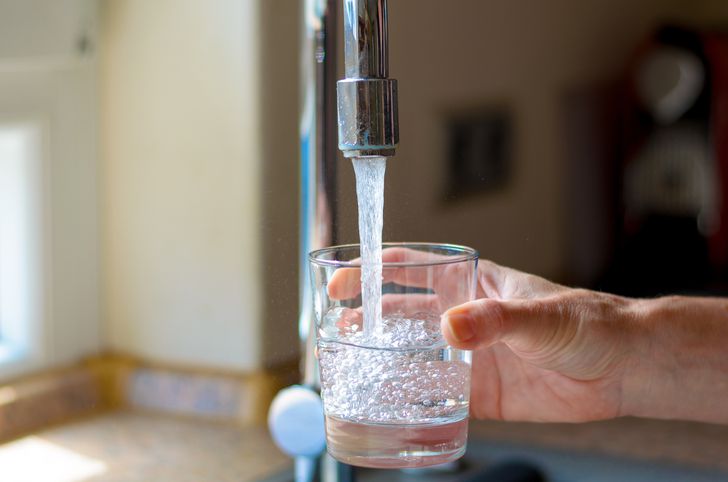
Since the 1940s, a class of chemicals called PFAS has been used in everything from food wrappers to waterproof jackets.
They are useful because they repel grease, water and oil, but they also have a pretty big downside: They’re incredibly bad for your health. Some common forms harm the immune system, the reproductive system and increase the risk of certain cancers. A recent study found that women with higher levels of PFAS in their blood had a 40% lower chance of becoming pregnant.
Because they don’t break down easily, PFAS have accumulated in the environment — earning the nickname “forever chemicals” — and contaminating our soil and water.
But recently, the U.S. Environmental Protection Agency moved to regulate the worst of these chemicals in drinking water to reduce the public’s exposure.
We asked Environmental Defense Fund’s chemicals expert Tom Neltner to explain what the proposed rules would do — and what you can do right now to protect yourself from PFAS in your drinking water.
What are PFAS chemicals?
PFAS stands for per- and polyfluoroalkyl substances — it’s chemical geek for something that’s loaded with fluorine atoms. They have many uses. For example, these chemicals are used to make jackets water resistant, frying pans nonstick and to protect food wrappers from grease. PFAS have also been used in firefighting foams, though that is being phased out. They are entirely man-made, and because they’re used in so many things, they’re all around us.
How do these chemicals end up in our water?
When PFAS are made, or used, some gets released into sewers or into the air, and because they don’t degrade easily, these chemicals eventually make their way into our water.
What are the adverse health effects of PFAS?
They can build up in your body to levels where we can see health harms. The harm that’s driving the latest EPA action to regulate these chemicals in drinking water is to the immune system.
For example, some PFAS chemicals undermine your immune system’s ability to fight off viruses. Not only that, they have been linked to cancer, and they affect the reproductive system.
What would the EPA’s proposed regulation do?
The proposed rule puts a limit on six of the worst forms of PFAS in drinking water that utilities will have to comply with. Utilities supplying water with PFAS levels over the limit will be forced to alert the public and take steps to clean up the supply, or face enforcement.
What’s likely to happen? Do you think the new regulations will be adopted?
The Biden administration is really committed to public health. I think in about a year, this rule will be final. Then the utilities will have three years to meet the limit. That might seem like a long time to us, but it’s not to the utility staff who need to implement the monitoring, and then get controls in place.
Who might resist regulating “forever chemicals” in drinking water?
The drinking water utilities are concerned about finding a way to pay for controls to remove PFAS, such as treating water with granular activated carbon. In 2022, the U.S. Congress passed the Bipartisan Infrastructure Law, which set aside $5 billion to clean up PFAS and other contaminants. But the cost will likely exceed that. So, utilities are asking “how will we pay for it?”
What really bothers me, though, is that the utilities didn’t create this problem. The source of the problem is the companies that made, and continue to make, PFAS as well as the companies using the chemicals. But the utility — and the consumer, through their water bill — is being asked to pay to clean up someone else’s mess. It’s the polluters that need to pay.
Is it possible to get the polluter to pay?
The U.S. government has a tool — it’s called CERCLA, which is better known as the Superfund program. It says that if you release a hazardous substance, you’re potentially responsible for cleaning it up. The EPA is actually moving to designate PFAS a hazardous substance so they can use this tool to hold polluters responsible.
Are there any home filters that capture PFAS chemicals?
Yes. An NSF 53 filter removes the most worrisome types of PFAS. NSF stands for National Sanitation Foundation. If you go to their website, you’ll find a list of filters that can do the work — just make sure it’s certified for PFAS. It won’t eliminate your exposure, but it will reduce it.
This is a particularly important option for the 23 million U.S. households who rely on well water. Wells will not be covered by the EPA’s proposed rule. It only applies to big water systems.
How can consumers discourage the use of PFAS in the first place?
Consumer demand is a powerful influence. There are safer substitutes for PFAS, but the companies using these chemicals need to put in the effort to conduct hazard assessments and consider alternatives. Hearing from customers can give them a reason to do that.
EDF works directly with a variety of businesses to introduce them to alternatives to PFAS, and, importantly, educate them on where PFAS might be lurking in their supply chains.
On the policy side, EDF and our allies also have a citizens’ petition that individuals can support before the Food and Drug Administration asking it to remove its approvals for these chemicals in food packaging. And citizens should also let the EPA know that they support the agency’s effort to regulate PFAS in drinking water. That support will help push the new regulations over the finish line.
Learn More:
This article originally appeared on EDF.org and was syndicated by MediaFeed.org.
More from MediaFeed:
5 groundbreaking 2022 environmental laws from around the world

2022 will go down as the year the United States got serious about climate action. With the passage of the Inflation Reduction Act, the nation’s climate goals are finally within striking distance.
The U.S. was not the only country to pass transformative climate and environmental laws this year, even as soaring inflation and the war in Ukraine slowed progress globally.
Here are five other rays of hope from around the world:
Depositphotos.com

After more than a decade of inaction and backsliding, Australia has finally passed meaningful climate legislation — enshrining emission reduction targets into law for the first time in the country’s history.
The law mandates a 43% reduction in greenhouse gas emissions by 2030 and stipulates that Australia must reach net-zero by 2050. While this action is historic and a huge step in the right direction for the world’s third-largest exporter of fossil fuels, Australia still has a lot of catching up to do.
Australia has long lagged behind other major developed countries in climate action. This new law puts it in line with the climate pledges made by Canada and South Korea, but it still falls far short of the ambitious commitments made by the U.S., EU and UK.
In recent years, Australia has been battered by deadly bushfires and record-breaking floods that have changed the conversation around climate change and helped usher in a new, more pro-climate government.
Deposit Photos

Sierra Leone has passed a sweeping package of bills that transform local communities’ ability to protect their land rights and the environment. The new legislation, for the first time, gives local people who own or use the land the right to veto mining, large-scale agriculture and other industrial projects.
The move is being hailed as the most progressive land rights law in the world and is intended to end decades of land grabbing and pollution by foreign firms who, until now, have only had to negotiate with government officials to make land use and leasing deals.
The laws also ban industrial development in old-growth forests and other ecologically sensitive areas and grant women equal rights to own land.
Despite a wealth of natural resources, Sierra Leone is one of the poorest nations in the world. At least 20% of arable lands in the West African nation are leased to international investors who pay a pittance to local communities and have often ravaged the countryside searching for gold, diamonds and other minerals or razed vast tracts to make way for palm oil and sugar cane plantations.
Muhammad Shah Jaman / iStock

France is banning short haul flights between cities that can be reached by train in less than 2.5 hours.
The move is part of France’s efforts to reduce its greenhouse gas emissions 40% by 2030 and marks the first time a country has banned flights for environmental reasons. Short flights are the worst climate offenders because take-off and landing are the most polluting stages of any flight.
The emissions per mile for each passenger are 70% higher on a short haul flight than on a long haul flight. And taking to the skies instead of the rails for a short trip creates six times the emissions.
For now, the ban will apply to only three routes, but more trips may soon be added to the no-fly list. While planes are becoming more efficient, and alternative fuels are on the rise, aviation remains one of the trickiest sectors to decarbonize.
That means that for now, keeping some planes on the ground may be the best way to keep their climate pollution out of the sky.
DepositPhotos.com

Companies hoping to sell their products in the EU will soon have to prove that they aren’t driving deforestation or degradation — or they will face hefty fines.
The law will apply to imported soy, beef, palm oil, wood, cocoa and coffee, and some products derived from these staples like leather, furniture and chocolate. Deforestation is responsible for about 10% of global greenhouse gas emissions.
The European Commission estimates that the new law will protect at least 278 square miles of forest annually and reduce global carbon emissions by almost 32 million tons per year.
Depositphotos.com

Colombia’s newly elected president, Gustav Petro, has called oil his economy’s “worst addiction” and rose to power on a strong social and environmental platform, pledging to leave fossil fuels behind.
The day after his inauguration, Petro unveiled an expansive new tax reform bill that included many major climate and environmental provisions. Now law, the legislation aims to raise $4 billion over the next four years largely through new levies on fossil fuel producers.
The law will impose duties of up to 10% on coal and up to 15% on crude oil when prices rise above a certain threshold. Oil and mining companies will also no longer be able to deduct the value of royalties from income taxes.
Perhaps most importantly, coal will now be taxed under the national carbon tax first established in 2016. Colombia is the largest producer of coal in Latin America and the 5th largest exporter of coal in the world.
Related:
From doomscroller to changemaker: Five ways to fight climate change and be a better advocate
Was Glass Onion right about hydrogen? EDF’s Ilissa Ocko gets her knives out.
This article originally appeared on Edf.org and was syndicated by MediaFeed.org.
Depositphotos.com

ecovillageithaca.org
Featured Image Credit: mheim3011/istockphoto.