
The 70% Rule
As a general retirement rule, you will need to replace 70% of your current income to retire comfortably during your golden years. So, if you typically earn, say, $60,000 per year, you will need to generate $42,000 per year once retired in order to maintain a comparable standard of living.
However, many Americans are falling short of this goal. Just 25% of retirees hit the 70% benchmark each year, according to new research from Goldman Sachs (GS). The majority live on less than 50% of their former income.
If you are still saving toward retirement, making these three moves now can help you get closer to reaching that 70% mark.
Increase Your Savings
When it comes to saving and investing, the key is to delay gratification now to benefit later.
Reducing your cost of living now will help you live more comfortably down the road. As a general rule of thumb, you should be saving around 15% of your income. If you are on a tight budget and can’t hit 15%, squeezing out even an extra 1% of your salary to put toward retirement will add up. With compound interest, the sooner you make this change, the bigger an effect it will likely have.
Additionally, consider having savings outside of employee-sponsored 401(k)s. These plans have contribution limits, which can hold you back, even if you can afford to increase your savings. So, in addition to a company plan, consider opening a personal IRA or similarly tax-advantaged account.
Finally, be sure to keep your money invested for the long run, instead of constantly buying and selling. Over the past two years, we’ve seen how volatile the stock market can be. But remember, when it comes to retirement, you’re investing in a goal that may be years or even decades down the road. Don’t let the short-term movements of the stock market impact your future.
One Small Change
Another tip to help save toward retirement is to make a small but effective lifestyle change. The idea is that this small change be significant enough to free up a bit of monthly income that you can reroute directly to your nest egg – over time becoming one giant leap for your savings.
For example, you could downgrade to a smaller apartment, pick up a side hustle, or even simply cut out your daily trip to Starbucks (SBUX). Every percentage point will help you get closer to that 70%.
Learn More:
This article originally appeared on SoFi.com and was syndicated by MediaFeed.org.
Please understand that this information provided is general in nature and shouldn’t be construed as a recommendation or solicitation of any products offered by SoFi’s affiliates and subsidiaries. In addition, this information is by no means meant to provide investment or financial advice, nor is it intended to serve as the basis for any investment decision or recommendation to buy or sell any asset. Keep in mind that investing involves risk, and past performance of an asset never guarantees future results or returns. It’s important for investors to consider their specific financial needs, goals, and risk profile before making an investment decision.
The information and analysis provided through hyperlinks to third party websites, while believed to be accurate, cannot be guaranteed by SoFi. These links are provided for informational purposes and should not be viewed as an endorsement. No brands or products mentioned are affiliated with SoFi, nor do they endorse or sponsor this content.
Communication of SoFi Wealth LLC an SEC Registered Investment Advisor
SoFi isn’t recommending and is not affiliated with the brands or companies displayed. Brands displayed neither endorse or sponsor this article. Third party trademarks and service marks referenced are property of their respective owners.
More from MediaFeed:
The most tax-friendly states for retirees

Many people consider relocating in retirement in order to reduce their cost of living and make their savings last longer. When weighing the pros and cons of moving to another state, it’s important to consider the total tax burden there, including state and local taxes on retirement income, property tax, even sales tax. Also, some areas with a lower tax burden have a higher overall cost of living, which can cancel out any savings.
There are many factors to consider when deciding where to put down roots in retirement, from climate to healthcare access. Below we look at the best states to retire in for taxes, and how to tell if moving will be worth it.
Related: Renting out extra rooms guide
Deposit Photos

A number of states exempt Social Security income from state taxes. A smaller number offer a tax break on other retirement income, such as IRAs and 401(k) plans, private pensions, interest, dividends, and capital gains.
These are the 10 states with the lowest taxes for retirees:
- Delaware
- Hawaii
- Wyoming
- District of Columbia
- Nevada
- South Carolina
- Colorado
- Alabama
- Arizona
- Tennessee
But before you complete that change-of-address card, you’ll want to look at the bigger picture.
DepositPhotos.com

When choosing where to retire, it’s wise to first consider issues like safety, access to healthcare, distance to friends and family, or living near other people of retirement age.
Make a list of features that are important to you in a retirement locale, and consider whether any of them could indirectly impact your cost of living – such as being close to friends and family.
Then look at the total cost of living in an area: housing, food, transportation, cultural activities, and other expenses. These retirement expenses generally have a bigger impact on one’s lifestyle than taxes.
Finally, to determine whether a state is tax-friendly for retirees, look at the following.
DepositPhotos.com

Generally Social Security income is subject to federal tax. But some states also tax Social Security above a certain income threshold, while other states offer tax exemptions for individuals in lower tax brackets.
The states that tax Social Security benefits are Colorado, Connecticut, Kansas, Minnesota, Missouri, Montana, Nebraska, New Mexico, North Dakota, Rhode Island, Utah, Vermont, and West Virginia.
Zinkevych / istockphoto

Many states tax income from pensions and 401(k) plans, but 12 states do not. These states are Alaska, Florida, Illinois, Mississippi, Nevada, New Hampshire, Pennsylvania, South Dakota, Tennessee, Texas, Washington and Wyoming.
Most of these states don’t have state income tax at all, with the exception of Illinois, Mississippi, and Pennsylvania. Alabama and Hawaii tax 401(k) plans and IRAs, but not pension plans.
DepositPhotos.com

When choosing the best state for you to retire in, it’s a good idea to look into sales tax and property taxes too. States that don’t charge sales tax are Alaska, Delaware, New Hampshire, Montana, and Oregon. On the other hand, New Hampshire has very high property taxes, reducing the benefit of no sales tax.
Recommended: When to Start Saving for Retirement
insta_photos/iStock

Choosing the best state to retire in sometimes means making compromises. If safety and healthcare access are top priorities, for instance, you may not get your ideal weather. But for many retirees, a high cost of living is a deal-breaker.
Here are the 10 states with the highest annual cost of living for retirees:
- Hawaii: $99,170
- California: $71,809
- New York: $69,847
- Massachusetts: $69,279
- Oregon: $68,712
- Maryland: $67,214
- Alaska: $66,956
- Connecticut: $66,543
- New Jersey: $64,736
- Rhode Island: $62,413
Recommended: Avoid These 12 Retirement Mistakes
twinsterphoto / iStock

As noted above, the best state to retire in will depend on an individual or couple’s budget, lifestyle, and values. But recent trends may help point you in the right direction.
These are the top 10 states that retirees are moving to:
- Florida
- Arizona
- North Carolina
- South Carolina
- Texas
- Tennessee
- Idaho
- Oregon
- Nevada
- Alabama
DisobeyArt/ iStock

If cost of living is your sole concern, the following are the 10 least expensive states:
- West Virginia
- Arkansas
- Mississippi
- Indiana
- Alabama
- Ohio
- Kansas
- Kentucky
- Iowa
- Oklahoma
Halfpoint / istockphoto
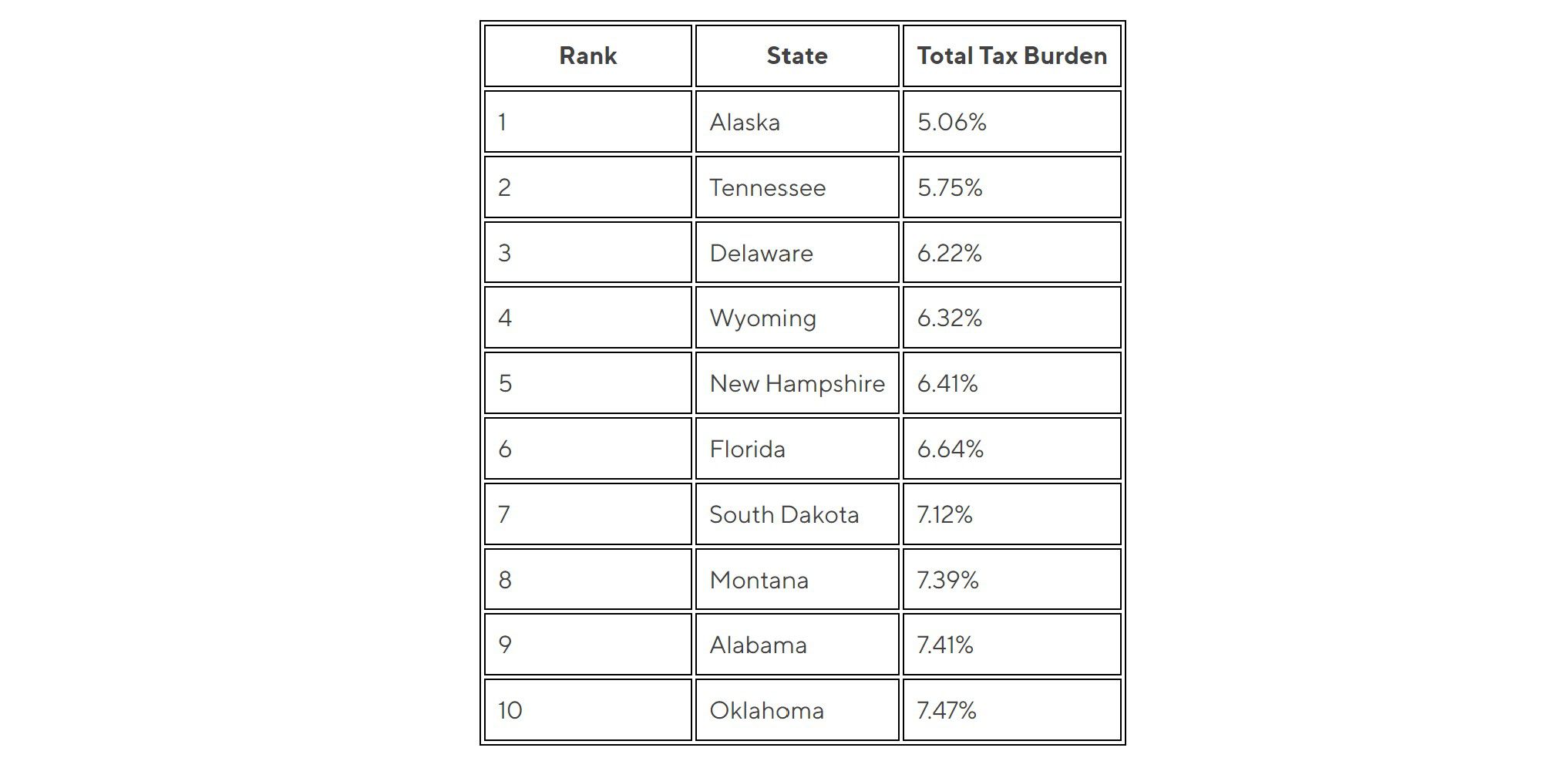
An area’s total tax burden is the sum of all property taxes, sales taxes, excise taxes (which affect the price of goods), and individual income taxes. Below are the states with the lowest total tax burden for retirees.
SoFi
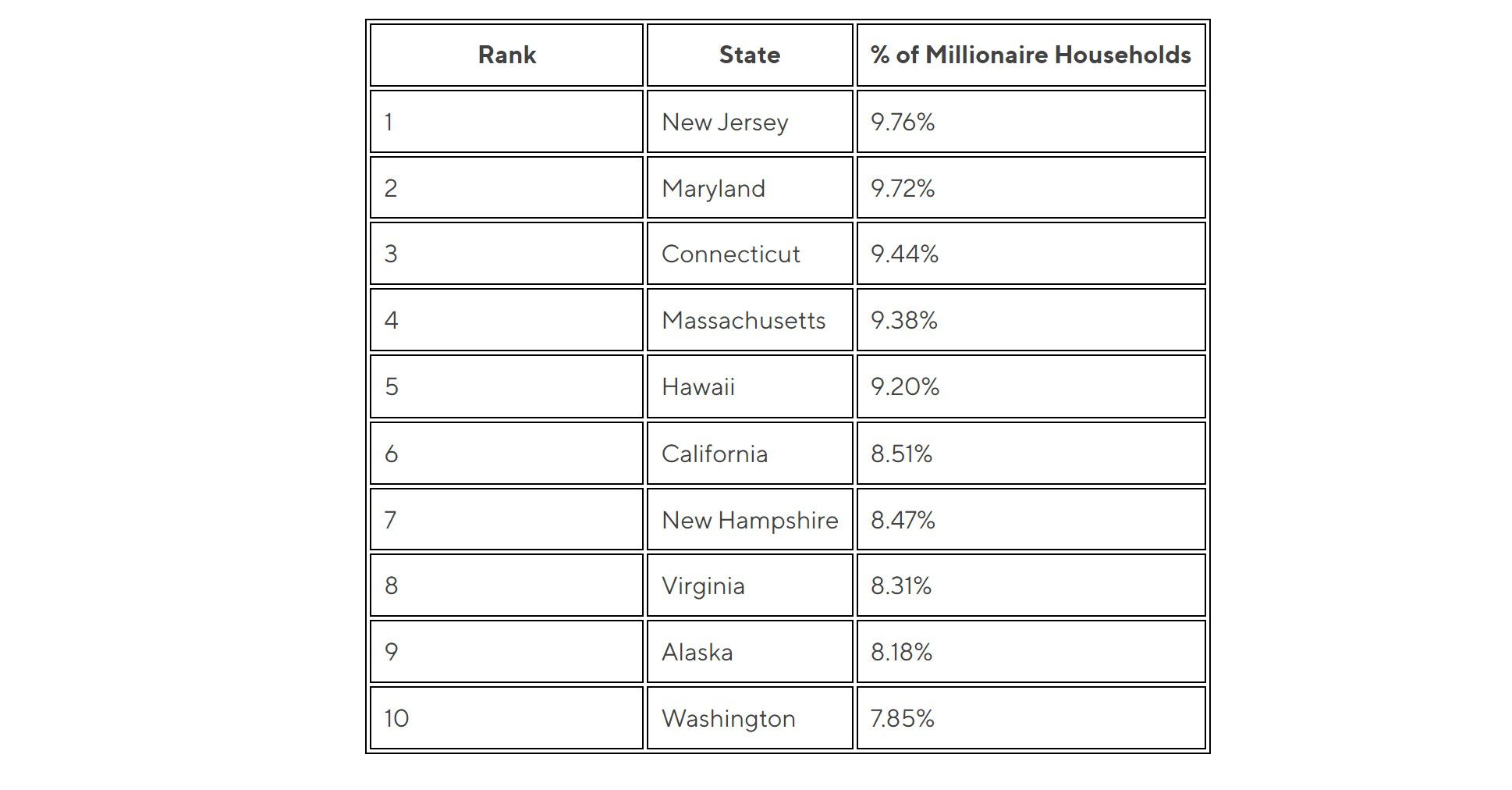
One way to measure the overall desirability of an area is the number of millionaires who live there. After all, millionaires can afford to live in states that have high-quality healthcare, nice weather, and diverse cultural offerings.
These are not the cheapest states in terms of cost of living or taxes, but their popularity may help non-millionaires reevaluate their must-haves vs. nice-to-haves.
SoFi

For workers who already live in a state with moderate taxes, near family, and have a lifestyle they enjoy and can afford, there may not be any compelling reason to move. But for those looking to make a change or lower their retirement expenses, it may make financial sense to relocate.
Just remember that housing, food, transportation, and other expenses usually have a bigger impact on one’s retirement lifestyle than taxes.
shapecharge

- Potentially lower cost of living
- Discovering a community of like-minded retirees
- Possibly ticking off other boxes on your list
Ridofranz/istockphoto

- Other living costs may cancel out the tax benefits
- Moving costs are high, and the stress can be tough
- Need to find another home in a seller’s market
monkeybusinessimages / istockphoto

What are the 3 states that don’t tax retirement income?
Nine states don’t tax retirement plan income because they have no state income taxes at all: Alaska, Florida, Nevada, New Hampshire, South Dakota, Tennessee, Texas, Washington and Wyoming. Illinois, Mississippi and Pennsylvania don’t tax distributions from 401(k) plans, IRAs, or pensions. Alabama and Hawaii don’t tax pensions, but do tax distributions from 401(k) plans and IRAs.
Which state is the best state to live in for tax purposes?
Alaska has the lowest overall tax rates.
Which states do not tax your 401k when you retire?
Alaska, Alabama, Hawaii, Florida, Illinois, Mississippi, Nevada, New Hampshire, Pennsylvania, South Dakota, Tennessee, Texas, Washington, and Wyoming do not tax 401(k) plans when you retire.
adamkaz
The best state to retire in for tax purposes depends on an individual’s budget, lifestyle, and values. Some states with lower taxes for retirees can have higher housing and transportation costs, canceling out any tax benefit. A financial advisor can help you decide if saving on taxes is worth the expense and trouble of relocating.
Learn More:
This article originally appeared on SoFi.com and was syndicated by MediaFeed.org.
SoFi’s Relay tool offers users the ability to connect both in-house accounts and external accounts using Plaid, Inc’s service. When you use the service to connect an account, you authorize SoFi to obtain account information from any external accounts as set forth in SoFi’s Terms of Use. SoFi assumes no responsibility for the timeliness, accuracy, deletion, non-delivery or failure to store any user data, loss of user data, communications, or personalization settings. You shall confirm the accuracy of Plaid data through sources independent of SoFi. The credit score provided to you is a Vantage Score® based on TransUnion (the “Processing Agent”) data.
Tax Information: This article provides general background information only and is not intended to serve as legal or tax advice or as a substitute for legal counsel. You should consult your own attorney and/or tax advisor if you have a question requiring legal or tax advice.
shapecharge

DepositPhotos.com
Featured Image Credit: dima_sidelnikov / istockphoto.