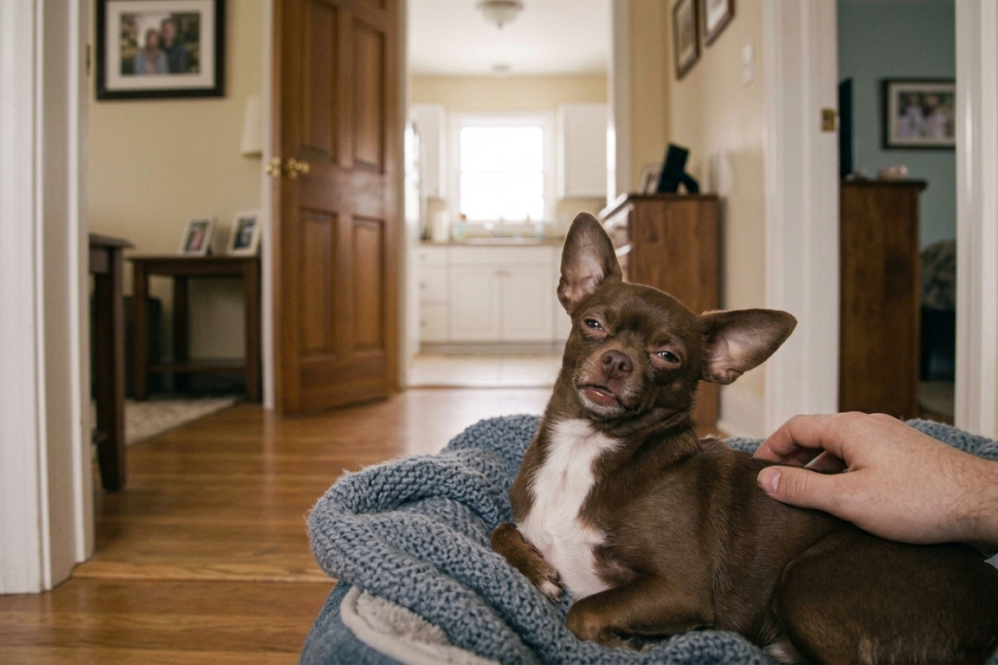
8 subtle warning signs your dog is trying to tell you they’re in pain
A dog that’s limping is easy to catch. A dog that’s just behaving slightly off is not, and that gap is where most owners get caught unguarded.
The same overlooked behaviors keep tripping up owners, who instead chalk them up to personality quirks.
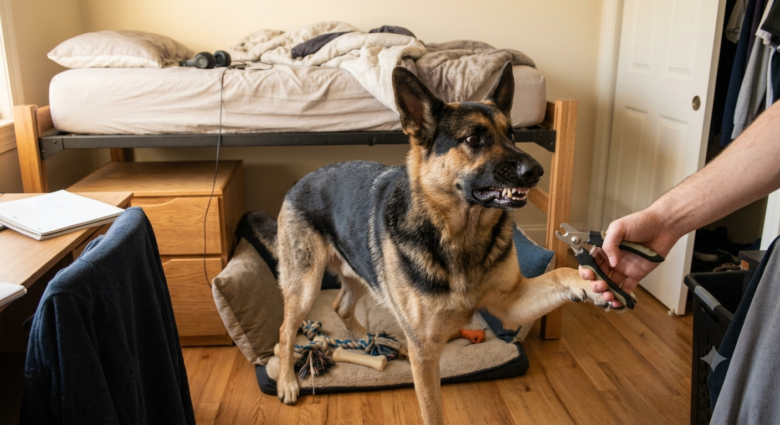
Aggression or reactivity
A normally affectionate dog, suddenly snapping. Growling. Flinching when petted in one specific spot. Veterinary behaviorists consider this one of the leading triggers of dog bites. Not a personality shift. A pain response, plain and simple.
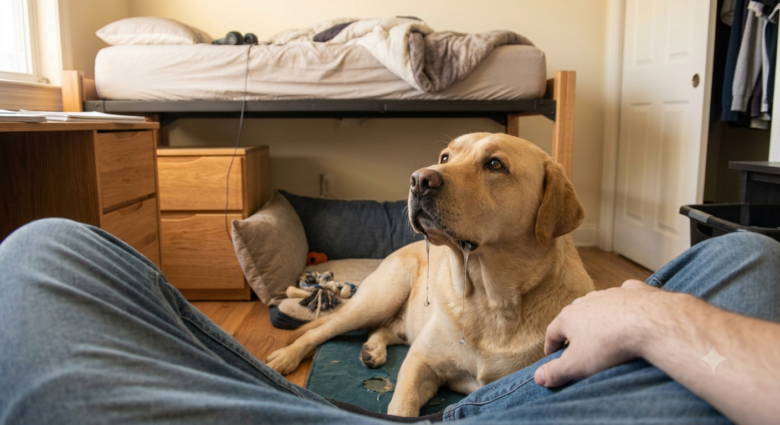
Drooling with no food in sight
Drooling makes sense around dinner. Drooling for no reason at all, though, that’s different. Can point to abdominal pain or a dental problem rather than a snack somewhere nearby.
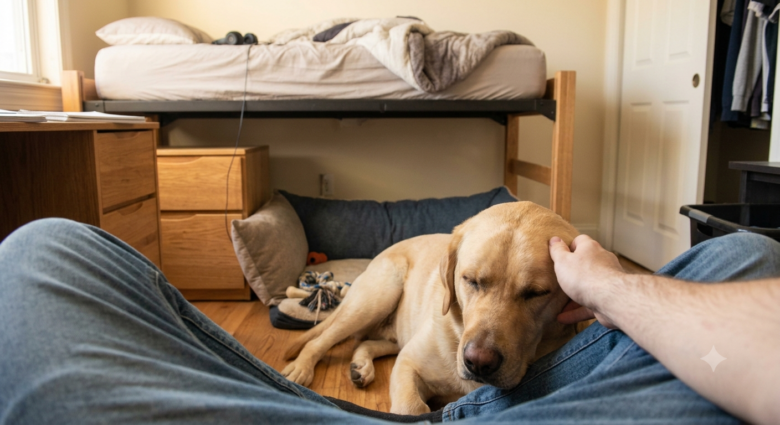
Changes in facial expression
Flattened ears. A tighter-looking face. A glazed expression that just doesn’t match the moment. Cornell’s veterinary college specifically flags facial expression shifts as a real pain indicator, subtle as it is, one most owners never think to check for.
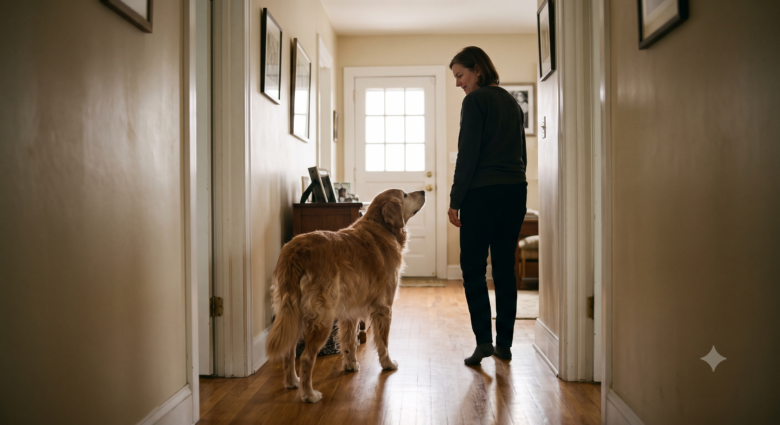
Avoiding stairs or hesitating before jumping
A dog that used to leap onto the couch without a second thought. Now pausing. Circling. Refusing some days altogether. This hesitation before jumping or climbing is often one of the earliest visible signs of joint pain, appearing well before an actual limp.
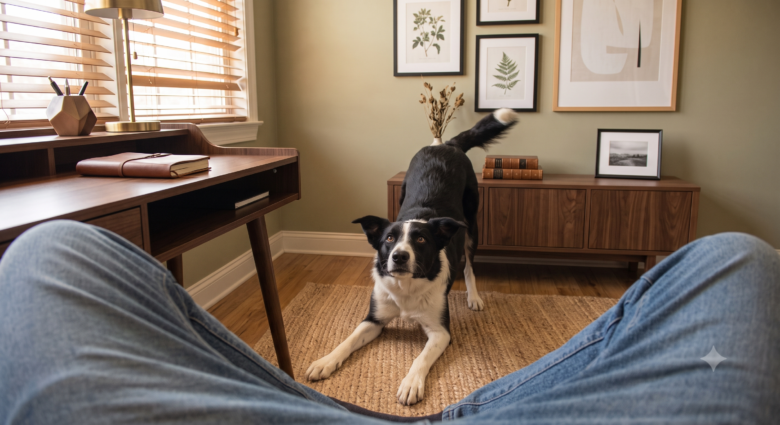
The “prayer position”
Front legs stretched flat on the ground. Rear end raised in the air. Looks almost playful. Frequently signals abdominal discomfort instead. Vets note this posture, along with a rigid, hunched stance, as worth close monitoring.

Increased clinginess or shadowing
A dog who suddenly won’t leave a person’s side. Following room to room in a way that feels new, almost desperate. Sometimes it’s comfort-seeking, much like when someone reaches for someone nearby. Vets list increased neediness alongside social withdrawal as two sides of the exact same pain response, depending on the individual dog.
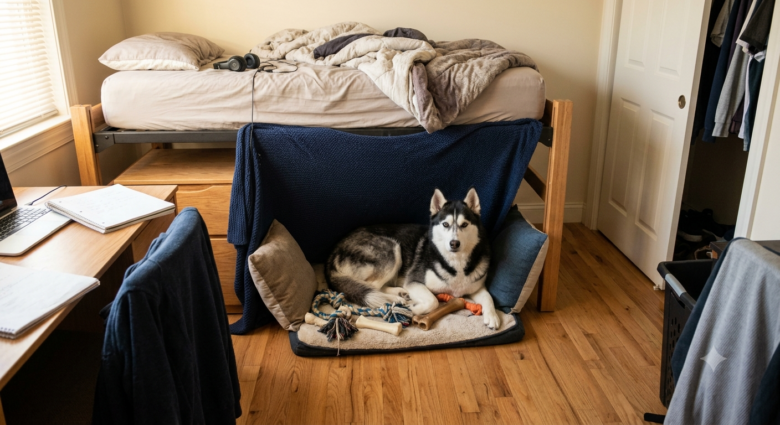
Restless, disrupted sleep
Shifting positions constantly. Waking more often than usual. Unable to settle into one comfortable spot for long. A dog dealing with chronic discomfort often struggles to get comfortable specifically at night, even while seeming mostly normal during the day.
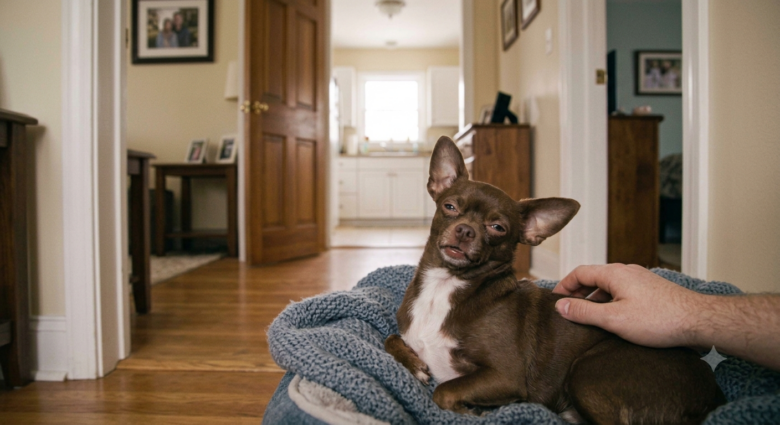
Unusual vocalizations
Whimpering. Groaning. Crying out with no obvious cause nearby. Cornell researchers count vocalization among the more direct pain signals a dog can offer. Ironically, it’s often one of the last signs to show up. Not the first.

The bottom line
None of these signs come with an obvious trigger attached. That’s exactly the danger in all of it. A dog built by instinct to hide discomfort is counting on someone paying close enough attention to notice the quiet version anyway.
Ask us! What questions do you have about content, strategy, pop culture, lifestyle, wellness, history or more? We may use your question in an upcoming article!
Related:
Like MediaFeed’s content? Be sure to follow us.
This article was syndicated by MediaFeed.co.