Vintage home gadgets that were dangerous to use
Nothing on this list felt dangerous at the time. That’s the unsettling part. A product worked exactly as advertised for years before the actual risk got connected to it, and it’s genuinely a little lucky how many people used these things without incident.
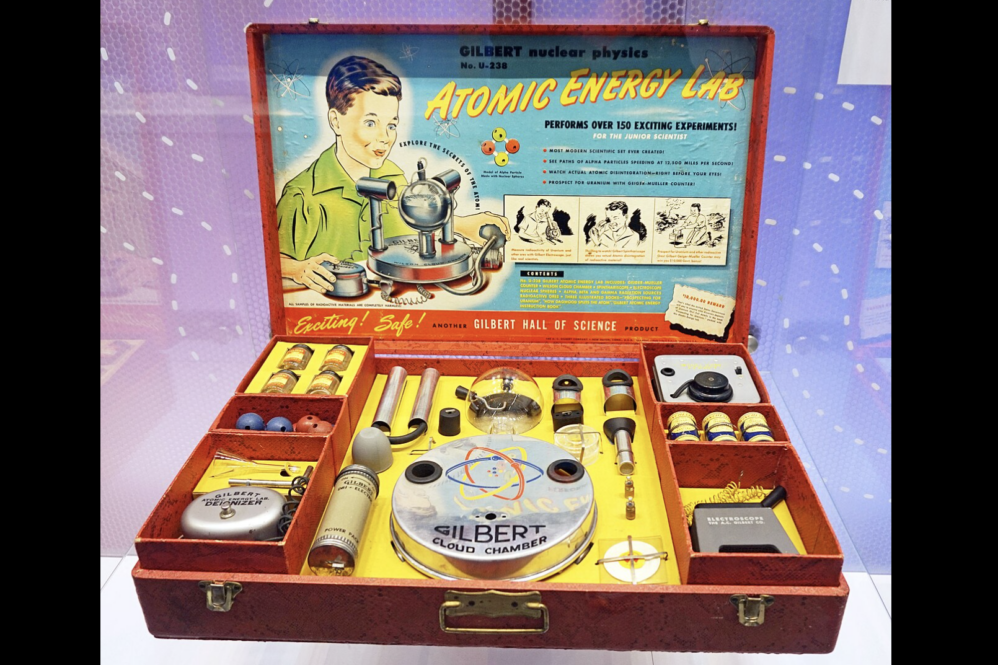
Seven examples, starting with the one that shipped actual uranium to children.
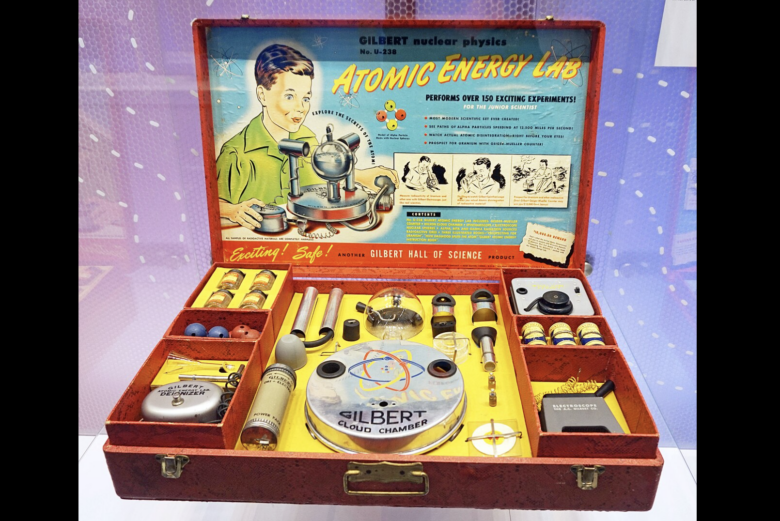
The Gilbert U-238 Atomic Energy Lab
Four jars of real uranium ore. Along with a working Geiger counter and a 60-page manual outlining 150 experiments, all sold for $49.50 in 1950. Radar Magazine later ranked the kit among the ten most dangerous toys ever made, second only to lawn darts, though a 2020 engineering review put the actual radiation risk closer to a day in the sun than anything catastrophic.
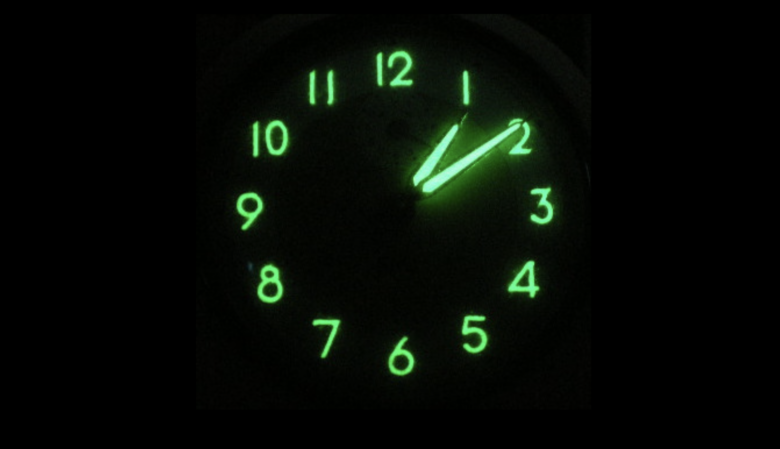
Radium dial clocks and watches
Glowed because they were radioactive. Not a metaphor. Radium paint made dial numbers visible at night for decades, applied by factory workers instructed to point their brushes with their own lips. Manufacturers kept using it on clocks and watches into the 1970s, and any surviving piece from before then is still emitting low-level radiation right now, sitting on someone’s shelf.
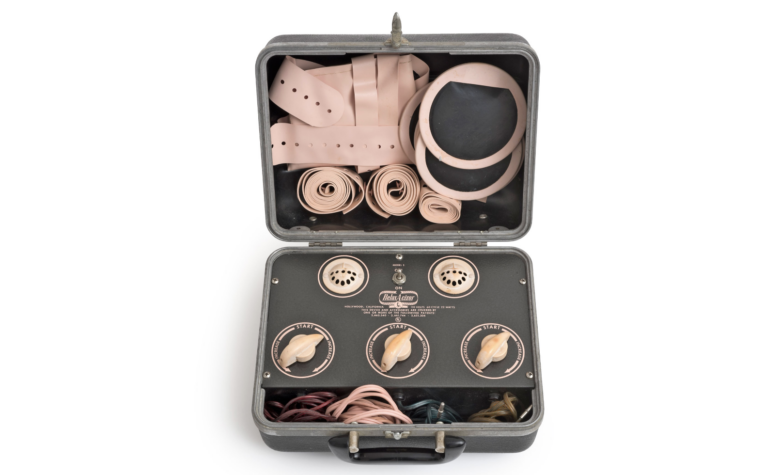
© Werkbundarchiv – Museum der Dinge
The Relax-A-Cizor
Promised weight loss through electric shocks to the stomach. Pads strapped to the abdomen, thighs, and even the face delivered rhythmic shocks, and it sold over 400,000 units through the fifties and sixties. A federal judge banned it outright in 1970 after testimony describing ruptured blood vessels, miscarriages, and cardiac fibrillation. Draw your own conclusion about how long it took to notice.
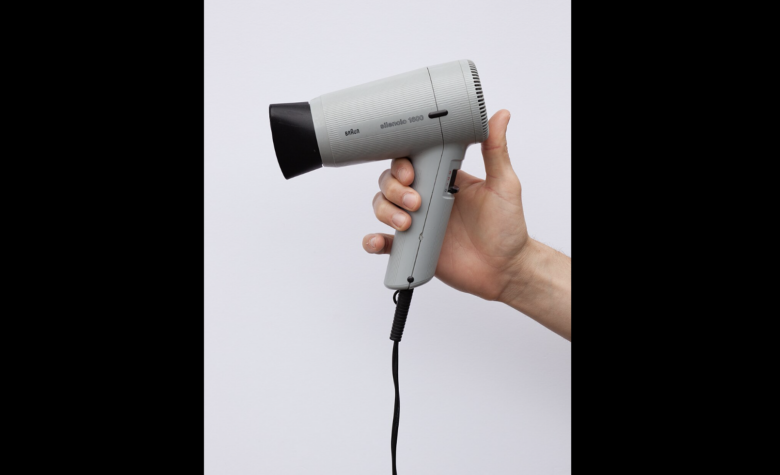
Asbestos-lined hair dryers
Millions of them contained asbestos before anyone recalled a single unit. Manufactured since 1969. The recall didn’t come until 1979, a full decade later, and even then only 3 million of the 18 million affected units were ever tracked down or returned.
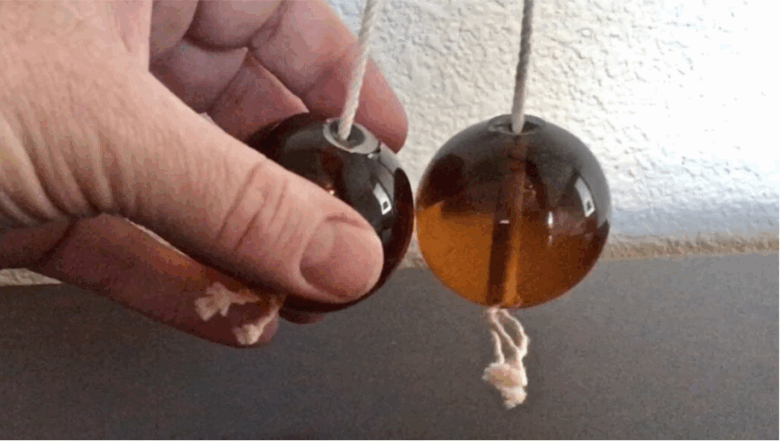
Clacker balls
Two acrylic balls on a string, pitched as a coordination toy, turned into flying shrapnel on a regular basis. The balls shattered mid-swing often enough that a court case classified them as an official mechanical hazard, and FDA safety standards effectively pulled them from shelves by 1971.

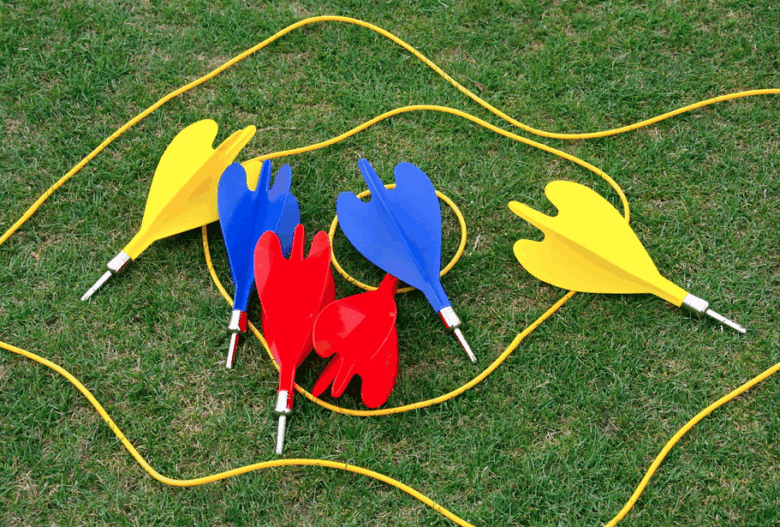
Lawn darts
A backyard game engineered to stick into skin about as easily as it stuck into ground. An estimated 6,100 people ended up in hospitals over the eight years before the 1988 ban, following the death of a seven-year-old girl in California. The metal tips did exactly what they were designed to do. They just didn’t check where they landed first.

Unshielded electric hair dryers near water
Dropping one in the sink used to be an actual annual body count. Eighteen electrocution deaths a year, on average, before immersion-protection plugs became a voluntary industry standard in 1991. That number fell to two within twelve months of the standard taking hold.
The bottom line
Every one of these sat in an ordinary home, sold as completely normal, right up until a lawsuit, a recall, or a body count forced someone to look closer. Most people who used them came out fine. That’s not the same thing as safe.
Ask us! What questions do you have about content, strategy, pop culture, lifestyle, wellness, history or more? We may use your question in an upcoming article!
Related:
- Gadgets Boomers & Gen X grew up with that are nearly obsolete
- 9 best phones you can’t buy in the US (2026)
Like MediaFeed’s content? Be sure to follow us.
This article was syndicated by MediaFeed.co.