Editor’s note: Charles Sennott is off this week and so he asked our colleague Wilson Liévano to take a look at what has happened to press freedom in Venezuela more than six months after the United States deposed president Nicolás Maduro and a month after a devastating earthquake.
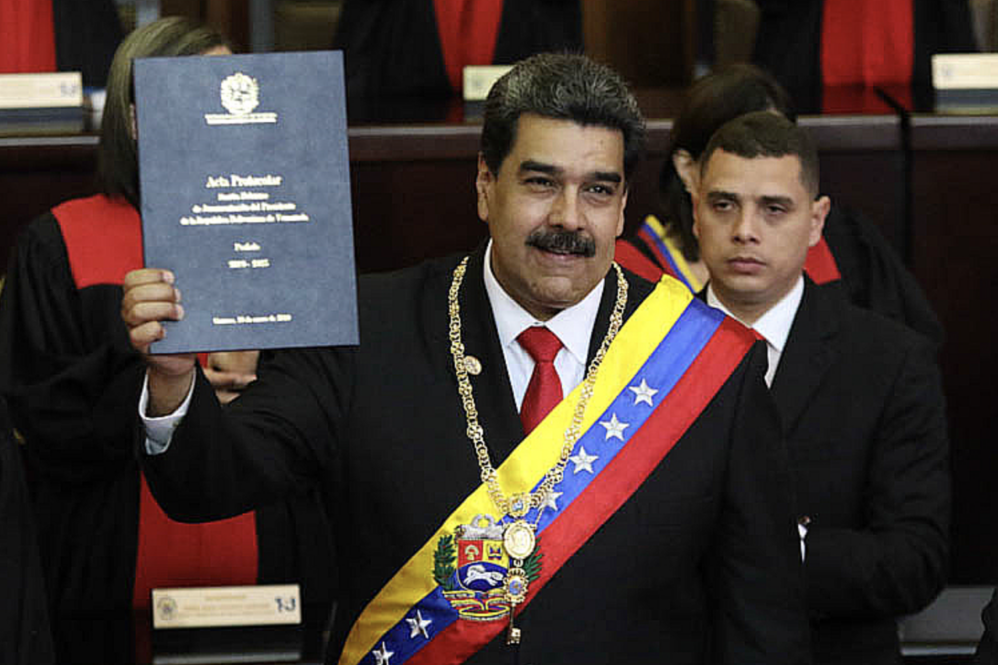
As the smoke cleared around the Miraflores Palace in Caracas and the first images of former Venezuelan president Nicolás Maduro in chains and blindfolded inside a U.S. bound plane topped the home page of every news site, many hoped this moment would become a catalyst for the restoration of freedoms lost over the years of repression by the Chávez and Maduro regimes. It didn’t take long to see it was just a mirage.
In the days following the U.S. military operation that captured Maduro and his wife Cilia Flores in the morning of January 3 and installed a transitional government led by Delcy Rodríguez, more than 16 media workers, both local and foreign, were detained by government forces, according to the National Union of Press Workers of Venezuela (SNTP); all of them were released.
Rodríguez has said that Venezuela is living a “new political moment” and that changes are coming, but her government has followed a pattern in matters of freedom of the press that suggests that despite the new management, it’s still business as usual: First, the government announced it would loosen some of the punitive restrictions on what Venezuelans can say or report on, but as soon as journalists tested the limits of the new policies they discovered that they can still end up censored, or worse, in jail.
Join the GroundTruth community.
Although press freedom advocates celebrate that some TV reporters are being permitted back on the air and foreign reporters are being allowed back in the country for the first time in many years, several incidents show that the lines remain blurry. In early June, the journalist Pablo Mujica from La Voz de Valera was detained and interrogated for an Instagram post in which he questioned a shortage of gasoline in his region. He was told that the governor of the state would order his release if he published a story that stated that “The state would guarantee the supply.”
A few days later, intelligence officers detained three photojournalists — one independent, one from the Spanish news agency EFE and one from Reuters — who were covering the transfer of political prisoners. The government agents tried to take their cameras, but received a counter-order, and the journalists were let go.
But perhaps the clearest example happened on live TV. In late January, Venevisión, the channel with the largest audience in the country, broadcasted a brief soundbite of María Corina Machado after a meeting with U.S. Secretary of State Marco Rubio. This was significant because any mention or image of Machado, a leading opposition voice and Nobel Peace Prize winner, had been banned from private and public media for a decade. But a few hours later, Diosdado Cabello, currently the Minister of the Interior, and one of the most powerful figures in the government, dedicated a segment on his weekly show “Con el Mazo Dando” (loosely translated as “Hammering”) to the soundbite.
Cabello attacked Machado, calling her “desperate” and claiming that she is looking to “manufacture an event that causes an international uproar” to draw attention to herself. “María ‘la Chiflada’ (the nutjob) Machado is running out of options,” said Cabello and pointed at Venevisión for giving her a platform and directed a thinly veiled threat: “Listen up, Venevisión. Without media fanfare, her profile fades away. Without headlines, she simply disappears,” he said.
The free-speech non-profit Espacio Público documented 65 cases and 131 violations of the right to free speech in Venezuela in the first six months of the year, with 33 detentions, a number that is on track to equal or even surpass the previous year toll of 123 cases and 238 violations. The backlash against online organizations has been particularly aggressive. In May, the Instagram account of the investigative site Armando.info was suspended after a wave of complaints of copyright infringement arrived from Venezuela. The site, which operates from exile, had just published an investigation that exposed corruption on the sale of the Bangente financial group. Weeks later, the same strategy was employed against the independent site El Pitazo, and the content creator Miguel Heredia, known as “Kilómetro.” In the case of El Pitazo, Instagram restored the account and acknowledged the organization didn’t violate any laws, but in the other cases the company has not responded to their requests.
Digital censorship extends beyond social media. Even as the government touted that it was restoring access to the social media platform X, more than 200 websites, including 65 news sites, remain inaccessible inside the country, according to SNTP.
Even in areas where there has been some progress, there are setbacks: In February, the National Assembly approved an amnesty law for political prisoners, which allowed several journalists to be released from prison, but it excluded others and left the door open for interpretation by judges. As Human Rights Watch describes in a report: “The law contains limitations that seriously undermine its stated purpose. Although the law claims to cover acts committed since 1999, it limits eligibility to those prosecuted “in the context” of specific events occurring in certain years. It also includes vaguely defined provisions that allow judges to deny amnesty to people who have been prosecuted for acts protected under international human rights law.”
Rory Branker, content director of the independent news site La Patilla, spent more than a year in prison under trumped-up charges of terrorism, treason, hate speech and conspiracy to commit crimes. He was one of the 28 journalists released after Maduro’s capture, but when he approached the courts to formalize the amnesty, the judge in charge denied his petition and his case is now in limbo. “I think the Venezuelan government is not done screwing me,” he told the Committee to Protect Journalists. According to SNTP, eight of the 28 journalists released are still facing charges.
Even if the amnesty law is applied properly, Venezuela still has a myriad of laws created over the years to silence dissent and punish those who criticize the government or who seek to expose its corruption: “Censorship in Venezuela is the result of a process built up in layers over more than twenty years. It began with the 2004 passage of the Law on Social Responsibility in Radio and Television (known as Ley Resorte), which granted the National Telecommunications Commission (Conatel) broad powers to fine, suspend, or shut down media outlets. The forced closure of Radio Caracas Televisión (RCTV) in 2007 was the pivotal moment that established self-censorship as a condition for the survival of private broadcasters. Repressive laws piled up: the Law Against Hatred (2017), the Simón Bolívar Law, the Anti-Blockade Law, and the NGO Law created a legal framework that criminalized dissent,” explained the Espacio Público non-profit in a recent post that examined the blurring of the lines between censorship and self-censorship.
In the middle of this climate of uncertainty, Venezuela faced one of the biggest tragedies in its history, when two consecutive earthquakes hit the north of the country on June 24. The current death toll stands at 6,125 but there is no official data about the number of people missing, which some organizations estimate to be around 30,000 to 50,000 people, and civil and aid organizations have criticized the lack of transparency by the government in their response. Journalists have reported that the military blocked their access to La Guaira, the state most affected by the earthquake, in the hours and days after the tragedy, forcing an already depleted press corps to operate surreptitiously to cover the situation on the ground and leaving them exposed to new repressive measures.
The Trump administration has signaled that Venezuela has to go through stages of “political stability, economic recovery and national reconciliation,” as Secretary Rubio said in a recent interview, before thinking of a return to democracy. But it is unlikely that any of those conditions will be met if basic rights, like press freedom, are not fully reestablished. Since it is also unlikely that the U.S. will demand any progress on these issues, given the administration’s own dismal record on matters of press freedom, Venezuelan journalists will have to continue operating under the fear of censorship and repression, with an added layer of uncertainty on top of it.
Read More:
Ask us! What questions do you have about content, strategy, pop culture, lifestyle, wellness, history or more? We may use your question in an upcoming article!
Like MediaFeed’s content? Be sure to follow us.
This article originally appeared on The Ground Truth and was syndicated by MediaFeed.co.