While no one wants pests in their garden, one insect it’s impossible not to love is the butterfly. Not only are they beautiful, but they are actually quite beneficial to your outdoor space.
According to Butterfly Conservation, a U.K. nonprofit, butterflies provide both pollination and pest control and are indicators of a healthy environment and healthy ecosystem. To attract them to your garden, however, you’ll need the right kind of flowers, as they have specific needs. The U.S. Forest System says butterflies prefer brightly colored flowers with a landing platform that are open during the day. Butterflies have good vision but a weak sense of smell and, unlike bees, can see the color red.
If you want butterflies in your garden, but would rather avoid the time-consuming task of figuring out what to plant, you can instead purchase flower-seeded mats that are already full of seeds for flowers that attract these beautiful creatures. Amazon currently has a two-pack of seeded mats that are priced at $16.13 for the pair.
The mats work by simply unrolling them and planting the entire mat in your yard or garden and continuing to water as the flowers grow. They can be cut to any shape to use anywhere you need them, so, while they come as a set of two, you can actually get more out of them if you want to cover even smaller areas. The mats grow a colorful blend of annuals and perennials.
The mats come with a 60-day return policy and 100% satisfaction guarantee, so if they do not lead to blooming flowers, you can get your money back, according to the seller.

The mats have more than 300 ratings from Amazon users so far, with 60% of them being at least a 4-star grade and nearly half of them being a perfect 5 stars. Pleased reviewers have said the seeds begin to sprout in as little as four days, and the mats ship quickly and are easy to use.
One reviewer recommends putting chicken wire on top of the mat so birds won’t pick at your seed bed. That particular buyer was also thrilled with the speed at which the flowers grew.
“Following the instructions, within a couple days the seeds started to sprout despite the fact a robin got in my yard and tried to scatter and tear up the paper with the seeds in it,” that Amazon user wrote. “Next time, I will cover it until it grows but for now I am anxious to see what kind of flowers are going to bloom.”
There is a notable chunk of negative reviews, however, including some customers who say the mats simply didn’t work. Keep in mind that it depends on your soil, how frequently (or infrequently) you water them, where you live and the climate there, so there are a variety of factors that may affect flower growth.
If attracting butterflies isn’t on your wishlist, you can buy mats that grow other flowers instead, including one from the same brand that will fill your yard with sunflowers. Priced the same as the butterfly mats, the sunflower mats grow blossoms in red, copper, gold, yellow and rust hues.
Other similar seed mats available on Amazon include this 7-foot pre-seeded flower mat that grows English lavender. Priced at $20, it has more than 5,000 seeds, with germination occurring in 10-20 days. Satisfaction is also guaranteed by the seller on that one.
This article originally appeared on SimpleMost.com and was syndicated by MediaFeed.org.
More from MediaFeed:
Eco-friendly home repairs that will also save you money

Converting a house into an environmentally friendly structure does not necessarily require installing an elaborate solar array on the roof or adding space-age construction materials — though expensive projects have a bigger impact on the environment and can bring significant savings on energy costs over time.
In many cases, small improvements and some changes in behavior can help a property owner go green, and save money, around the home.
Landlords in the single-family rental market are wise to take steps to attract the younger demographic that is their target market. Surveys show that “younger generations are more likely to feel ashamed (‘very often’ or ‘often’) about living lifestyles that are unhealthy and are not environmentally friendly,” compared to their older peers.
So a rental property that has a compost bin in the backyard, or a clothesline hanging alongside the house, offers visual clues early on to prospective tenants that the owner is thinking about the carbon footprint and is taking steps to make it smaller.
Whether you’re a homeowner, a tenant or a landlord, the following tips can help you save money and make the house much more environmentally friendly.
DepositPhotos.com

Save water by fixing all leaky faucets — a leaking faucet wastes about three liters of water a day.
SeventyFour/istockphoto

LED bulbs draw less electricity and last longer than comparable bulbs, up to 20 years in some cases.
DepositPhotos.com

According to the U.S. Environmental Protection Agency, up to 30 percent of trash that goes to landfills is kitchen and yard waste.
DepositPhotos.com

If the city or town where you live does not have a program set up, there are usually other options to drop off recyclables.
DepositPhotos.com

These thermostats can be programmed so that they only turn on at certain times of the day — for example, beginning to heat up just before you get home, and shutting off an hour or so before you leave the house.
Nest

A clothesline uses a lot less energy to dry clothes than an electric dryer.
BrianAJackson/istockphoto

Once you’re finished, seal any leaks around doors, windows or the foundation around the property.
Jun / istockphoto

When the sun is out in winter, pull back the shades to help heat the house.
Aleksandr Golubev / istockphoto

Properties that have plants that fit that local climate save on water and landscaping costs.
istockphoto

When you set up an online payment system for tenants you’ll save on paper costs and postage .
DepositPhotos.com

Clean the coils on the refrigerator regularly so that it runs more efficiently and uses less energy.
leezsnow/istockphoto

This will repel stains and make it easier to keep clean. They are also very durable.
Image Source/istockphoto

One way to do this is to leave a supply of them at the property on moving-in day. Of course, you can do the same if you’re a tenant or own your own home.
DepositPhotos.com

Substantive changes to a property to turn it into a true eco-home can be expensive and cause disruption. This is especially true when retrofitting an older home. For new construction, incorporating an environmentally conscious approach can be part of the planning process. For instance, it’s easier and less expensive to install a maximum amount of insulation as a house goes up as opposed to retrofitting insulation into an older structure.
These choices depend on what a homeowner can afford as well as calculations about how long it will take to recoup the investment on major projects. With that in mind, consider these questions:
- Is it time to go solar? Installation of solar panels and systems can cost from $15,000-$25,000, depending on the size of a home. When considering solar, take into account the size of a home’s electric bill, its location and the tax break associated with a system. States like California, Arizona, Texas and Nevada that average more hours of sunlight a day are usually better candidates for a solar system. There is an online calculator that can estimate the efficiency of panels in your area. In addition, there are federal tax breaks for solar systems. A tax credit, or a dollar-for-dollar deduction, of 26 percent is in place for solar photovoltaic (pv) systems installed this year and in 2022. In 2023, the tax credit drops to 22 percent.
- Is a geothermal system economically feasible? A geothermal system saves significant energy costs by using long loops of underground pipes filled with liquid that connect to a heat pump, which acts as a furnace and air conditioner. It is cleaner and vastly more efficient than conventional systems because it does not burn fuel to generate warmth, it just transfers heat from the ground to a house. However, the upfront costs for drilling and installation are very high, from $30,000 to $50,000 for the average home. Geothermal systems also qualify for the 26 percent tax credit in 2021 and 2022.
- Is reclaimed as good as new? Reclaimed materials for renovating walls, floors or countertops are greener and also growing in popularity. Cabinets are among the priciest items for a kitchen redo, so try searching for salvage shops that might have them in excellent condition. Before taking a sledgehammer to the walls or cabinets, figure out what can be reused in the reconstruction process. That way less will be sent to the dump and less will be spent on new materials, and less energy will be expended to make those new materials.
anatoliy_gleb/istockphoto
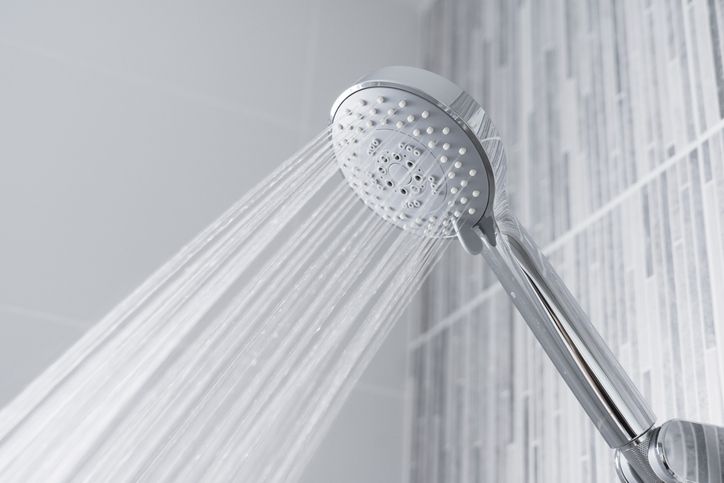
In some cases, especially when a rental is turning over or an owner is preparing a new property for rent, there are some renovations that can be done for a reasonable cost that will push energy savings higher, and raise an owner’s green credentials among prospective tenants.
Spending anywhere from a few hundred to a couple thousand dollars on a project can have a significant impact and pay for itself over time. For instance, shower heads installed before 1992 rain down from 5 to 8 gallons a minute, but the industry standard is now 2.5 gallons per minute. (California has the strictest standard in place with a limit of 1.8 gallons a minute.)
Today’s low-flow shower heads, which dispense 2.0 gallons or less per minute, can cost about $30 upward to $300 for the fanciest and most energy efficient, and decrease water consumption by up to 40 percent a year. (There are various online guides to the best low flow shower heads.)
If a home is located in a state or city with expensive water rates, and again California is among the leaders in this category, the cost of buying new bathroom fixtures can be quickly recouped. Also, a home with energy and water saving upgrades can be marketed as environmentally friendly, which appeals to young renters.
Here are a number of moderately priced investments that will make a home more eco-friendly:
- Install low-flow shower heads and low-flush, energy efficient toilets. The U.S. Environmental Protection Agency recommends looking for the WaterSense label on shower heads, faucets, faucet accessories, and toilets to help you identify models that save water and perform well.
- If a home needs new appliances, look for brands that have the Energy Star label. (A new refrigerator should have a built-in water filter so that tenants can avoid bottled water.)
- Install a tankless hot water heater. Also known as on-demand or instant hot water heaters, these appliances only expend energy when the hot water is turned on. (Hot water tanks rely on a continuous energy flow.) They cost more to install — $3,000 vs. $900 for a tank — but are a greener option because they last twice as long as traditional hot water heaters, use less energy and need less space.
- Insulate, insulate, insulate. The EPA estimates that homeowners can save an average of 15% on heating and cooling costs (or an average of 11% on total energy costs) by air sealing their homes and adding insulation in attics, floors over crawl spaces, and accessible basement rim joists.
- Invest in double-paned windows. Energy loss attributed to windows accounts for nearly 25 percent of the annual heating and cooling costs for the average American home, according to the Department of Energy.
- Skip the hardwood floors. Concerns about deforestation has some homeowners considering different solutions if a floor needs to be replaced. Some green options include bamboo, polished concrete, and cork, which is a relatively new entry in the flooring world.
- Hire a sustainability consultant. These professionals can advise a homeowner on all types of projects, from water savings to energy efficiency to eco-friendly improvements.
This article originally appeared on Mynd.com and was syndicated by MediaFeed.org.
ben-bryant / istockphoto
Featured Image Credit: David O’Brien / iStock.