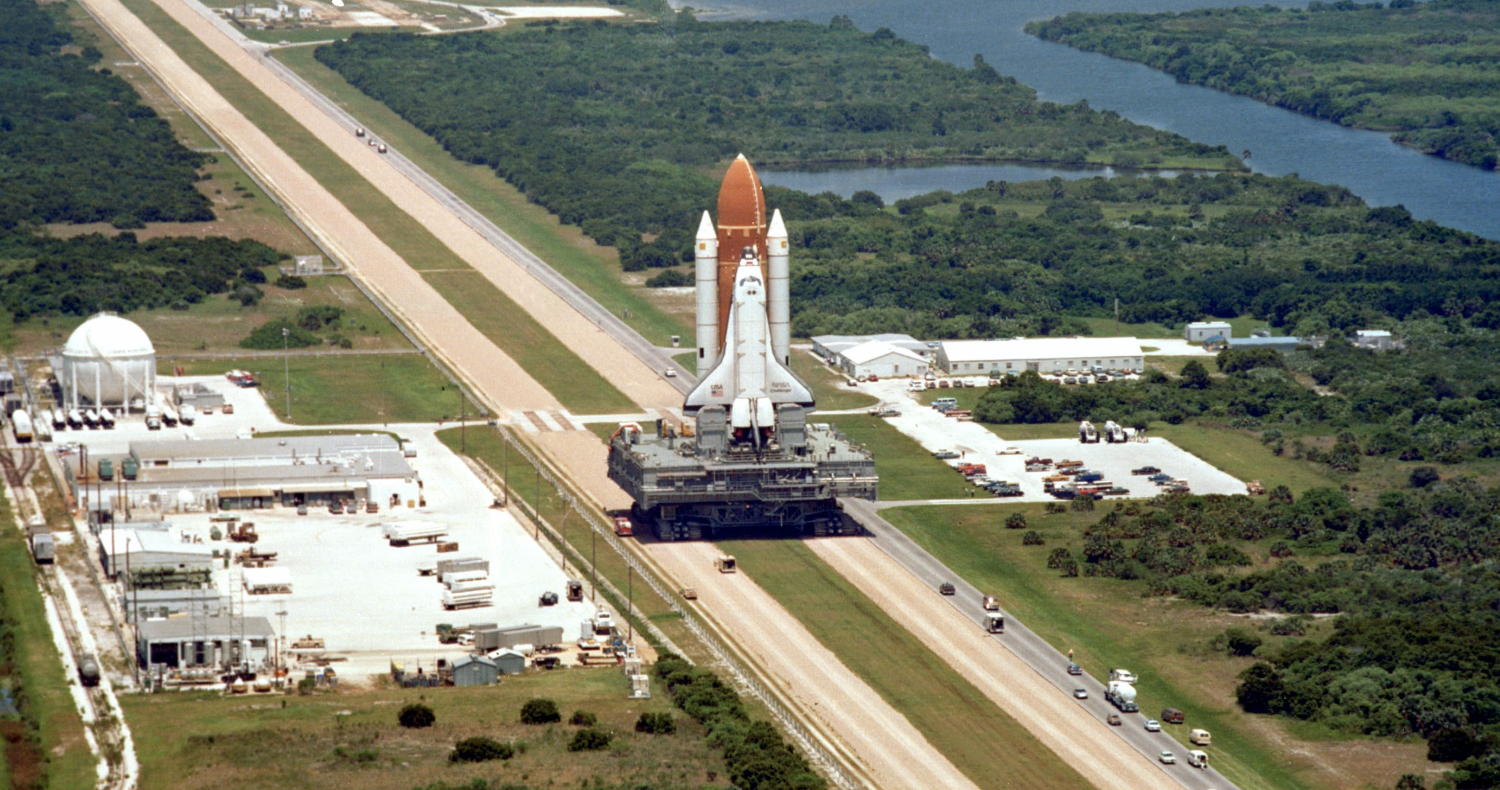
On January 28, 1986, the Space Shuttle Challenger broke apart just 73 seconds after liftoff from Kennedy Space Center in Florida, killing all seven astronauts aboard and marking one of the darkest days in U.S. space exploration history. The crew included mission commander Francis R. “Dick” Scobee, pilot Michael J. Smith, mission specialists Ronald McNair, Ellison Onizuka, Judith Resnik, and payload specialist Gregory Jarvis, as well as civilian teacher Christa McAuliffe, who had been selected as the first educator to fly in space.
The shuttle launched at 11:38 a.m. EST under unusually cold conditions. Overnight temperatures had dropped below freezing, causing ice to form on parts of the launch pad. Despite concerns raised by engineers at contractor Morton Thiokol, NASA officials proceeded with the launch. Investigators later determined that the cold severely compromised the rubber O-ring seals in the solid rocket boosters, which were designed to prevent hot gases from escaping during ignition.
Shortly after liftoff, a plume of flame was observed escaping from the right solid rocket booster. The damaged O-ring failed to contain the pressure, allowing superheated gases to burn through the booster’s joint and strike the external fuel tank. At 73 seconds into flight, structural failure caused the liquid hydrogen and liquid oxygen tanks to rupture, resulting in a catastrophic explosion that tore the shuttle apart in full view of millions watching live on television.
The disaster prompted the immediate grounding of the U.S. space shuttle fleet. NASA suspended all shuttle flights for 32 months while an extensive investigation was conducted. President Ronald Reagan appointed the Rogers Commission, which concluded that the primary cause of the accident was the O-ring failure, compounded by flawed decision-making processes within NASA. The commission found that known technical concerns were repeatedly downplayed and that communication between engineers and management had broken down.
As a result, NASA implemented sweeping changes to shuttle design, safety oversight, and organizational culture. The solid rocket boosters were redesigned, launch decision protocols were overhauled, and greater authority was given to engineers to halt launches when safety concerns arose. The Teacher in Space Program was suspended indefinitely.
The Challenger disaster had a profound impact on the nation’s perception of spaceflight, revealing the inherent risks behind routine launches. It remains a powerful reminder of the consequences of ignoring engineering warnings and the human cost of institutional failure, shaping NASA’s approach to safety for decades to come.
Ask us! What questions do you have about content, strategy, pop culture, lifestyle, wellness, history or more? We may use your question in an upcoming article!
Like MediaFeed’s content? Be sure to follow us.
This article was syndicated by MediaFeed.org.