Miranda rights refer to the requirement to inform suspects of their rights before interrogation and their right to counsel during custodial interrogations, which is now considered a standard police procedure.
“You have the right to remain silent. Anything you say can, and will, be used against you in court of law. You have the right to an attorney. If you cannot afford one, one will be appointed to you.”
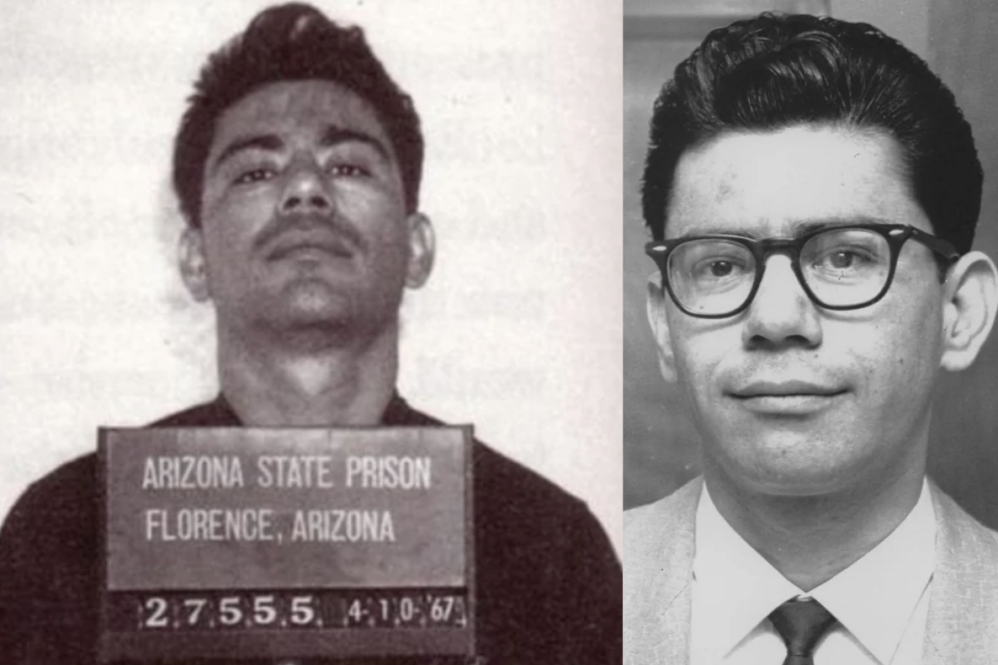
The requirement to give Miranda warnings came from the Supreme Court decision, Miranda v. Arizona, (1966). But the main reason behind it goes to a guy named Ernesto Miranda, after an 18-year-old woman told police that she had been kidnapped and raped. Her results from a polygraph test were inconclusive. However, police had tracked a car they suspected might belong to the attacker, which led them to Ernesto Miranda.
In a line-up the victim couldn’t identify Miranda, but after being interrogated by police officers for two hours Miranda confessed to the crimes, signed his confession with a statement indicating that the confession was made knowingly and voluntarily.
Miranda wasn’t aware that he could remain silent and could request to speak with an attorney before being questioned. As a result, he was found guilty and was sentenced to 20-30 years imprisonment on each count.
While Miranda was in prison, the case was appealed to the Arizona Supreme Court then again to the United States Supreme. The Supreme Court reversed the Arizona Supreme Court decision and declared that Miranda’s confession could not be used as evidence, the court also mentioned that police procedure should ensure that defendants are clearly informed of their rights as they are being detained and interrogated. As a result On June 13, 1966, the U.S. Supreme Court established the principle that all suspects must be informed of their rights before interrogation.
Miranda’s life ended after he was stabbed during a fight. At the time of his death, the prime suspect in his murder, Eseziquiel Moreno Pérez, was read his rights upon being detained, chose to remain silent, and was never convicted. Then when police opened murder charge against him on February 4, 1976 they were unable to get him as he fled across the border to Mexico.
Ask us! What questions do you have about content, strategy, pop culture, lifestyle, wellness, history or more? We may use your question in an upcoming article!
Like MediaFeed’s content? Be sure to follow us.
This article was syndicated by MediaFeed.co