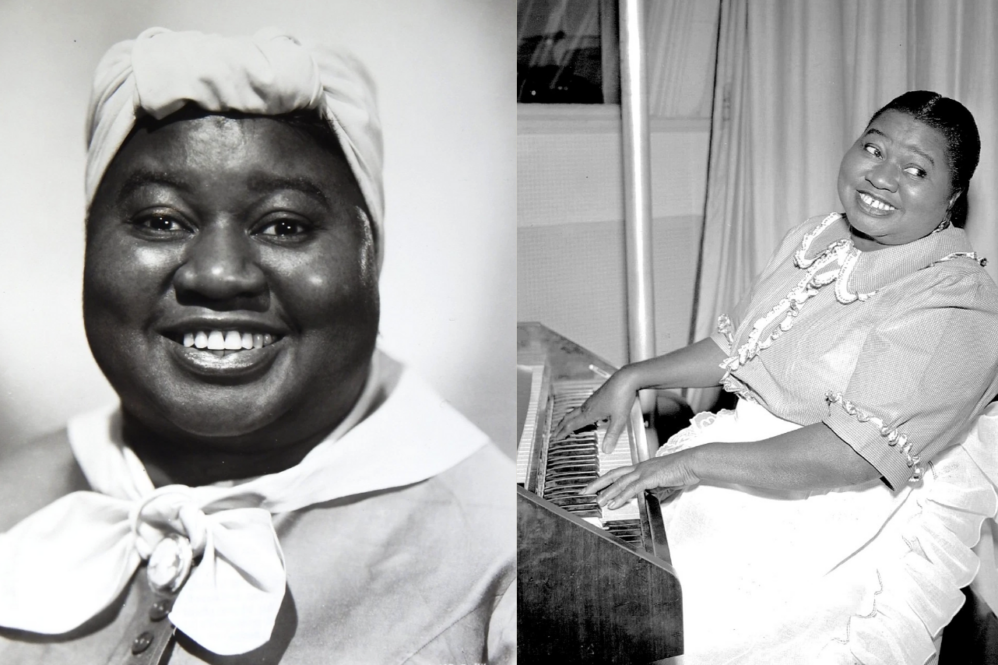
In the 1920s, Hattie worked with Professor George Morrison’s orchestra for several years. During that time, she was invited to perform on Denver’s KOA radio station, becoming one of the first Black women to perform on radio.
Even though Hattie was becoming Hollywood famous, Georgia’s Jim Crow laws at that time didn’t allow her, along with all the Black actors in Gone with the Wind, to attend the film’s premiere at the Loew’s Grand Theatre in 1939. Regardless, Hattie became the first ever Black person to win an Academy Award for Best Supporting Actress for her role as Mammy in Gone with the Wind, at the 12th Academy Awards in 1940.
During World War II she continued acting in Hollywood, mainly playing the same roles, and the conflicts she’d had with civil rights leaders like Walter White, leader of the National Association for the Advancement of Colored People (NAACP), also continued. In many interviews, she’d answered her critics and defended her work, in an interview in the Hollywood Reporter in 1947, she tried to make her critics see the progress the film industry had made in hiring Black actors during her career, she said, “I have never apologized for the roles I play,” she wrote, adding, “I believe my critics think the public more naïve than it actually is.”
Her breast cancer was fatal. McDaniel died on October 26, 1952, in Los Angeles. She was 57 years old.
After her death, she was awarded two stars on the Hollywood Walk of Fame. She was also inducted into the Black Filmmakers Hall of Fame in 1975 and honored with a commemorative U.S. postage stamp in 2006.
Ask us! What questions do you have about content, strategy, pop culture, lifestyle, wellness, history or more? We may use your question in an upcoming article!
Like MediaFeed’s content? Be sure to follow us.
This article was syndicated by MediaFeed.co