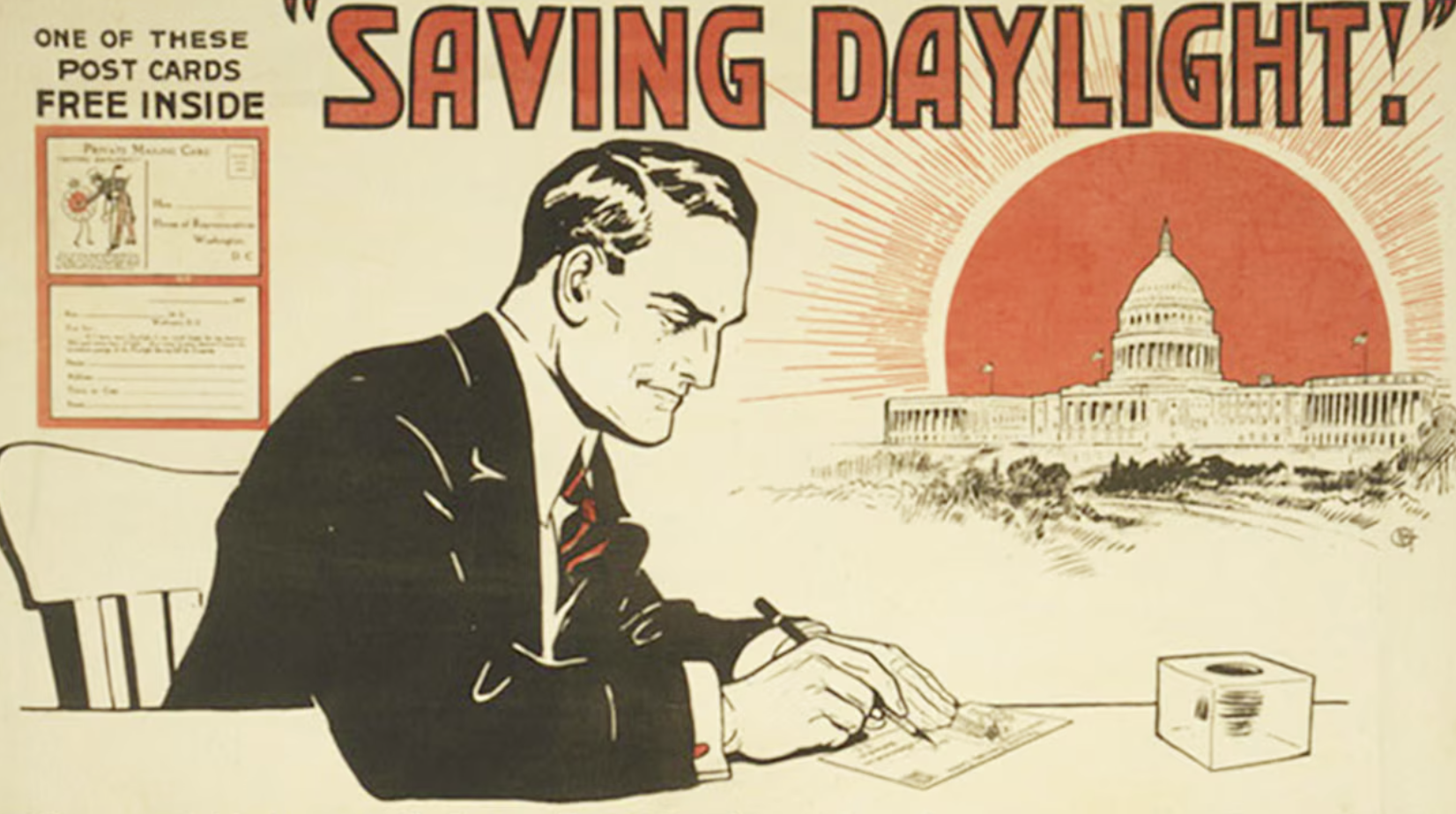
During World War II, the United States made a major change to how it tracked time. On February 9, 1942, Congress pushed the clocks forward by one hour in every time zone. This change was not just for the summer months, it was all year round.
The main reason for this change was to help the nation’s defense. By moving the clocks ahead, the government hoped to save fuel and energy. With an extra hour of light in the evening, people would not need to use as much electricity for lights in their homes and factories. This saved important resources like coal and oil, which were needed for the war. This change was also used to promote national security and defense, which is why people used names like War time, even the time zones were known as Eastern War Time, Pacific War Time, etc.
Not everyone was happy with the change. Some newspapers at the time reported that workers found it strange to go to their jobs in the dark during winter. Even though “War Time” did not actually provide more sunlight, it changed the schedule of the day so that the sun rose later and set later. This allowed for more activity during the bright evening hours.
This was not the first time the U.S. had tried this idea. A similar law called the Standard Time Act was passed during World War I in 1918 for the same reason, to save energy. However, that law was very unpopular, especially with farmers who needed the morning light to work, and shortly after that war ended no one used it anymore.
On the other hand, War Time during World War II lasted much longer. It stayed in effect until the war was over in September 1945. After that the country went back to its regular time zones.
For the next twenty years, there were no national rules for daylight saving time, but this caused a lot of confusion because different cities and states could choose their own schedules. Finally, in 1966, Congress established a national standard with the Uniform Time Act, which permanently replaced various local time schedules. This law set a consistent period for daylight saving time, beginning on the final Sunday of April and ending on the final Sunday of October.
Related:
Ask us! What questions do you have about content, strategy, pop culture, lifestyle, wellness, history or more? We may use your question in an upcoming article!
Like MediaFeed’s content? Be sure to follow us.
This article was syndicated by MediaFeed.org.