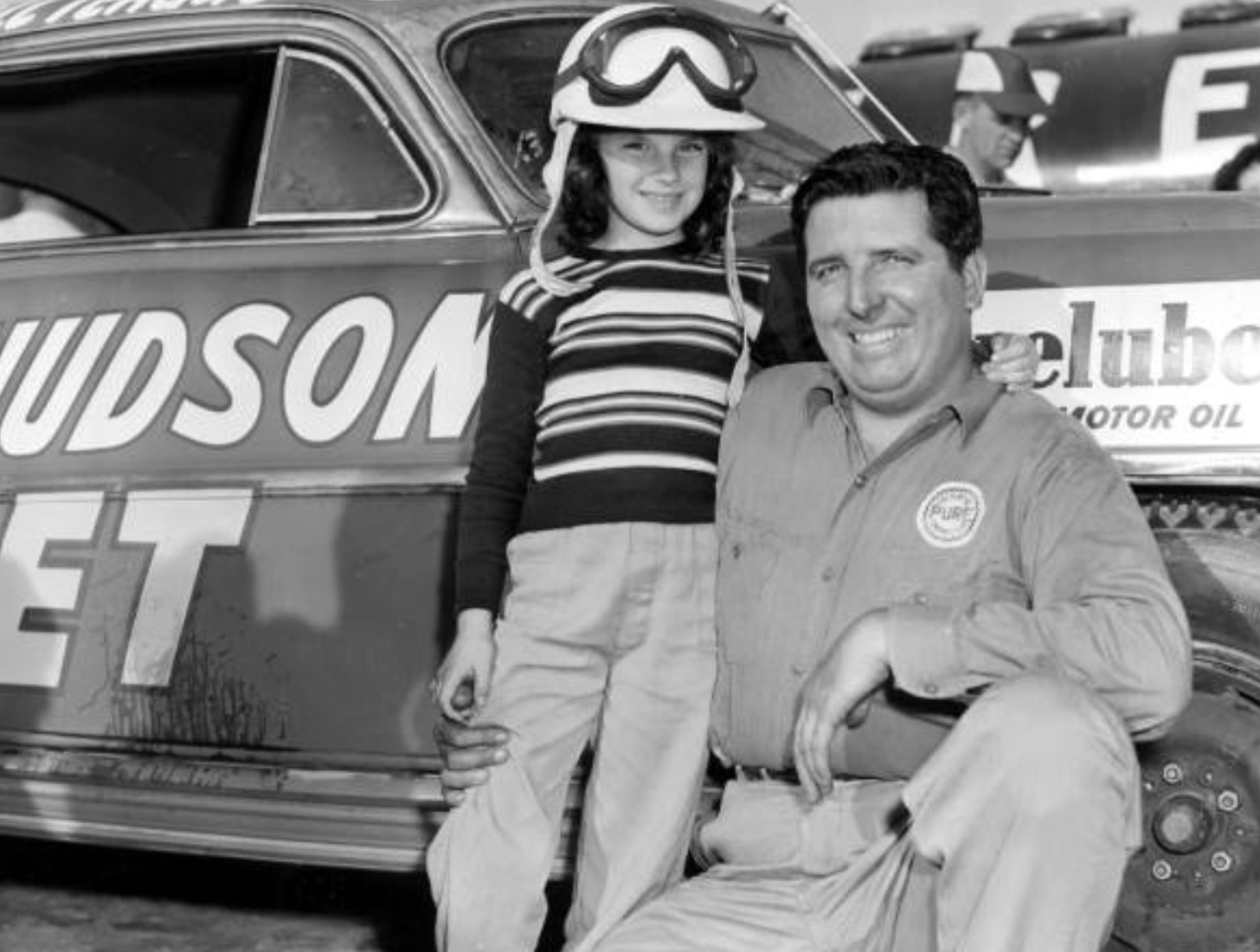
February 11, 1959, Marshall Teague, a famous NASCAR driver and racing pioneer, lost his life at the age of 37 during the newly opened Daytona International Speedway while attempting to break the speed record .
Marshall Teague was one of the biggest stars in the early days of NASCAR. He is best known for driving the “Fabulous Hudson Hornet.” Teague worked closely with the Hudson Motor Car Company to tune their cars for racing, making them almost impossible to beat on the track. One of the cars he helped with was the Hornet’s 308-cubic-inch by improving its engine to reach its full potential. The car was naturally light and sat low to the ground, which gave it a major advantage. Because of this, Teague and other Hudson drivers were able to dominate stock car racing from 1951 to 1954. They regularly beat drivers who had much larger and newer engines. In fact, Teague and his partner Smokey Yunick won 27 out of 34 major racing events during that time.
In early 1959, the racing world was excited about the opening of the Daytona International Speedway. The track was designed for high speeds, and Teague wanted to prove just how fast a car could go on the new closed course. On February 9, just two days before his accident, Teague made history by setting an unofficial speed record. He reached a speed of 171.821 mph. Despite already setting a record, Teague was determined to go even faster. On February 11, he returned to the track to attempt to raise the record once more. He was driving a specially prepared Indy-style car known as a Sumar Special.
As he was speeding through the high-banked turns of the track, something went wrong and his car suddenly flipped over. Because of the extreme speed, the crash was so violent that Teague died instantly. The racing community was shocked by the loss of one of its most talented and respected drivers.
Marshall’s work with the Hudson Hornet changed how people looked at stock car racing and helped bridge the gap between everyday cars and professional racing machines. He brought the Hudson Motor Car Company into NASCAR, making it the first manufacturer to officially support racing in the young organization. He was also a veteran of World War II, having served in the Navy before starting his famous racing career.
Related:
- Boomer-era B-movies that are actually masterpieces
- Take a brain break & guess what these vintage ad taglines are advertising
Like MediaFeed’s content? Be sure to follow us.
This article was syndicated by MediaFeed.org.