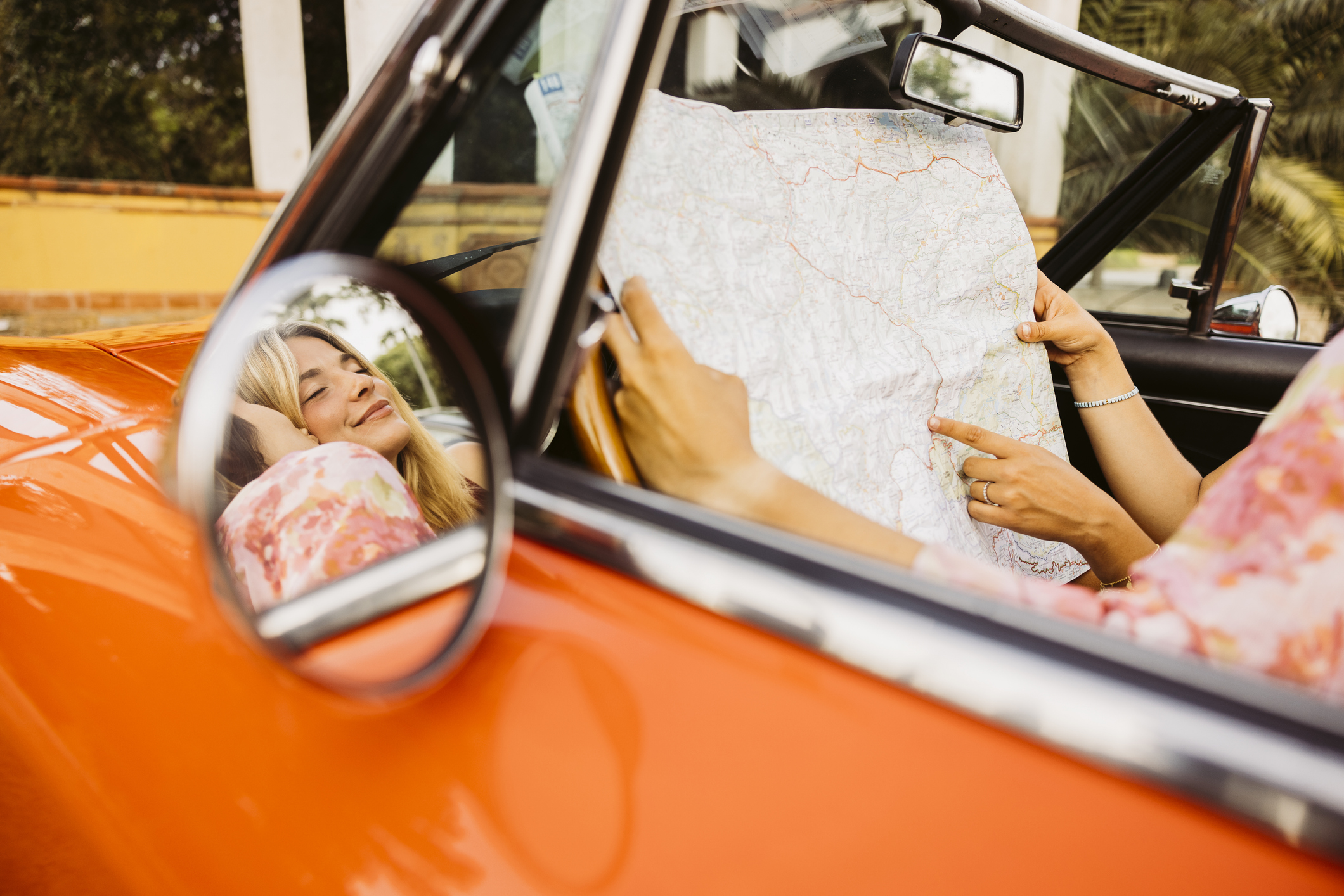
A time before maps took over
Sunlight catches chrome, warm vinyl fills your palms, the engine settles into rhythm. A paper map rests beside you. For those who drove before GPS dominated every dashboard, this sensory ritual wasn’t just transportation but meditation in motion. According to Harvard researchers, “Studies have shown benefits against an array of conditions, both physical and mental, including irritable bowel syndrome, fibromyalgia, psoriasis, anxiety, depression, and post-traumatic stress disorder.” Before apps taught us mindfulness, the car already offered it. For Boomers and Gen Xers, driving cultivated presence long before wellness became an industry.
Driving as mindfulness in motion
Classic driving engaged every sense simultaneously. Hands gripped the textured steering wheel, feet felt pedal resistance, and eyes tracked the horizon while noting landmarks. The gear shift demanded attention. Radio dials required tuning by ear. These tactile experiences kept drivers anchored, creating what modern psychology calls flow state. When you had to read the road, feel the wheel, and listen to the engine, your mind stayed entirely present. Research demonstrates that nostalgia activates brain regions associated with emotional well-being and psychological resilience. The dashboard wasn’t just functional but a portal to mindfulness.
The dashboard as a portal to nostalgia
Physical elements inside vintage cars evoke robust emotional responses. The gear shift’s weight, the analog radio’s satisfying click, and the scents of aged leather or vinyl create multisensory memory anchors. Studies reveal that nostalgia triggers both memory and reward systems, releasing dopamine and fostering emotional well-being. These dashboard details weren’t incidental, but emotional touchstones that grounded drivers in continuity and calm.
Lessons in patience and presence
Relying on paper maps or intuition required patience and spatial awareness, now recognized as cognitively vital. Without turn-by-turn commands, drivers developed mental maps, noticing landmarks and engaging hippocampal functions. Scientific research confirms that habitual GPS use leads to steeper declines in spatial memory and cognitive mapping abilities. Constant alerts fragment attention, creating hurried experiences. Old-school navigation taught something GPS can’t: slowing down enhances mental clarity, creativity, and stress resilience.
Generational perspective
The Sunday drive tradition reached its peak in the 1950s and 1960s, becoming a ritualized form of self-care for Baby Boomers and Gen Xers. These leisurely excursions had no destination, just the journey itself. Families reconnected. Individuals decompressed. The practice fostered emotional resilience decades before wellness trends emerged. This wasn’t escapism but engagement with surroundings, community, and self.
Bringing mindful driving into today
Mindfulness experts suggest using everyday driving as an opportunity to deepen awareness through simple, yet effective, strategies. Take weekend drives without GPS, following curiosity instead of commands. Turn off notifications. Let music, scenery, and engine sounds guide you. Notice the wheel’s texture, the wind blowing through the windows, and the hum of the tires on the pavement. Treat the car as a moving meditation.
Final note
Before screens dictated every turn, dashboards reminded us how to be simple. Presence was built into every mile, every shift, every unfamiliar horizon. That lesson remains available. We just need to turn off the GPS and remember.
Related:
- Mindfulness & Meditation Tools for a Perfectly Zen Summer
- What Is Winter Arc? (& 6 Ways to Get Started in 2025)
Like MediaFeed’s content? Be sure to follow us.
This article was syndicated by MediaFeed.org.