
In 2021, out of nearly 170 million workers in America, more than 5,200 didn’t make it home due to a fatal job injury.
Workplace injuries have been dropping drastically over the years thanks to improved safety measures and increased training across various industries; some professions are more dangerous than others.
According to the data provided by U.S. Bureau of Labor Statistics, these are America’s 16 most dangerous jobs.
Image Credit: sculpies/iStock.
16. Electrical power-line installers and repairers

Workers: 114,930
Fatal injury rate: 24.21
Nonfatal injury rate: 188.7
Working with high-voltage electricity, often at great heights, is not for the faint-hearted. Power-line installers and repairers with an average salary of $53,702 annually had a fatal work injury rate of 24.2 per 100,000 workers and ranked 100th for its nonfatal injury rate.
Image Credit: Depositphotos.com.
15. Construction laborers
Workers: 971,330
Fatal injury rate: 26.32
Nonfatal injury rate: 207.1
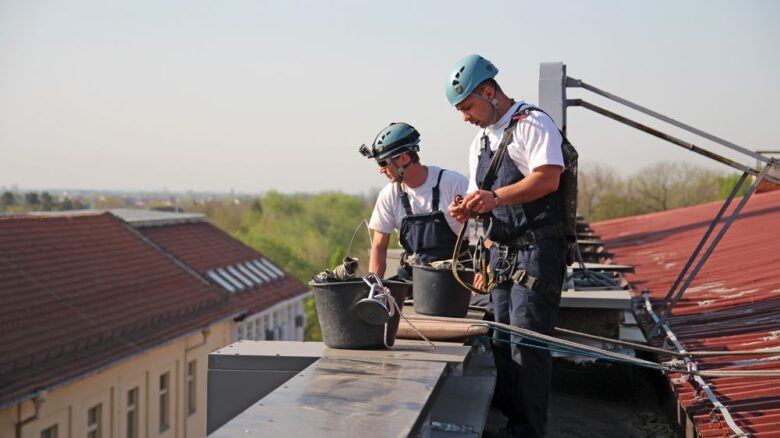
Working as a construction laborer is no walk in the park – it’s pretty intense with all the power tool handling, balancing on scaffolds, and other risky stuff they do every day. It comes as no surprise that this line of work is on the list of the deadliest professions in America, with a fatal injury rate of 26.3 per 100,000 workers in 2021.
Image Credit: DepositPhotos.com.
14. Painters, construction and maintenance

Workers: 217,880
Fatal injury rate: 27.08
Nonfatal injury rate: 89.9
Construction and maintenance painters put the finishing touches on building interiors and exteriors and machinery, bridges, and other structures. Working in awkward positions, on ladders, and sometimes at extreme heights puts these painters at high risk of suffering a fatal injury.
Image Credit: Smitt/istockphoto.
13. Audiovisual equipment installers and repairers

Workers: 25,760
Fatal injury rate: 27.86
Nonfatal injury rate: 164
Audiovisual equipment installers and repairers do more than just tinkering with tech—they’re often up ladders or crammed into tight spaces, ensuring everything’s hooked up perfectly. In 2021, this occupation faced a fatality rate of 27.9 per 100,000 workers, landing them at 126th for nonfatal injury rates in their line of work.
Image Credit: istockphoto/dima_sidelnikov.
12. First-line supervisors of landscaping and groundskeeping workers

Workers: 103,730
Fatal injury Rate: 35.23
Nonfatal injury Rate: 198.8
While one might think that supervising landscapers and grounds workers is a pretty safe job, according to the Bureau of Labor Statistics, this occupation has a 35.2 death rate per 100,000 workers. People working in this area handle everything from sprucing up the areas around buildings and structures to the more risky business of constructing highways, streets, and bridges.
Image Credit: Depositphotos.com.
11. Sailors and marine oilers

Workers: 25,570
Fatal injury rate: 37.58
Nonfatal injury rate: N/A
Sailors and marine oilers manage cargo handling, rigging, and running equipment while maintaining the vessel and responding to emergencies, which puts them in the high-risk job category. This profession had a fatality rate of 37.6 deaths per 100,000 workers.
Image Credit: iStock/Kanoke_46.
10. Farm equipment mechanics and service technicians

Workers: 35,720
Fatal injury rate: 39.97
Nonfatal injury rate: 178.4
Farm equipment mechanics ranks as America’s 10th most dangerous profession, which includes repairing or maintaining farm machinery and vehicles, such as irrigation systems, combines, tractors, and dairy equipment. The fatal injury rate is four times the national average.
Image Credit: dusanpetkovic / istockphoto.
9. Underground mining machine operators

Workers: 24,200
Fatal Injury Rate: 41.32
Nonfatal Injury Rate: N/A
In 2021, ten underground machine operators died on the field, leading to the first appearance of this occupation on the list of deadliest jobs. This job category usually employs fewer than 20,000 people; an average annual fatality rate is usually less than four.
Image Credit: iStock/Juan Jose Napuri.
8. Heavy and tractor-trailer truck drivers

Workers: 1,797,710
Fatal injury Rate: 45.92
Nonfatal injury Rate: 259.7
This profession includes driving big rigs, typically weighing over 26,000 pounds, to transport cargo. In 2021, tractor-trailer truck drivers had the eighth-highest rate of fatal injuries. While the primary cause of death in this job was vehicular accidents, injuries were more frequently due to falls.
Image Credit: iStock/ajr_images.
7. Agricultural equipment operators
Workers: 29,220
Fatal injury rate: 49.66
Nonfatal Injury Rate: N/A
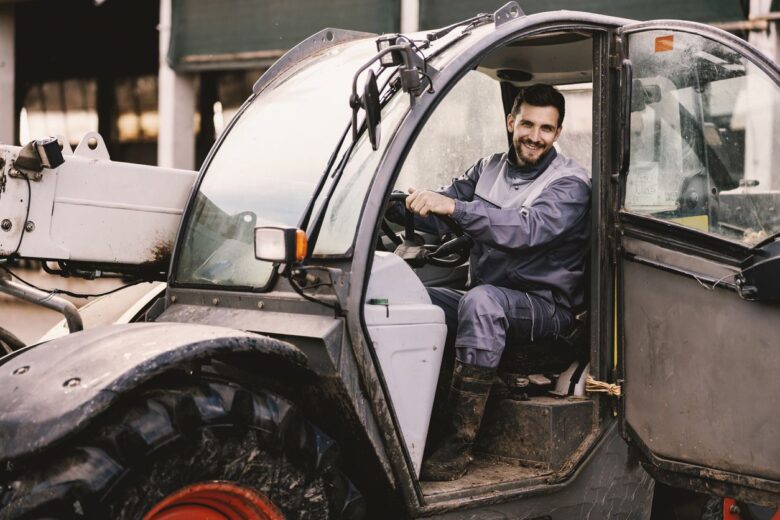
Agricultural equipment operators handle large machinery for tasks like planting, harvesting, tilling, feeding, or herding. This role is marked by the seventh-highest rate of fatal injuries in the U.S., a rate that is over five times higher than that of the average job.
Image Credit: iStock/dusanpetkovic.
6. First-line supervisors of farming, fishing, and forestry workers

Workers: 22,640
Fatal injury Rate: 62.09
Nonfatal injury Rate: 100.1
According to federal data, around 26,000 people are employed as supervisors in farms, commercial fishing, or forestry work, with an average annual income of $54,000. Supervisors often oversee workers handling heavy equipment, perilous tools, and large moving objects or animals, often under hazardous weather conditions, while also being actively involved in the work themselves. Given these factors, it’s not surprising that this job category has the sixth-highest fatal injury rate in the country.
Image Credit: mel-nik / iStock.
5. Roofers
Workers: 128,680
Fatal injury rate: 88.54
Nonfatal injury rate: 185.6
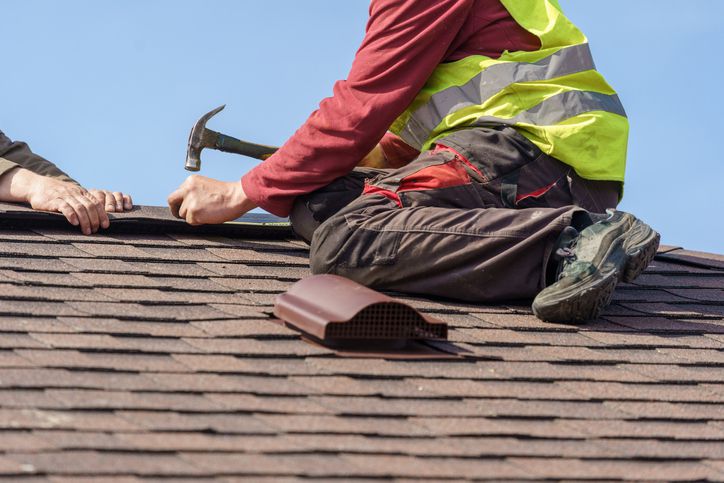
With a fatality rate 10 times higher than the average American job, roofers rank as the fifth deadliest profession in the country. The apparent culprit for injuries and deaths is falling from great heights, as roofers almost exclusively work at great heights, installing various materials in order to waterproof a roofing surface. They often work at great heights and may perform their services in all types of weather conditions.
Image Credit: brizmaker / istockphoto.
4. Logging workers

Workers: 37,630
Fatal injury rate: 119.35
Nonfatal injury rate: 111.7
Logging workers have led the national rankings in recent years, reporting the fourth-highest job fatality rate in the U.S. in 2021. The most common fatal accident is contact with objects and equipment. With an average salary of $47,900, logging workers often work in isolated areas and harsh weather and require on-the-job training for handling heavy logging machinery safely.
Image Credit: vaitekune / istockphoto.
3. Farmworkers

Workers: 36,820
Fatal injury rate: 134.74
Nonfatal injury rate: N/A
Farmworkers hold the third-highest rate of deaths from their job, which is 15 times higher than the average job in America. Tractor turnovers and transportation incidents are the most common culprits in farming. While tractors are the primary cause of work-related deaths, they are far from being the only hazard. Farmworkers also face many other dangers, including animal and insect attacks, needle sticks from administering medications to animals, exposure to toxic chemicals like pesticides, entrapment in machinery or equipment, including grain bins, and falls from ladders.
Image Credit: Dmytro Diedov/istockphoto.
2. Commercial pilots

Workers: 37,120
Fatal injury rate: 137.95
Nonfatal injury rate: 65.3
According to federal statistics, commercial pilots— those flying cargo planes or helicopters, not passengers— earn an average of $115,080 annually. Almost all the serious injuries and deaths in this job happen because of crashes, which is why you don’t see a lot of non-deadly injuries.
Image Credit: SeventyFour/istockphoto.
1. Tree trimmers and pruners

Workers: 52,040
Fatal injury rate: 186.07
Nonfatal injury rate: 228.2
As the occupation with the highest rate of fatalities, this groundskeeping job is unfortunately deemed the most dangerous in the nation. The leading causes of these fatalities are accidents involving equipment such as saws, as well as falls, and falling tree limbs.
This article was produced and syndicated by MediaFeed.
Image Credit: Depositphotos.com.
More From MediaFeed

Quit looking for your dream job & do this instead
- 10 questions you should never answer if the police pull you over
- 30 awesome things we could do in the ‘70s that today’s kids have missed out on
Like MediaFeed’s content? Be sure to follow us.
Image Credit: amanalang/istockphoto.