The lost ’70s food trends we’re all secretly craving
The 1970s represented a fascinating culinary crossroads where traditional home cooking collided with convenience culture and aspirational entertaining, creating a unique food landscape defined by both innovation and accessibility. This decade witnessed the rise of boxed meal solutions, such as Hamburger Helper, alongside elaborate dinner party presentations that showcased homemakers’ creativity and social status. The era’s cuisine reflected broader cultural shifts, including women entering the workforce, greater prosperity that allowed for experimentation, and a growing interest in international flavors filtered through American interpretations.
The decade’s food culture celebrated both convenience and spectacle, producing dishes that prioritized visual impact and social experience over refined culinary techniques. Home entertaining reached new heights as dinner parties became important social rituals, driving demand for impressive yet manageable dishes that could be prepared by amateur cooks using accessible ingredients. This combination of practicality and showmanship created a distinctive aesthetic that emphasized color, texture, and presentation in ways that seem both charming and excessive by today’s standards.
Modern food culture’s renewed interest in 1970s cuisine stems from nostalgia for simpler times, appreciation for unpretentious comfort foods, and curiosity about an era when cooking focused on gathering people together rather than pursuing culinary perfection. These dishes offer emotional comfort through their associations with family gatherings, community celebrations, and a time when food served primarily social rather than performative purposes.
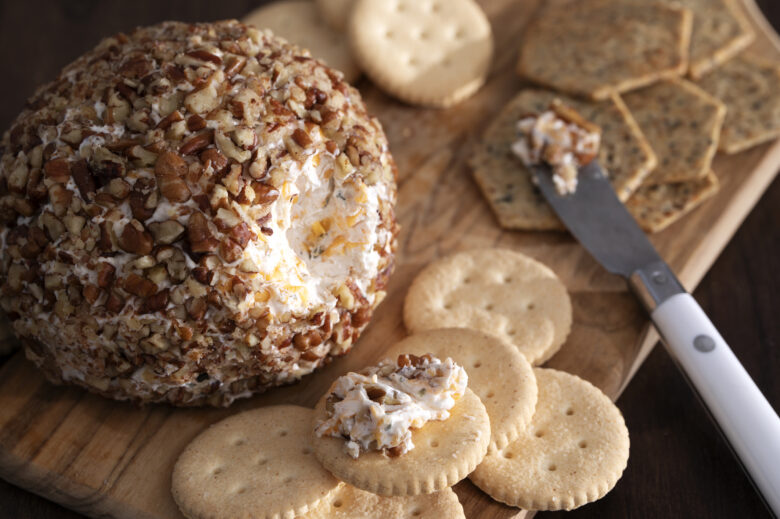
The cheese ball
The cheese ball reigned supreme as the centerpiece of 1970s gatherings, transforming simple cream cheese into an impressive presentation through coatings of chopped nuts, herbs, or colorful seasonings that created visual appeal and textural contrast. These spherical creations represented accessible elegance, allowing hosts to produce something that appeared sophisticated while using affordable, readily available ingredients. The preparation involved mixing cream cheese with various seasonings, shaping the mixture into balls, and rolling them in nuts or herbs to create attractive exteriors that concealed the simple base ingredients.
The cheese ball’s success lay in its combination of rich, satisfying flavors with impressive visual presentation that made any gathering feel more special and festive. Variations included combinations like cheddar and chives, blue cheese with walnuts, or herb-crusted versions that appealed to different taste preferences while maintaining the fundamental concept. The make-ahead nature of cheese balls made them practical for busy hosts, as they could be prepared days in advance and actually improved in flavor as ingredients melded together, demonstrating how convenience and elegance could coexist in 1970s entertaining.
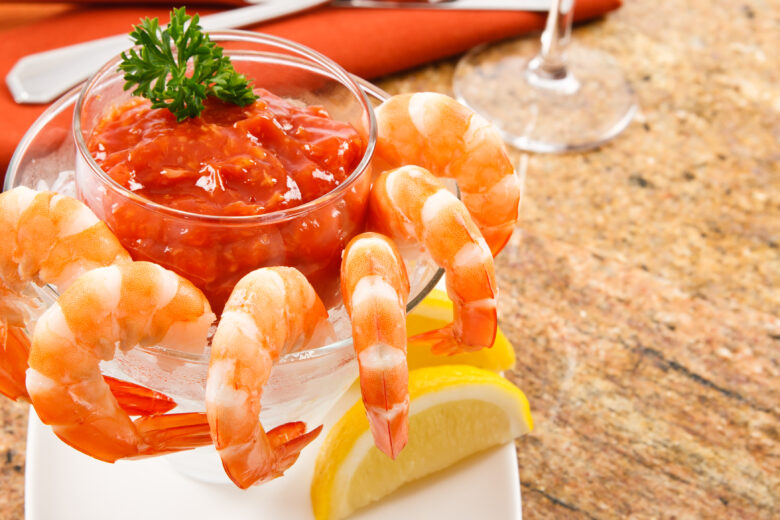
Prawn cocktail
Prawn cocktail epitomized aspirational dining for many Americans discovering their taste for seafood beyond basic preparations, with its elegant presentation in stemmed glasses making simple ingredients feel luxurious and cosmopolitan. The dish consisted of chilled cooked prawns arranged around glass rims with cocktail sauce served in the center, creating restaurant-style presentations that impressed guests while remaining achievable for home cooks. The visual impact of bright pink prawns against clear glass created sophisticated table settings that suggested international dining experiences.
The accompanying cocktail sauce, typically a combination of ketchup, horseradish, and lemon, provided a tangy contrast that highlighted the prawns’ natural sweetness while adding complexity to the simple preparation. This appetizer represented many families’ introduction to what they considered sophisticated dining, bringing restaurant-style elegance into home entertaining. The combination of accessible ingredients with upscale presentation perfectly captured 1970s aspirations toward refined dining experiences that could be achieved within domestic settings and budgets.
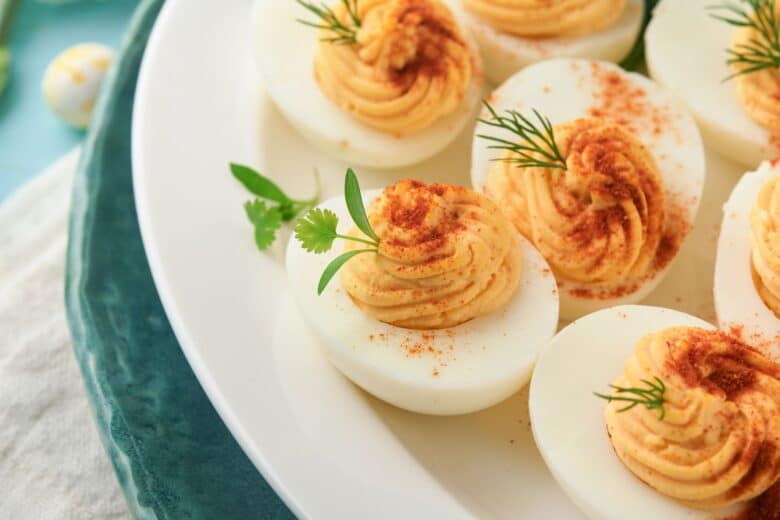
Deviled eggs
Deviled eggs achieved peak popularity during this decade as the perfect balance of familiar comfort and party-worthy presentation, with their bright yellow centers and paprika garnish providing color and visual interest that photographed beautifully in party spreads. The preparation involved hard-boiling eggs, removing the yolks, mixing them with mayonnaise and seasonings, and then piping the mixture back into the egg white halves for an elegant presentation. Variations included additions such as pickle relish, mustard, or bacon bits, which allowed hosts to customize flavors while maintaining the basic concept.
The dish’s appeal stemmed from its accessibility to cooks of all skill levels while still requiring enough preparation steps to feel special and thoughtful. These appetizers succeeded because they delivered reliable satisfaction through familiar flavors while maintaining an elegant appearance that impressed guests. The make-ahead convenience and room temperature serving requirements made deviled eggs practical choices for large gatherings, while their protein content provided substance that balanced lighter appetizer offerings typical of 1970s party menus.
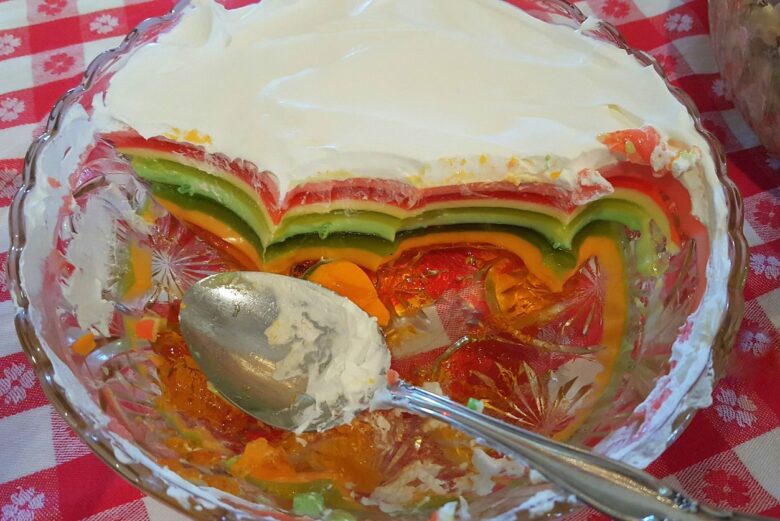
Jell-O salads
Jell-O salads dominated 1970s gatherings as colorful, whimsical creations that blurred lines between salad and dessert categories, incorporating everything from fruit and nuts to vegetables and even seafood in gelatinous presentations. These molded creations required careful timing and technique to achieve proper setting and layering, with popular varieties including lime Jell-O with cottage cheese and pineapple, or orange gelatin with carrots and nuts. The appeal lay in their ability to transform ordinary ingredients into something visually striking and conversation-worthy through creative combinations and artistic molding.
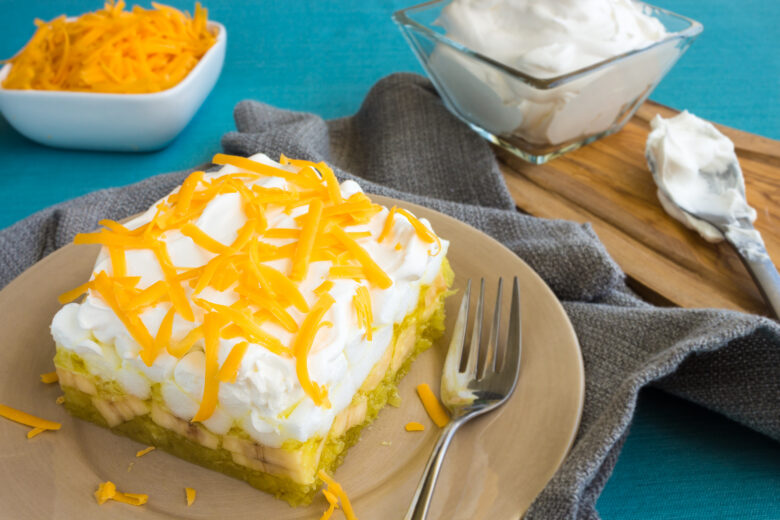
The most famous example, Watergate Salad, combined pistachio pudding, marshmallows, nuts, and whipped topping to create bright green confections that represented creativity within constraints as home cooks experimented with textures and flavor combinations that seem surreal by today’s standards. These dishes succeeded because they offered make-ahead convenience for busy hosts while creating impressive presentations that suggested culinary skill and creativity. Modern appreciation for these salads often focuses on their nostalgic charm and social significance rather than their actual flavors. However, some contemporary cooks have begun experimenting with updated versions that use natural ingredients.
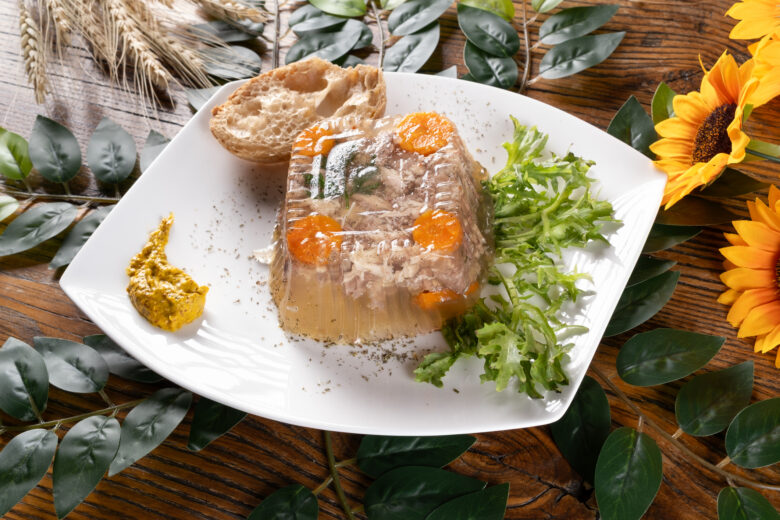
Savory aspic
Savory aspic preparations, once a symbol of high-society dining, experienced a decline as American palates shifted away from gelatin-based dishes toward fresher, less processed presentations. These elaborate, molded creations required significant time and skill to execute correctly, involving clear broths or stocks set with gelatin and containing various ingredients, such as vegetables, meats, or seafood, arranged in decorative patterns. The preparation demanded precise timing for layering different components and achieving proper consistency throughout the mold.
The decline of aspic reflects broader changes in American food culture, where fresh ingredients and natural textures are prioritized over processed convenience foods. These dishes became associated with outdated formal dining rather than contemporary entertaining styles. However, recent interest in fermentation and preserved foods suggests potential for revival among adventurous home cooks interested in historical cooking techniques. The technical challenges of aspic preparation, including achieving proper gelatin ratios and preventing separation, made these dishes less appealing to busy households seeking convenience-focused solutions for entertaining needs.
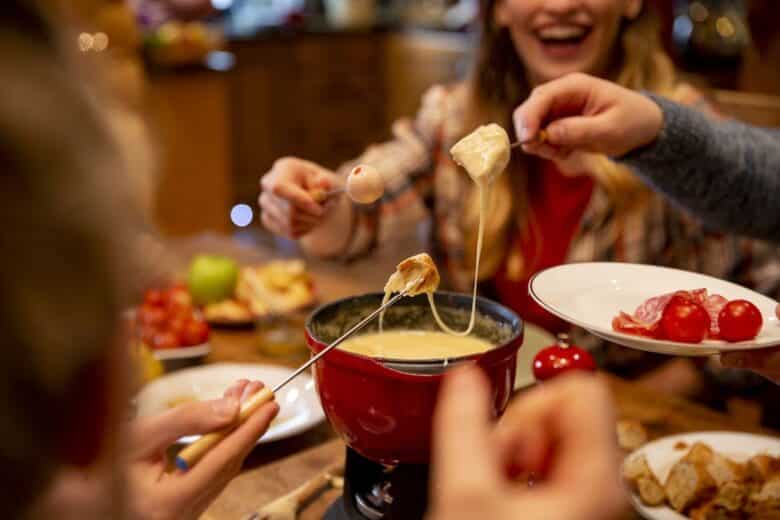
Fondue
Fondue represented the ultimate social dining experience, transforming meals into interactive rituals where guests gathered around shared pots of melted cheese or chocolate to create communal eating experiences that prioritized conversation and connection over individual plates. The Swiss-inspired tradition appealed to Americans seeking novel dining experiences while maintaining familiar flavors and ingredients. Cheese fondue required careful temperature control and constant stirring to prevent separation, while chocolate versions demanded precise heating to maintain smooth consistency for dipping.
The equipment requirements, including special pots, burners, and long-handled forks, made fondue both an investment and a statement about entertaining priorities that emphasized social interaction over efficiency. These interactive dining experiences created memories through shared participation, rather than passive consumption, with their communal nature encouraging conversation and naturally extending meal duration. The success of fondue reflected 1970s values that prioritized gathering, conversation, and communal experiences over the individual dining experiences that dominate contemporary food culture.
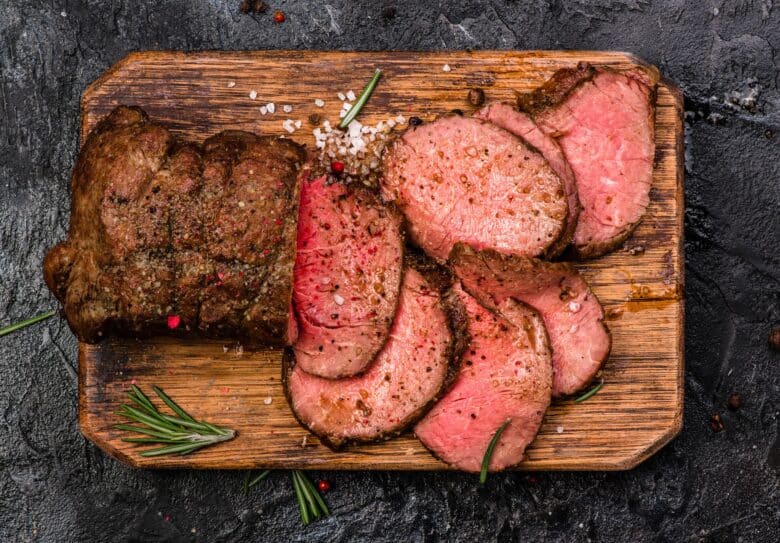
Slow cooker meals
The slow cooker emerged as a kitchen hero for busy families, allowing home cooks to prepare complex-flavored dishes like beef stroganoff and pot roast with minimal active cooking time by combining ingredients in the morning and returning home to fully cooked meals. This appliance was ideally suited to the needs of dual-income households, while still producing hearty, home-cooked meals that represented family values and nurturing care. Popular slow cooker recipes included stews, roasts, and casseroles that developed rich flavors through long, gentle cooking processes.
The convenience factor revolutionized weeknight dinner preparation for working families, enabling elaborate dishes that previously required constant attention to cook unattended throughout the day. Recipes typically involved simple preparation steps, like browning meats and combining ingredients, before transferring everything to the slow cooker for extended cooking periods. The appliance’s popularity reflected changing lifestyles while maintaining connections to traditional comfort foods, proving that convenience and quality could coexist in modern American kitchens.
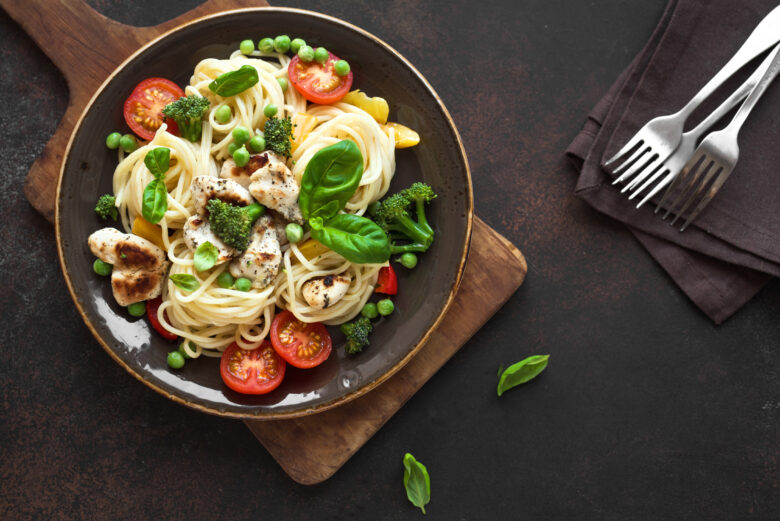
Pasta primavera
Pasta Primavera emerged as a surprising 1970s innovation, introducing fresh, seasonal vegetables to pasta preparations during a time when American dining was shifting towards healthier, lighter approaches to familiar dishes. This colorful creation combined the comfort of pasta with the visual appeal and nutritional benefits of fresh vegetables, representing early attempts to strike a balance between indulgence and health consciousness. The dish typically featured fettuccine or a similar pasta tossed with crisp-tender vegetables, such as bell peppers, broccoli, and zucchini, in a light cream or oil-based sauce.
The preparation required careful timing to maintain the texture of vegetables while achieving proper pasta doneness, demonstrating how Italian-inspired cuisine could adapt to American preferences for abundant and colorful presentations. The dish’s popularity reflected a growing awareness of vegetables as more than mere side dishes and demonstrated the beginning of America’s shift toward lighter, more vegetable-forward eating patterns. Pasta Primavera succeeded because it offered familiar comfort food enhanced with nutritious ingredients and vibrant colors that appealed to health-conscious diners without sacrificing satisfaction or flavor.
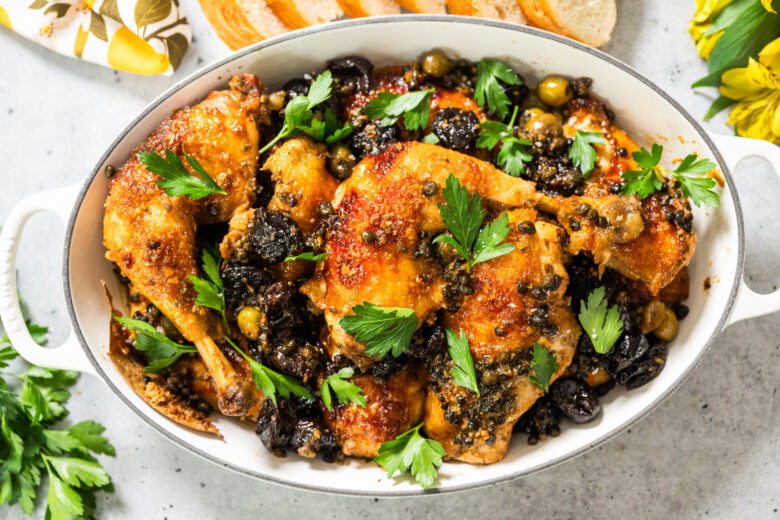
Chicken Marbella
Chicken Marbella gained fame through influential cookbooks as an exotic yet accessible dish, combining sweet and savory elements through its signature mixture of prunes, olives, capers, and herbs, which creates complex flavors using pantry-friendly ingredients. This recipe represented many Americans’ first exposure to Mediterranean flavor profiles and demonstrated how home cooks could create restaurant-quality dishes using accessible techniques. The preparation involved marinating chicken pieces overnight in a mixture of wine, vinegar, and seasonings, followed by baking with a distinctive blend of fruit and herbs.
The dish’s success lay in its ability to appear sophisticated while remaining approachable for inexperienced cooks, requiring minimal hands-on time to produce impressive results suitable for entertaining. The combination of sweet prunes with briny olives and capers created a flavor complexity that intrigued American palates as they began to explore international cuisines. Chicken Marbella became a dinner party staple because it could be prepared ahead of time and actually improved in flavor when reheated, making it practical for hosts while maintaining its exotic appeal and sophisticated presentation.
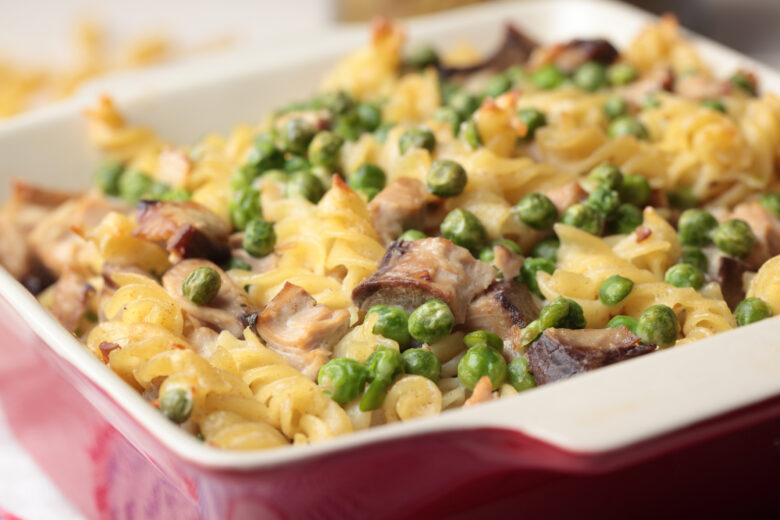
Tuna noodle casserole
Tuna Noodle Casserole epitomized practical comfort food that stretched budgets while providing satisfying, filling meals that could feed families economically using shelf-stable ingredients. This dish represented the decade’s embrace of convenience foods combined with home-cooking values, creating hearty meals that required minimal fresh ingredients while still providing emotional satisfaction associated with homemade food. The typical preparation combined egg noodles, canned tuna, cream of mushroom soup, and frozen peas, topped with crushed potato chips or breadcrumbs.
The casserole’s appeal stemmed from its reliability, affordability, and ability to feed large families using ingredients that could be stored for long periods without refrigeration. The combination of protein, starch, and vegetables in one dish provided complete nutrition while requiring minimal preparation skills or cooking experience. The casserole’s enduring popularity demonstrates how economical ingredients could create satisfying family meals that evoke memories of community gatherings and home cooking traditions that connected families around shared dinner tables.
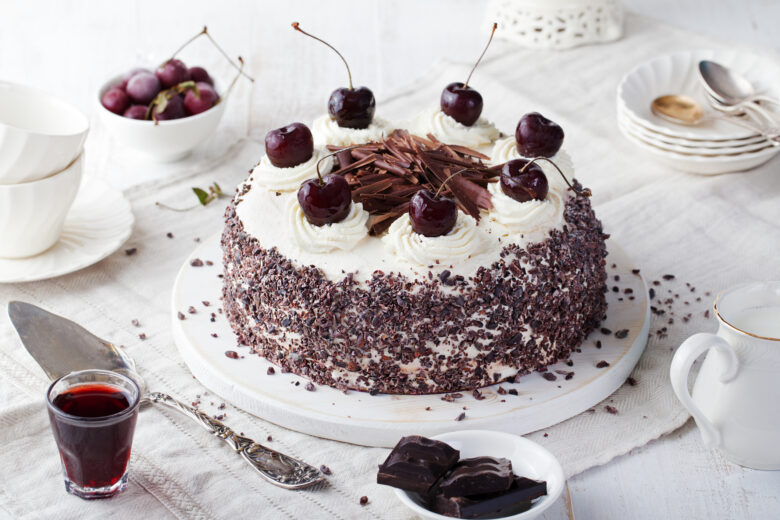
Black Forest cake
The Black Forest Cake became the ultimate dinner party showstopper, with its dramatic layers of chocolate cake, whipped cream, and bright red cherries, creating visually stunning presentations worthy of special occasions. This German-inspired dessert appealed to American hosts seeking impressive finale dishes that would photograph well and create lasting memories for guests. The preparation involved multiple components, including a chocolate sponge cake, cherry filling, whipped cream, and chocolate shavings, which required precise timing and assembly skills to achieve professional-looking results.
The cake’s combination of rich chocolate, light cream, and tart fruit provided balanced flavors that satisfied diverse palates while maintaining spectacular visual appeal through its contrasting colors and textures. The assembly process, which involved soaking cake layers in cherry juice or kirsch and building alternating layers of cream and fruit, created opportunities for creative presentation that impressed guests. Black Forest Cake succeeded because it delivered both taste and visual impact, making it worthy of special celebrations while remaining achievable for dedicated home bakers willing to invest time in creating memorable dessert experiences.

Poke cake
Poke Cake offered an ingenious solution for creating colorful, impressive desserts with minimal skill requirements, as home bakers could transform simple cake mixes into rainbow creations by poking holes and filling them with flavored gelatin. This technique democratized impressive dessert presentation by making restaurant-quality visual effects accessible to novice bakers using basic ingredients and equipment. The preparation involved baking sheet cakes, creating holes throughout using wooden spoons or skewers, then pouring liquid gelatin over the surface to create colorful patterns.
The appeal lay in the dramatic transformation from plain cake to colorful spectacle through simple techniques that required no advanced baking skills or specialized equipment. Popular variations included combinations such as white cake with rainbow gelatin, chocolate cake with cherry filling, or lemon cake with matching yellow gelatin, which created striking visual presentations. The technique succeeded because it provided guaranteed impressive results regardless of baking experience, while using affordable ingredients that were readily available in most grocery stores.
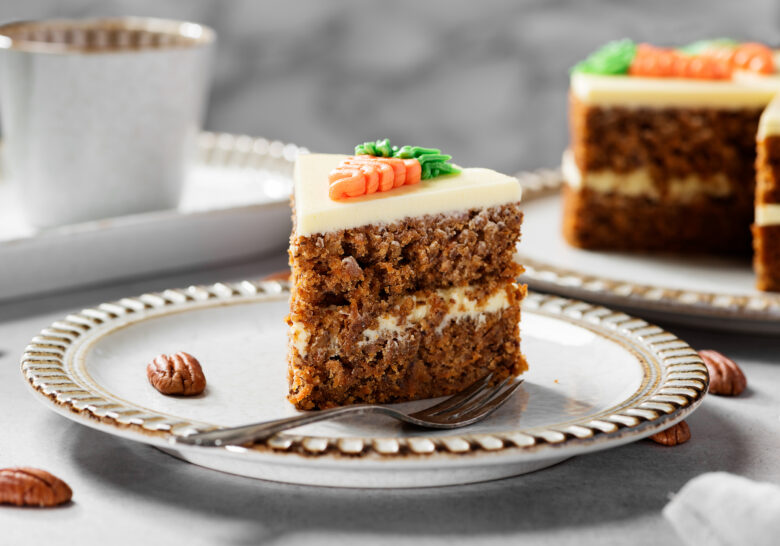
Carrot cake
Carrot Cake captured the decade’s health food trend by incorporating vegetables into dessert presentations, allowing indulgence while maintaining connections to wholesome ingredients and natural foods. The dense, moist texture, combined with cream cheese frosting, created satisfying desserts that felt less guilty than pure sugar confections, while delivering rich flavors and satisfying textures. The preparation typically involved grating fresh carrots into spiced cake batter enhanced with nuts, raisins, or coconut for additional texture and flavor complexity.
The success of carrot cake represented broader cultural shifts toward appreciating natural ingredients and finding ways to incorporate nutritious elements into traditional comfort foods without sacrificing taste or satisfaction. The cream cheese frosting provided a tangy contrast to the spiced cake while creating smooth, professional-looking presentations that rivaled bakery desserts. Carrot cake became a dinner party favorite because it offered guilt-free indulgence through its vegetable content while delivering the rich flavors and impressive presentation expected from special occasion desserts that celebrated both health consciousness and traditional baking skills.
Conclusion
These 1970s food trends represent more than nostalgic curiosities, embodying values of community, creativity, and comfort that resonate strongly with contemporary desires for meaningful food experiences over perfectionist culinary achievement. The decade’s cuisine prioritized bringing people together, creating memorable presentations, and working within practical constraints while still producing satisfying, enjoyable meals. These dishes succeeded because they struck a balance between accessibility and aspiration, enabling home cooks to create impressive results without requiring professional skills or exotic ingredients.
Modern interpretations of these classics can honor their social significance while updating ingredients and techniques to suit contemporary preferences for fresher, lighter preparations. Simple modifications, such as using Greek yogurt in place of heavy cream, incorporating more vegetables, or reducing the sugar content, can maintain the essential character while improving the nutritional profile. The key lies in preserving the generous spirit and visual appeal that made these dishes memorable while adapting them to current dietary awareness and ingredient availability.
Embracing the retro spirit means recognizing that successful cooking involves more than technical perfection; it focuses instead on creating experiences that bring people together and provide comfort through familiar flavors and generous presentations. Check out our other food articles here at MediaFeed to discover more fascinating stories about how American cuisine has evolved and why specific trends deserve revival in modern kitchens.
Related:
- 8 Gifts for Spicy Food Lovers This Holiday Season
- From ketchup to popcorn: Modern foods with ancient origins
Like MediaFeed’s content? Be sure to follow us.
This article was syndicated by MediaFeed.org.