

This article was reviewed by Darragh O’Carroll, MD.
Blood Type Diet: A Guide to Eating Right According to Your Blood Type
Have you ever wondered if your blood type could influence the foods you should eat? That’s the idea behind the blood type diet, a nutrition theory that claims your ABO blood type (A, B, AB, or O) determines how your body digests food, absorbs nutrients, and even manages weight.
Overview
Proponents of the blood type diet believe D’Adamo’s claims that “eating for your blood type” can improve your energy, digestion, and overall wellness. However, there’s a lack of scientific evidence behind doing so, especially when it comes to claims that certain foods are harmful to people with different blood types.
So, what’s the deal? Does blood type affect diet requirements, or is this just another fad? We’ve examined the ins and outs of the blood type diet, including recommended foods to eat and avoid, and whether research supports its claims.
What is the Blood Type Diet?
The blood type diet is an approach to nutrition that became popular in the 1990s by a naturopathic physician named Dr. Peter D’Adamo. It still makes its rounds today via headlines, books, and podcasts about it.
The core idea is simple: your blood type (A, B, AB, or O) affects how your body responds to certain foods. Your blood type is defined by specific markers on your red blood cells called antigens, which are what determine whether you have type A, B, AB, or type O blood.
According to the blood type diet plan, tailoring your food choices to your blood type can improve digestion, metabolism, weight management, and even long-term health.
The Logic Behind It
The central theory has to do with lectins, a type of carbohydrate-binding protein found in many plant foods, like legumes, seeds, and nightshade vegetables. The idea is that lectins may interact differently with each blood type, purportedly promoting inflammation, slowed digestion, or metabolic effects.
The blood type diet is built on the idea that your ABO blood group shapes how your body interacts with food.
According to this theory, each blood type evolved at different points in human history, which explains why people with certain types may thrive on specific eating plans:
- Blood Type O, considered the “hunter-gatherer,” is linked to early human ancestors who relied heavily on animal protein.
- Blood Type A, the “agrarian,” emerged when farming began, favoring vegetarian diets or plant-based diets.
- Blood Type B, the “nomad,” is said to tolerate dairy products and a wider variety of foods.
- Blood Type AB, a more modern blood type, supposedly combines the benefits (and restrictions) of A and B.
While the concept of eating right for your blood type is intriguing, it’s important to know that scientific research hasn’t confirmed these claims. We’ll get into that more next.
Does the Blood Type Diet Work?
While there’s some evidence that the different blood types are associated with various infectious and non-infectious disease risks, there’s no strong scientific evidence that blood type and dietary choices go together. Nor that the blood type diet works the way it claims.
Several studies have looked at whether eating for your blood type actually impacts health outcomes like weight loss, digestion, or heart disease risk. The results? Mixed — at best.
A 2013 systematic review found no scientific studies showing health benefits tied directly to following blood type–specific diets.
In 2014, another study concluded that improvements in cardiovascular risk factors (like cholesterol or blood pressure) among people following various blood type diets were not related to the participants’ blood types.
Similarly, a 2021 study on people consuming a low-fat vegan diet found that cardiometabolic improvements had nothing to do with blood type.
In other words, benefits seen in studies are usually explained by eating healthier overall — not by matching foods to their blood type.
For example, someone eating a diet rich in fruits and vegetables, lean protein, and whole grains is likely to feel better, regardless of their blood type, than someone fueling themselves with mostly potato chips, soda, and hot dogs.
That doesn’t mean the blood type diet is inherently harmful, as most versions encourage replacing ultra-processed junk with nutrient-rich foods.
But it does mean you shouldn’t expect magical results just because your plate “matches” your blood type. And it’s possible that some of the foods to avoid for your blood type are nutritious, and there’s more potential harm in ditching them.
Blood Type Diet Food Guide
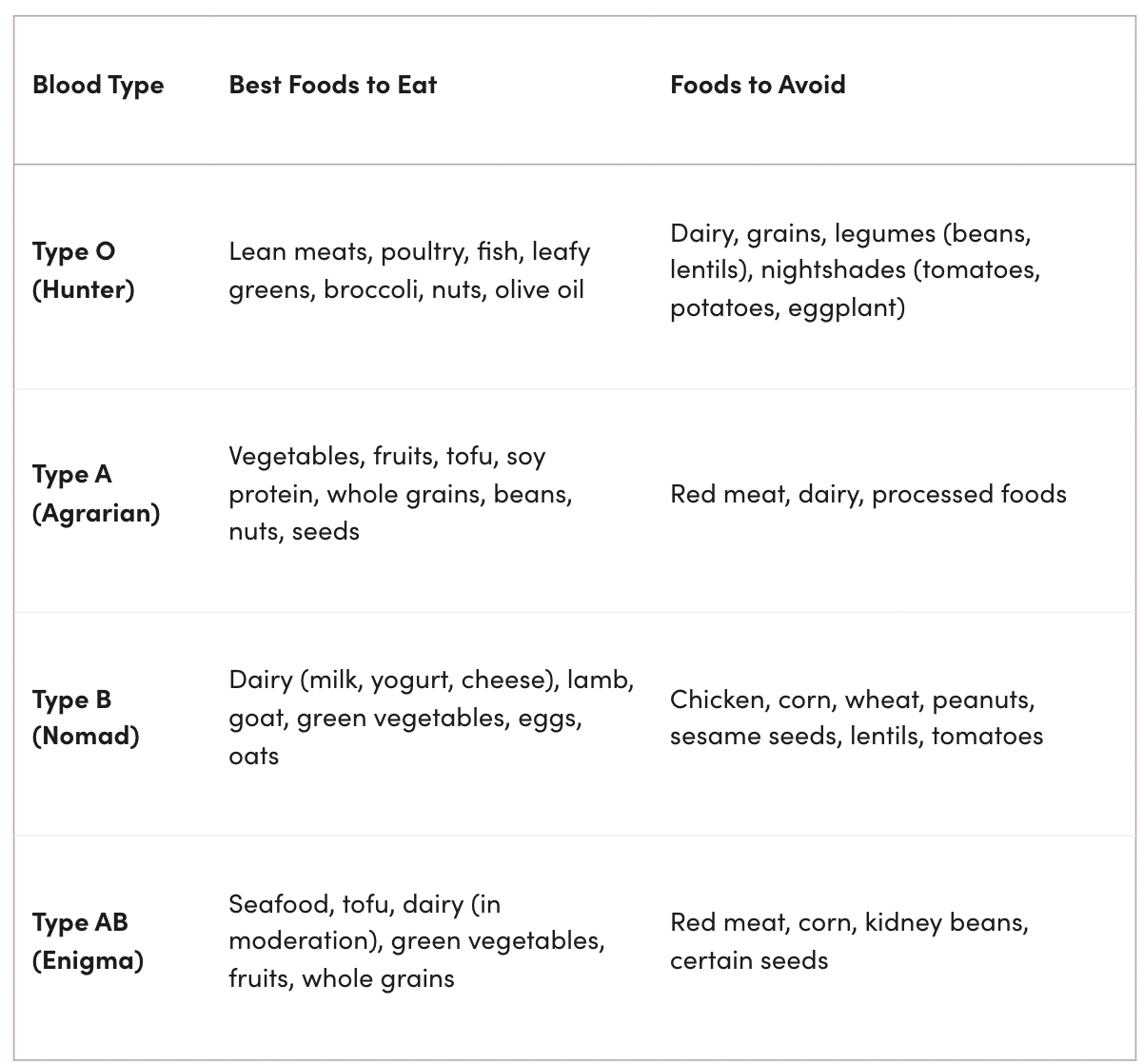
The blood type diet breaks food recommendations down by ABO group. Here’s a snapshot of what it suggests to “eat right for your type.”
Why Knowing Your Blood Type Actually Matters
Even if you never follow the blood type diet, knowing your blood type is still valuable. Your ABO type (A, B, AB, or O) and Rh factor (positive or negative) play important roles in health and medical care.
Here’s why:
- Blood transfusions. The most critical reason to know your blood type is for safe blood transfusions. Receiving an incompatible type can cause dangerous immune system reactions.
- Pregnancy. Rh factor matters during pregnancy. If a mother is Rh-negative and the baby is Rh-positive, medical care is needed to prevent complications.
- Disease risk. Some research suggests links between blood type and risks for certain conditions (like heart disease or infections), although these associations aren’t strong enough to guide diet or lifestyle alone.
- Curiosity and personal tracking. Many people just like knowing their blood type for wellness planning or simply as part of their personal health information.
So, while your blood type may not dictate your perfect diet, it’s still useful knowledge for your overall health.
How to Find Out Your Blood Type
If you don’t already know your blood type, there are a few simple ways to find out:
- Check your medical records. Your blood type may already be listed in your electronic health chart or lab results.
- Donate blood. Need a free way to find out? Blood donation centers routinely test and record your type, and you can usually request the information.
- Ask your doctor for a test. A quick lab draw can determine your ABO and Rh factor. This could be tacked onto other routine blood tests done at your annual wellness check-up.
- At-home test kits. Some pharmacy or online kits use a small finger prick and a test card to reveal your blood type within minutes.
The Blood Type Diet FAQs
Here are some answers to commonly asked questions about the blood type diet.
Does blood type affect diet?
There’s no strong scientific evidence that your blood type should determine what you eat. While some people feel better on the blood type diet, improvements are usually due to eating more whole, unprocessed foods versus blood type.
What is the blood type diet?
The blood type diet is a theory that your ABO blood type (A, B, AB, or O) influences how your body reacts to certain foods. It recommends specific diets for each blood type. For example, high protein for type O and plant-based for type A.
Is eating for your blood type safe?
For most people, yes, if you’re eating a balanced diet with enough calories and nutrients. The risk comes if you cut out major food groups (like grains or legumes) without proper replacements, which can cause deficiencies over time.
Can eating for your blood type help with weight loss?
Possibly, but not for the reasons you’d think. Weight loss usually comes from eating fewer processed foods, paying attention to portions, and making healthier choices overall, not because the foods “match” your blood type.
Should I try the blood type diet?
If you’re curious, it’s generally safe to try as long as you don’t over-restrict your nutrition. But evidence-based diets, like the Mediterranean diet or other plant-forward eating patterns, are better supported by research. Always check with your healthcare provider before making big changes.
Should You Eat Right for Your Blood Type? Meh.
The blood type diet has been around for a long time, but science hasn’t proven that matching foods to your blood type makes a real difference. Still, it does encourage eating more whole and minimally processed foods, which is always a good thing for your well-being.
- The theory: Each blood type has unique “ideal” foods, but research doesn’t support this.
- The reality: Most benefits come from eating fewer ultra-processed foods and more balanced meal plans.
- The better option: Evidence-based diets like ones based primarily on whole plant foods are more reliable for long-term health.
The best diet is one that’s balanced, sustainable, nutrient-dense, and works for you, blood type aside.
For personalized nutritional guidance based on your goals, preferences, and health conditions, we recommend speaking with a registered dietitian nutritionist (RDN).
Related:
Like MediaFeed’s content? Be sure to follow us.
This article originally appeared on Hims.com and was syndicated by MediaFeed.org.


