Editorial Note: The content of this article is based on the author’s opinions and recommendations alone. It may not have been previewed, commissioned or otherwise endorsed by any of our network partners.
The coronavirus pandemic brought countless economic challenges, especially for small business owners who had to find ways to cope with a new way of doing things. Sometimes confusing health and safety rules and evolving social distancing requirements only added to the hurdles. But as we near 2022 and some of these challenges wear away, would-be entrepreneurs may be looking to start new business ventures.
“It’s definitely a challenging time to start a small business, but that doesn’t mean that you shouldn’t do it,” says Matt Schulz, LendingTree chief credit analyst. “There are always going to be things that you can’t predict. The truth, however, is that if you have a good idea, a thoughtful plan, adequate funding and a willingness to take the risk and put in the work, any time can be a good time to get started.”
To find the best and worst places to start a small business, LendingTree looked at nine metro-and state-based metrics — from the proportion of self-employed residents to unemployment rates, to one-year business survival rates — across the 100 largest U.S. metros by population.
Image Credit: DepositPhotos.com.
Methodology

LendingTree analysts compared nine metrics across the 100 largest U.S. metros by population to determine the best places to start a small business.
Analysts created three scores using this data:
- Entrepreneurship score
- Business climate score
- Local economy score
Analysts averaged the three indexes to create a final score to rank the metros. Here are the categories and the metrics within them, representing the latest available data at the time of research. Metrics are metro-based unless otherwise noted.
Entrepreneurship score
- Proportion of residents in their prime working years: The percentage of residents ages 25 to 54. U.S. Census Bureau, 2019. (Full weight)
- Proportion of self-employed residents: U.S. Census Bureau, 2019 American Community Survey. (Full weight)
- Entrepreneurship rate: The percentage of residents who start a business, measured at the state level. Kauffman Indicators of Entrepreneurship, 2020. (Half weight)
Business climate score
- Tax climate: The State Business Tax Climate Index score, measured at the state level. Corporate, individual income, sales, property and unemployment insurance taxes are factors in the score. Tax Foundation, 2021. (Full weight)
- Proportion of residents with at least a bachelor’s degree: U.S. Census Bureau, 2019 American Community Survey. (Full weight)
- Business survival rate: The percentage of new businesses still operating after a year, measured at the state level. Kauffman Indicators of Entrepreneurship, 2020. (Half weight)
Local economy score
- Housing costs as a percentage of income: U.S. Census Bureau, 2019 American Community Survey. (Full weight)
- Unemployment rate: U.S. Bureau of Labor Statistics, July 2021. (Full weight)
- Business formation rate: The percentage of new businesses that make payroll within eight quarters of applying for a tax Employer Identification Number (EIN), measured at the state level. Kauffman Indicators of Entrepreneurship, 2020. (Half weight)
Image Credit: DepositPhotos.com.
25. Boston

- Tax climate: 4.92
- Business survival rate: 80.5%
- Proportion of residents with at least a bachelor’s degree: 49.3%
- Housing costs as a percentage of income: 22.7%
- Business formation rate: 12.1%
- Unemployment rate: 5.3%
- Entrepreneurship rate: 2.7%
- Proportion of residents in their prime working years: 54.2%
- Proportion of self-employed residents: 3.0%
- Total score: 60.0
Image Credit: DepositPhotos.com.
24. San Francisco, California

- Tax climate: 4.00
- Business survival rate: 81.8%
- Proportion of residents with at least a bachelor’s degree: 51.4%
- Housing costs as a percentage of income: 23.2%
- Business formation rate: 13.1%
- Unemployment rate: 5.8%
- Entrepreneurship rate: 4.3%
- Proportion of residents in their prime working years: 57.0%
- Proportion of self-employed residents: 3.1%
- Total score: 60.5
Image Credit: DepositPhotos.com.
23. North Port, Florida

- Tax climate: 6.89
- Business survival rate: 75.8%
- Proportion of residents with at least a bachelor’s degree: 33.7%
- Housing costs as a percentage of income: 19.8%
- Business formation rate: 7.6%
- Unemployment rate: 4.5%
- Entrepreneurship rate: 5.3%
- Proportion of residents in their prime working years: 44.7%
- Proportion of self-employed residents: 5.9%
- Total score: 60.6
Image Credit: Rino Landa.
22. Orlando

- Tax climate: 6.89
- Business survival rate: 75.8%
- Proportion of residents with at least a bachelor’s degree: 33.3%
- Housing costs as a percentage of income: 23.9%
- Business formation rate: 7.6%
- Unemployment rate: 5.3%
- Entrepreneurship rate: 5.3%
- Proportion of residents in their prime working years: 53.9%
- Proportion of self-employed residents: 4.7%
- Total score: 61.5
Image Credit: LUNAMARINA / istockphoto.
21. Ogden, Utah
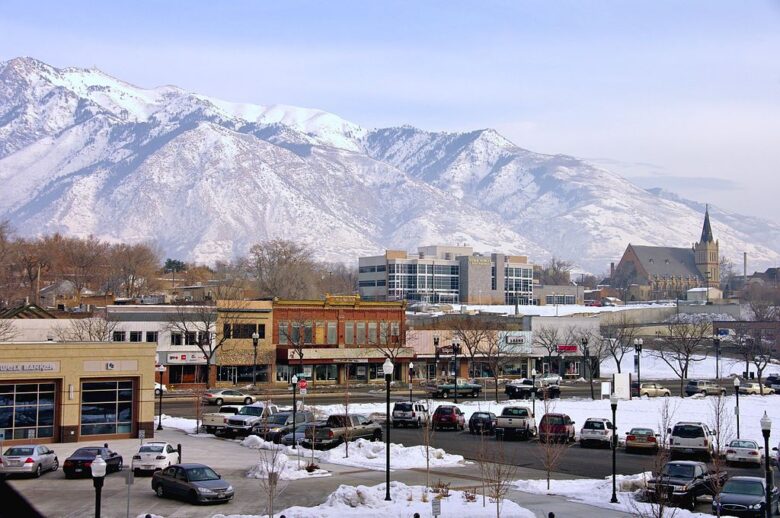
- Tax climate: 5.60
- Business survival rate: 76.8%
- Proportion of residents with at least a bachelor’s degree: 32.0%
- Housing costs as a percentage of income: 18.2%
- Business formation rate: 10.6%
- Unemployment rate: 2.5%
- Entrepreneurship rate: 2.4%
- Proportion of residents in their prime working years: 49.2%
- Proportion of self-employed residents: 4.4%
- Total score: 63.4
Image Credit: Scott Catron from Sandy, Utah, USA .
20. Denver

- Tax climate: 5.18
- Business survival rate: 76.9%
- Proportion of residents with at least a bachelor’s degree: 45.8%
- Housing costs as a percentage of income: 22.0%
- Business formation rate: 9.6%
- Unemployment rate: 6.0%
- Entrepreneurship rate: 3.5%
- Proportion of residents in their prime working years: 56.6%
- Proportion of self-employed residents: 4.7%
- Total score: 63.9
Image Credit: istockphoto.
19. Seattle

- Tax climate: 5.33
- Business survival rate: 63.4%
- Proportion of residents with at least a bachelor’s degree: 44.1%
- Housing costs as a percentage of income: 22.3%
- Business formation rate: 13.9%
- Unemployment rate: 5.2%
- Entrepreneurship rate: 2.7%
- Proportion of residents in their prime working years: 56.8%
- Proportion of self-employed residents: 3.6%
- Total score: 64.1
Image Credit: aiisha5 / istockphoto.
18. Dallas

- Tax climate: 5.46
- Business survival rate: 79.6%
- Proportion of residents with at least a bachelor’s degree: 36.3%
- Housing costs as a percentage of income: 21.3%
- Business formation rate: 10.1%
- Unemployment rate: 5.3%
- Entrepreneurship rate: 3.8%
- Proportion of residents in their prime working years: 53.7%
- Proportion of self-employed residents: 3.2%
- Total score: 64.6
Image Credit: istockphoto/f11photo.
17. Atlanta

- Tax climate: 4.97
- Business survival rate: 76.5%
- Proportion of residents with at least a bachelor’s degree: 39.9%
- Housing costs as a percentage of income: 20.8%
- Business formation rate: 6.3%
- Unemployment rate: 3.2%
- Entrepreneurship rate: 3.6%
- Proportion of residents in their prime working years: 54.1%
- Proportion of self-employed residents: 4.5%
- Total score: 65.2
Image Credit: Kruck20/istockphoto.
16. Jacksonville, Florida

- Tax climate: 6.89
- Business survival rate: 75.8%
- Proportion of residents with at least a bachelor’s degree: 32.5%
- Housing costs as a percentage of income: 20.8%
- Business formation rate: 7.6%
- Unemployment rate: 4.5%
- Entrepreneurship rate: 5.3%
- Proportion of residents in their prime working years: 53.3%
- Proportion of self-employed residents: 4.5%
- Total score: 65.4
Image Credit: istockphoto/Allen Allnoch.
15. Des Moines, Iowa

- Tax climate: 4.50
- Business survival rate: 79.8%
- Proportion of residents with at least a bachelor’s degree: 38.0%
- Housing costs as a percentage of income: 18.3%
- Business formation rate: 11.4%
- Unemployment rate: 3.9%
- Entrepreneurship rate: 3.1%
- Proportion of residents in their prime working years: 52.7%
- Proportion of self-employed residents: 3.0%
- Total score: 65.6
Image Credit: istockphoto.
14. Madison, Wisconsin

- Tax climate: 5.06
- Business survival rate: 78.9%
- Proportion of residents with at least a bachelor’s degree: 48.6%
- Housing costs as a percentage of income: 19.3%
- Business formation rate: 9.8%
- Unemployment rate: 3.1%
- Entrepreneurship rate: 2.2%
- Proportion of residents in their prime working years: 52.5%
- Proportion of self-employed residents: 3.1%
- Total score: 65.8
Image Credit: Pixabay.com.
13. Kansas City, Missouri

- Tax climate: 5.45
- Business survival rate: 76.0%
- Proportion of residents with at least a bachelor’s degree: 37.7%
- Housing costs as a percentage of income: 18.5%
- Business formation rate: 10.3%
- Unemployment rate: 4.4%
- Entrepreneurship rate: 3.7%
- Proportion of residents in their prime working years: 52.7%
- Proportion of self-employed residents: 3.0%
- Total score: 66.9
Image Credit: istockphoto.
12. Provo, Utah

- Tax climate: 5.60
- Business survival rate: 76.8%
- Proportion of residents with at least a bachelor’s degree: 40.6%
- Housing costs as a percentage of income: 19.8%
- Business formation rate: 10.6%
- Unemployment rate: 2.3%
- Entrepreneurship rate: 2.4%
- Proportion of residents in their prime working years: 42.6%
- Proportion of self-employed residents: 4.0%
- Total score: 67.0
Image Credit: Utah Valley Convention & Visitors Bureau / Flickr.
11. Omaha, Nebraska

- Tax climate: 5.00
- Business survival rate: 79.6%
- Proportion of residents with at least a bachelor’s degree: 37.7%
- Housing costs as a percentage of income: 18.8%
- Business formation rate: 13.6%
- Unemployment rate: 2.6%
- Entrepreneurship rate: 2.7%
- Proportion of residents in their prime working years: 51.6%
- Proportion of self-employed residents: 3.3%
- Total score: 67.2
Image Credit: Matt Bills / iStock.
10. St. Louis, Missouri

- Tax climate: 5.45
- Business survival rate: 76.0%
- Proportion of residents with at least a bachelor’s degree: 35.8%
- Housing costs as a percentage of income: 17.8%
- Business formation rate: 10.3%
- Unemployment rate: 4.4%
- Entrepreneurship rate: 3.7%
- Proportion of residents in their prime working years: 52.9%
- Proportion of self-employed residents: 3.2%
- Total score: 69.1
Image Credit: istockphoto.
9. Nashville

- Tax climate: 5.25
- Business survival rate: 79.5%
- Proportion of residents with at least a bachelor’s degree: 38.5%
- Housing costs as a percentage of income: 19.9%
- Business formation rate: 9.3%
- Unemployment rate: 3.7%
- Entrepreneurship rate: 3.5%
- Proportion of residents in their prime working years: 54.3%
- Proportion of self-employed residents: 2.9%
- Total score: 69.9
Image Credit: ANPerryman / istockphoto.
8. Salt Lake City

- Tax climate: 5.60
- Business survival rate: 76.8%
- Proportion of residents with at least a bachelor’s degree: 36.5%
- Housing costs as a percentage of income: 19.6%
- Business formation rate: 10.6%
- Unemployment rate: 2.8%
- Entrepreneurship rate: 2.4%
- Proportion of residents in their prime working years: 52.4%
- Proportion of self-employed residents: 3.4%
- Total score: 69.9
Image Credit: DepositPhotos.com.
7. Portland, Oregon

- Tax climate: 5.42
- Business survival rate: 77.6%
- Proportion of residents with at least a bachelor’s degree: 40.3%
- Housing costs as a percentage of income: 22.6%
- Business formation rate: 13.5%
- Unemployment rate: 4.6%
- Entrepreneurship rate: 2.9%
- Proportion of residents in their prime working years: 55.6%
- Proportion of self-employed residents: 3.9%
- Total score: 70.0
Image Credit: DepositPhotos.com.
6. Minneapolis

- Tax climate: 4.26
- Business survival rate: 80.1%
- Proportion of residents with at least a bachelor’s degree: 43.2%
- Housing costs as a percentage of income: 18.8%
- Business formation rate: 11.4%
- Unemployment rate: 3.5%
- Entrepreneurship rate: 1.8%
- Proportion of residents in their prime working years: 53.8%
- Proportion of self-employed residents: 3.6%
- Total score: 70.1
Image Credit: istockphoto.
5. Boise, Idaho

- Tax climate: 5.20
- Business survival rate: 80.4%
- Proportion of residents with at least a bachelor’s degree: 33.3%
- Housing costs as a percentage of income: 19.8%
- Business formation rate: 14.0%
- Unemployment rate: 3.0%
- Entrepreneurship rate: 3.8%
- Proportion of residents in their prime working years: 51.7%
- Proportion of self-employed residents: 4.0%
- Total score: 71.9
Image Credit: Mike Worley / istockphoto.
4. Durham, North Carolina

- Tax climate: 5.51
- Business survival rate: 78.2%
- Proportion of residents with at least a bachelor’s degree: 46.3%
- Housing costs as a percentage of income: 20.1%
- Business formation rate: 10.0%
- Unemployment rate: 3.9%
- Entrepreneurship rate: 3.1%
- Proportion of residents in their prime working years: 52.6%
- Proportion of self-employed residents: 3.1%
- Total score: 72.2
Image Credit: Sean Pavone / istockphoto.
3. Charlotte, North Carolina
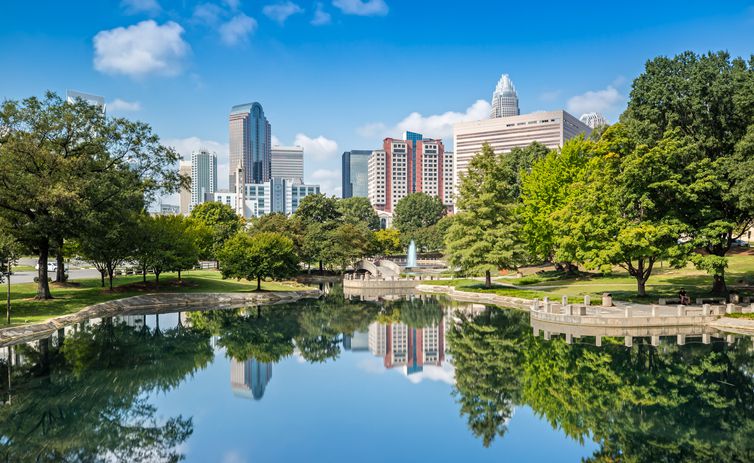
- Tax climate: 5.51
- Business survival rate: 78.2%
- Proportion of residents with at least a bachelor’s degree: 36.2%
- Housing costs as a percentage of income: 19.9%
- Business formation rate: 10.0%
- Unemployment rate: 4.4%
- Entrepreneurship rate: 3.1%
- Proportion of residents in their prime working years: 54.1%
- Proportion of self-employed residents: 3.8%
- Total score: 73.7
Image Credit: Susanne Neumann/istockphoto.
2. Austin, Texas
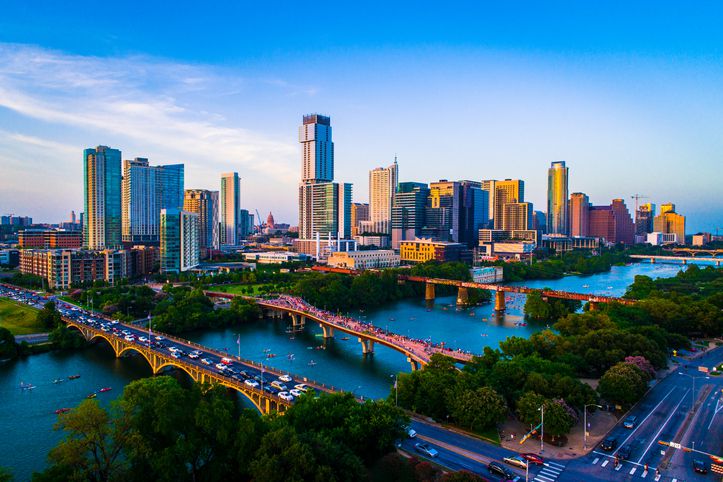
- Tax climate: 5.46
- Business survival rate: 79.6%
- Proportion of residents with at least a bachelor’s degree: 46.2%
- Housing costs as a percentage of income: 21.4%
- Business formation rate: 10.1%
- Unemployment rate: 4.2%
- Entrepreneurship rate: 3.8%
- Proportion of residents in their prime working years: 56.5%
- Proportion of self-employed residents: 4.1%
- Total score: 82.7
Image Credit: RoschetzkyIstockPhoto / istockphoto.
1. Raleigh, North Carolina

- Tax climate: 5.51
- Business survival rate: 78.2%
- Proportion of residents with at least a bachelor’s degree: 48.0%
- Housing costs as a percentage of income: 18.5%
- Business formation rate: 10.0%
- Unemployment rate: 3.9%
- Entrepreneurship rate: 3.1%
- Proportion of residents in their prime working years: 54.8%
- Proportion of self-employed residents: 4.1%
- Total score: 88.8
Image Credit: Sean Pavone/ istockphoto.
How to choose a small business location

If you’re looking to start a small business, location can make a big difference in how well it does and how much of an uphill battle it’ll be to get started. And while it may be tempting to stay where you are, it may not be the best decision for your business. Here are a few factors you should consider first:
- Think about your business’s needs: Assuming your business isn’t 100% online, the location can make a significant difference in your first years. “So much about starting a business is about knowing what you’re trying to accomplish and who you are trying to serve,” Schulz says. “Once you’ve answered those questions about your own business, you can start researching places that might be the best fit for you, including your current location.” Of note, the average age of entrepreneurs in the largest U.S. metros is 40.
- Look into the local small business scene: As a new business owner, being able to talk to someone who’s been in your situation before can be a useful way to avoid common pitfalls and get ahead faster. While it won’t be the deciding factor, it can help you weigh your options.
- Consider your support system: “Starting a business is hard, hard work,” Schulz says. “Having friends and family rooting you on, and even sometimes pitching in physically, financially or emotionally, can be a huge help, especially in those difficult early days.”
- Compare the cost of living and potential business expenses: The early days of any business can be expensive, so having the opportunity to save on rent, which is usually the largest monthly expense, can help ease that pressure as you begin. Alternatively, staying with family can also help you manage, at least until your business is in a better financial position.
“Ultimately, there’s no one-size-fits-all answer for the perfect place to start a business,” Schulz says, though these metrics can help give you an idea. “What matters most is taking the time to be thoughtful, do your homework and make an informed decision.”
Related:
- A small business guide to understanding the product life cycle
- How much it costs to start a business in every industry
This article originally appeared on LendingTree.com and was syndicated by MediaFeed.org.
Image Credit: istockphoto/jacoblund.