Key takeaways
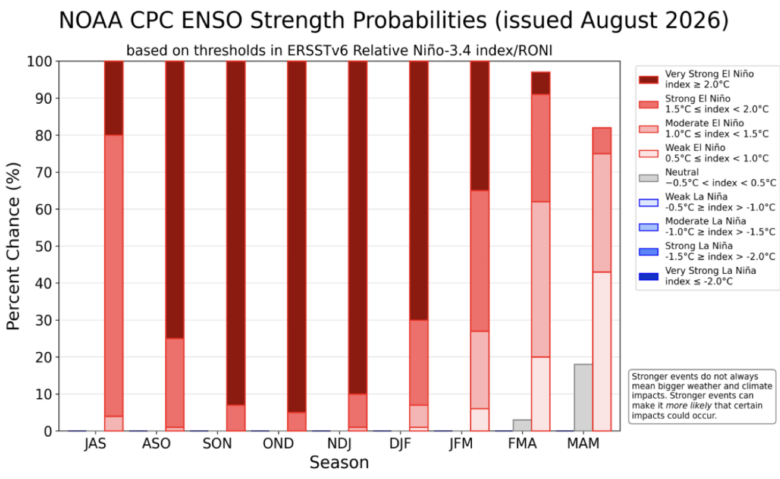
- A strong event (80% probability) is likely by fall, with peak intensity hitting in winter 2026–27.
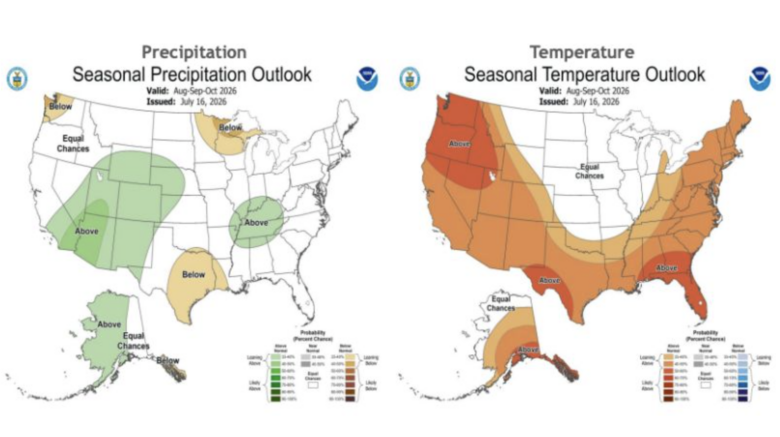
- El Niño splits the country. The Southeast, Gulf Coast, California and the Desert Southwest will trend wetter and nearly the entire country trends warmer, including the Northern Tier and Northeast.
- Wet regions should expect more lawn fungus and lawn mowing. Dry regions must prepare for drought stress and watering. Fall is your key window to act.
A strong El Niño is building for late 2026, and whether it helps your grass or hurts it comes down to your region. In wet areas, it means more lawn fungus and lawn mowing, while in dry ones, more drought stress and watering.
NOAA issued an El Niño Advisory and put the odds of a “very strong” event at greater than 80% by October through December 2026. Forecasters say this could rank among the strongest El Niño events in recorded history by ocean temperature, with the biggest effects felt in fall and winter.`
What is a “Super” El Niño?
El Niño is a climate pattern in which surface water in the central and eastern tropical Pacific becomes warmer than normal. That warming can shift the jet stream and change the weather we usually expect across the United States, especially during the fall and winter.
Cheryl Nelson, meteorologist and CEO of Prepare with Cher in Norfolk, Virginia, explains the mechanics behind El Niño.
“El Niño is the atmosphere’s response to warmer than normal water temperatures in the Pacific Ocean near the equator,” she says. “This ultimately influences weather patterns across North America.”
As for the dramatic nickname?
“One thing worth pointing out is that ‘Super El Niño’ isn’t actually an official NOAA term – it’s something you’ll often see in media headlines,” Nelson clarifies. “NOAA classifies El Niño events based on their strength, using categories like weak, moderate, strong, and very strong.
“Even a very strong El Niño won’t produce textbook impacts in every community,” she says, “but it does increase the likelihood of seeing the weather patterns we typically associate with it.”
When El Niño hits your lawn: A seasonal timeline
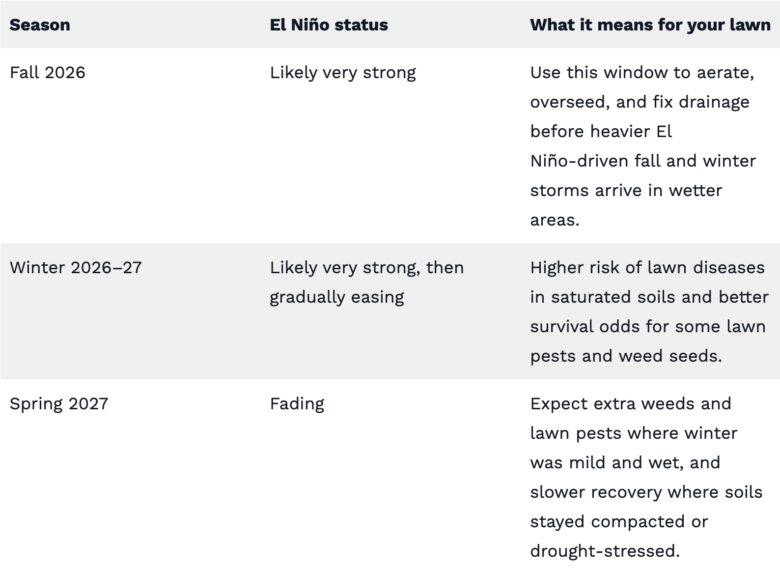
El Niño’s lawn effects unfold over the year. Here’s when to expect the changes:
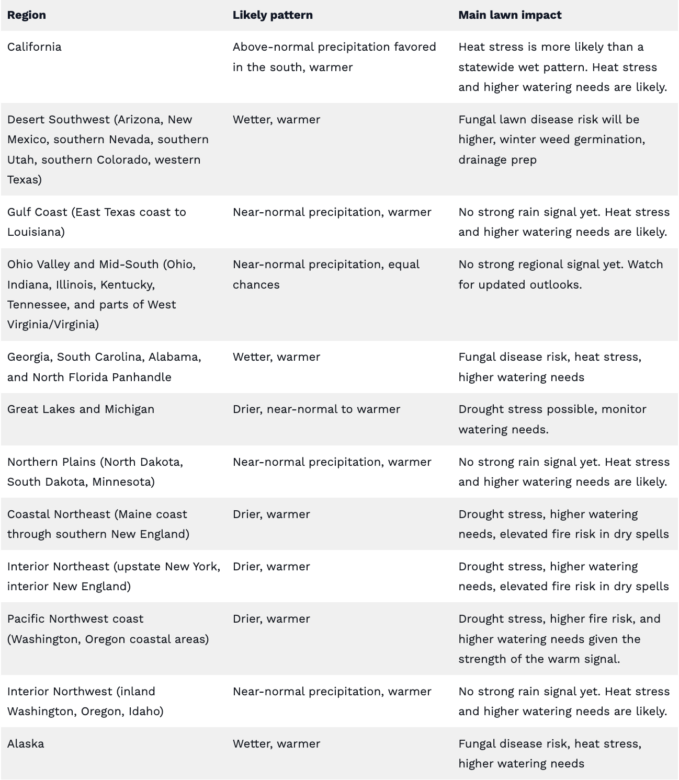
How El Niño affects your lawn (by region)
Before diving into regional specifics, it’s important to remember that macro-forecasts tell only half the story.
“When NOAA says an area has an increased chance of being wetter or drier than average, they’re describing the odds over an entire period of time or season – not predicting what will happen in someone’s backyard on any given day,” Nelson says.
“Things like elevation, proximity to lakes or the ocean, urban development, prevailing winds, and even the slope of your property can all influence how much rain your yard actually receives. It’s not unusual for neighborhoods just a few miles apart to receive very different rainfall totals from the same storm,” she says.
If your region turns wetter
Extra rain and humidity, expected in Southern California, the Desert Southwest, Georgia, South Carolina, Alabama, the North Florida Panhandle, and Alaska, can do a lot of damage to a lawn:
Fungal disease: Brown patch, dollar spot, and pythium blight thrive in warm, wet conditions. Contact and protectant fungicides lose efficacy fast in heavy rain. One inch of rain removes roughly 50% of the residue. You’ll need to reapply sooner or switch to longer-lasting fungicides during prolonged wet spells.
More weeds: A wetter winter and spring germinate more weed seeds, so expect a heavier weed year. A pre-emergent and a thick, well-fed lawn are your best defense.

Nutrient leaching: Heavy rain washes nitrogen out of the soil, which can leave grass yellow and hungry. On sandy soils, repeated heavy rains wash out nutrients that keep your soil balanced. Do a post-rain soil test before you fertilize.
Flooding and erosion: Standing water suffocates roots and invites disease. Runoff carries away your topsoil. Improve your drainage, fix low spots, and consider a rain garden where water pools.
Mosquitoes: Standing water is a mosquito nursery. Empty anything that holds water and treat the problem spots.
What to do:
Joseph Demkovich, brand president of Heroes Lawn Care in Omaha, Nebraska, says the biggest mistake homeowners make is watering on a set schedule without checking whether the lawn actually needs it.
“In areas that stay wet, turn off automatic sprinklers, let the grass grow a little taller so it can dry out more easily, and use a preventive lawn treatment during warm, humid nights,” Demkovich says. “You can also switch to a slow-release granular fertilizer that stays in place after it is applied.”
To handle the excess water, Demkovich offers a practical fix: “The most cost-effective way to improve drainage before the heavy winter rains is to use inexpensive flexible downspouts to direct roof water away from trouble areas.”
If your region turns warmer and drier
El Niño’s current outlook pushes the Great Lakes and Michigan, the coastal and interior Northeast, and the Pacific Northwest coast toward drier conditions, on top of warmth that is showing up almost everywhere.
This combination which brings its own set of problems:
Drought stress: Grass browns, thins, and goes dormant to survive. Learn the difference between dormant grass (tan, firm, recoverable with water) and dead grass (pulls up easily) before you give up on a brown lawn.
Higher fire risk: Dry, tall grass is fuel for a wildfire. Keeping your grass mowed and watered near your home and other structures matters more in a dry El Niño year.
Heat and drought pests: Chinch bugs and spider mites thrive in hot, dry turf, and their damage mimics drought. If a patch keeps spreading no matter how much you water it, suspect an insect invasion.
Watering restrictions: Dry years bring water restrictions, so check your local rules before you plan an irrigation schedule.
What to do:
Adjust your watering habits to build resilience.
“In areas with dry winters, help your lawn grow deep, drought-resistant roots by giving it about 1 inch of water every week in one or two deep soakings instead of watering lightly every day,” Demkovich says.
He also warns homeowners to learn the difference between heat-stressed grass and an infestation.
“If your grass turns brown during a drought, it may simply be dormant,” Demkovich says. “However, if dead patches keep spreading near hot sidewalks, the lawn may have an insect problem. You may also have bugs if the grass lifts up like loose carpet or does not turn green again after a deep watering.”
Don’t forget winter: The overwintering effect
A milder winter lets pests and weed seeds survive what a hard freeze would otherwise kill. That means heavier grub, armyworm, and weed pressure the following spring.
“For a typical El Niño winter, apply a pre-emergent weed preventer and grub treatment in the fall,” Demkovich says. “This helps control weeds and bugs that may survive the mild winter before they become a bigger problem in spring.”
The changing temperatures also mess with your spring timeline:
- In wetter regions, soils that stay saturated through winter delay spring green-up and slow your early seeding windows.
- In warmer, drier regions, earlier soil warming can advance the green-up timeline.
Fall prep that pays off either way
Because El Niño peaks in fall and winter, and fall is the time to get your lawn ready for winter anyway, this is your action window.
If you have cool-season grass, a warmer, wetter El Niño fall can still favor cool-season grass establishment in areas with adequate rainfall. This is a great window to overseed.
Overseed thin spots with drought-tolerant grass in early fall, before El Niño’s peak effects hit in winter. Choose varieties suited to your region. Tall fescue, Bermudagrass, and Zoysiagrass are more drought-tolerant than Kentucky bluegrass or ryegrass.
If you have warm-season grass, use fall to prepare for a drier, warmer El Niño winter. Check your irrigation system, address any drainage issues, and apply a fall pre-emergent to control weeds while your grass is dormant.
In drier El Niño regions, plan to supplement irrigation for any fall seeding or dormant-season lawn care.
What to do:
- Core aerate: “Use a core aerator to make small holes in the lawn,” Demkovich says. “This helps heavy El Niño rain soak deeper into the soil instead of turning the yard into a muddy, waterlogged mess.”
- Overseed 4 to 6 weeks before the ground freezes.
- Fertilize by soil test, favoring slow-release nitrogen.
- Fix low spots and clean gutters before heavy rain or runoff arrives.
FAQs
Does a “super” El Niño mean worse weather for my lawn?
Not necessarily. A stronger El Niño makes the seasonal pattern more predictable, not automatically more extreme. Whether it helps or hurts depends on whether your region trends wetter or drier.
“I always encourage people to think of seasonal outlooks as planning tools rather than promises,” Nelson says. “Seasonal outlooks help us prepare – they don’t predict exactly what will happen in your neighborhood.”
When does El Niño end, and what comes next?
This event has a 97% chance of lasting through early spring 2027. After it fades, forecasters are watching for a swing back to La Niña conditions later in 2027. If La Niña takes over, the reduced wind shear typically associated with that pattern tends to favor a more active Atlantic hurricane season, and the South often trends drier again.
Does El Niño increase the risk of soil compaction on my lawn?
Indirectly, yes. In drought-stressed regions, dry, brittle grass is more vulnerable to compaction from regular foot traffic, which further stresses already weakened turf. In wet regions, saturated soil compacts easily under any weight, including mower traffic.
Minimizing foot traffic on stressed lawns and avoiding mowing when the soil is soggy can prevent additional damage beyond what El Niño already causes.
Will El Niño change how often I need to mow this year?
Likely, yes.
“Mowing height should depend on the weather,” Demkovich says. “In hot, dry areas, keep the grass a little taller to shade the soil. In wet areas where lawn disease is common, mow it slightly shorter so air can move through and help the soil dry.”
Related:
Like MediaFeed’s content? Be sure to follow us.
This article originally appeared on Lawnlove.com and was syndicated by MediaFeed.co