There is a lot more waiting for you in Idaho than just potatoes — not that anyone is likely to pass up a hot plate of french fries.
There are also some amazing academic opportunities to be found in the state of Idaho. You may want to check out Idaho grants for college, as well as scholarships, to help make your education dreams come true.
Keep reading to learn more about Idaho student loan forgiveness programs, as well as aid options, to help make funding your college experience easier.
Related: How to legally escape your student loan debt
This article originally appeared on SoFi.com and was syndicated by MediaFeed.org.
Image Credit: knowlesgallery / iStock.
Average student loan debt in Idaho
Idaho students may be curious about the current state of Idaho student loans. To start, in 2017, 61% of Idaho college attendees had student loan debt, and on average owed $26,675.
When it comes to student loan default rates, as of 2015 (the most recent federal data available) Idaho has a default rate of 9.3%, with over 2,400 loan borrowers in default.
For comparison, despite having two fewer schools than Idaho, and less borrowers who have entered repayment, Nevada’s student loan default rate is vastly higher than Idaho’s at 15.3% compared to 9.3%.
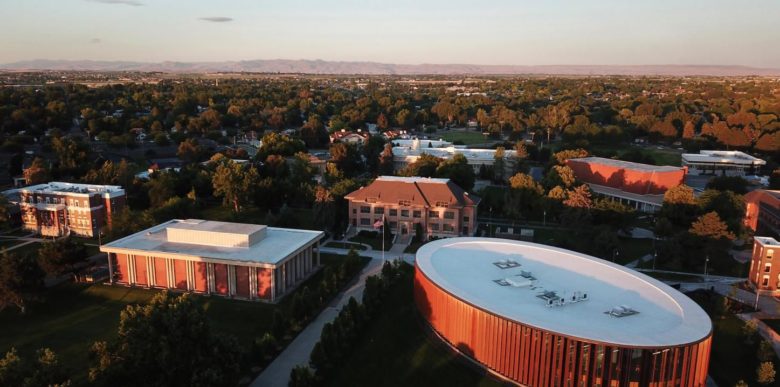
Image Credit: The College of Idaho, Caldwell, Idaho.
Idaho student loans

If your goal is to attend school in Idaho and you’re looking at ways to finance your education, you have options. And both federal and private student loans may be worth considering when researching how to pay for your college degree.
Image Credit: knowlesgallery / iStock.
Federal student loans

Federal student loans are all provided by the U.S. Department of Education’s William D. Ford Federal Direct Loan (Direct Loan) Program. If you take out a federal loan, the U.S. Department of Education is your lender.
To see which type of loan you may qualify for, you’ll need to fill out the Free Application for Federal Student Aid (FAFSA®) form to apply for financial aid for college or grad school. You can review your state’s deadline and the federal FAFSA deadline here.
You should also review the deadlines for each college you are considering, as each college may consider the date that they receive your FAFSA form, or the date your FAFSA form is processed, as their final deadline. FAFSA will then offer you a financial aid package, dependent on your college, that may include grants, work-study opportunities and federal student loan options. It is important to note that not every student will qualify to receive federal aid.
There are four types of direct loans available:
Direct Subsidized Loans: For eligible undergraduate students who demonstrate financial need these loans help cover the costs of higher education at a college or career school. The federal government pays the interest on Direct Subsidized Loans while a student is in school at least half-time, and interest starts accruing on these loans only after a six-month grace period once students graduate, or if they drop below half-time enrollment.
Direct Unsubsidized Loans: Eligible undergraduate, graduate and professional students may qualify for these loans. Eligibility is not based on financial need. Interest on these loans begins accruing immediately after funds are disbursed.
Direct PLUS Loans: These loans are for graduate or professional students, and parents of dependent undergraduate students who need help paying for education expenses not covered by other financial aid. Eligibility for this loan is not based on financial need, but requires a credit check.
Direct Consolidation Loans: This type of federal loan combines all of your eligible federal student loans into a single loan, with one loan payment. Students generally use this loan if they have taken out multiple federal loans and want to combine them into one loan for repayment. The interest rate on these loans are the weighted average of the interest rates on all of the loans that a student is consolidating, rounded to the nearest one-eighth of 1%.
NOTE: All federal student loans have fixed interest rates, and generally they have lower interest rates than private loans.
Image Credit: DepositPhotos.com.
Private student loans

Private loans are funded by private organizations such as banks, online lenders, credit unions, some schools and state-based or state-affiliated organizations. Federal student loans have interest rates that are regulated by Congress. Private lenders follow a different set of regulations, so their interest rates can vary widely.
Private lenders may (but don’t always) require you to make payments on your loans while you are still in school, whereas you don’t have to start paying back your federal loans until after you graduate, leave school, or change your enrollment status to less than half-time. Their rates will usually differ too. Private loans have variable or fixed interest rates which may be higher or lower than federal loan interest rates, which are always fixed.
Unlike federal loans which can only be applied for within certain deadlines (once a year, and states have their own deadlines), private loans can be applied for on an as-needed basis. Even if you suspect you may need to take out a private loan, it’s still a best practice to submit your FAFSA before applying to see what federal aid you may qualify for first.
If you’ve missed the FAFSA deadline and you’re struggling to pay for school throughout the year, private loans can potentially help you make your education payments — as long as you have enough lead time for your loan to process and for your lender to send money to your school.
For more information on private loans, you can check out our article: Private student loans 101
Image Credit: Esteban Martinena Guerrero/iStock.
Getting ‘gift aid’
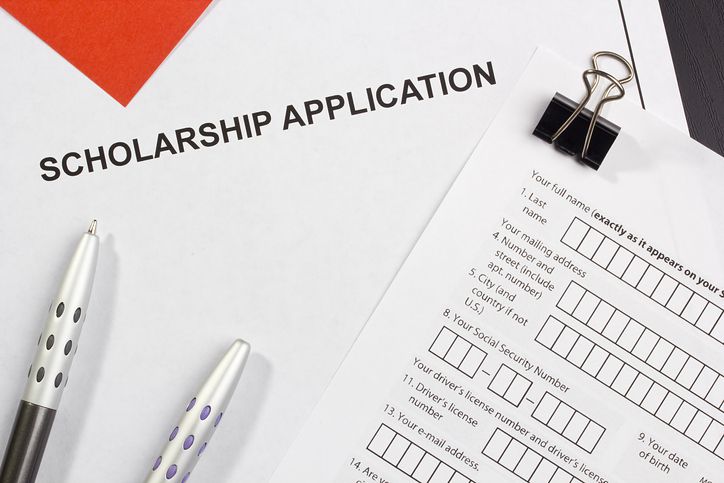
Who doesn’t love a gift? You may sometimes hear grants and scholarships referred to as “gift aid.” That’s because while grants or scholarships may have certain academic or other requirements to keep them, you usually don’t have to pay them back like you would with a loan.
There are a few instances where you may have to pay back grant money, but typically only if certain requirements aren’t met. Generally, grants are need-based and scholarships are awarded based on merit.
There is no one-size-fits-all grant or scholarship amount or requirements, and both scholarships and grants can come from a variety of entities (including private organizations and federal or state governments).
Some scholarships or grants can be for a small amount that may help you pay for your books or research supplies, but others can cover the entire cost of your education. Who knew parking passes could be so expensive?
Image Credit: Picsguru / iStock.
Idaho scholarships & grants
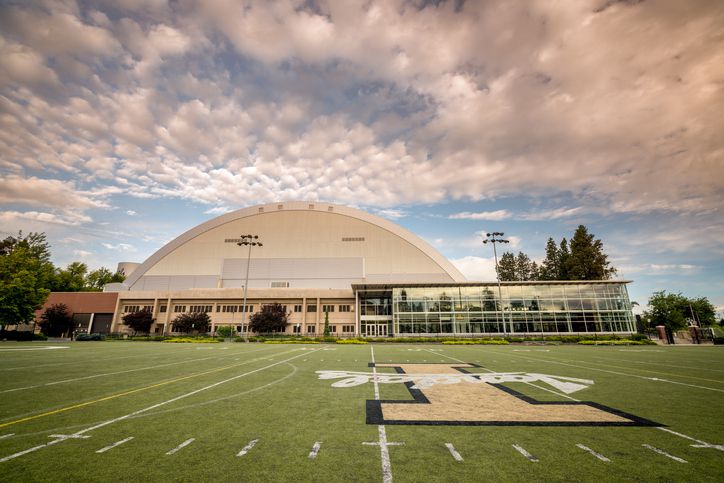
If you’re struggling to afford expensive tuition, fees and books, consider applying for some Idaho scholarships that can help lessen the cost of college. And don’t forget about Idaho college grants that might lighten your financial load.
Idaho Opportunity Scholarship
This scholarship aims to remove financial barriers to higher education in order to help students prepare for college and enter the workforce successfully. This scholarship awards eligible applicants up to $3,500 a year and is renewable for up to four years.
Idaho Governor’s Cup Scholarship
Twenty-five Idaho high school seniors who are planning to attend an Idaho college or university receive this award each year. A $3,000 award is renewable for up to four years for any academic programs, and up to three years for career technical programs for eligible students.
Idaho Postsecondary Credit Scholarship
Recipients of this scholarship must have attended or have graduated from an accredited Idaho high school starting in the spring of 2016 to qualify for this scholarship. They must also have ten or more post secondary credits at the time of high school graduation (or graduated high school with an associate’s degree) and have obtained a matching industry merit-based scholarship.
GEAR UP Idaho Scholarship 2
Graduating Idaho high school seniors can apply for this scholarship if they have participated in an Idaho GEAR UP program at a qualified school district. Award amounts vary based on the number of applicants and funds available each year.
Tschudy Family Scholarship
This scholarship is for eligible graduates of Emmett High School who choose to pursue a degree from an Idaho public four-year higher education institution. Awards are $2,500 per year, are renewable and are awarded based on academic merit, integrity and financial need.
Idaho Opportunity Scholarship for Adult Learners
The Opportunity Scholarship awards eligible applicants up to $3,500 per year. The award is renewable for up to four years and is designed to assist students to go to college and prepare to enter the workforce.
Image Credit: knowlesgallery / iStock.
Idaho student loan repayment & forgiveness programs

If you’ve taken out student loans to attend a school in Idaho, it is never too early to start thinking about your repayment plan. And guess what? You have quite a few repayment options at your disposal.
Take a deep breath — you’ll have time to pay off your loans once you leave school. The standard student loan repayment term is 10 years, but allowances are made for eligible loan borrowers who need more time to pay off their loans (up to 25 years).
Federal student loan interest rates vary based on what year you receive the loan, and change annually in July. Between July 1, 2018, and July 1, 2019, interest rates for federal student loans ranged from 5% to 7.6%, depending on the type of loan.
For private loans, terms and conditions such as interest rates are set by the lender and vary due to many factors. Federal student loans typically offer the lowest interest rates and more flexible repayment options as compared to private student loans.
Image Credit: bunditinay / iStock.
Federal student loan repayment options

Just like there are several types of loans to explore, there are also different kinds of repayment plans. You can learn more about your repayment options for federal student loans here, but the following high-level summaries can give you an idea of which repayment plan may work for you.
Standard Repayment plan
Most borrowers are eligible for this plan and may often pay less over time than with other plans because the loan term is shorter (typically, less interest accrues over shorter loan terms than longer ones if payments are made in full and on-time). There is a 10-year repayment period with this plan.
Graduated Repayment plan
Most borrowers are eligible for this plan, which allows them to pay their loans off over a longer period than the Standard Repayment Plan. Payments start relatively low, then increase over time (usually every two years).
Extended Repayment Plan
To qualify for this plan, there are income thresholds for certain loan types to qualify, and you won’t qualify for Public Service Loan Forgiveness (PSLF) if you choose this loan. Monthly payments are typically lower than under the 10-year Standard Plan or the Graduated Repayment Plan, and borrowers may have a longer period to pay them off (and therefore make more interest payments).
Revised Pay As You Earn (REPAYE)
Direct Loan borrowers (and all Consolidation Loan borrowers) with eligible loan types may be able to choose this plan. Monthly payments are 10% of discretionary income, and any remaining loan balance will be forgiven after 20 years (for undergraduate studies) or 25 years (for graduate or professional studies).
Pay As You Earn (PAYE)
To qualify for this plan, borrowers must have a higher debt relative to their discretionary income. Payments for this plan are capped at 10% of discretionary income (and never more than what would be paid on the Standard Repayment Plan), and any remaining balance will be forgiven after 20 years.
Income-Based Repayment (IBR)
IBR is designed for borrowers who have a high debt relative to their income in order to qualify. Monthly payments will not usually be higher than the 10-year Standard Plan amount. Generally, however, borrowers may pay more over time than under the Standard Plan.
Income-Contingent Repayment (ICR)
Direct Loan borrowers with an eligible loan type may want to consider ICR. This plan is different from IBR because there is no financial hardship requirement. But, it may cost more over time when compared to the 10-year Standard Repayment Plan, and any remaining balance will be forgiven after 25 years.
Income-Sensitive Repayment
Borrowers can expect to pay more over time than under the 10-year Standard Plan. Monthly payments are based on annual income, but loans will be paid in full within 15 years. This repayment plan is only available for FFEL Program loans, which are not eligible for PSLF.
Still not sure which payment plan is right for you?
For more information on repayment plans, check out our student loan repayment options article to help add some clarity.
Image Credit: nirat / iStock.
Student loan refinancing

Another option to potentially help accelerate student loan repayment is to refinance your student loans with a private lender. Some private lenders will let you consolidate and refinance both your federal and private student loans into one loan and interest rate.
Consolidating your loans (aka combining them) under one lender gives you the opportunity to refinance your loan and get a new term and interest rate. If you have an improved financial profile compared to when you took out your original loan, you may be able to lower your interest rate when you refinance — or even shorten your term to pay off your loan more quickly!
But, it is important to remember that if you refinance federal student loans with a private lender, you will lose access to federal programs such as the income-driven repayment plans mentioned above, as well as student loan forgiveness and forbearance options.
Image Credit: Drazen Zigic/iStock.
Student loan forgiveness

At first glance, student loan forgiveness looks appealing. But it may not be as easily attainable as one might think. For example, 98% of applicants who applied to the Public Service Loan Forgiveness (PSLF) Program were denied due to issues such as not meeting the program requirements or mistakes made on their forms.
That being said, there are state-specific and federal Public Service Loan Forgiveness programs that certain student loan borrowers may be eligible for.
Before you review your options, it’s important to know that the terms forgiveness, cancellation and discharge essentially mean the same thing when it comes to federal student loans, but are applied in different scenarios. For example, if you are no longer required to make loan payments due to your job, that could fall under forgiveness or cancellation.
Or, if the school you received your loans at closed before you graduated, this situation would generally be called a discharge.
Even if you don’t complete your education, can’t find a job, or are unhappy with the quality of your education, you must repay your loans. But there are circumstances that may lead to federal student loans being forgiven, canceled, or discharged. Here are some of those options:
Public Service Loan Forgiveness (PSLF)
The PSLF Program may forgive the remaining balance on eligible Direct Loans after making 120 qualify monthly payments under a repayment plan (and working with a qualifying employer).
Teacher Loan Forgiveness
Those who teach full-time for five complete and consecutive academic years in a low-income school or educational service agency (amongst other qualifications) may be eligible for forgiveness of up to $17,500 on select federal loans.
Perkins Loan Cancellation
Cancellation for this specific loan is based on eligible employment or eligible volunteer service and the length of time applicants were in such a position, among other factors.
Total and Permanent Disability Discharge
Qualification may relieve eligible borrowers from repaying a qualifying Direct Loan, a Federal Family Education Loan (FFEL) Program loan, a Federal Perkins Loan or to complete a TEACH Grant service obligation.
Death Discharge
Due to the death of the borrower or of the student on whose behalf a PLUS loan was taken out, federal student loans may be discharged.
Bankruptcy Discharge
Certain eligible borrowers may have federal student loans discharged if they file a separate action during bankruptcy, known as an “adversary proceeding.”
Closed School Discharge
Borrowers who were unable to complete an academic program because their school closed might be eligible for a discharge of Direct Loans, Federal Family Education Loan (FFEL) Program loans, or Federal Perkins Loans.
False Certification of Student Eligibility or Unauthorized Signature/Unauthorized Payment Discharge
Due to a variety of circumstances, borrowers may be eligible to discharge Direct Loans or FFEL Program loans due to issues such as identity theft or mistakes made by a school.
Unpaid Refund Discharge
Certain borrowers may be eligible for partial discharge of Direct Loans or FFEL Program loans if they withdrew from school, but the portion of a loan that the school was required to return to the borrower wasn’t returned.
Image Credit: SeventyFour/iStock.
Idaho specific student loan forgiveness programs

Federal loan forgiveness programs are a logical place to start, but it can be smart to also consider other student loan forgiveness programs, too. There are forgiveness programs tailored to loan borrowers who live in certain locations, or have an in-demand and service-based vocation.
The Rural Physician Incentive Program (RPIP)
Physicians who practice primary care medicine in an Idaho health professional shortage area may apply for this incentive program. Other medical disciplines, aside from primary care, may qualify if it is determined that there is a demonstrated high level of need for this type of care. Award amounts vary, but the maximum amount possible is $100,000 payable over a four-year period.
Idaho State Loan Repayment Program (SLRP)
Idaho SLRP is a loan repayment program for physicians, clinicians and nurses who work in a health professional shortage area. Every dollar of this federal grant must be matched by the eligible practitioner’s employer. Depending on the employer’s contribution, loan repayment awards may range from $10,000 to $25,000.
Learn more:
External Websites: The information and analysis provided through hyperlinks to third party websites, while believed to be accurate, cannot be guaranteed by SoFi. Links are provided for informational purposes and should not be viewed as an endorsement.
Financial Tips & Strategies: The tips provided on this website are of a general nature and do not take into account your specific objectives, financial situation, and needs. You should always consider their appropriateness given your own circumstances.
SoFi Loan Products
SoFi loans are originated by SoFi Lending Corp (dba SoFi), a lender licensed by the Department of Business Oversight under the California Financing Law, license # 6054612; NMLS # 1121636. For additional product-specific legal and licensing information, see SoFi.com/legal.
SoFi Private Student Loans
Please borrow responsibly. SoFi Private Student Loans are not a substitute for federal loans, grants, and work-study programs. You should exhaust all your federal student aid options before you consider any private loans, including ours. Read our FAQs. SoFi Private Student Loans are subject to program terms and restrictions, and applicants must meet SoFi’s eligibility and underwriting requirements. See SoFi.com/eligibility for more information. To view payment examples, click here . SoFi reserves the right to modify eligibility criteria at any time. This information is subject to change. SoFi Lending Corp. and its lending products are not endorsed by or directly affiliated with any college or university unless otherwise disclosed.
SoFi Student Loan Refinance
IF YOU ARE LOOKING TO REFINANCE FEDERAL STUDENT LOANS PLEASE BE AWARE OF RECENT LEGISLATIVE CHANGES THAT HAVE SUSPENDED ALL FEDERAL STUDENT LOAN PAYMENTS AND WAIVED INTEREST CHARGES ON FEDERALLY HELD LOANS UNTIL THE END OF DECEMBER DUE TO COVID-19. PLEASE CAREFULLY CONSIDER THESE CHANGES BEFORE REFINANCING FEDERALLY HELD LOANS WITH SOFI, SINCE IN DOING SO YOU WILL NO LONGER QUALIFY FOR THE FEDERAL LOAN PAYMENT SUSPENSION, INTEREST WAIVER, OR ANY OTHER CURRENT OR FUTURE BENEFITS APPLICABLE TO FEDERAL LOANS. CLICK HERE FOR MORE INFORMATION. Notice: SoFi refinance loans are private loans and do not have the same repayment options that the federal loan program offers such as Income-Driven Repayment plans, including Income-Contingent Repayment or PAYE. SoFi always recommends that you consult a qualified financial advisor to discuss what is best for your unique situation.
Image Credit: knowlesgallery / iStock.