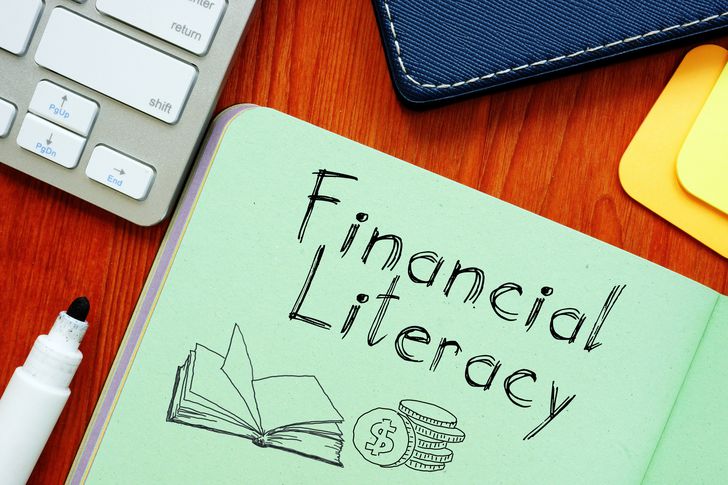
Financial literacy is a way of saying that you have a good working knowledge of the basics of managing money and using it to reach your goals. It typically means you understand budgeting; you know how different financial products can help you protect and grow your cash; and you are aware of how the financial climate (from inflation to interest rates) can impact your personal situation.
Building financial literacy is a valuable move because it helps you achieve goals like saving for the down payment on a house, affording your kid’s college costs, and being prepared for retirement.
Read on to take a financial literacy quiz, learn more about financial literacy, and find out how to build it.
Why Financial Literacy Is Important
Higher levels of financial literacy have been consistently linked to responsible money management. This can help consumers:
- Avoid high-cost debt
- Plan for financial goals
- Avoid defaulting on mortgages
- Build an emergency savings fund
- Earn higher interest on investments
Boosting your financial literacy can be a great way to be confident that you have the information and insight you need to manage your finances well, today and tomorrow.
Are You Financially Literate?
If you feel as if you are not fully financially literate, it might be a case of not having focused on this aspect of your life. After all, financial literacy isn’t usually a part of the curriculum in high school or college.
Also, age plays a factor in financial literacy. The younger you are, the less money know-how you are likely to have. One recent study found that Gen Z (born between 1997 and 2012) had less financial savvy than Millennials, Gen X, and Boomers. Which could be understandable: The younger a person is, the less likely it can be that they’ve gone mortgage shopping, waded deeply into retirement planning, or researched health insurance.
Typically, financial literacy based on such key components of this type of knowledge as:
- Knowing how to create an effective budget so that you’re aware of and accountable for where your money is going
- Understanding how interest works when you save and invest, as well as how it works when you borrow, including the concept of compound interest
- Saving, whether that means for emergencies or for a specific goal, such as a big-ticket item or even a house
- Knowing the facts about credit card debt, managing your debt well, and avoiding the credit card debt roller-coaster
- Protecting your identity and otherwise using practices to safeguard your funds
- Investing wisely, and understanding how the average stock market return
Educating Yourself
If you’ve taken our quiz, the financial literacy questions will likely have helped you to pinpoint if you need to bolster your understanding of money matters.
Financial topics can be challenging, but fortunately, there are plenty of resources to help you increase your knowledge. Your bank may have a library of information as well as tools and calculators to help you do some number crunching and give you a better picture of your finances.
Your local library and book retailers, as well as financial magazines and websites, probably have plenty of information too. It can be a smart move to veer towards those publications that are well-regarded vs. following, say, an influencer without credentials but a lot of lofty promises on social media.
Podcasts, newsletters, and continuing-ed classes are other options. It can also make good sense to find a financial planner, who can walk you through your own unique challenges and opportunities.
(Learn more: Personal Loan Calculator)
Government Resources for Building Financial Literacy
There are also government resources, including those available at the Financial Literacy and Education Commission (FLEC), connected to the Treasury Department. This commission was founded to boost literacy.
Another government site, one created by FLEC, is dedicated to financial education: MyMoney.gov . This site provides practical information about each of what they call the five building blocks for money management (MyMoney Five), which are:
- Earn: Understand your pay and benefits to make the most out of what you earn.
- Save and Invest: Start as soon as you can to save for future goals, even if you need to begin by saving small amounts.
- Protect: Create an emergency savings fund, choose the right insurance for your needs, and otherwise take precautions to protect your finances.
- Spend: Shop around and compare prices and products to get a good value on purchases, especially with larger ones.
- Borrow: Borrowing allows you to make essential purchases and also helps you to build credit, so it makes sense to understand how to borrow in the smartest way possible for your situation.
You can also access the government resource known as Federal Reserve Education , which provides resources for educators and students alike, while also empowering consumers to boost their understanding of banking. Topics include central banking and monetary policy, economics/macroeconomics, our government’s role in money regulation, personal finances, and more.
Here’s one more financial literacy resource from the federal government: FDIC’s Money Smart . This program provides resources to help people learn how to improve their financial management skills, from computer-based educational games to podcasts that focus on saving and borrowing.
Another Way to Gain Financial Literacy
Another way to help with your financial literacy is to opt for a banking partner that delivers insight into your spending and saving.
This article originally appeared on SoFi.com and was syndicated by MediaFeed.org.
SoFi® Checking and Savings is offered through SoFi Bank, N.A. ©2023 SoFi Bank, N.A. All rights reserved. Member FDIC. Equal Housing Lender.
The SoFi Bank Debit Mastercard® is issued by SoFi Bank, N.A., pursuant to license by Mastercard International Incorporated and can be used everywhere Mastercard is accepted. Mastercard is a registered trademark, and the circles design is a trademark of Mastercard International Incorporated.
SoFi members with direct deposit activity can earn 4.60% annual percentage yield (APY) on savings balances (including Vaults) and 0.50% APY on checking balances. Direct Deposit means a deposit to an account holder’s SoFi Checking or Savings account, including payroll, pension, or government payments (e.g., Social Security), made by the account holder’s employer, payroll or benefits provider or government agency (“Direct Deposit”) via the Automated Clearing House (“ACH”) Network during a 30-day Evaluation Period (as defined below). Deposits that are not from an employer or government agency, including but not limited to check deposits, peer-to-peer transfers (e.g., transfers from PayPal, Venmo, etc.), merchant transactions (e.g., transactions from PayPal, Stripe, Square, etc.), and bank ACH funds transfers and wire transfers from external accounts, do not constitute Direct Deposit activity. There is no minimum Direct Deposit amount required to qualify for the stated interest rate.
SoFi members with Qualifying Deposits can earn 4.60% APY on savings balances (including Vaults) and 0.50% APY on checking balances. Qualifying Deposits means one or more deposits that, in the aggregate, are equal to or greater than $5,000 to an account holder’s SoFi Checking and Savings account (“Qualifying Deposits”) during a 30-day Evaluation Period (as defined below). Qualifying Deposits only include those deposits from the following eligible sources: (i) ACH transfers, (ii) inbound wire transfers, (iii) peer-to-peer transfers (i.e., external transfers from PayPal, Venmo, etc. and internal peer-to-peer transfers from a SoFi account belonging to another account holder), (iv) check deposits, (v) instant funding to your SoFi Bank Debit Card, (vi) push payments to your SoFi Bank Debit Card, and (vii) cash deposits. Qualifying Deposits do not include: (i) transfers between an account holder’s Checking account, Savings account, and/or Vaults; (ii) interest payments; (iii) bonuses issued by SoFi Bank or its affiliates; or (iv) credits, reversals, and refunds from SoFi Bank, N.A. (“SoFi Bank”) or from a merchant.
SoFi Bank shall, in its sole discretion, assess each account holder’s Direct Deposit activity and Qualifying Deposits throughout each 30-Day Evaluation Period to determine the applicability of rates and may request additional documentation for verification of eligibility. The 30-Day Evaluation Period refers to the “Start Date” and “End Date” set forth on the APY Details page of your account, which comprises a period of 30 calendar days (the “30-Day Evaluation Period”). You can access the APY Details page at any time by logging into your SoFi account on the SoFi mobile app or SoFi website and selecting either (i) Banking > Savings > Current APY or (ii) Banking > Checking > Current APY. Upon receiving a Direct Deposit or $5,000 in Qualifying Deposits to your account, you will begin earning 4.60% APY on savings balances (including Vaults) and 0.50% on checking balances on or before the following calendar day. You will continue to earn these APYs for (i) the remainder of the current 30-Day Evaluation Period and through the end of the subsequent 30-Day Evaluation Period and (ii) any following 30-day Evaluation Periods during which SoFi Bank determines you to have Direct Deposit activity or $5,000 in Qualifying Deposits without interruption.
SoFi Bank reserves the right to grant a grace period to account holders following a change in Direct Deposit activity or Qualifying Deposits activity before adjusting rates. If SoFi Bank grants you a grace period, the dates for such grace period will be reflected on the APY Details page of your account. If SoFi Bank determines that you did not have Direct Deposit activity or $5,000 in Qualifying Deposits during the current 30-day Evaluation Period and, if applicable, the grace period, then you will begin earning the rates earned by account holders without either Direct Deposit or Qualifying Deposits until you have Direct Deposit activity or $5,000 in Qualifying Deposits in a subsequent 30-Day Evaluation Period. For the avoidance of doubt, an account holder with both Direct Deposit activity and Qualifying Deposits will earn the rates earned by account holders with Direct Deposit.
Members without either Direct Deposit activity or Qualifying Deposits, as determined by SoFi Bank, during a 30-Day Evaluation Period and, if applicable, the grace period, will earn 1.20% APY on savings balances (including Vaults) and 0.50% APY on checking balances.
Interest rates are variable and subject to change at any time. These rates are current as of 10/24/2023. There is no minimum balance requirement. Additional information can be found at https://www.sofi.com/legal/banking-rate-sheet.
Financial Tips & Strategies: The tips provided on this website are of a general nature and do not take into account your specific objectives, financial situation, and needs. You should always consider their appropriateness given your own circumstances.
External Websites: The information and analysis provided through hyperlinks to third-party websites, while believed to be accurate, cannot be guaranteed by SoFi. Links are provided for informational purposes and should not be viewed as an endorsement.
More from MediaFeed:
States With The Highest (& Lowest) Average Student Debt In 2024

It can be hard to wrap your mind around the size of college student debts in America. When you’re talking about education-financing trends, the numbers are … huge. Exceeding $1.7 trillion as of January 2024.
How did this happen? Experts say that as it became more and more common to pursue a college degree, the federal government made accruing student loans fairly easy to do and tuition has skyrocketed since 1980. The National Center for Education Statistics (NCES) data — as adjusted for inflation — confirms the average cost of tuition, fees, room, and board at U.S. colleges increased 166% over the last four decades using 2022 constant dollars based on the Consumer Price Index.
These forces seem to have strengthened one another, leading to what some describe as a crisis. Student loan debt is now the second highest consumer debt category in the nation, according to TransUnion®. It is second to mortgage debt and ranks higher than credit card or auto loan debt.
In August 2022, President Joe Biden said that over time “an entire generation is now saddled with unsustainable debt in exchange for an attempt, at least, at a college degree. The burden is so heavy that even if you graduate, you may not have access to the middle-class life that the college degree once provided.”
Drazen Zigic/istockphoto

According to the latest statistics, over 40 million Americans owe $1.7 trillion in student loan debt. The vast majority of this debt is made up of federal loans.
In March 2020, a pause was put on payments on federal student loans due to hardship caused by the COVID-19 pandemic. The federal student loan pause ended in the autumn of 2023 as required by the Fiscal Responsibility Act of 2023.
The three-year-long pause included the following relief measures for eligible loans:
- a suspension of loan payments
- a 0% interest rate
- stopped collections on defaulted loans
The payment pause freed up cash in the budgets of millions of Americans. But the pause also cost the federal government more than $100 billion.As part of the debt ceiling bill negotiated by President Biden and Congress, student loan interest accrual resumed on Sept. 1, 2023, and required payments resumed in October.
SeventyFour/istockphoto

The average student loan debt in the U.S. is about $35,000 per borrower, according to TransUnion. In general, it can take 10 years or longer to repay your student loans.Here are the states with the highest overall federal student debt balances as of June 30, 2023:
1. California
Balance (in billions): $149
Borrowers (in thousands): 3,985.7
Average Balance: $37,384
Spondylolithesis/istockphoto

Balance (in billions): $127.2
Borrowers (in thousands): 3,183.6
Average Balance: $33,354
4kodiak/istockphoto

Balance (in billions): $105.4
Borrowers (in thousands): 2,724.7
Average Balance: $38,683
Kasra Keighobady/istockphoto

Balance (in billions): $94.9
Borrowers (in thousands): 2,498.1
Average Balance: $37,989
(Learn more: Personal Loan Calculator)
frankpeters/istockphoto

Balance (in billions): $70.6
Borrowers (in thousands): 1,690
Average Balance: $41,775
SeanPavonePhoto/istockphoto

Here are the states with the lowest overall federal student debt balances as of June 30, 2023:
1. Wyoming
Balance (in billions): $1.7
Borrowers (in thousands): 56
Average Balance: $30,357
DenisTangneyJr/istockphoto

Balance (in billions): $2.4
Borrowers (in thousands): 68.7
Average Balance: $34,934
matt grimaldi/istockphoto

Balance (in billions): $2.7
Borrowers (in thousands): 90
Average Balance: $30,000
DenisTangneyJr/istockphoto

Balance (in billions): $3
Borrowers (in thousands): 78.8
Average Balance: $38,071
Erika J Mitchell/shutterstock

Balance (in billions): $3.8
Borrowers (in thousands): 119.7
Average Balance: $31,746
DenisTangneyJr/istockphoto

The 2022 Survey of Household Economics and Decisionmaking (SHED) found most student loan borrowers with outstanding debt owed less than $25,000 on their educational loans.
Students loan borrowers who completed an undergraduate program in 2018 owed the following amounts of education debt on average, according to the National Postsecondary Student Aid Studies (NPSAS) data:
- Undergraduate certificate recipients owed an average of $14,800
- Associate degree recipients owed an average of $20,900
- Bachelor’s degree recipients owed an average of $27,500
Once students graduate, drop below half-time enrollment, or leave school, their federal student loan goes into repayment. However, if they have a Direct Subsidized, Direct Unsubsidized, or Federal Family Education Loan, they have a six-month grace period before being required to start making regular payments. They’ll have a nine-month grace period if they’ve got a Perkins Loan.
Kateryna Onyshchuk/istockphoto

When you scrutinize the student debt average for graduate school, the amount can be staggering. Student loan borrowers who completed a graduate program in 2018 owed the following amounts of education debt on average, according to the National Postsecondary Student Aid Studies (NPSAS) data:
- Master’s degree recipients owed an average of $71,800
- Doctor of Philosophy (PhD) and similar research-driven doctoral degree recipients owed an average of $112,400
- Professional practice doctoral degree recipients (such as medical doctors and law school graduates) owed an average of $185,100
In almost all cases, graduate or professional students are considered independent students for the purposes of completing their FAFSA® form for grad school. This means graduate students generally are not required to provide parent information.
PeopleImages/istockphoto

Unless you qualify for student loan forgiveness, borrowers are expected to pay off student debt over time. The way it begins: your loan servicer will provide you with a loan repayment schedule that states when your first payment is due, the number and frequency of payments, and the amount of each payment.
Your billing statement will tell you how much to pay. Your monthly payment amount depends on your repayment plan. If you signed up for electronic communication, pay attention to your email. Most loan servicers send an email when your billing statement is ready for you to access online.
On its Federal Student Aid website, the U.S. Department of Education issues the following statement: “REMEMBER: Your federal student loans can’t be canceled or forgiven because you didn’t get the education or job you expected or you didn’t complete your education (unless you couldn’t complete your education because your school closed).”
Tero Vesalainen/istockphoto
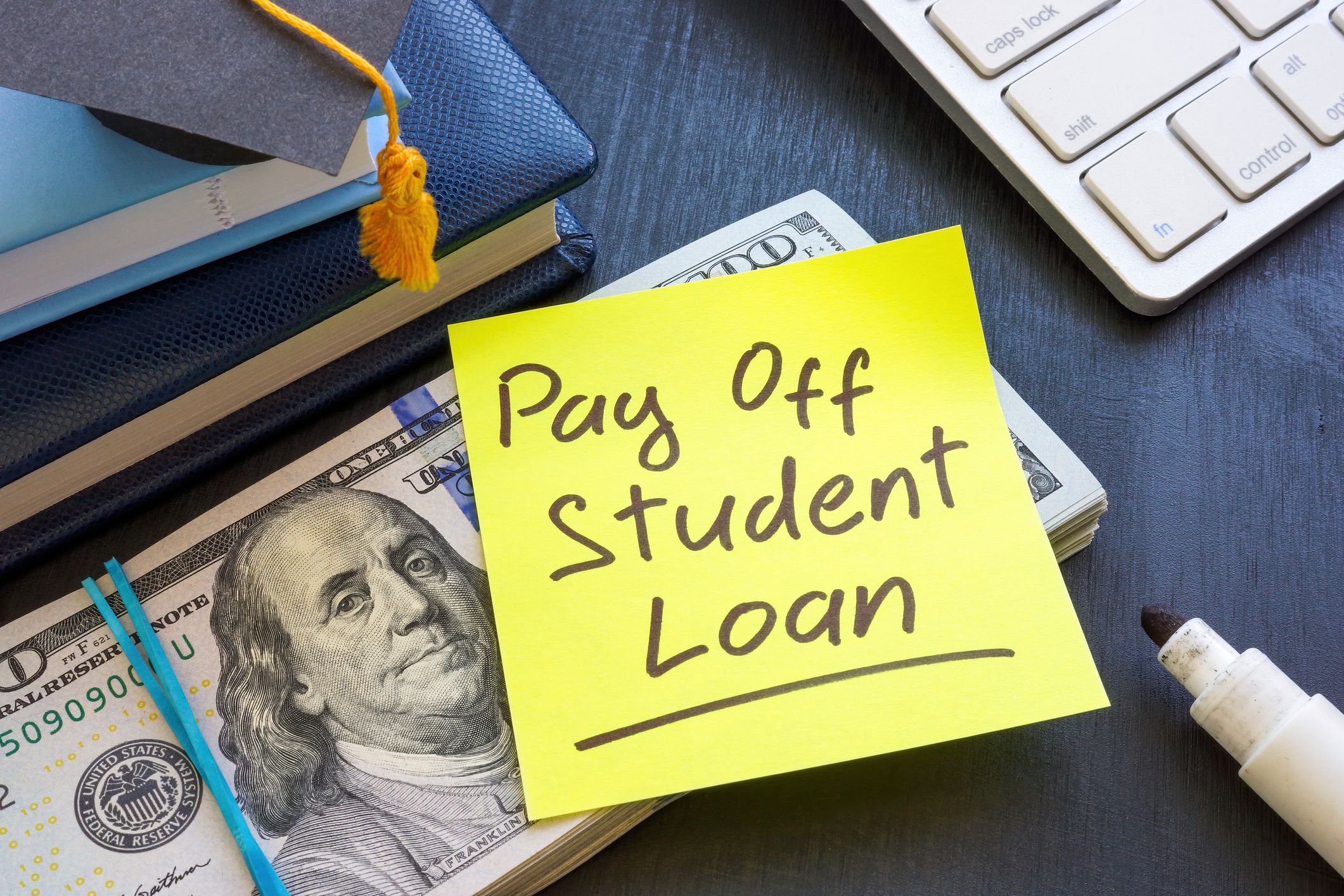
To pursue new interest rates and flexibility in repayment time frames, some people choose to refinance their federal student loans with a private loan servicer. You may pay more interest over the life of the loan if you refinance with an extended term.
By comparing student loan refinance rates, loan holders can choose a deal that works for them. The private company pays off the federal loan and begins a new loan with the customer.
There are pros and cons to refinancing. By doing so, private loan holders lose out on some benefits available to those with federal student loans. Those include:
- Losing access to the government’s SAVE program for federal student loans, an income-driven repayment plan that can significantly decrease your monthly payment amount compared to all other government repayment plans.
- No interest accumulation on subsidized student loans during periods when payments are deferred
- Access to repayment plans based on your income that provide loan forgiveness once you have been in repayment for 20 or 25 years (or earlier for some SAVE Plan enrollees)
- Access to various forms of loan forgiveness and discharge, such as Public Service Loan Forgiveness, Teacher Loan Forgiveness, total and permanent disability discharge, and borrower defense to repayment discharge
designer491/istockphoto

The nation’s student debt has grown in recent years, with the average student borrowing $35,000 to pursue a college education. When it comes to grad school, the average PhD candidate can rack up well above $100K in student debt.
What this has led to: student loan debt now ranks as the second highest consumer debt category in the nation, second only to mortgage debt.
Holders of federal student loans could be interested in refinancing loans. However, they must bear in mind that refinancing means that loan is no longer eligible for federal forgiveness or income-driven repayment. You may pay more interest over the life of the loan if you refinance with an extended term.
This article originally appeared on SoFi.comand was syndicated byMediaFeed.org.
Lantern By
SoFiSoFi receives compensation in the event you obtain a loan, financial product, or service through the Lantern marketplace. This Lantern website is owned by SoFi Lending Corp., a lender licensed by the Department of Financial Protection and Innovation under the California Financing Law, license number 6054612; NMLS number 1121636. (nmlsconsumeraccess). This site is NOT owned and operated by SoFi Bank. Loans, financial products, and services may not be available in all states.
All rates, fees, and terms are presented without guarantee and are subject to change pursuant to each provider’s discretion. There is no guarantee you will be approved or qualify for the advertised rates, fees, or terms presented. The actual terms you may receive depends on the things like benefits requested, your credit score, usage, history and other factors.
*Check your rate: To check the rates and terms you may qualify for, Lantern and/or its network lenders conducts a soft credit pull that will not affect your credit score. However, if you choose a product and continue your application, the lender(s) you choose will request your full credit report from one or more consumer reporting agencies, which is considered a hard credit pull and may affect your credit.
All loan terms, including interest rate, and Annual Percentage Rate (APR), and monthly payments shown on this website are from lenders and are estimates based upon the limited information you provided and are for information purposes only. Estimated APR includes all applicable fees as required under the Truth in Lending Act. The actual loan terms you receive, including APR, will depend on the lender you select, their underwriting criteria, and your personal financial factors. The loan terms and rates presented are provided by the lenders and not by SoFi Lending Corp. or Lantern. Please review each lender’s Terms and Conditions for additional details.
Many factors affect your credit scores and the interest rates you may receive. SoFi is not a Credit Repair Organization as defined under federal or state law, including the Credit Repair Organizations Act. SoFi does not provide “credit repair” services or advice or assistance regarding “rebuilding” or “improving” your credit record, credit history, or credit rating. For details, see the FTC’s website on credit (consumer.ftc.gov)
Financial Tips & Strategies: The tips provided on this website are of a general nature and do not take into account your specific objectives, financial situation, and needs. You should always consider their appropriateness given your own circumstances.¹
SoFi’s Insights tool offers users the ability to connect both SoFi accounts and external accounts using Plaid, Inc.’s service. When you use the service to connect an account, you authorize SoFi to obtain account information from any external accounts as set forth in SoFi’s Terms of Use. SoFi assumes no responsibility for the timeliness, accuracy, deletion, non-delivery or failure to store any user data, loss of user data, communications, or personalization settings. You shall confirm the accuracy of Plaid data through sources independent of SoFi. The credit score provided to you is a VantageScore® based on TransUnion® (the “Processing Agent”) data.
Personal Loan
SoFi Lending Corp. (“SoFi”) operates this Personal Loan product in cooperation with Engine by MoneyLion. If you submit a loan inquiry, SoFi will deliver your information to Engine by MoneyLion, and Engine by MoneyLion will deliver to its network of lenders/partners to review to determine if you are eligible for pre-qualified or pre-approved offers. The lenders/partners receiving your information will also obtain your credit information from a credit reporting agency. If you meet one or more lender’s and/or partner’s conditions for eligibility, pre-qualified and pre-approved offers from one or more lenders/partners will be presented to you here on the Lantern website. More information about Engine by MoneyLion, the process, and its lenders/partners is described on the loan inquiry form you will reach by visiting our Personal Loans page as well as our Student Loan Refinance page. Click to learn more about Engine’s Licenses and Disclosures, Terms of Service, and Privacy Policy.Personal loan offers provided to customers on Lantern do not exceed 35.99% APR. An example of total amount paid on a personal loan of $10,000 for a term of 36 months at a rate of 10% would be equivalent to $11,616.12 over the 36 month life of the loan.
Student Loan RefinanceSoFi Lending Corp. (“SoFi”) operates this Student Loan Refinance product in cooperation with Engine by MoneyLion. If you submit a loan inquiry, SoFi will deliver your information to Engine by MoneyLion, and Engine by MoneyLion will deliver to its network of lenders/partners to review to determine if you are eligible for pre-qualified or pre-approved offers. The lenders receiving your information will also obtain your credit information from a credit reporting agency. If you meet one or more lender’s and/or partner’s conditions for eligibility, pre-qualified and pre-approved offers from one or more lenders/partners will be presented to you here on the Lantern website. More information about Engine by MoneyLion, the process, and its lenders/partners is described on the loan inquiry form you will reach by visiting our Personal Loans page as well as our Student Loan Refinance page. Click to learn more about Engine’s Licenses and Disclosures, Terms of Service, and Privacy Policy.
NOTICE: The debt ceiling legislation passed on June 2, 2023, codifies into law that federal student loan borrowers will be reentering repayment. The US Department of Education or your student loan servicer, or lender if you have FFEL loans, will notify you directly when your payments will resume For more information, please go to https://docs.house.gov/billsthisweek/20230529/BILLS-118hrPIH-fiscalresponsibility.pdf https://studentaid.gov/announcements-events/covid-19
If you are a federal student loan borrower considering refinancing, you should take into account the new income-driven payment plan, SAVE, which replaces REPAYE, seeks to make monthly payments more affordable, and offers forgiveness of balances that were originally $12,000 or lower after 120 payments, among other improvements. Also, please note that once you refinance federal student loans you will no longer be eligible for current or future flexible payment options available to federal loan borrowers, including but not limited to income-based repayment plans, such as SAVE, or extended repayment plans.
Auto Loan RefinanceAutomobile refinancing loan information presented on this Lantern website is from Caribou, AUTOPAY, Engine by MoneyLion, and each of Engine’s partners (along with their affiliated companies). Caribou, AUTOPAY, and Engine by MoneyLion pay SoFi compensation for marketing their products and services on the Lantern site.
Auto loan refinance information presented on this Lantern site is indicative and subject to you fulfilling the lender’s requirements, including but not limited to: credit standards, loan size, vehicle condition, and odometer reading. Loan rates and terms as presented on this Lantern site are subject to change when you reach the lender and may depend on your creditworthiness, consult with the lender for more details. Additional terms and conditions may apply and all terms may vary by your state of residence.
Secured Lending DisclosureTerms, conditions, state restrictions, and minimum loan amounts apply. Before you apply for a secured loan, we encourage you to carefully consider whether this loan type is the right choice for you. If you can’t make your payments on a secured personal loan, you could end up losing the assets you provided for collateral. Not all applicants will qualify for larger loan amounts or most favorable loan terms. Loan approval and actual loan terms depend on the ability to meet underwriting requirements (including, but not limited to, a responsible credit history, sufficient income after monthly expenses, and availability of collateral) that will vary by lender.
BankingSoFi Lending Corp. (“SoFi”) operates this website in cooperation with Engine by MoneyLion presenting promotions for products and services offered by other banks, lenders, and financial institutions. If you select a promotion above, you will be connected to the website of the company offering the product. The promotions presented on this site are from companies that pay SoFi and Engine by MoneyLion compensation for marketing their products and services. This may affect whether a provider is featured on this site and could affect the order of presentation. Lantern and Engine by MoneyLion do not include all providers in the market or all of their available offerings. Click to learn more about Engine’s Licenses and Disclosures, Terms of Service, and Privacy Policy.
jacoblund/istockphoto
NicoElNino/istockphoto
Featured Image Credit: Andrii Dodonov/istockphoto.