Only people who grew up in the ’60s can name all 12 of these household objects
On May 3, 1966, Johnny Carson got down on the floor of “The Tonight Show” with Eva Gabor, a plastic mat covered in colored dots between them. After a few calls of right foot red and left hand blue, the two got tangled, and the studio audience went into hysterics. Milton Bradley had nearly given up on the game.
The decade’s other household objects also have people behind them: a French electrician who worked with aluminum powder, a British engineer who sold a drawing set at a Leeds department store, and a Mattel engineer who put a record player inside a doll.
Twelve slides follow, in no particular order. Each has a named person and a detail you can check.
The mat that almost got pulled
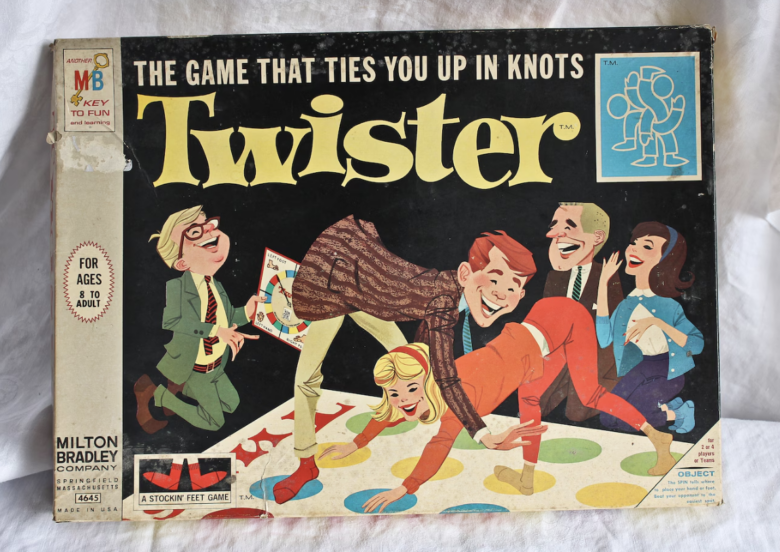
Reyn Guyer, a St. Paul ad man, brought a game he called Pretzel to Milton Bradley in 1965. Mel Taft, the company’s R&D chief, hit a trademark problem and renamed it Twister. Charles Foley and Neil Rabens are the names on the patent. Stores were refusing to stock it in 1966, and Milton Bradley was about to pull it, until its PR firm got the game onto “The Tonight Show.”
Noon on Christmas Eve
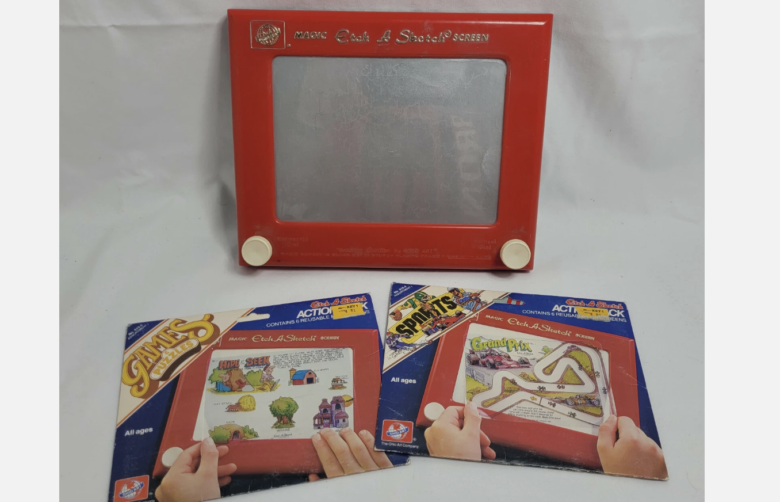
André Cassagnes, a French electrical technician, built a drawing toy from static electricity and aluminum powder and called it L’Écran Magique. At the 1959 Nuremberg toy fair, nobody wanted it. Ohio Art paid $25,000, more than it had ever paid for a license, renamed it Etch A Sketch, and ran heavy television ads. The factory kept working until noon on Christmas Eve 1960.
It sold for $2.99, and Ohio Art moved 600,000 in the first year. Some workers on its Bryan, Ohio, line stayed for more than four decades.
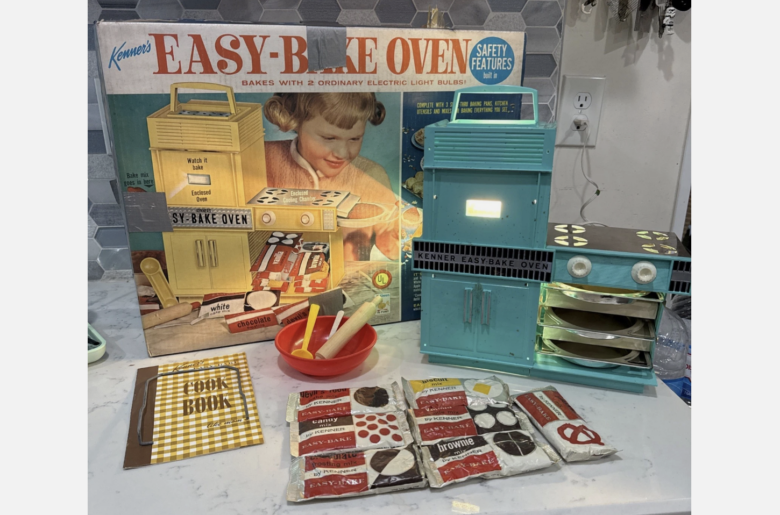
$15.95 for a turquoise oven
Kenner vice president James Kuhn and Ronald Howes, the company’s director of new product development, designed the oven. Kenner used two 100-watt bulbs instead of a heating element to cut the risk of burned fingers.
The first model was turquoise and boxy and cost $15.95. “Around 500,000 were sold in its first year,” said Debbie Schaefer-Jacobs, a Smithsonian curator. Kenner ran its commercials during morning cartoons and during “I Love Lucy.”

Where did the first lava lamp come from?
A pub in Dorset. Edward Craven Walker noticed a homemade egg timer, a cocktail shaker with globules of oil bubbling on the stove, and turned it into a lamp. He settled on an orange squash bottle for the body, “a revolting drink we had in England growing up,” said Cressida Granger, who now owns Mathmos.
The Astro lamp went on sale in 1963 and appeared in “The Prisoner” and “Doctor Who,” according to Mathmos. In 2000, Mathmos sold about 800,000.
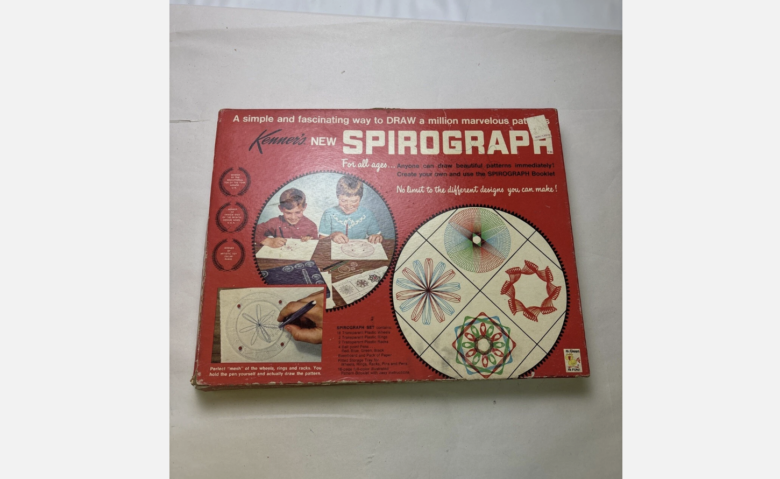
Schofields, Leeds, 1965
Denys Fisher, a British engineer, first sold his gear-and-wheel drawing set at Schofields department store in Leeds. At the 1965 Nuremberg toy fair, he sold the US rights to Kenner, and by 1977 more than 30 million had sold.
It reached American stores in 1966 at about $4. The Smithsonian’s set holds 18 wheels, two rings, two bars, and two pens.
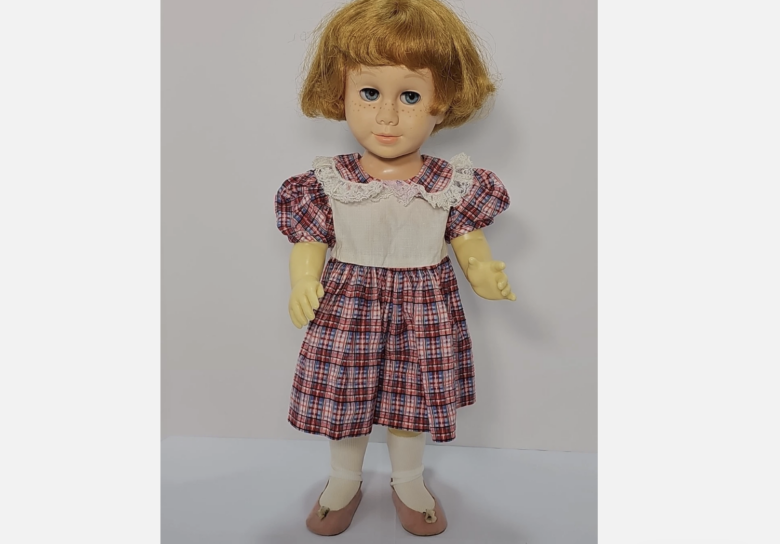
Eleven phrases, then eighteen
Jack Ryan, Mattel’s head of research and development, designed Chatty Cathy’s voice: a small phonograph record connected by string to a metal coil, wound each time a child pulled the ring on her back. She debuted at the New York Toy Fair in March 1960 with eleven phrases, grew to eighteen by 1963, and June Foray voiced her, per Click Americana.
The Henry Ford Museum calls her the first successful talking doll. Mattel’s best-selling doll of the 1960s, second only to Barbie.
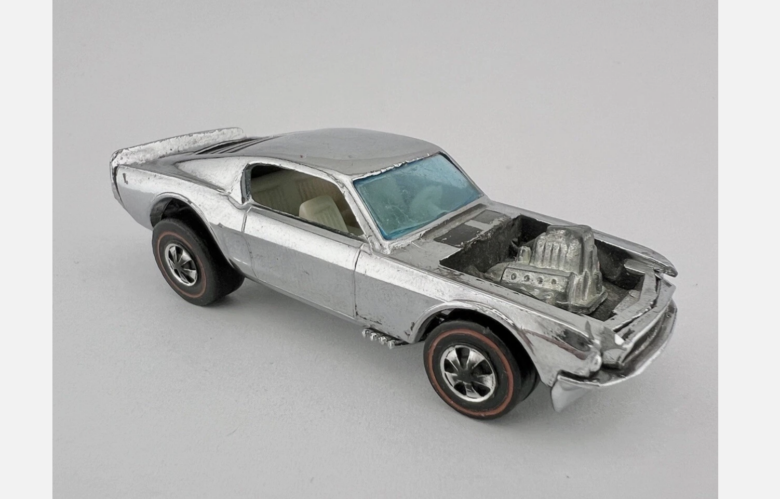
“Those are some hot wheels!”
Mattel co-founder Elliot Handler wanted the company to make its own toy cars, and his colleagues pushed back, including GM designer Harry Bentley Bradley and missile systems engineer Jack Ryan. Then Handler watched a demo car zoom across the floor and said, “Those are some hot wheels!”
The Custom Camaro hit shelves in May 1968, with 15 other models called the Sweet 16. All wore Spectraflame paint and red-lined wheels.
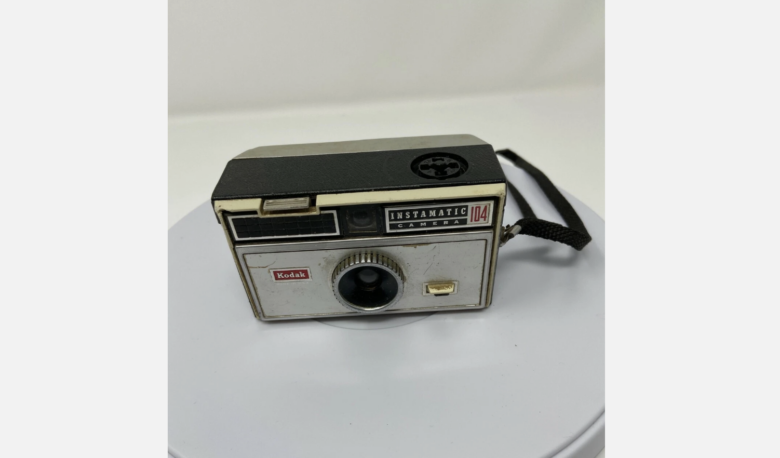
50 million in seven years
Kodak sold more than 50 million Instamatics between 1963 and 1970, including 7.5 million in the first two years, according to the Eastman Museum. Frank Zagara designed the Instamatic 100, and Kodak engineer Hubert Nerwin designed the 126 cartridge.
It launched at $15.95 and, in 1965, added the flash cube, according to Digital Camera World. The sealed cartridge could be loaded in any light, and it was nearly impossible to load incorrectly.
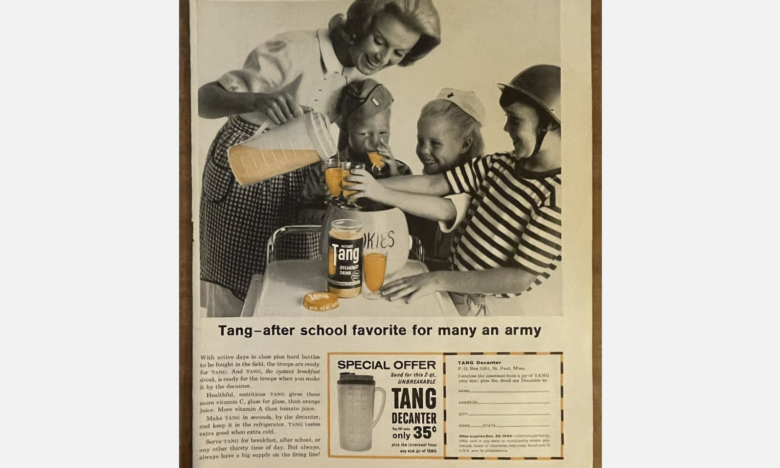
Was Tang made for astronauts?
No. General Foods chemist William A. Mitchell and colleague William Bruce James developed the formula in 1957, and it reached shelves in 1959. NASA flew it with John Glenn in 1962.
Michele Perchonok, who ran NASA’s Space Food Systems Laboratory, has called the idea that it was created for astronauts a myth. A 1966 ad still said Tang “was chosen for the Gemini astronauts.”
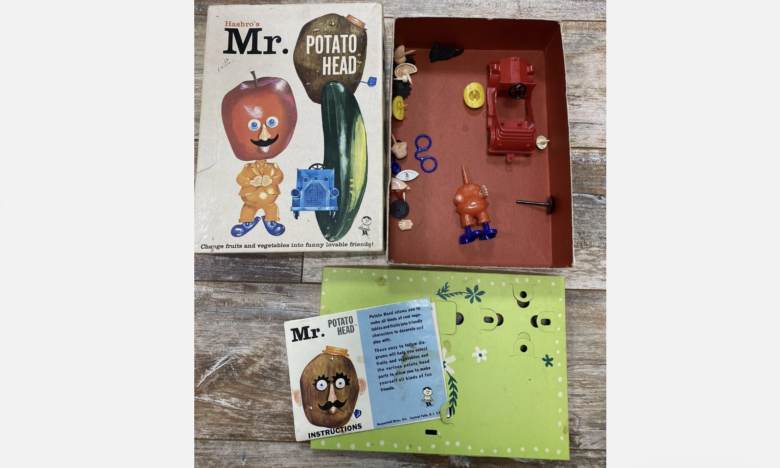
Real potatoes until 1964
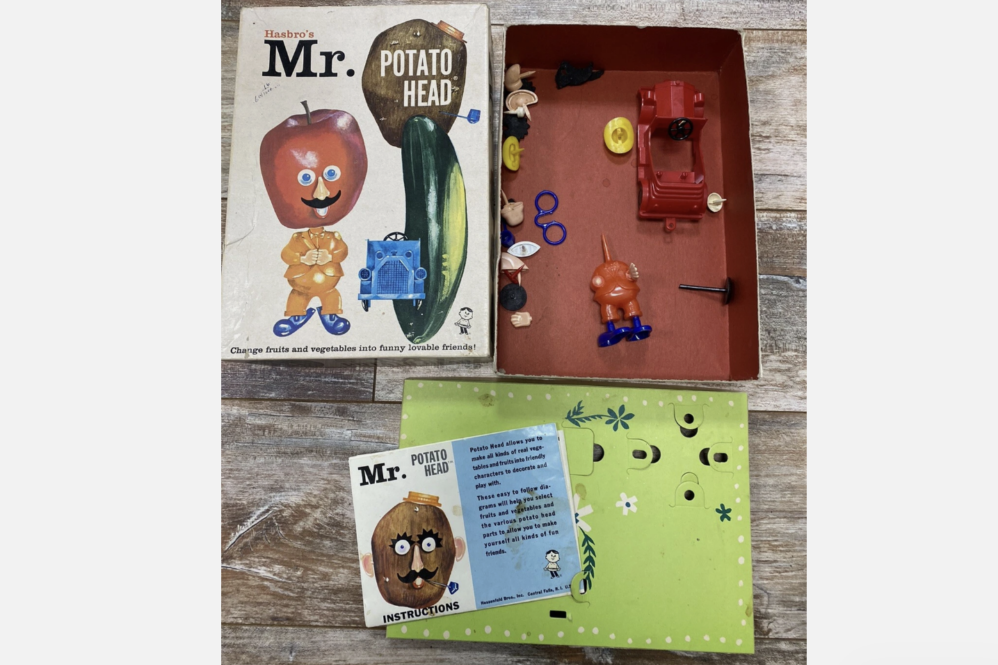
George Lerner invented the face parts in 1949, and toy companies rejected the idea. Hassenfeld Brothers, later Hasbro, bought the idea, and on April 30, 1952, Mr. Potato Head became the first toy advertised on television.
The kit came with no potato, so parents supplied their own. In 1964, they added a hard plastic body.
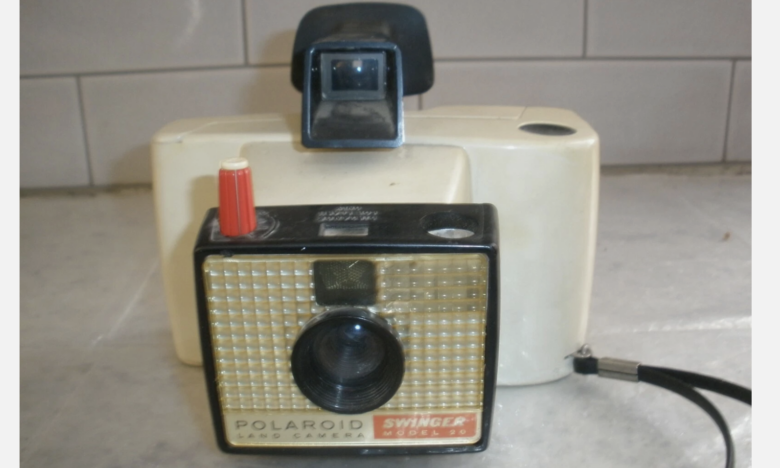
“Meet the Swinger”
Henry Dreyfuss and James M. Conner designed Polaroid’s Swinger, Land camera model 20, in 1965, per LACMA. Polaroid priced it at $19.95 and marketed it to teenagers; the ad starred a young Ali MacGraw, a model nobody knew yet.
The viewfinder showed the word YES when the exposure was right. Model 20 went out of production in 1970.
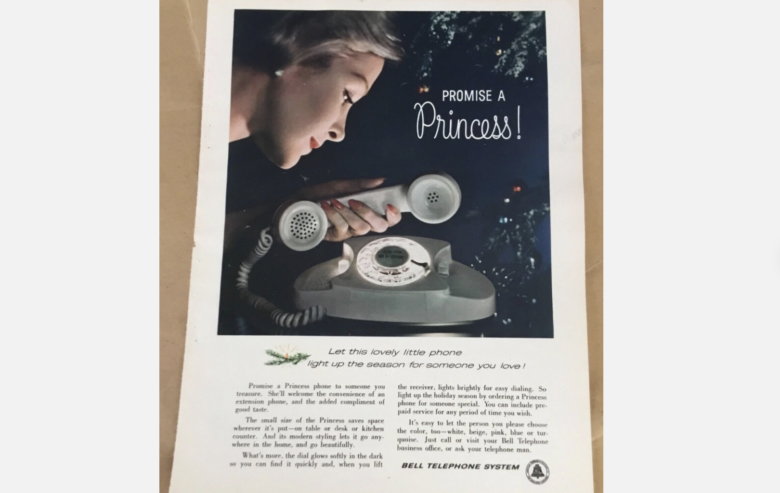
A phone that doubled as a night-light
Henry Dreyfuss designed the Princess phone as a bedside phone for teenage girls, taking a third of the space of a desk phone and adding a night light under the dial, according to the Smithsonian. The slogan was “It’s little, it’s lovely, it lights.”
It stayed in production from 1959 to 1994. The lit dial needed a transformer plugged into household wiring, and Mattel didn’t offer black until 1963.
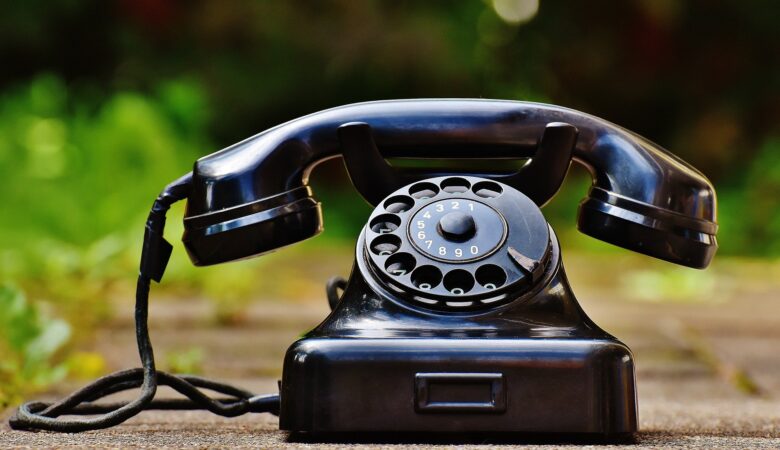
The bottom line
Mattel made two of these twelve: Chatty Cathy and Hot Wheels. Kenner made two more, the Easy-Bake Oven and Spirograph.
Ask us! What questions do you have about content, strategy, pop culture, lifestyle, wellness, history or more? We may use your question in an upcoming article!
Related:
Like MediaFeed’s content? Be sure to follow us.
This article was syndicated by MediaFeed.co.