Bizarre NASA discoveries that we’re not allowed to talk about (but we will)
Space exploration consistently reveals phenomena that challenge our understanding of the cosmos, from the behavior of distant objects to the composition of alien worlds that defy terrestrial expectations. NASA’s missions have uncovered discoveries so unusual that they required scientists to reconsider fundamental assumptions about how celestial bodies form, behave, and interact across the vast emptiness of space. These findings demonstrate that the universe operates according to principles far stranger and more complex than early astronomers could have imagined.
The most compelling discoveries often emerge not from grand missions to distant galaxies, but from careful observation of objects within and just beyond our solar system that exhibit behaviors unlike anything previously documented. These phenomena force scientists to develop new theories, refine existing models, and acknowledge the limitations of current understanding while opening new avenues for research and exploration. Each discovery represents years of painstaking analysis, peer review, and scientific debate before reaching public awareness.
The case of ‘Oumuamua, the interstellar cigar
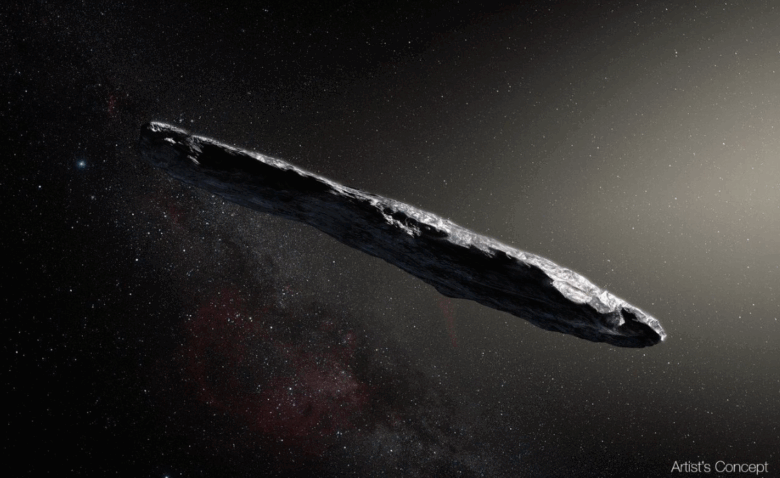
‘Oumuamua entered scientific history as the first confirmed interstellar object detected passing through our solar system, discovered by the University of Hawaii’s Pan-STARRS1 telescope in October 2017. This unprecedented visitor from another star system immediately captured scientific attention due to its remarkable properties that differed from any known asteroid or comet within our solar system. The object’s Hawaiian name, meaning “a messenger from afar arriving first,” proved prophetic as it opened entirely new categories of astronomical research focused on interstellar objects and their origins.
The object’s most striking characteristic was its extraordinary elongated shape, measuring up to one-quarter mile long while being approximately ten times longer than it was wide. This cigar-like aspect ratio exceeded that of any previously observed asteroid or comet, with most known solar system objects maintaining ratios no greater than three-to-one. Observations revealed that ‘Oumuamua varied dramatically in brightness by a factor of ten as it rotated every 7.3 hours, indicating its highly unusual geometry and suggesting a complex, convoluted structure unlike typical space rocks.
The most puzzling aspect of ‘Oumuamua’s behavior was its slight but measurable acceleration as it departed the solar system, a phenomenon that couldn’t be explained by gravitational forces alone. This acceleration initially suggested comet-like outgassing, but observations revealed no visible coma or tail typically associated with sublimating ice. Scientists proposed various explanations including outgassing of frozen hydrogen or nitrogen, radiation pressure effects, or internal composition factors, but definitive answers remain elusive. The object’s reddish color, similar to outer solar system bodies, and its apparent rocky composition suggested exposure to cosmic radiation over hundreds of millions of years during its interstellar journey.

The strange methane lakes of Titan
Saturn’s largest moon, Titan, emerged as one of the most Earth-like worlds in our solar system through discoveries made by NASA’s Cassini-Huygens mission, which revealed a complex world with dense atmosphere, weather patterns, and a complete hydrological cycle. Unlike any other known celestial body except Earth, Titan features vast rivers, lakes, and seas that create familiar-looking landscapes when viewed through radar imaging. However, the similarity to Earth ends with the physical geography, as Titan’s “water” cycle operates under conditions so extreme that they create entirely different chemistry.
The lakes, rivers, and seas covering Titan’s surface consist not of water, but of liquid methane and ethane existing at temperatures around -290°F (-179°C). This represents the only known example of stable surface liquids existing elsewhere in the solar system, creating a bizarre mirror-world where familiar processes operate with completely different materials. The Cassini mission’s radar imaging revealed shorelines, deltas, and seasonal changes in these hydrocarbon bodies that parallel Earth’s water cycle but involve chemistry impossible under terrestrial conditions.
The implications for potential life forms based on hydrocarbon chemistry rather than water have inspired entirely new branches of astrobiology research. Titan’s environment presents conditions where complex organic molecules could potentially form and interact in ways that might support exotic forms of life adapted to cryogenic liquid methane environments. NASA’s upcoming Dragonfly mission will explore these possibilities by deploying a nuclear-powered rotorcraft to study Titan’s surface chemistry and search for signs of prebiotic processes. The discovery of Titan’s methane lakes expanded definitions of habitable environments and demonstrated that liquid-based ecosystems might exist under conditions previously thought impossible for life.
The ‘singing’ of Voyager 1
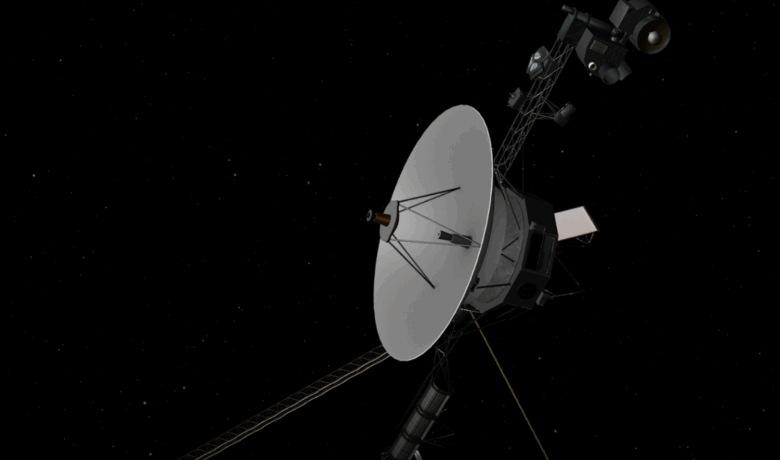
Voyager 1 achieved the unprecedented milestone of becoming humanity’s first artificial object to enter interstellar space in August 2012, crossing the heliopause boundary where the solar wind gives way to the interstellar medium. Operating more than 164 astronomical units from Earth, the probe continues transmitting data from instruments that have functioned for over four decades since launch in 1977. The spacecraft’s journey beyond the solar system has provided unique insights into the nature of interstellar space and the boundaries of our solar system’s influence.
Among Voyager 1’s most intriguing discoveries in interstellar space has been the detection of a constant, low-frequency plasma wave vibration that scientists have dubbed the “hum” or “singing” of interstellar space. This monotone vibration, detected by the spacecraft’s plasma wave instrument, represents the background electromagnetic activity of the interstellar medium itself. The signal provides valuable data about the density and properties of interstellar space, revealing information about the cosmic environment that exists between star systems.
The persistent nature of this interstellar “song” surprised scientists who expected the region beyond the heliopause to be relatively quiet compared to the dynamic environment within the solar system. Instead, Voyager 1’s measurements revealed that interstellar space maintains constant low-level activity that provides insights into the structure and composition of the galaxy’s interstellar medium. This ongoing vibration serves as a scientific tool for understanding the density of matter between stars and the electromagnetic properties of deep space, while also representing a poetic reminder that even the emptiest regions of space maintain their own forms of activity and communication.

Conclusion
These three discoveries demonstrate that scientific exploration consistently reveals phenomena that exceed the boundaries of previous understanding and force researchers to develop new theoretical frameworks for comprehending cosmic processes. From interstellar visitors with unprecedented shapes and behaviors to alien worlds with familiar processes operating under impossible conditions, each finding expands the catalog of known possibilities while raising new questions about the nature of our universe.
The significance of these discoveries extends beyond their immediate scientific value to demonstrate how space exploration continuously challenges assumptions and reveals the inadequacy of Earth-based perspectives for understanding cosmic diversity. Far from being secrets or suppressed information, these findings represent NASA’s commitment to transparent scientific discovery and the ongoing human quest to understand our place in a universe far stranger and more complex than early astronomers imagined. Check out our other space exploration articles here at MediaFeed to discover more stories about life and science mysteries, and oddities.
Related:
- Real-life historical facts that sound like fiction
- 5 things you should never automate in your “smart” home
Like MediaFeed’s content? Be sure to follow us.
This article was syndicated by MediaFeed.org.