
We scoured South by Southwest for fun, inspiring and wacky climate ideas and innovations. It didn’t disappoint.
Coolest travel tech: The Lightship L1
Making its debut at SXSW was this eco-conscious roadtripper’s dream come true — an electric travel-trailer with integrated solar panels from the new RV company, Lightship. When in camp mode, it provides sleeping space for four with a bathroom and full kitchen. When you’re not on the road, the Lightship L1’s solar panels can provide back-up power for your home or charge your EV.
Its self-propulsion system means you won’t lose any fuel efficiency or range when towing it, and Lightship co-founder Ben Parker told us it’s three times more aerodynamic than a traditional trailer. All these perks come at a cost, though. The L1 starts at $125,000 (though it is eligible for some of the tax credits included in the Inflation Reduction Act.) Production is expected to start in late 2024. — Vanessa Glavinskas, Climate writer
Strangest solution to our plastics problem: Hungry enzymes
This year, we’ll produce another 400 million tons of plastic. (For perspective, that’s the collective weight of every human on the planet.) And just a fraction of that — about 9% — will get recycled. Most will end up in a landfill, or worse, the ocean. But in the decades since humans started using plastics, nature has found a way to deal with it: Enzymes.
Discovered by a scientist in Japan who noticed that a discarded plastic bottle seemed to be disintegrating where bacteria was growing on it — scientists have since figured out how to engineer these enzymes to break down plastic much more efficiently. In a lab, the FAST-PETase enzyme can convert a plastic bottle back into its original monomers in a matter of days. Even more astounding? Those monomers have the exact same property traits as virgin plastic derived from oil — eliminating the need to extract more oil to make plastic. Engineer Hal Alper says we’ll be able to roll out these plastic-eaters at scale in less than 10 years. — VG
Best green career move: House painter to hemp builder
Kim Croes used to run a house painting business in Michigan. She loved the hands-on work, but hated the headaches and breathing issues from the fumes. Researching healthier building alternatives, Croes stumbled across hempcrete — a carbon sequestering, renewable building material made from the hemp plant. She re-launched her business as FiberFort, a hemp-based green building company. She and her team just completed their first home, and now she’s fielding calls from all over the world on how to build with hemp. “It’s a little overwhelming,” says Croes, but she’s looking forward to growing her new green business. — Shanti Menon, Energy editor
Most inspiring soundbite: An empowering proverb
As a long-time attendee of SXSW, I have often found hope here even when dealing with tough topics like climate change. My inspiration for this trip came from Elizabeth Nyamayaro, a special advisor at the United Nations World Food Programme. During a panel on the humanitarian crisis of climate change, she said: “If you think you are too small to make a difference, try spending a night in a room with a mosquito.” Back to the day job! — Jordon Brown, Web editor
Most inspirational speaker: Leah Stokes
Sometimes big thinkers can get lost in their ivory towers. Not so Leah Stokes, a UC Santa Barbara professor, climate podcaster, author and major force behind the design of last year’s historic federal climate legislation, the Inflation Reduction Act. While climate change can be complicated, Stokes was an onstage charmer, breaking down the problem to one simple solution: Use clean energy to electrify everything. Doing so would cut U.S. carbon pollution by as much as 75%.
And while impactful, scalable progress requires collaboration across governments and beyond, going electric in your own life is something almost everyone can do, Stokes said. I knew there were several filing cabinets’-worth of scientific research behind her presentation, but she made it all fun, compelling and easy to understand. By the end of it, I was ready to take my credit card straight to the nearest induction stove store. — Liz Galst, Climate writer
Most exciting oceans solution: Kelp farming
The waters off the coast of Maine are warming faster than almost any other part of the world’s oceans. This puts at risk the livelihoods of Maine’s 4,100 lobster farmers, who rely on cold water for their catch. Enter Atlantic Sea Farms, a woman-led business that works with Maine lobster farmers to grow climate-friendly kelp.
“Americans eat lots of seaweed, whether in the form of seaweed snacks or that bright green seaweed salad,” said President and CEO Briana Warner. “But when I took over in 2017, the entire Western Hemisphere produced about 30,000lbs of line-grown kelp.” (The rest — about 16 million pounds in 2019 — is imported from Asia.) ASF’s regeneratively grown product requires no fertilizers and draws carbon dioxide and other pollutants like excess nitrogen out of the ocean. “We see seaweed farming as a tool for working waterfront communities to thrive in the face of climate change,” says Warner. — LG
Learn More:
This article originally appeared on EDF.org and was syndicated by MediaFeed.org.
More from MediaFeed:
This art is garbage. Literally

Washed Ashore is hoping to teach people about marine debris and plastic pollution through epic, giant artworks of sea creatures … all of which are made from, you guessed it, ocean garbage.
According to Washed Ashore’s website, the organization works with artists and scientists to educate the public on how consumer habits can cost sea creatures their habits, homes and even their lives. They hope to teach exhibit-goers that “every action counts.” The traveling exhibit has been on display at the U.S. State Department, United Nations, The Smithsonian National Museum’s Ocean Hall and more. You can learn more about Washed Ashore’s mission online.
Check out some of Washed Ashore out-of-this-world, large-scale sculptures and wall pieces below!
WashedAshore.org

This great white shark seems even more, well, great, when you remember it’s made from debris from the ocean!
WashedAshore.org

The detail on this giant penguin named Gertrude is stunning!
WashedAshore.org
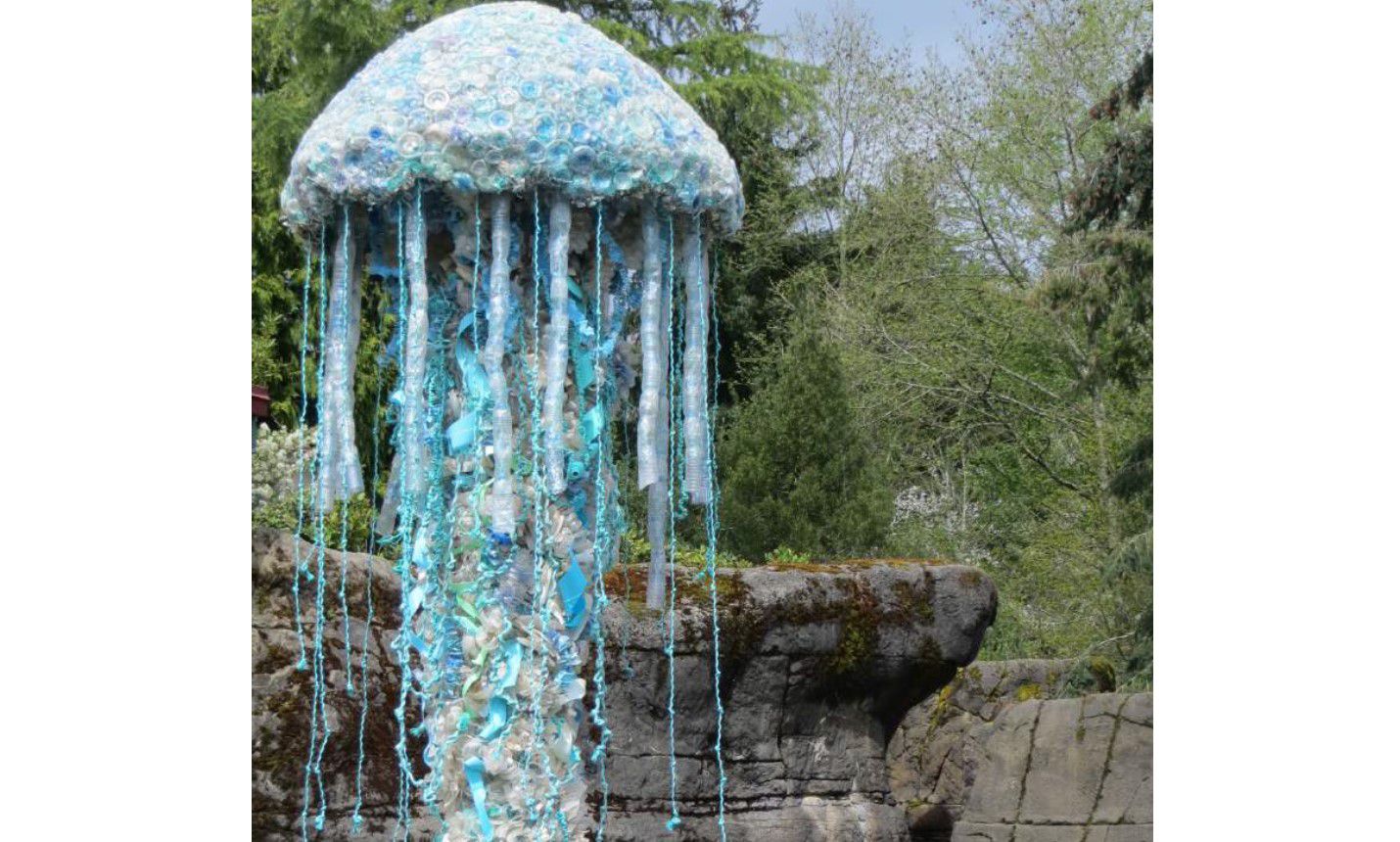
This gigantic jellyfish is larger than life!
WashedAshore.org

This colorful turtle was created against the backdrop of its very own ocean, complete with algae and a jellyfish friend!
WashedAshore.org

The Whale Ribs arch is a popular attraction since visitors can walk through it and marvel and the craftsmanship from both inside and outside the arch.
WashedAshore.org

Priscilla the Parrot is a colorful feat that will surely capture your attention.
WashedAshore.org

SeeMore offers viewers a rather realistic depiction of a sea lion, considering it’s made completely from sea rubbish.
WashedAshore.org
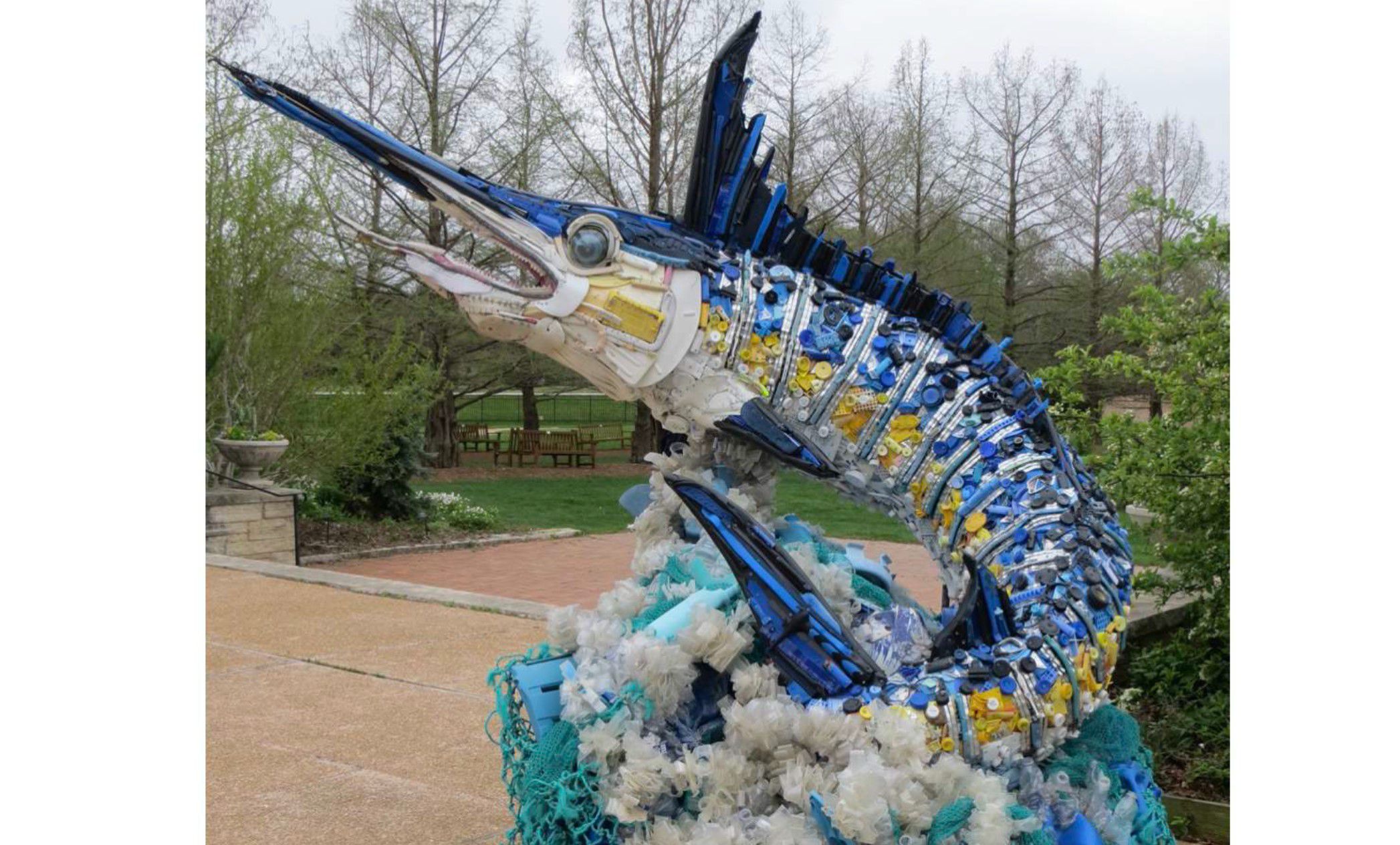
This blue marlin artwork is one of many from Washed Ashore that is sturdy enough to be displayed outside!
WashedAshore.org

The magnificent red octopus truly shows off how garbage can be turned into a work of art.
WashedAshore.org

This giant shark comes with its own patch of sea algae, coral and more!
WashedAshore.org

You almost won’t believe this sturgeon is made from garbage; it looks so realistic and life-like!
WashedAshore.org

This patriotic bald eagle stands tall with its wings outstretched to the sky.
WashedAshore.org
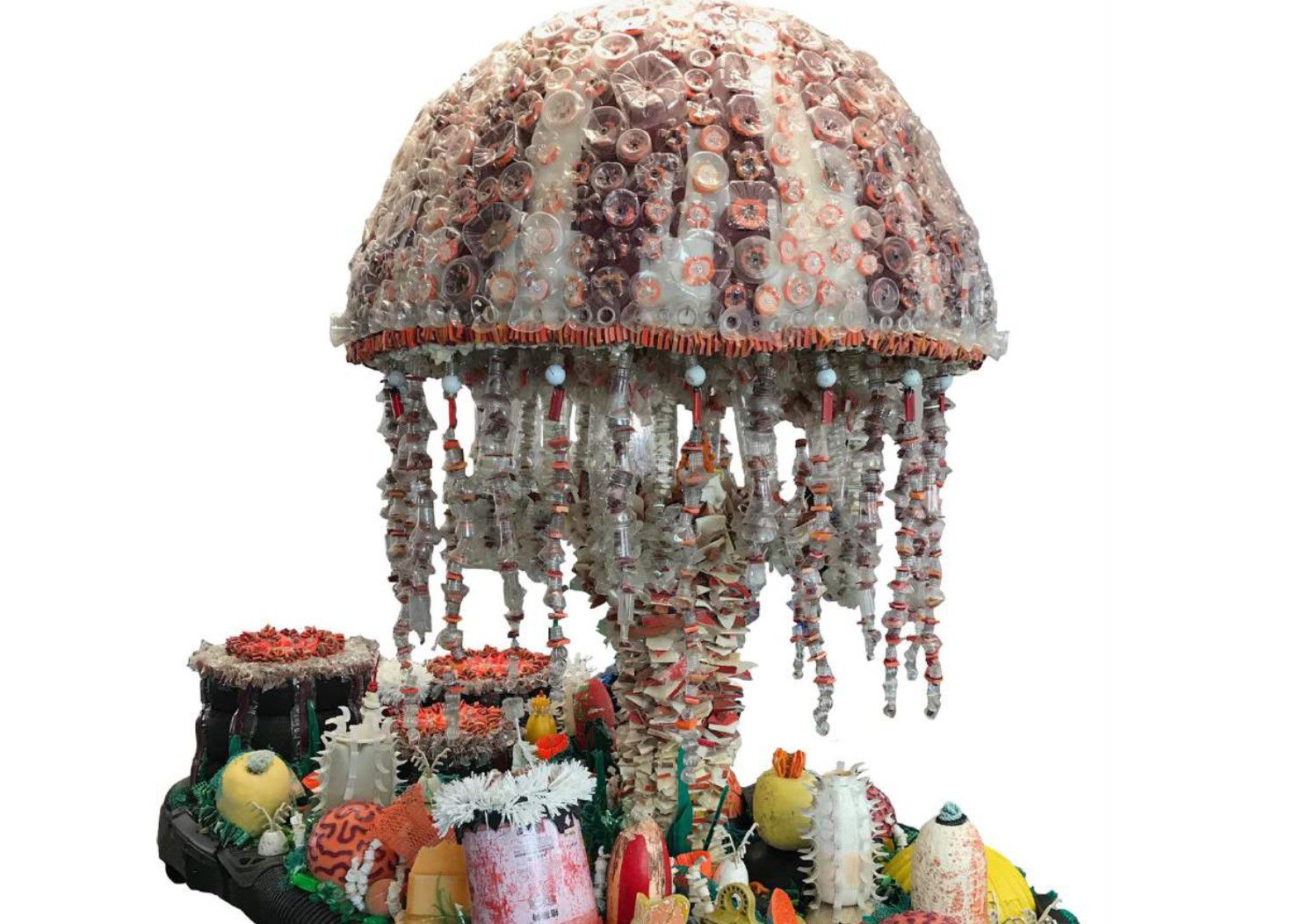
One of many jellyfish made through Washed Ashore, this gumdrop jellyfish stands tall over a bed of colorful sea coral.
WashedAshore.org
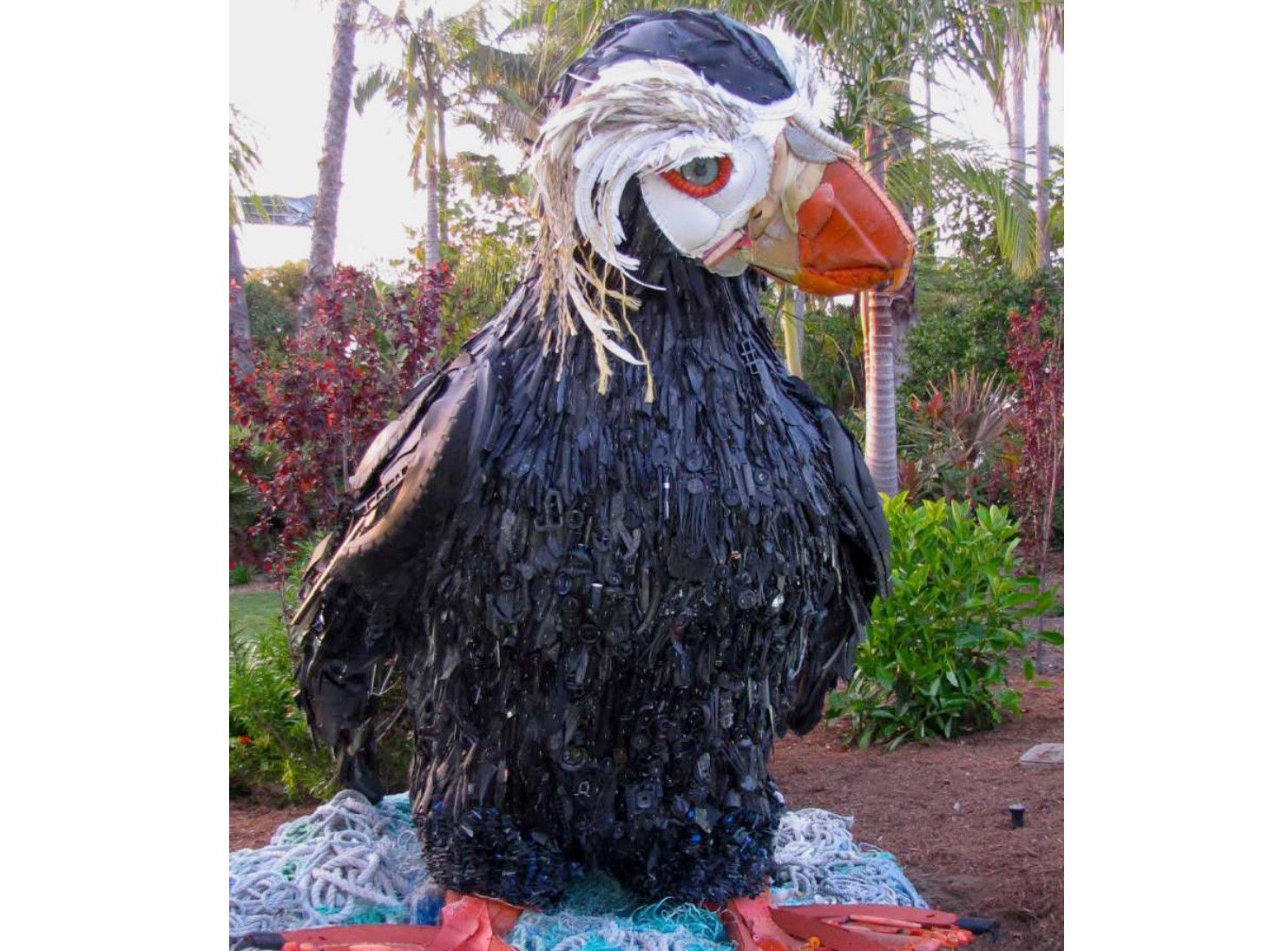
The tufted penguin’s hair truly does look like, well, hair! And its orange eyes, beak and feet stand out against its black coloring.
WashedAshore.org

The blue and orange trigger fish floats atop some algae and rope.
WashedAshore.org
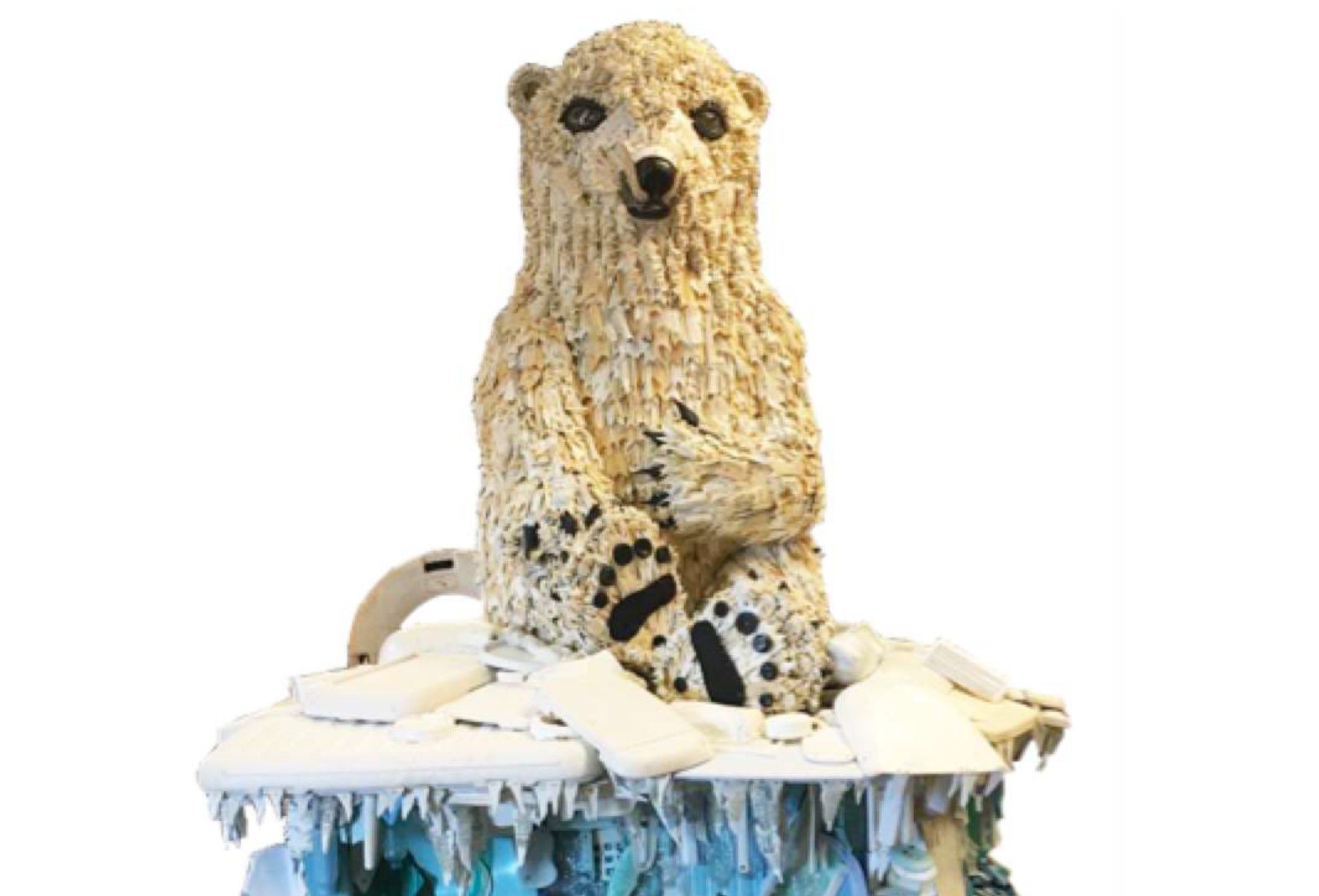
You’ll fall in love with this adorably cute polar bear named Daisy!
WashedAshore.org

This whale tail statue really shows off just how big the whale is!
WashedAshore.org
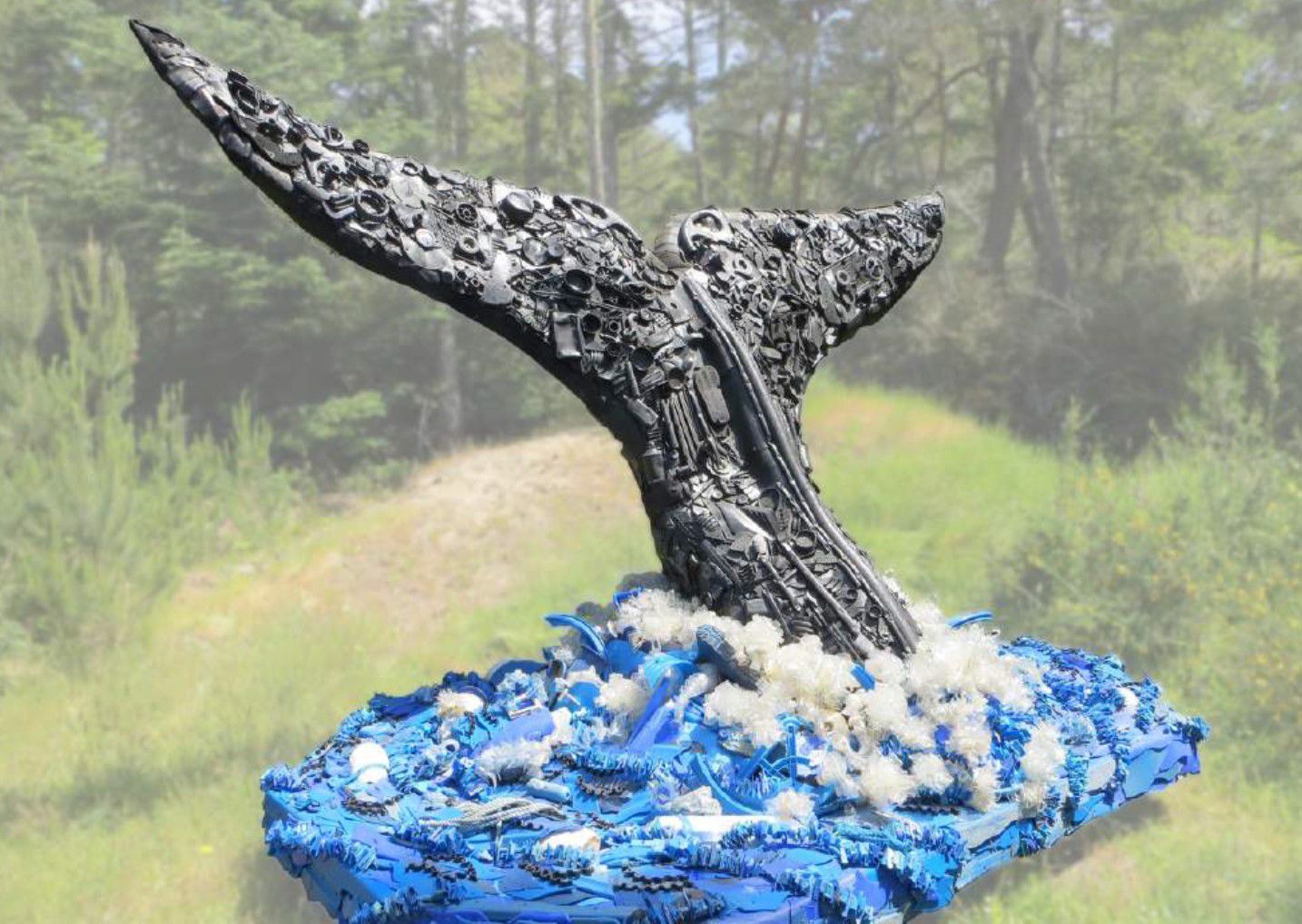
Hugo isn’t the only humpback on display! Meet Grace, who has an equally impressive and artistic tail.
WashedAshore.org

The silvertip shark is showed off through this model made entirely of ocean debris.
WashedAshore.org

This heartwarming depiction of two penguins will almost make you forgot about the fact that they’re made from trash found in the ocean.
WashedAshore.org

Edward “swims” with a jellyfish in this colorful ocean display!
WashedAshore.org
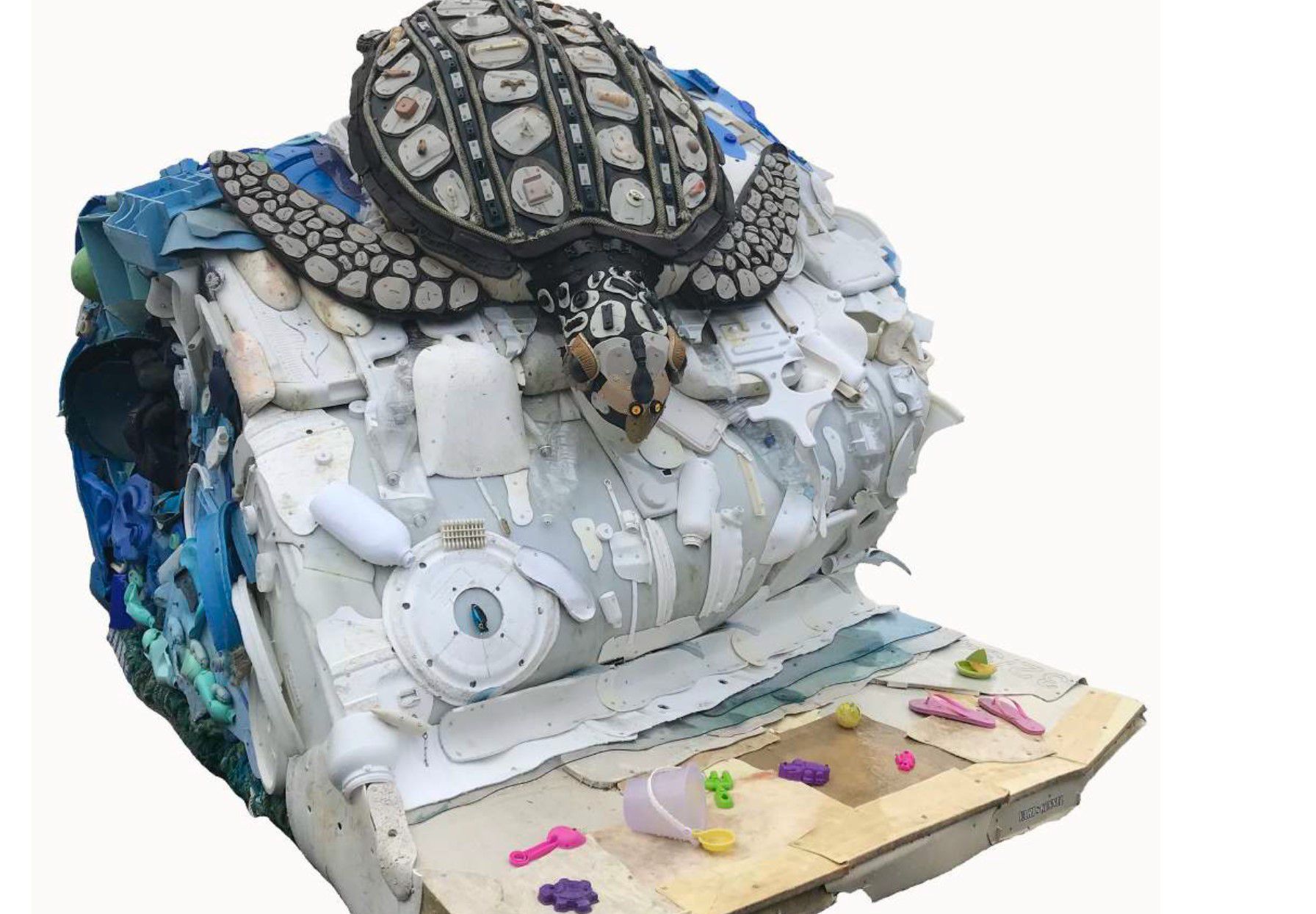
Natasha hopes you think twice about littering as she catches some waves!
WashedAshore.org

With its flippers outstretched, Brody stands tall over visitors.
WashedAshore.org

This happy seal sits on a bed of colorful items found deep beneath the ocean’s surface.
WashedAshore.org

Zorabelle is one of man penguins on display at Washed Ashore’s traveling exhibits.
WashedAshore.org

Finn looks like it’s practically swimming in this extravagant sculpture.
WashedAshore.org

Leo is so tall that we couldn’t even capture its whole body in one photo!
WashedAshore.org

Creamsicle’s tentacles are both impressive and elegant!
WashedAshore.org

Marigold is a colorful jellyfish made with primarily yellow, orange and white debris.
WashedAshore.org

This blackberry jellyfish is another massive sculpture made for Washed Ashore’s traveling exhibits.
WashedAshore.org

This epic salmon swims on a sea of vibrant blue water, complete with white foam on top of the wave it’s swimming on.
WashedAshore.org

This adorable river otter stands on a bed of rock with flowers and algae peeking out of its crevices.
WashedAshore.org

Angus is made out of vibrant yellow debris and floats on top of a bed of algae.
WashedAshore.org
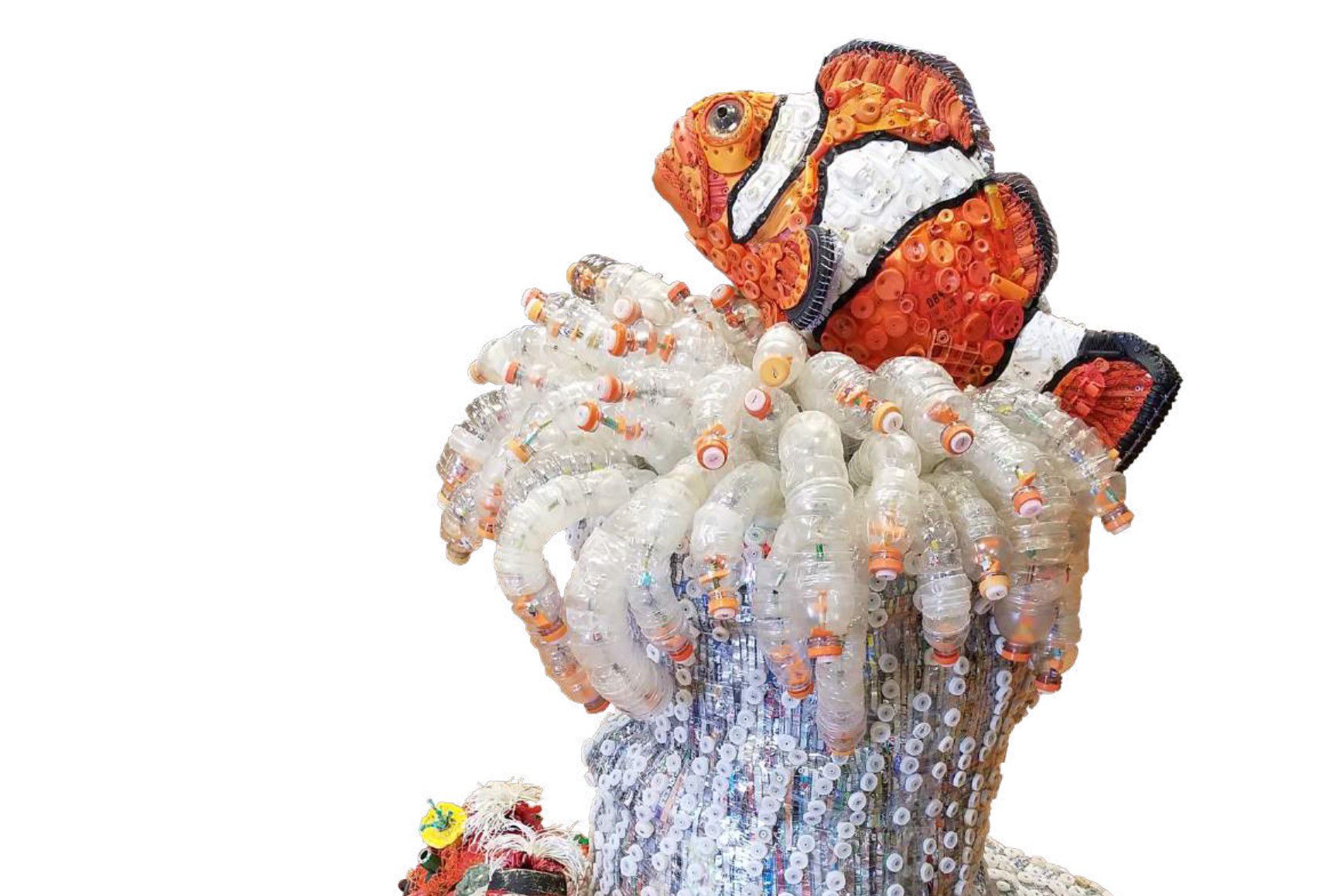
This clownfish stands out against a pastel-colored sea anemone.
WashedAshore.org

Bella the blue angelfish certainly looks angelic on top of this vibrant coral reef!
WashedAshore.org

Flip Flop is one of many artworks designed to be displayed on the walls of Washed Ashore’s exhibit spaces.
WashedAshore.org

Fish Bite is a green and blue artwork displayed on a exhibit space’s wall.
WashedAshore.org

Stella is a green, white and yellow seahorse with features made from various pieces of ocean debris, including brooms, mops and combs.
WashedAshore.org

This patriotic sea star is made out of, you guessed it, pieces of red, white and blue ocean trash.
WashedAshore.org

These incredibly detailed masks almost look like they’re straight out of a museum, but they’re actually straight out of the ocean!
Like what you see? You can learn more about the artwork and where they’re visiting next on WashedAshore.org.
Related:
This article was
produced and syndicated by MediaFeed.org.
WashedAshore.org

shalamov / istockphoto
Featured Image Credit: EDF.