Hurricane yard prep checklist: What to do before the storm
The 2026 Atlantic hurricane season opened June 1, and NOAA forecasts 8 to 14 named storms.
The eye of the storm can be hundreds of miles away and still cause major damage to your home and yard — and the hurricane yard prep that prevents it takes weeks, not hours.
As someone who has hunkered down through many hurricanes over the past 35 years living in Florida, I have the yard prep down to a science. This checklist covers what to do weeks ahead of any storm, 72 hours before a storm hits, and the first days after it passes.
Why early prep matters
In the past 10 years, there have been 29 hurricanes or tropical storms that have caused a total of over $820 billion in damage in the U.S. Protecting your property from loss is a priority.
When a hurricane forms and you’re in the forecast cone, 3 things happen fast:
- Arborists and lawn care pros book up within 24 hours.
- Hardware stores run out of tarps, plywood, and sandbags.
- Tree limbs become projectiles — too late to trim weak ones.
“Anything loose in a yard can become a projectile when winds pick up,” says Kody Robinson, owner of ProCutz Lawncare & Landscaping in Mount Dora, Florida. “I’ve seen branches come down, patio furniture get tossed around, and debris cause damage that could have been avoided with a little preparation.
“It also helps reduce cleanup and can protect your landscaping investment.”
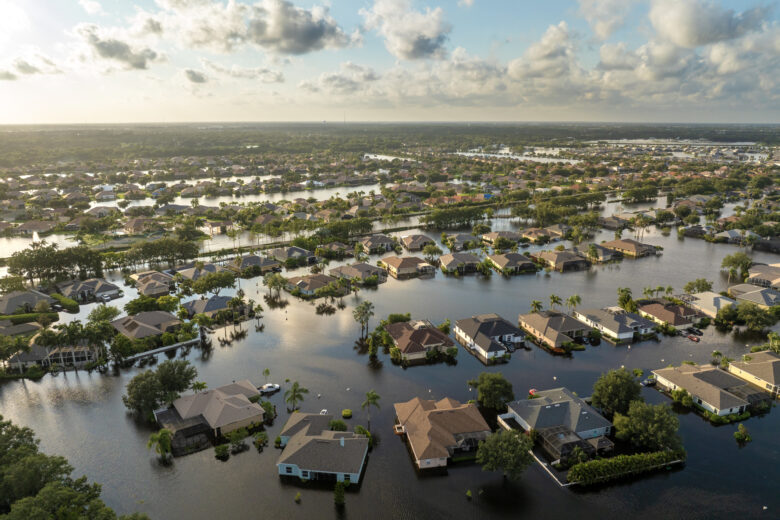
Damage as a hurricane or tropical storm approaches and after it makes landfall is not isolated to coastal communities hit hardest. Trees branches often fall, pool cages can crumple, and yards can flood hundreds of miles inland even where I live in Ocala in Central Florida.
The 72-hour window before a storm is only enough time to secure loose items, prep the pool, and bring equipment inside. Real damage prevention happens weeks ahead.
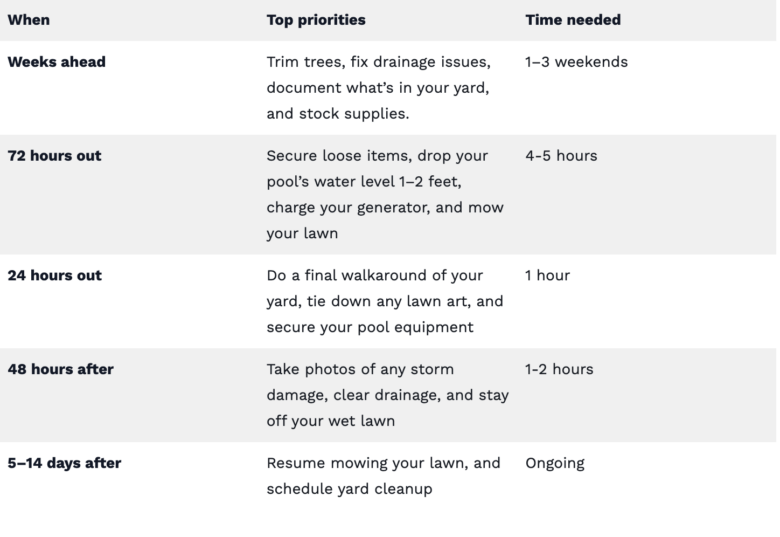
Hurricane prep timeline at a glance
OK, here’s what you need to do – and when – before you’re in the path of a hurricane or tropical storm.
Pre-season prep (weeks ahead)
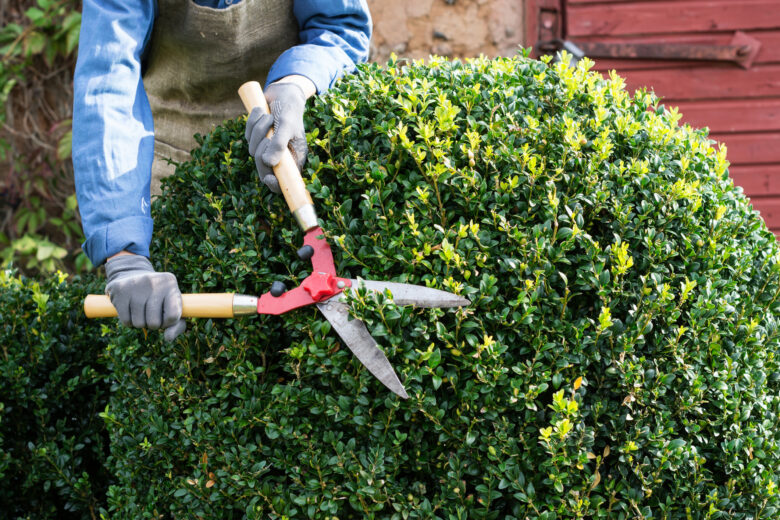
Get tree trimming done now
The ideal tree pruning window is the dormant season (late winter or early spring), according to the University of Florida Extension Office. If you’re reading this in June and haven’t booked an ISA-certified arborist, do it immediately.
Tree trimming costs $412 to $612 per tree, but waiting until a storm is approaching means you may not be able to get an arborist at any price.
The tree pruning rule, per Miami-Dade County: Don’t remove more than 25% of the canopy at once, and never “top” or “hatrack” a tree. Have your arborist thin interior branches so wind passes through the canopy, which helps prevent the tree from falling.
Cameron Miller, founder of Spartan Tree and Landscape, in Stanley, North Carolina, agrees that you can’t just hack off branches. You have to be more precise.
“The root system is built to support a full canopy,” Miller says. “Strip too much away and the tree goes into survival mode — watersprouts everywhere, all weakly attached, actually making the tree less safe than before.”
Identify high-risk tree species
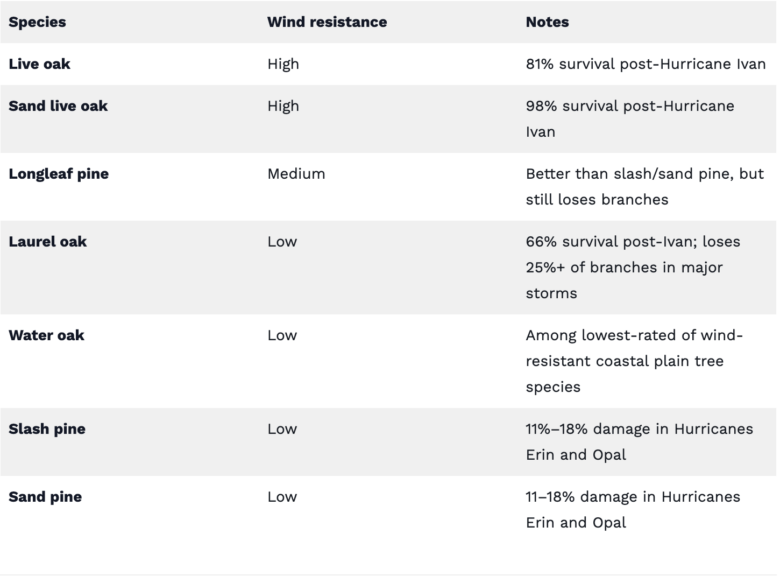
University of Florida’s tree and wind damage research from Hurricanes Ivan, Erin, and Opal shows that laurel oak, water oak, sand pine, and slash pine lose the most branches in major storms — between 11% and 25% of canopy per storm. By contrast, live oak and sand live oak had 81% and 98% post-Ivan survival rates respectively.
“Here in Florida, I see a lot of issues with older laurel oaks because they can develop internal decay as they age,” Robinson says. “Trees with weak branch attachments or multiple large trunks can also be more susceptible to storm damage.”
Robinson says any diseased tree, no matter what species, can be a problem, so you should evaluate the health of all the trees on your property.
“Any tree that’s unhealthy, has decay, or hasn’t been maintained can become a concern during a hurricane,” he says.
Check drainage
Walk your yard during the next heavy rain (or run a hose for 30 minutes). Note where water pools. Standing water means saturated soil during a storm, and saturated soil means trees that fall.
Common fixes: French drain installation, downspout extensions, and regrading low spots.
Robinson says flooding from tropical systems can be a major problem for your landscape.
“Flooding can weaken turf, promote disease, and cause root problems,” he says. “Depending on the severity of the storm, you may also deal with erosion, washed-out landscape beds, and damage that doesn’t become noticeable until weeks later.”
Document yard valuables
Take photos or shoot video of everything in your yard — patio furniture, your grill, all your pool equipment, sheds, hardscaping features, fire pits, and outdoor lighting. Store backups of this documentation in the cloud. Photos with a date stamp make a much faster insurance claim than memory.
Stock up on tarps, sandbags, and rope
Buying tarps, sandbags, and rope in May or June is easy. Trying to buy the same items from Lowe’s or Home Depot when a storm is 72 hours out is impossible — every store in the eye of the storm is sold out within hours.
Since I have a driveway that slopes down to my home, I line my garage door with sandbags. I keep them on hand because it’s better to have some than to be standing in long lines just days before a storm hits trying to get free sandbags from the city or county.
72-hour checklist (when a storm enters the cone)
Here’s what to do once a named storm enters the forecast cone:
Bring in or secure all loose items
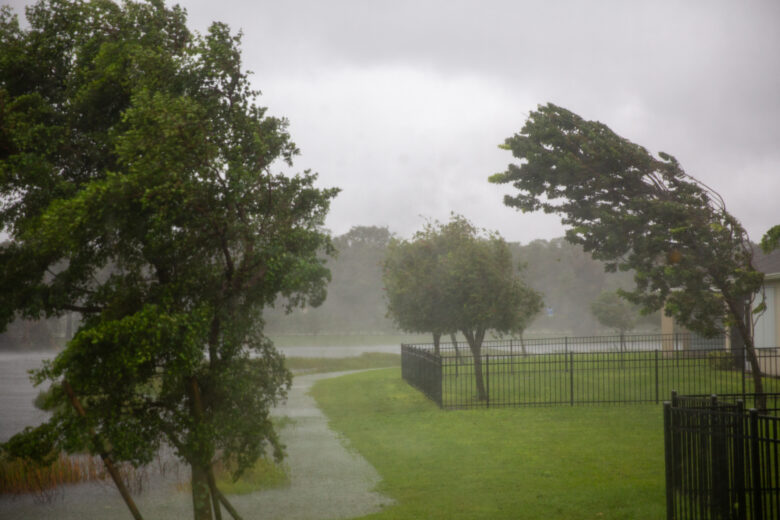
Secure or bring inside all patio furniture, planters, grill covers, kids’ toys, bird feeders, garden flags, decorative rocks, hanging plants. Per FEMA, hurricane-force winds turn anything unsecured into a projectile.
I have furniture around my backyard fire pit and around my screened-in swimming pool. I move all of it onto my porch that is under the roof and also enclosed by a screen. That keeps it all secure even with 100-mph winds blowing.
Anchor what can’t be brought in
Propane tanks, grill, AC compressor housings, large planters. Strap them to a fixed structure or move them into the garage or shed.
I have a trampoline that I move in between large pine trees and secure it on all sides to the tree trunks with heavy rope. I also have a large soccer goal my son uses for practice that I also secure to trees on both ends.
Mow your lawn
If you haven’t just mowed your lawn, it’s smart to mow it before the storm hits.
Here’s why: You never know how long it will be after the storm before you can mow again since you will have to wait until your lawn dries out. Also, if your property suffers a lot of storm damage, it could take weeks to clean up all the fallen trees and other debris in your yard.
Cut grass at your normal height — don’t scalp it, which stresses the lawn — and bag or remove clippings so they don’t become projectiles or clog drains.
Turn off your sprinklers
Turn off your irrigation system as soon as a storm enters the forecast cone. A hurricane can drop 6 to 12 inches of rain in 24 hours — running sprinklers on top of that saturates soil faster, increases runoff, and stresses pipes that may already take a beating in the storm.
If your system has a smart controller or rain sensor, don’t rely on it; override it manually. After the storm, wait at least 5 to 7 days before resuming your normal watering schedule.
Drop pool water by 1 to 2 feet — but DON’T fully drain your pool
The Florida Swimming Pool Association warns that a fully drained pool can pop out of the ground from groundwater pressure during heavy rain. Lowering your pool’s water level by 1 to 2 feet gives room for rain without overflowing.
Many in-ground pools, like mine, have automatic water level control systems that prevent overflow, so you don’t have to worry about lowering the level before heavy rain.
If you have an above-ground pool, you can drain some water with a submersible pump or siphon with a garden hose.
Move outdoor equipment to higher ground or inside
This includes generators, pressure washers, lawn mowers, gas containers. Move gas cans AWAY from the house. I store all my gas cans and lawn equipment in my backyard shed.
Charge your generator, fill propane tanks, fill gas cans
Power may be out for days or weeks. Depending on the size of your generator, it can just run a few important appliances like your refrigerator or it can supply power to your entire house.
I always fill up my gas cans and propane tanks days before a storm. I use the propane in my grill tanks to cook food so it doesn’t spoil during a power outage.
Clear gutters and storm drains
Flooding damage often comes from clogged drainage, not the storm itself. I have a lot of trees around my home, so I get my gutters cleaned every 6 months, usually in spring and fall. But I schedule an extra cleaning if I see leaf clutter building up during summer storm season.
Set up your rain barrel or other container to catch rainwater
It’s smart to install a rain barrel in your yard, but it really comes in handy when you need water to flush toilets or wash your hands when you don’t have power.
24-hour final prep
Walk your yard one more time for things you missed
Check your yard for anything else that might become a projectile in heavy winds. This includes hose reels, hummingbird feeders, decorative flags, garden gnomes, doormats. Also, make sure you don’t have any loose yard debris that might fly around.
Tie down ‘lawn art’
Don’t forget about statues, fountain bases, and large planters. You may think that they are heavy and won’t move, but they will.
Protect your pool
Cover and turn off the pool pump and heater to protect your equipment during a surge or power outage. Add extra chlorine or chemicals to protect your pool from algae growth if you lose power for an extended period and can’t run your pump.
Make sure to protect your pets
If you have small house pets like cats and dogs, make sure they are safe inside your home. You don’t want your pets exposed to heavy rains and high winds.
But if you have horses or other animals on your hobby farm, make sure they are protected in outdoor barns, stables and shelters.
After the storm: yard recovery
Stay off soaked lawns for at least 48 hours
Don’t walk on storm-drenched grass. Wet soil compacts under foot traffic, killing roots and creating bare patches that can take months to recover.
Survey your trees from a safe distance
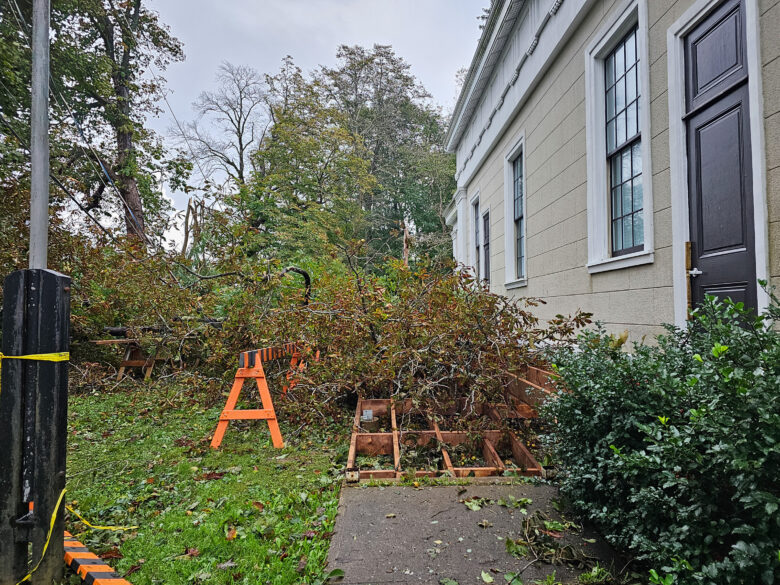
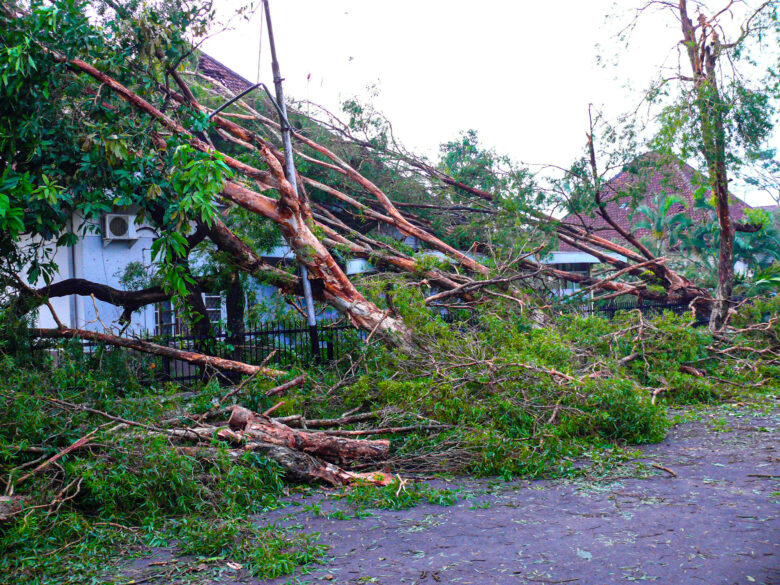
Don’t walk under storm-damaged trees until an arborist has assessed them. Hanging limbs (“widow-makers”) can fall hours or days after a storm.
“Watch for downed power lines, hanging branches, or trees that may still be unstable,” Robinson says.
Photograph all storm damage immediately
Insurance companies will want to assess any storm damage, so take pictures. Insurance claims move faster with same-day photos. Also, if the storm causes widespread damage, your insurance company could be overwhelmed with the number of homeowners filing claims.
Clear drainage first
Storm debris blocks gutters and downspouts within hours. Standing water becomes a mosquito breeding habitat within 3 to 5 days.
Wait to mow
Don’t mow your grass until the lawn dries out — usually 5 to 7 days after a major rain event. Mowing wet grass tears it instead of cutting, opening your lawn to fungal disease.
“One mistake people make is trying to mow or drive equipment on saturated ground right away. That can cause additional damage to the turf and soil,” Robinson says.
Watch for lawn fungal diseases
Saturated, warm soil is ideal for fungal diseases like brown patch, large patch, dollar spot, red thread, and rust. If you see irregular brown rings 7 to 14 days post-storm, that’s likely a fungal lawn disease.
Be on guard for pests
With heavy rains and standing water, it’s a breeding ground for mosquitoes. Also, with an abundance of downed, wet trees and wood-damaged homes, termites could be an issue.
With any destructive storm, it can ruin habitats and displace wildlife and other pests like rodents, roaches, fire ants, and snakes. Contact a qualified pest control professional.
FAQs
How long does it take a lawn to recover after a hurricane?
A lawn can take anywhere from 2 weeks to never to recover after a hurricane, depending on flood duration and water type. Most grasses can survive being underwater for up to 4 days, though roots can begin to rot in as little as 24 hours.
If standing water persists longer than 7 to 10 days, assume that your grass is dead and plan to plant new seed, sod, plugs. For lawns that drain within a few days, visible recovery usually takes 2 to 4 weeks.
Does homeowners insurance cover tree removal after a hurricane?
That depends on where the tree landed. Most policies cover removal only if the tree fell and damaged a covered structure — your home, garage, or shed. If the tree falls in your yard without hitting anything, you’ll typically pay out of pocket.
When you are covered, limits apply: Most homeowners insurance policies cap removal at $500 to $1,000 per tree, with aggregate limits of $2,500 to $5,000 per storm event. You also might have to prove the tree was healthy and not damaged. Review your insurance coverage before storm season.
Do palm trees survive hurricanes better than other trees?
Generally, yes. University of Florida research found palm survival rates of 88% in Hurricane Charley and 86% in Hurricane Jeanne, compared to 77% and 76% for all other tree species. The reason: Palm trees can bend 40 to 50 degrees without snapping, and their fronds fold to reduce wind resistance instead of catching the wind like a sail.
Call a landscaping pro before the storm rush
Hurricane season is something you can prepare for every year. And the best defense is a good offense.
“I think one of the biggest things homeowners can do is stay ahead of maintenance year-round,” Robinson says. “Trees and landscapes that are regularly maintained generally handle storms much better than properties that only get attention when a hurricane is approaching.”
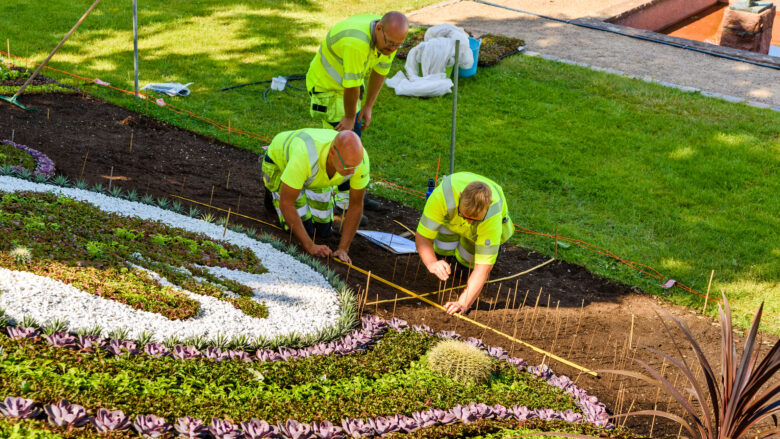
If you’ve slacked on maintenance or still have some tasks to tackle, booking weeks ahead not only saves you money, but literally saves your house. The week a storm enters the “cone of uncertainty,” it’s too little too late.
Related:
- From Wagner to Wu-Tang: What Landscapers Really Listen To
- Rain gardening 101: Brighten your yard & keep waterways clean
Ask us! What questions do you have about content, strategy, pop culture, lifestyle, wellness, history or more? We may use your question in an upcoming article!
Like MediaFeed’s content? Be sure to follow us.
This article originally appeared on Lawn Love and was syndicated by MediaFeed.co.