
If you’re starting a business or charging for your products and services, you’ll need to understand the legal requirements for becoming an official business entity. For those starting a limited liability company (LLC), the first step you’ll want to take is filing your articles of organization with the appropriate state agency. As part of this process, you’ll get to complete one of the most exciting steps of starting a business—picking the name. Let’s look at the ins and outs of choosing a name and the other documents you’ll need.
What’s the purpose of articles of organization?

Articles of organization are an official filing with your respective state to create a limited liability company (LLC). Many business owners and entrepreneurs use the LLC structure as it comes with several perks, such as limiting your personal liability exposure. This can protect you in the event of a lawsuit against your company.
A sole proprietorship is different in that it lacks liability protection and leaves you more vulnerable to a personal suit rather than one against your company. There are also tax benefits to LLC formation, including some that carry over from a sole proprietorship, which can help you maximize your tax returns with the IRS.
But first, you need to know how to become an LLC. While becoming an LLC is a big move, it’s surprisingly easy. After a few steps and a filing fee for your articles of organization, you can be the proud owner of an LLC.
What’s needed to file articles of organization?

Each state has different filing requirements. Some states may use an alternate name for the document, such as “certificate of formation” or “certificate of organization.” Although filing requirements differ from state to state, each requires certain information regardless of your state.
Here’s the information to include when you file articles of organization:
- Company name: You’ll need to include your new company name. But first, run a business entity search in your state for the name you want to use. Check whether it’s available or if another company has already registered that name.
- Statement of purpose: You’ll need to list the purpose of the LLC. Most states do not require a specific statement of purpose. Rather, a general statement of purpose, such as “to engage in any lawful business for profit,” is usually acceptable. This also leaves the door open for future business opportunities you may not have anticipated at the time of formation.
- Duration: If the LLC won’t last forever, you can state the specific time period for which the LLC will be operating. However, most LLCs elect a perpetual duration. Many states do not require you to include a specific duration and will likely assume a perpetual duration.
- Principal place of business: This refers to the main location or headquarters of the business. It’s usually the address where the company’s management works and keeps books and records. If you run a business from home, you can list your home office as your principal place of business. You could also qualify for a home office tax deduction.
- Registered agent: You must list the name and address of your LLC’s registered agent. A registered agent receives important documents on behalf of the LLC. You need a registered agent in each state where you register your LLC. The registered agent can be an LLC member (such as yourself) or an outside individual or firm.
- Management style: Most states require you to indicate whether the LLC will be member-managed or manager-managed. Most LLCs are member-managed, where all members share responsibility for running the business. In a manager-managed LLC, the members appoint a manager or a group of managers to handle the company’s daily operations. The manager-managed structure is useful when there are too many members to manage the business efficiently or when some members would prefer to be passive investors.
How to file articles of organization
Filing articles of organization is the key step in establishing your LLC—let’s look at the five steps you’ll need to take:
Step 1: Visit your Secretary of State
When it comes to filing articles of organization the first step is to visit your state’s Secretary of State website (or whichever agency handles articles of organization filings in your state). In most states, the Secretary of State is the governing body responsible for overseeing business entities and maintaining official records.
By visiting the agency’s website, you can access all the information and resources you need to understand the specific requirements and guidelines for filing articles of organization.
Step 2: Gather the necessary information
You’ll need all the information above, such as company name and registered agent, but the exact info you’ll need will vary. Every state has its own rules and regulations for filing articles of organization. And while the information on their websites can be comprehensive, it may be outdated, so consider consulting a business attorney who can provide guidance.
When putting the info together, the name search process can easily be the longest part of your journey. Most state laws prohibit two businesses from having the same name, so you should first check to see if any business is using your chosen name in your state.
Step 3: Create an operating agreement
An LLC operating agreement is a legal document laying out how your LLC will, well, operate. In it, you can detail how you’ll divvy up responsibilities, the management structure, financial matters, and governance issues.
While not always necessary for registering a business, an LLC operating agreement can help determine many of the things you’ll need when filing your articles of organization. Note that the operating agreement is an internal document, which some states will require and others won’t. Either way, it’s a good idea to have one. Without it, you could find yourself dealing with disagreements as the company grows and questions or concerns over business structure arise.
Step 4: Submit to the state
This step is a big one, but also perhaps the easiest—depending on the state. Once you gather all the info and fill out the necessary forms, you’ll pay a fee and submit them (usually online).
The fee varies by state, as does the waiting time for them to process your paperwork. Some states will have it done in less than a week, while others say the process takes a month or longer.
Step 5: Get your approved articles of organization
After the state approves or rejects—which can happen if your name is too similar to another business—they’ll notify you. You can then view and save or print the document.
What to do after you file your articles of organization
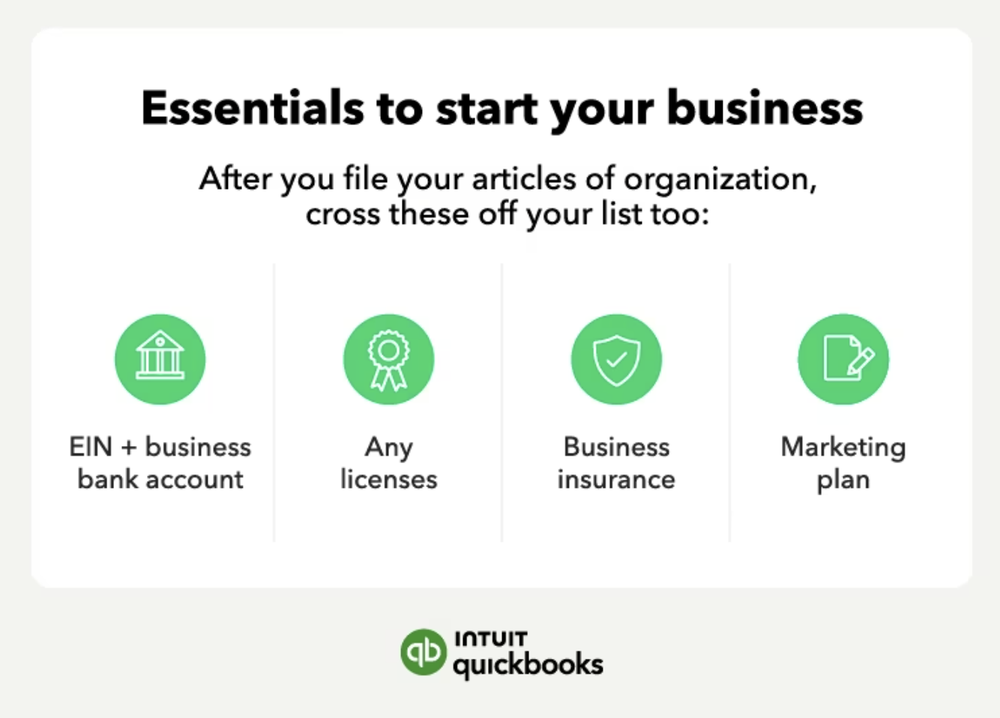
Once you officially register your business as an LLC, you’ll want to keep your momentum by taking the next steps in getting your business up and running.
Here are a few ways to get even more out of your new LLC status:
- Get an EIN: An employer identification number (EIN) is a tax identification number for businesses. You will need an EIN to hire employees, open a business bank account, or file taxes for your LLC.
- Open a business bank account: This will help you keep your business finances separate from your personal finances.
- Get a business license: Depending on your location, you may need to obtain a license from your city or county.
- See if you need business insurance: Your LLC will help protect you from personal lawsuits, but you may want to get business insurance to avoid potential damages, claims, or losses. Key types of business insurance include liability, property, and business interruption insurance.
- Start marketing your business: There are various ways to market your business, such as online marketing, print advertising, and public relations. You could also set up a website and social media accounts if you need an online presence.
Plus: State-by-state reminders
Remember that each state will have different filing requirements, so you’ll want to visit your Secretary of State website. However, note that this department doesn’t always handle articles of organization filings. For example, some states have a commission or division that handles such things. In Alaska, the agency you file with is the State of Alaska Corporations Section.
Some key things to keep when filing your documents with the appropriate state agency:
- Processing times for some states can be 4-6 weeks. In many cases, you can pay extra to expedite the process, such as $100 for same-day services. Other states process the filings within days without a surcharge, such as New York, which processes their filings within minutes.
- The filing fee will vary by state. Many states charge $100-$200, but some charge more.
- There might be other requirements beyond just filing your articles of organization. Some states will require you to also publish a notice in the local newspaper or file tax-related registration forms.
It’s important to carefully review your state’s specific requirements to ensure that you include all necessary information and attachments.
Start your business with confidence
Congratulations on starting your LLC. Like with all things in the business and financial world, it pays to keep good records. Keep copies of all your paperwork, cover all your bases, and when in doubt, speak to a legal expert to make sure you’re making the right decisions.
This article originally appeared on the QuickBooks Resource Center and was syndicated by MediaFeed.org.
More from MediaFeed:
Holiday budget looking not-so holly jolly? Make sure to check this list of money tips twice

Paying yourself first is a personal finance strategy in which you prioritize saving money before you spend it. Doing so may mean you transfer funds into a savings or investment account before bills, such as housing and loan payments, get taken care of.
By paying yourself first, you can help build wealth and achieve money goals, whether that means accumulating the down payment on a house or being able to pay for your child’s education. It can also be a way to avoid overspending.
If this “pay yourself first” strategy sounds good, read on to learn tips for making it a reality by budgeting well and using tools such as automatic transfers.
It may help to know that plenty of financial planners believe in this approach, as it can help you build a nice nest egg. Here’s a few ways paying yourself first can help you financially.
triocean / iStock

The beauty of this approach is that it focuses on consistent, prioritized savings and investment, along with a frugal mindset, which could give you the freedom to ultimately put your money where it matters most to you.
(Learn more: Personal Loan Calculator)
staticnak1983/istockphoto

Everyone has unique savings and investment goals, and it’s helpful to be clear about your own — then you could use those goals as motivation to consistently pay yourself first.
To get started, it could help to brainstorm how much you’d like to save and what you would do with that money.
You might, for example, want to put a certain amount of money aside for things like a downpayment on a house or to help your children attend college. Or you may want to travel.
RichVintage/istockphoto

Because some of the bigger financial goals may take a while to achieve, it could help to also have shorter-term goals to stay motivated to save.
Your shorter-term goal, for example, might be to put enough away in savings to cover a month’s worth of expenses — and then three months, and then six months. Or you may want to save to buy a new car. Paying yourself first can make meeting those shorter-term goals more doable.
Doucefleur/istockphoto

If saving enough money to meet your goals seems out of reach, then it might help to take an honest look at your spending habits. Maybe you find yourself making impulse purchases when you’re feeling stressed. If so, know that you’re not alone when indulging in some retail therapy.
If you only rarely indulge in impulse shopping, and the dollar amounts are within your means, then this isn’t likely to cause significant harm. But, if this becomes a habit, crossing over into compulsive spending, then this could have a serious impact on your financial well-being. Consider the following:
- If you believe that you’re not achieving savings goals because of overspending, then it could make sense to address that issue first. It might help to identify your emotional triggers and then avoid shopping during those times.
- If you aren’t yet sure what those triggers are, track impulse purchases and reverse engineer when you’re more likely to spend too much. You may notice it happens after a long day at work or when you’re worried about something.
- As another strategy, if you’re not sure whether something fits into your budget, you could wait a couple days before making a buying decision or call a friend when you’re feeling the urge to shop.
- Another potential challenge: FOMO spending — based on the fear of missing out. Many people admit to feeling pressured by others to spend money on purchases they didn’t need, just to keep up with their friends, coworkers, or even influencers on social media.
- If that feels familiar to you, there are strategies to help conquer FOMO spending. You can brainstorm free alternatives to high-cost plans a friend might suggest. When is a local art museum, for example, offering a free community day? What movie can you get from the library and invite friends to watch with you? What about a hike in the local park system?
- If you find that FOMO kicks in when you have your credit or debit card handy, you might want to only carry cash when you go out to your favorite restaurant, bar, or shop. And if ads and posts on social media cause you to want to shop, you could reduce your time on Instagram, Facebook, Twitter, and the like.
- Another strategy: If you’re tempted to put a discretionary purchase on your credit card, you could use a credit card interest calculator to see how much interest you might really pay on that impulse buy. The amount might shock you and cause you to put the item down and walk away.
mediaphotos/istockphoto

Before you can really know how much money you can pay yourself first, you might need to be confident in your budget. Although the word “budget” can have a negative connotation, it’s really a way to take control of your money to make sure you’re saving and spending in a way that meshes with your wants and needs, dreams, and goals.
By tracking your spending for a period of time, say 30 days (or more), you might get a sense of where your money is going. You could create a list of your monthly expenses, including your rent or mortgage payment, car payment, credit card payments, student loan payments, and more.
You might also consider listing what you pay for your utilities, cell phone, groceries, and so forth, along with discretionary purchases, in order to see a more complete picture of monthly costs.
Ideally, when you add these up, you’ll be spending less than what you earn, and you could use that information to help determine how much you can potentially deduct from your paycheck and put into savings or investment accounts.
If you discover that you’re not currently living within your means, or that you aren’t able to save as much as you’d like, then one good idea is to see where you can trim expenses. You may also consider ways to grow your income, whether that means asking for a raise or picking up a side gig.
Based on this information, you can set up a monthly budget. One budget strategy is the 50-30-20 budget. In this budget, you allocate your take-home pay into three categories; needs (50% of your take-home pay), wants (30% of your take-home pay), and savings (20% of your take-home pay). Allocating your money with this budget offers flexibility so that you can save and spend on the things that are most important to you.
damircudic/istockphoto

Let’s look at a few steps you can take to make paying yourself first a priority.
Create an Emergency Savings Account
As a first step in paying yourself first, it may make sense to create an emergency savings account if you don’t already have one or if it needs an extra infusion of cash.
That way, if your car or HVAC system breaks down or you have unexpected medical bills, you’ll have cash to help address the situation without simply relying on high-interest credit cards or other forms of debt.
Conventional wisdom suggests an emergency account that contains three to six months’ worth of basic living expenses, put into an account that’s accessible at any time.
Then you could move on to saving for other short- and long-term goals, including but not limited to saving for retirement.
When trying to determine how much money you should pay yourself first in the beginning, one idea is to start with a small amount and then incrementally increase it until you reach your goals.
Or it might make sense to determine how much you’ll need for your goals and reverse engineer how much you’ll need to put away to reach them in a certain time frame.
Also, if you receive a bonus or inherit money, you could consider putting all of the additional money into a savings or investment account. You could do the same if you get a raise.
designer491/istockphoto

If you are looking to kickstart your savings and build it up fast, there are several strategies you might consider. You may choose to review your expenses and get rid of unnecessary ones.
What online subscriptions and streaming services are you paying for? Are you using them? If you review an entire month’s worth of debits from your account, how many do you see that are discretionary, ones you could live without?
Once you’ve eliminated some expenses, consider adding that combined dollar amount to the money you’re sending directly to your savings account. Even if the amounts, overall, are small, over time they can really add up.
Delmaine Donson/istockphoto
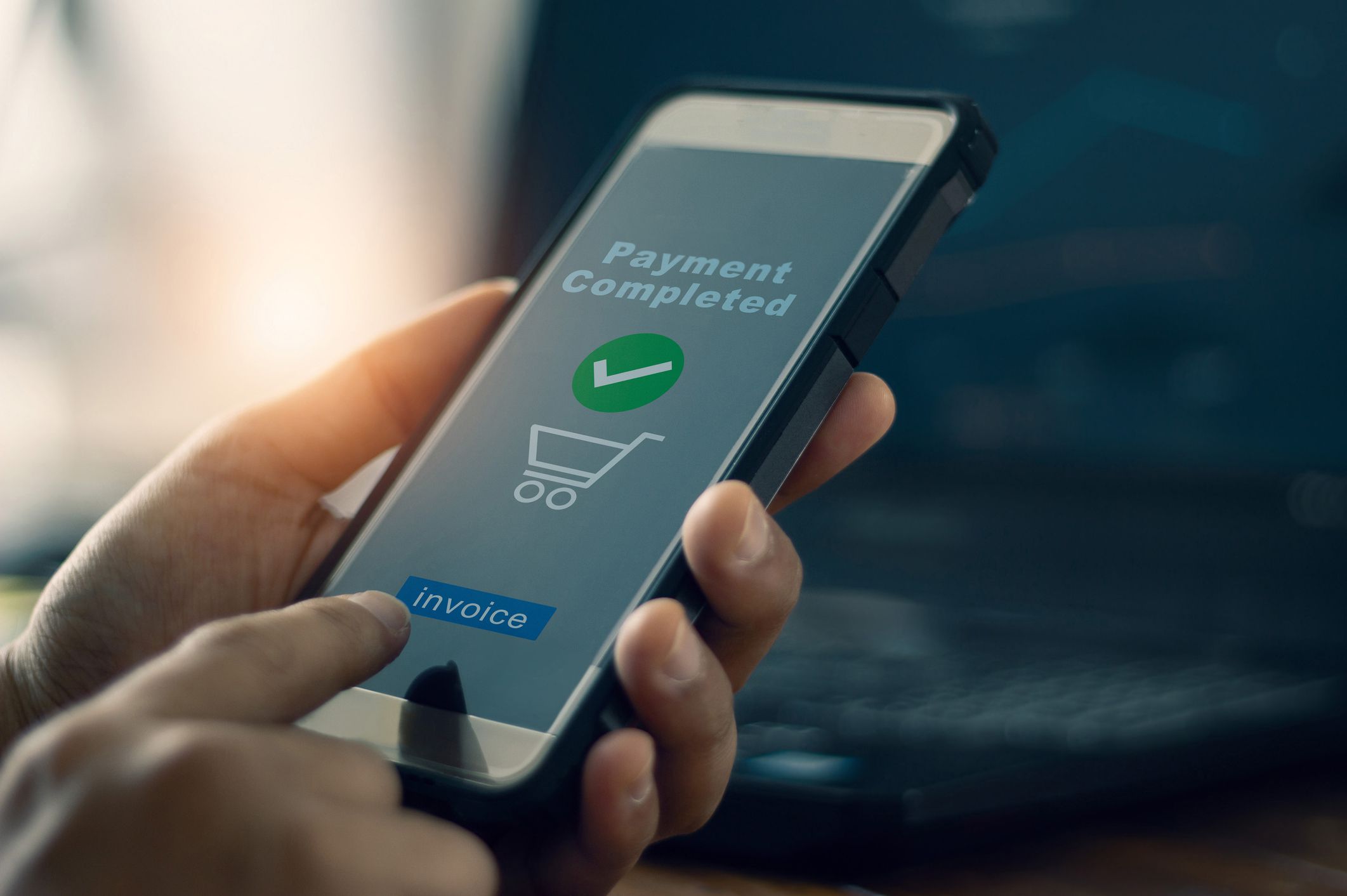
Sometimes, if you owe a monthly payment to a company, they’ll give you a discounted rate if you set up autopay and have your payment automatically deducted from your account. This could help to assure the company that the bill will be paid on the due date. Meanwhile, you could benefit from a discount and the convenience of not having to manually pay the bill each month.
This may help you avoid late fees, as well, but you might want to be cautious. If you don’t have enough money in your account on the day the bill is due to be deducted, you might be charged additional fees, such as an overdraft fee by your bank.
ipopba/istockphoto

Automating your savings can be just as useful as automating your bill pay. Ways to automate your savings include, setting up direct deposit, funneling a set amount to your savings each month, and taking advantage of employer programs like a 401(k) and any employer match offered to employees.
Thai Liang Lim/istockphoto

What about going on a spending fast? You might, for example, pick a day or two of the week when you don’t spend any money outside of what it takes you to get to and from work.
You could also consider other cost-saving ideas like packing your lunch, skipping the stop at the coffee shop, and getting your book from the library on the way home, not from the bookstore. Besides saving you money on your “fasting” days, employing these strategies may help you to pay more attention to discretionary spending on the other days.
ilona titova/istockphoto

Also, you might want to review your bank accounts. Are you getting as much interest as you can, given the wide gap between what different financial institutions pay? Could you earn more interest with your funds in an account at an online bank vs. traditional bank? What fees does your bank charge? Have you shopped around to see if you could get a better deal?
Anchiy/istockphoto

Here’s another strategy you may want to consider as a tool to help with overspending: the 30-day rule. It has two parts and, combined, the rule might help you save money more quickly. In the first half, if you’re tempted to buy anything outside of what’s necessary to meet basic needs, then you write down what you want to buy, how much it costs, where you saw it, and the date.
Then, give yourself 30 days to think about whether you really want to buy this item. If, after 30 days has gone by, you still want to make that purchase, you could price shop it and then buy the item.
As an added twist, take the amount of the item and put those dollars in your savings account. Then, when 30 days have passed, decide whether you’d be happier having more money in your savings or with making this purchase.
If it’s the former, then you have more savings built up. If you still want the item, you could withdraw the money from your savings, rather than putting it on a credit card.
MStudioImages/istockphoto

Paying yourself first is a great way to prioritize saving, especially if you find yourself tempted to make unnecessary purchases often. Taking some time to think about your financial goals, reevaluating your spending habits, and prioritizing your savings, can help you get to a more secure place financially.
Having the ability to track your spending and savings may be one key to help in creating an effective plan to pay yourself first. Reviewing your checking and savings accounts might help you determine if better options are available to boost your financial health.
This article originally appeared on SoFi.com and was syndicated by MediaFeed.org.
SoFi® Checking and Savings is offered through SoFi Bank, N.A. ©2023 SoFi Bank, N.A. All rights reserved. Member FDIC. Equal Housing Lender.
The SoFi Bank Debit Mastercard® is issued by SoFi Bank, N.A., pursuant to license by Mastercard International Incorporated and can be used everywhere Mastercard is accepted. Mastercard is a registered trademark, and the circles design is a trademark of Mastercard International Incorporated.
SoFi members with direct deposit activity can earn 4.60% annual percentage yield (APY) on savings balances (including Vaults) and 0.50% APY on checking balances. Direct Deposit means a deposit to an account holder’s SoFi Checking or Savings account, including payroll, pension, or government payments (e.g., Social Security), made by the account holder’s employer, payroll or benefits provider or government agency (“Direct Deposit”) via the Automated Clearing House (“ACH”) Network during a 30-day Evaluation Period (as defined below). Deposits that are not from an employer or government agency, including but not limited to check deposits, peer-to-peer transfers (e.g., transfers from PayPal, Venmo, etc.), merchant transactions (e.g., transactions from PayPal, Stripe, Square, etc.), and bank ACH funds transfers and wire transfers from external accounts, do not constitute Direct Deposit activity. There is no minimum Direct Deposit amount required to qualify for the stated interest rate.
SoFi members with Qualifying Deposits can earn 4.60% APY on savings balances (including Vaults) and 0.50% APY on checking balances. Qualifying Deposits means one or more deposits that, in the aggregate, are equal to or greater than $5,000 to an account holder’s SoFi Checking and Savings account (“Qualifying Deposits”) during a 30-day Evaluation Period (as defined below). Qualifying Deposits only include those deposits from the following eligible sources: (i) ACH transfers, (ii) inbound wire transfers, (iii) peer-to-peer transfers (i.e., external transfers from PayPal, Venmo, etc. and internal peer-to-peer transfers from a SoFi account belonging to another account holder), (iv) check deposits, (v) instant funding to your SoFi Bank Debit Card, (vi) push payments to your SoFi Bank Debit Card, and (vii) cash deposits. Qualifying Deposits do not include: (i) transfers between an account holder’s Checking account, Savings account, and/or Vaults; (ii) interest payments; (iii) bonuses issued by SoFi Bank or its affiliates; or (iv) credits, reversals, and refunds from SoFi Bank, N.A. (“SoFi Bank”) or from a merchant.
SoFi Bank shall, in its sole discretion, assess each account holder’s Direct Deposit activity and Qualifying Deposits throughout each 30-Day Evaluation Period to determine the applicability of rates and may request additional documentation for verification of eligibility. The 30-Day Evaluation Period refers to the “Start Date” and “End Date” set forth on the APY Details page of your account, which comprises a period of 30 calendar days (the “30-Day Evaluation Period”). You can access the APY Details page at any time by logging into your SoFi account on the SoFi mobile app or SoFi website and selecting either (i) Banking > Savings > Current APY or (ii) Banking > Checking > Current APY. Upon receiving a Direct Deposit or $5,000 in Qualifying Deposits to your account, you will begin earning 4.60% APY on savings balances (including Vaults) and 0.50% on checking balances on or before the following calendar day. You will continue to earn these APYs for (i) the remainder of the current 30-Day Evaluation Period and through the end of the subsequent 30-Day Evaluation Period and (ii) any following 30-day Evaluation Periods during which SoFi Bank determines you to have Direct Deposit activity or $5,000 in Qualifying Deposits without interruption.
SoFi Bank reserves the right to grant a grace period to account holders following a change in Direct Deposit activity or Qualifying Deposits activity before adjusting rates. If SoFi Bank grants you a grace period, the dates for such grace period will be reflected on the APY Details page of your account. If SoFi Bank determines that you did not have Direct Deposit activity or $5,000 in Qualifying Deposits during the current 30-day Evaluation Period and, if applicable, the grace period, then you will begin earning the rates earned by account holders without either Direct Deposit or Qualifying Deposits until you have Direct Deposit activity or $5,000 in Qualifying Deposits in a subsequent 30-Day Evaluation Period. For the avoidance of doubt, an account holder with both Direct Deposit activity and Qualifying Deposits will earn the rates earned by account holders with Direct Deposit.
Members without either Direct Deposit activity or Qualifying Deposits, as determined by SoFi Bank, during a 30-Day Evaluation Period and, if applicable, the grace period, will earn 1.20% APY on savings balances (including Vaults) and 0.50% APY on checking balances.
Interest rates are variable and subject to change at any time. These rates are current as of 10/24/2023. There is no minimum balance requirement. Additional information can be found at SoFi.
Financial Tips & Strategies: The tips provided on this website are of a general nature and do not take into account your specific objectives, financial situation, and needs. You should always consider their appropriateness given your own circumstances.
SoFi® Checking and Savings is offered through SoFi Bank, N.A. ©2023 SoFi Bank, N.A. All rights reserved. Member FDIC. Equal Housing Lender.
The SoFi Bank Debit Mastercard® is issued by SoFi Bank, N.A., pursuant to license by Mastercard International Incorporated and can be used everywhere Mastercard is accepted. Mastercard is a registered trademark, and the circles design is a trademark of Mastercard International Incorporated.
SoFi members with direct deposit activity can earn 4.60% annual percentage yield (APY) on savings balances (including Vaults) and 0.50% APY on checking balances. Direct Deposit means a deposit to an account holder’s SoFi Checking or Savings account, including payroll, pension, or government payments (e.g., Social Security), made by the account holder’s employer, payroll or benefits provider or government agency (“Direct Deposit”) via the Automated Clearing House (“ACH”) Network during a 30-day Evaluation Period (as defined below). Deposits that are not from an employer or government agency, including but not limited to check deposits, peer-to-peer transfers (e.g., transfers from PayPal, Venmo, etc.), merchant transactions (e.g., transactions from PayPal, Stripe, Square, etc.), and bank ACH funds transfers and wire transfers from external accounts, do not constitute Direct Deposit activity. There is no minimum Direct Deposit amount required to qualify for the stated interest rate.
SoFi members with Qualifying Deposits can earn 4.60% APY on savings balances (including Vaults) and 0.50% APY on checking balances. Qualifying Deposits means one or more deposits that, in the aggregate, are equal to or greater than $5,000 to an account holder’s SoFi Checking and Savings account (“Qualifying Deposits”) during a 30-day Evaluation Period (as defined below). Qualifying Deposits only include those deposits from the following eligible sources: (i) ACH transfers, (ii) inbound wire transfers, (iii) peer-to-peer transfers (i.e., external transfers from PayPal, Venmo, etc. and internal peer-to-peer transfers from a SoFi account belonging to another account holder), (iv) check deposits, (v) instant funding to your SoFi Bank Debit Card, (vi) push payments to your SoFi Bank Debit Card, and (vii) cash deposits. Qualifying Deposits do not include: (i) transfers between an account holder’s Checking account, Savings account, and/or Vaults; (ii) interest payments; (iii) bonuses issued by SoFi Bank or its affiliates; or (iv) credits, reversals, and refunds from SoFi Bank, N.A. (“SoFi Bank”) or from a merchant.
SoFi Bank shall, in its sole discretion, assess each account holder’s Direct Deposit activity and Qualifying Deposits throughout each 30-Day Evaluation Period to determine the applicability of rates and may request additional documentation for verification of eligibility. The 30-Day Evaluation Period refers to the “Start Date” and “End Date” set forth on the APY Details page of your account, which comprises a period of 30 calendar days (the “30-Day Evaluation Period”). You can access the APY Details page at any time by logging into your SoFi account on the SoFi mobile app or SoFi website and selecting either (i) Banking > Savings > Current APY or (ii) Banking > Checking > Current APY. Upon receiving a Direct Deposit or $5,000 in Qualifying Deposits to your account, you will begin earning 4.60% APY on savings balances (including Vaults) and 0.50% on checking balances on or before the following calendar day. You will continue to earn these APYs for (i) the remainder of the current 30-Day Evaluation Period and through the end of the subsequent 30-Day Evaluation Period and (ii) any following 30-day Evaluation Periods during which SoFi Bank determines you to have Direct Deposit activity or $5,000 in Qualifying Deposits without interruption.
SoFi Bank reserves the right to grant a grace period to account holders following a change in Direct Deposit activity or Qualifying Deposits activity before adjusting rates. If SoFi Bank grants you a grace period, the dates for such grace period will be reflected on the APY Details page of your account. If SoFi Bank determines that you did not have Direct Deposit activity or $5,000 in Qualifying Deposits during the current 30-day Evaluation Period and, if applicable, the grace period, then you will begin earning the rates earned by account holders without either Direct Deposit or Qualifying Deposits until you have Direct Deposit activity or $5,000 in Qualifying Deposits in a subsequent 30-Day Evaluation Period. For the avoidance of doubt, an account holder with both Direct Deposit activity and Qualifying Deposits will earn the rates earned by account holders with Direct Deposit.
Members without either Direct Deposit activity or Qualifying Deposits, as determined by SoFi Bank, during a 30-Day Evaluation Period and, if applicable, the grace period, will earn 1.20% APY on savings balances (including Vaults) and 0.50% APY on checking balances.
Interest rates are variable and subject to change at any time. These rates are current as of 10/24/2023. There is no minimum balance requirement. Additional information can be found at sofi.
Financial Tips & Strategies: The tips provided on this website are of a general nature and do not take into account your specific objectives, financial situation, and needs. You should always consider their appropriateness given your own circumstances.
SOBK0923008
SoFi® Checking and Savings is offered through SoFi Bank, N.A. ©2023 SoFi Bank, N.A. All rights reserved. Member FDIC. Equal Housing Lender.
The SoFi Bank Debit Mastercard® is issued by SoFi Bank, N.A., pursuant to license by Mastercard International Incorporated and can be used everywhere Mastercard is accepted. Mastercard is a registered trademark, and the circles design is a trademark of Mastercard International Incorporated.
SoFi members with direct deposit activity can earn 4.60% annual percentage yield (APY) on savings balances (including Vaults) and 0.50% APY on checking balances. Direct Deposit means a deposit to an account holder’s SoFi Checking or Savings account, including payroll, pension, or government payments (e.g., Social Security), made by the account holder’s employer, payroll or benefits provider or government agency (“Direct Deposit”) via the Automated Clearing House (“ACH”) Network during a 30-day Evaluation Period (as defined below). Deposits that are not from an employer or government agency, including but not limited to check deposits, peer-to-peer transfers (e.g., transfers from PayPal, Venmo, etc.), merchant transactions (e.g., transactions from PayPal, Stripe, Square, etc.), and bank ACH funds transfers and wire transfers from external accounts, do not constitute Direct Deposit activity. There is no minimum Direct Deposit amount required to qualify for the stated interest rate.
SoFi members with Qualifying Deposits can earn 4.60% APY on savings balances (including Vaults) and 0.50% APY on checking balances. Qualifying Deposits means one or more deposits that, in the aggregate, are equal to or greater than $5,000 to an account holder’s SoFi Checking and Savings account (“Qualifying Deposits”) during a 30-day Evaluation Period (as defined below). Qualifying Deposits only include those deposits from the following eligible sources: (i) ACH transfers, (ii) inbound wire transfers, (iii) peer-to-peer transfers (i.e., external transfers from PayPal, Venmo, etc. and internal peer-to-peer transfers from a SoFi account belonging to another account holder), (iv) check deposits, (v) instant funding to your SoFi Bank Debit Card, (vi) push payments to your SoFi Bank Debit Card, and (vii) cash deposits. Qualifying Deposits do not include: (i) transfers between an account holder’s Checking account, Savings account, and/or Vaults; (ii) interest payments; (iii) bonuses issued by SoFi Bank or its affiliates; or (iv) credits, reversals, and refunds from SoFi Bank, N.A. (“SoFi Bank”) or from a merchant.
SoFi Bank shall, in its sole discretion, assess each account holder’s Direct Deposit activity and Qualifying Deposits throughout each 30-Day Evaluation Period to determine the applicability of rates and may request additional documentation for verification of eligibility. The 30-Day Evaluation Period refers to the “Start Date” and “End Date” set forth on the APY Details page of your account, which comprises a period of 30 calendar days (the “30-Day Evaluation Period”). You can access the APY Details page at any time by logging into your SoFi account on the SoFi mobile app or SoFi website and selecting either (i) Banking > Savings > Current APY or (ii) Banking > Checking > Current APY. Upon receiving a Direct Deposit or $5,000 in Qualifying Deposits to your account, you will begin earning 4.60% APY on savings balances (including Vaults) and 0.50% on checking balances on or before the following calendar day. You will continue to earn these APYs for (i) the remainder of the current 30-Day Evaluation Period and through the end of the subsequent 30-Day Evaluation Period and (ii) any following 30-day Evaluation Periods during which SoFi Bank determines you to have Direct Deposit activity or $5,000 in Qualifying Deposits without interruption.
SoFi Bank reserves the right to grant a grace period to account holders following a change in Direct Deposit activity or Qualifying Deposits activity before adjusting rates. If SoFi Bank grants you a grace period, the dates for such grace period will be reflected on the APY Details page of your account. If SoFi Bank determines that you did not have Direct Deposit activity or $5,000 in Qualifying Deposits during the current 30-day Evaluation Period and, if applicable, the grace period, then you will begin earning the rates earned by account holders without either Direct Deposit or Qualifying Deposits until you have Direct Deposit activity or $5,000 in Qualifying Deposits in a subsequent 30-Day Evaluation Period. For the avoidance of doubt, an account holder with both Direct Deposit activity and Qualifying Deposits will earn the rates earned by account holders with Direct Deposit.
Members without either Direct Deposit activity or Qualifying Deposits, as determined by SoFi Bank, during a 30-Day Evaluation Period and, if applicable, the grace period, will earn 1.20% APY on savings balances (including Vaults) and 0.50% APY on checking balances.
Interest rates are variable and subject to change at any time. These rates are current as of 10/24/2023. There is no minimum balance requirement. Additional information can be found at sofi.
Financial Tips & Strategies: The tips provided on this website are of a general nature and do not take into account your specific objectives, financial situation, and needs. You should always consider their appropriateness given your own circumstances.
SOBK0923008
shapecharge/istockphoto

FG Trade/istockphoto
Featured Image Credit: DepositPhotos.com.