Most Americans swipe and tap their way through the day, using credit cards for a variety of purchases. Plastic is quick and convenient, and it can help a person make purchases they otherwise wouldn’t be able to afford in a single transaction.
But with credit cards come high interest rates…and fees. Often, many different kinds of fees are levied on a single transaction.These charges may be part of the reason why there’s so much credit card debt right now. The average American carries an approximate credit card balance of $7,951.
If you’re trying to control your costs, read on to learn more about these fees, plus smart tips on how to dodge them. It can be a good path to taking control of your credit and your cash.
Breaking Down the 6 Main Credit Card Fees
The best way to sidestep credit card fees is to know what they are. Sounds obvious, but it can be your primary defense in the battle against fees. Here’s a summary of some of the most common credit card fees and advice on how to avoid them.
1. Annual Fees
An annual fee is the yearly price you pay to use a credit card. Not all credit cards have annual fees, but many reward-heavy and premium cards do. It’s not inherently bad to pay an annual fee on a credit card, but it does require busting out a calculator and doing some math. To justify paying an annual credit card fee, you should earn enough in rewards to cover the fee and then some.
How to avoid this fee: Lots of cards have no annual fee or will waive an annual fee in the first year. When choosing a credit card, you’ll want to do some comparison shopping and annual fees should be something you pay close attention to. Ultimately, if you’re going to pay a fee for using a rewards card, you should make sure you’ll be cashing in on rewards you’ll actually use.
2. Late Payment Fees
Late payment fees are pretty self-explanatory. Basically, some banks will ding you if you miss a payment. Currently, late payment fees can run up to $41, but there’s a movement afoot to cap these. The Consumer Financial Protection Bureau, for instance, has proposed a limit of $8. But for the time being, these fees are still quite steep.
There are other consequences of late payments worth noting. Your interest rate could go up, for instance.
How to avoid this fee: Consider automating your finances. Specifically, you could set up an automatic payment for at least the minimum monthly payment. That way, you are in a good position to avoid late fees.
If you do miss a payment, call your credit card company and ask them to waive the fee. (If you’re a first-time offender, they might be amenable to it.)
3. Cash Advance Fees
When you use a credit card to withdraw cash from a bank or ATM, you will almost always be charged a cash advance fee. Credit card cash advance fees generally cost 5% of the amount you withdraw or $10, whichever is higher. Also be aware the interest rate on a cash advance is likely to be higher than on “normal” credit card purchases, and interest accrues immediately.
How to avoid this fee: Don’t use your credit card like a debit card. If you’re going to take out cash, it should be with a debit card. If you do have to take out a cash advance on your credit card, try to pay it back as soon as possible. And to avoid needing to take out a cash advance in the future, establish a cash emergency fund that’s easily accessible.
4. Balance Transfer Fees
When you transfer a credit card balance to a new card with a lower interest rate (often 0% interest for a promotional period of, say, 18 months), the new credit card issuer may charge you a fee. The fee is usually 3% to 5% of the balance being transferred. Balance transfer cards usually offer 0% interest rates to new customers who want to transfer their credit card debt — so charging a fee allows them to make some money on the initial transaction.
How to avoid this fee: If a balance transfer card would stress you out with its tight timeline before its interest rates change, you could instead consider taking out a personal loan to pay off your credit card debt. A personal loan will usually charge a lower interest rate than your credit card, but it can allow you to pay off your debt on a timeline that’s right for you.
(Learn more: Personal Loan Calculator)
5. Foreign Transaction Fees
If you use a credit card while traveling outside of the country, you may be charged a foreign transaction fee of around 1% to 3%. Once very common, these fees are declining in popularity thanks to the rise of cards with no foreign transaction fees.
Also know that banks may charge currency conversion fees in addition to foreign transaction fees.
How to avoid this fee: Choose a card that doesn’t charge foreign transaction fees. There are lots of options out there, it’s just a matter of shopping around. Airline cards often don’t have foreign transaction fees, but plenty of other cards have dropped these fees as well.
You may also be able to use a debit card in a foreign country.
6. Interest
Interest is how credit card issuers stay in business, to a large extent. They are extending you credit to make a purchase, and interest is what you pay for that privilege. Credit card issuers assess interest on any balance that remains on your card after the due date. You will also see this interest rate called the purchase APR.
How to avoid this fee: Pay off your credit card balance in full each month. If you’re unable to do that, pay as much as you can — every dollar counts.
The Takeaway
Credit cards can be a convenient way to purchase, and most Americans use them. However, these cards can also charge fees that can add to any debt you carry. It’s worthwhile to acquaint yourself with these fees and work to avoid them so your balance doesn’t grow.
If you’re currently chipping away at a balance, you may want to consider taking out a personal loan to pay off your credit card. This can lower your rate of interest and make your debt less of a burden..
This article originally appeared on SoFi.com and was syndicated by MediaFeed.org.
SoFi Student Loan Refinance
If you are a federal student loan borrower, you should consider all of your repayment opportunities including the opportunity to refinance your student loan debt at a lower APR or to extend your term to achieve a lower monthly payment. Please note that once you refinance federal student loans you will no longer be eligible for current or future flexible payment options available to federal loan borrowers, including but not limited to income-based repayment plans or extended repayment plans.
SoFi Loan Products
SoFi loans are originated by SoFi Bank, N.A., NMLS #696891 Opens A New Window.(Member FDIC). For additional product-specific legal and licensing information, see SoFi.com/legal. Equal Housing Lender.
Non affiliation: SoFi isn’t affiliated with any of the companies highlighted in this article.
Financial Tips & Strategies: The tips provided on this website are of a general nature and do not take into account your specific objectives, financial situation, and needs. You should always consider their appropriateness given your own circumstances.
More from MediaFeed:
You spend money on food, but can food help you make money?

You may not know what the future holds, but you know there’ll be a meal involved. A good meal or grocery trip is not only a necessity for survival, it can also be part of an investment strategy.
While restaurants and retailers may come to mind, the world of food stocks is larger than one might think, encompassing everything from a grain of wheat to the latest on-demand app.
Food stocks and the industries surrounding them have long been a part of investors’ plate of holdings in the market. Americans dedicate close to 10% of their disposable income on food — a stat that’s been steady during the past 20 years.
But here’s where the broth thickens — some types of food stock can hold more risk than others. Read on to learn the history of food stocks in the market, the types of food stocks, and the overall risk profile of these tasty investments.
vermontalm / istockphoto

Looking at the market as a whole, food stocks are part of the “consumer staple” sector and are often considered less risky and more stable than other industries.
Food stocks are often considered to be recession-resistant. That means in the event of an economic downturn, food stocks may be less volatile than some other stocks.
However, no stock is recession-proof, but data has shown that this staple market fares better in the face of a weak economy.
When deciding whether to invest in a food stock, budding investors might want to research before chowing down.
Evaluate the stock and company, because while industries have trends, each company is unique.
DepositPhotos.com

If the stock market were a grocery store, food stocks would be the nonperishables on the shelf. They’re safer, less volatile and can be a good base for a meal. Food stocks often keep their value since they’re considered essentials, and if a recession hits, you’re less likely to lose major value with these stocks.
That being said, no one wants to live on canned food alone. An investor might want to spice up their shopping cart with a variety of foods — creating a stock portfolio that’s diverse and exciting — with various levels of risk and safety. Food stocks have been consistent, but in general, they don’t experience the same growth as higher risk stocks.
Deposit Photos

Food stocks include more than just memorable brands like McDonald’s or Starbucks. It’s more encompassing than just consumer-facing brands or restaurants. Anything that helps food get to your plate can be considered part of the food supply chain.
Food stocks can be broken down a multitude of ways, but they generally fall under these seven sub-industries.
Corey Coyle / Wikimedia Commons

Food stock investing can start at the granular level — literally — by investing in raw agricultural commodities like soy, rice, wheat and corn.
Farming stocks include raw goods, but also the ancillary companies that foster that growth. Take, for example, companies that create and distribute insecticide and herbicide or build the industrial-size farm equipment to help harvest goods.
While one might think investing in farming stock would be actual farms, the reality is the opposite. Ninety-seven percent of farms in the U.S. are family-owned and not publicly traded.
Instead, investing in farming stock primarily means the chemicals and machinery that help harvest the raw product.
Companies like Bayer and Monsanto produce seeds and chemicals to encourage more growth. Investing on the machinery side could mean purchasing stock from companies like Deere & Company, more commonly known as John Deere.
Farming is the first step in the food chain, but it’s not always the steady stock a potential investor might expect in U.S. markets.
Farming stocks can waver based on things like the weather and current events. It can be challenging to predict the next rainy season or drought, sometimes making it hard to track and predict value.
In addition, ongoing tariffs and foreign traders can influence the health of stocks. China’s ongoing tariffs on American agriculture, for example, have made the industry harder to predict.
Once purchasing up to 60% of American-produced crops, soybeans hit a 10-year low last summer in part due to the drop in interest from Chinese markets.
Scharfsinn86 / istockphoto

Whereas farming is the beginning of the supply chain for food, processing is the middle. Companies that work in food processing buy raw ingredients that are combined to make items in the grocery store aisles or on restaurant menus.
Everyone has to get their food from somewhere, making stocks in food processing a relatively stable venture. Over the past two decades, food processing stocks have consistently delivered high-single-digit annual returns.
Some names and brands in the food processing sector might not be familiar to the casual investor. More often than not, these companies are behind the scenes, operating at a large scale to provide the world oils and sweeteners.
Food processing stocks have their own quirks when it comes to investing. Unlike farming, they’re less influenced by the whims of weather or season, but they still have an associated set of risks.
The costs associated with this industry vertical are vast, and price competition across brands can lead to drops or jumps in the market.
dusanpetkovic / istockphoto

Further up the supply chain comes food producers, where novice investors are more likely to know these brands and companies from daily life and dietary habits. Food producers take the raw ingredients provided by processors and create the items found on store shelves.
Break this vertical down further to find “diversified” and “specialized” producers.
As the name suggests, diversified food producers are companies that create a ton of different products under the same name umbrella, like Nestlé, which makes everything from baby food to ice cream.
Then there are specialized producers. They make consumer products as well, but these companies often cater to a narrower audience, producing only a few items, often within the same vertical. This includes brands like Post, which creates a variety of cereals.
In times of recession, luxury or expensive food processing stocks might take a dip. However, unlike other luxury brands or “nice to have items,” like new phones or clothing, food and grocery store items are often less volatile in economic recessions.
Additionally, consumer trends can influence the market. Take the alternative meat craze, for example. Investors in brands like the Impossible Burger and Beyond Meat saw larger-than-average returns for the industry due to such an interest in the trend.
gsheldon / istockphoto
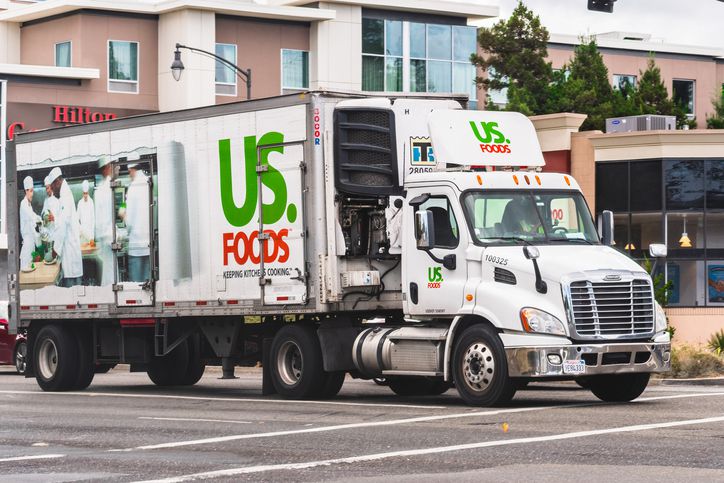
Distribution companies have little to do with consumption or production and focus more on logistics and transport. These companies, like Sysco or United Natural Foods, send products across the country and world.
Distribution companies range from very large, reaching national distribution, to fairly small, where they connect specialty retailers.
The distribution market might have its long-term players, but investing in it comes with its own risks. Amazon’s purchase of Whole Foods could lead to disruption in the distribution market, meaning change could be imminent in this steady stock.
Andrei Stanescu / istockphoto

Grocery stores have become big business in the investment game. The next link in the chain, grocery stores are where the products end up once a distributor drops them off.
The biggest name in the game is Walmart — which has cornered the grocery market. But there’s plenty of room for growth among competitors Target, Costco and Amazon.
Grocery store investments are hardly recession-proof, but the necessity of groceries as a staple for consumers suggests these investments take a lesser hit in a market downturn.
DepositPhotos.com

Restaurants are an additional resting place for food distributors. Restaurant stocks include everything from the recognizable golden arches of McDonald’s to high-end hospitality holdings like The ONE Group.
In economic downturns, discretionary restaurant spending is usually the first to go, making this industry within food investing slightly less stable than the others. Additionally, this arena might be most susceptible to trends — take Chipotle’s meteoric rise and fall.
mahmoud.masad/istockphoto
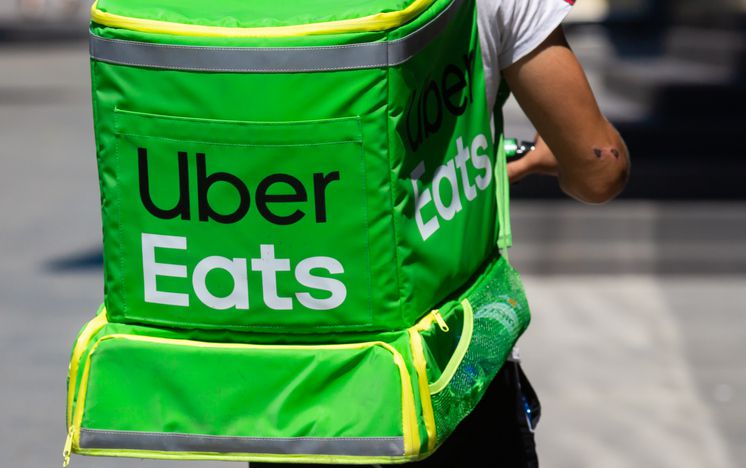
The newest addition in food stocks is more about tech than good eats. Online delivery services like GrubHub, UberEats and Postmates have burst onto the scene, and with a limited history of performance, are considered to be riskier than the traditional food stocks outlined above (for example, GrubHub’s value has dramatically fluctuated within a 12-month period).
In addition to innovation, traditional grocery stores are getting into the game, offering delivery and pickup services for customers.
Right now, delivery service companies are still duking it out across the country, expanding to new cities and slashing the price of services to entice customers.
This vertical stands out against the other arms of food investing, and some might be considered “safer bets” in comparison.
lcva2 / istockphoto

With all the ingredients in order, it’s time to highlight a few of the basic pros and cons of investing in food stocks:
• Pro: Food stocks perform consistently. Food stocks can be a relatively safe, recession-resistant investment (but remember all stocks have inherent risk).
• Con: Food stocks perform consistently. For an investor looking for a higher-risk investment, the steady year-over-year earnings might not be as enticing for someone trying to build a high-return portfolio.
• Pro: Familiarity with brands. Many food stocks are also commonly found in investors’ pantries and refrigerators. For someone new to investing, buying stocks in the brands they trust and use could be a great way to dip their toes in the market.
• Con: An investor might feel like they’re in it for the long haul. With consistent, steady returns, they shouldn’t expect to make a quick buck on food stocks. Instead, this might be best implemented as part of an investor’s long-term strategy.
Lazy_Bear / istockphoto

Looking to get a piece of the pie? Investing in food stocks is similar to investing in any other stock. Investors can buy traditional stock, mutual funds, exchange-traded funds (ETFs), or even fractional shares of stock.
Learn more:
This article originally appeared on SoFi.com and was syndicated by MediaFeed.org.
SoFi Invest
The information provided is not meant to provide investment or financial advice. Investment decisions should be based on an individual’s specific financial needs, goals and risk profile. SoFi can’t guarantee future financial performance. Advisory services offered through SoFi Wealth, LLC. SoFi Securities, LLC, member FINRA/SIPC . The umbrella term “SoFi Invest” refers to the three investment and trading platforms operated by Social Finance, Inc. and its affiliates (described below). Individual customer accounts may be subject to the terms applicable to one or more of the platforms below.
Stock Bits
Stock Bits is a brand name of the fractional trading program offered by SoFi Securities LLC. When making a fractional trade, you are granting SoFi Securities discretion to determine the time and price of the trade. Fractional trades will be executed in our next trading window, which may be several hours or days after placing an order. The execution price may be higher or lower than it was at the time the order was placed.
Financial Tips & Strategies: The tips provided on this website are of a general nature and do not take into account your specific objectives, financial situation, and needs. You should always consider their appropriateness given your own circumstances.
Investment Risk: Diversification can help reduce some investment risk. It cannot guarantee profit, or fully protect in a down market.
External Websites: The information and analysis provided through hyperlinks to third party websites, while believed to be accurate, cannot be guaranteed by SoFi. Links are provided for informational purposes and should not be viewed as an endorsement.
Third Party Brand Mentions: No brands or products mentioned are affiliated with SoFi, nor do they endorse or sponsor this article. Third party trademarks referenced herein are property of their respective owners.
A Slice of Pie
Featured Image Credit: frantic00 / iStock.