
This article was reviewed by Sara Harcharik Perkins, MD.
Key Takeaways:
- A widening hair part is a common early sign of female pattern hair loss, which affects up to 40 percent of women by age 50.
- Telogen effluvium or traction alopecia can also make the scalp more visible.
- FDA-approved treatments like topical minoxidil can help slow hair thinning and improve density, especially when started early.
- A healthcare provider can help identify the cause of a widening part and determine whether prescription treatment is appropriate.
If you’ve noticed more visible scalp along your hair part, it might be time to take action. A widening hair part is a sign of hair loss.
Shedding along your hair part can be an early sign of female pattern hair loss (FPHL), which tends to get worse over time. The quicker you treat it, the better.
In this article, we’ll explore the possible causes of a widening hair part and offer tips for how to fix it.
Is a Widening Hair Part a Sign of Female Pattern Hair Loss?
Yes. A widening hair part is one of the earliest and most recognizable signs of female pattern hair loss, also called androgenic alopecia or female pattern baldness.
This condition causes gradual thinning across the top of the scalp rather than sudden shedding. It affects roughly 40 percent of women by age 50.
Other symptoms of female pattern hair loss include:
- Diffuse thinning. This is when there’s thinning all over, across the crown and top of the scalp.
- A “Christmas tree” pattern. This is where the part is widest at the front and narrows toward the back.
Unlike male pattern baldness, women with FPHL rarely develop a completely bald spot or a receding hairline.
However, both male and female pattern hair loss get worse over time. When left untreated, your hair follicles gradually shrink (miniaturization), leaving you with finer and thinner hair strands, until they stop producing hairs altogether.
Key takeaway: If your hair part is slowly becoming wider over months or years, female pattern hair loss is the most likely explanation — and it tends to progress without treatment.
Other Causes of a Widening Hair Part
While FPHL is the most likely cause of a widening hair part, it’s not the only possible explanation. Other hair loss conditions can reduce overall hair density, making the scalp more visible at your part line.
These include telogen effluvium and traction alopecia.
Telogen Effluvium
Telogen effluvium is a temporary form of hair shedding. It happens when a large number of hair follicles shift into the resting (telogen) phase of the growth cycle at once.
Common triggers of telogen effluvium:
- Severe emotional or physical stress
- Illnesses with a fever (including viral infections)
- Surgery or hospitalization
- Certain medications
- Postpartum hormonal changes
- Rapid weight loss or nutritional deficiencies
With telogen effluvium, hair shedding usually starts 2 to 3 months after the trigger. It often resolves within several months once the underlying cause is addressed.
Traction Alopecia
Traction alopecia results from repeated tension on hair follicles due to repeated tugging or tight hairstyles. For example:
- Tight ponytails
- Tight buns
- Braids or cornrows
- Heavy hair extensions
This type of hair loss most commonly affects the hairline and temples. But if there’s tension along the part, thinning can show up there too.
The good news is that traction alopecia is preventable and often reversible if caught early.
How to Fix a Wide Hair Part
A few different hair loss treatments can help slow down hair loss and, in some cases, encourage hair regrowth — including along a widening part.
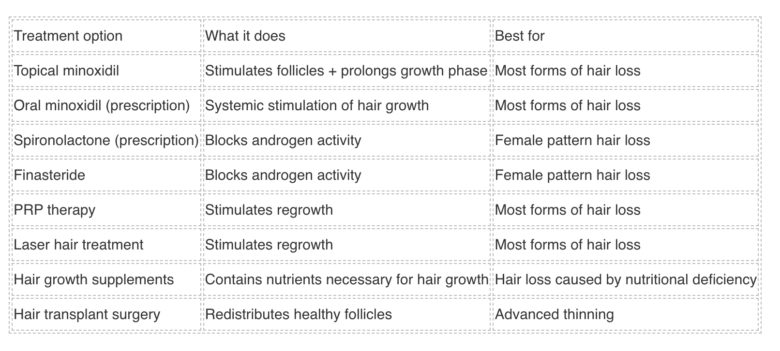
Here’s a rundown of hair loss treatments that address the root cause of thinning.
Minoxidil for a Widening Hair Part
Topical minoxidil (Rogaine®) is approved by the Food and Drug Administration (FDA) to treat male and female pattern hair loss. It’s one of the most well-studied hair regrowth treatments available.
This over-the-counter (OTC) treatment can be used for many different types of hair loss, from female pattern hair loss to telogen effluvium.
Minoxidil helps by:
- Boosting blood flow to the scalp
- Slowing hair thinning
- Improving hair density over time
- Promoting new hair growth
Topical minoxidil is available as:
- Topical solution (2%). Apply this liquid solution directly to your scalp twice a day.
- Topical minoxidil foam (5%). The foam is often easier to apply and spread on your scalp than the solution. Plus, you only need to apply it once a day.
Though it’s prescription-only, you could also consider low-dose oral minoxidil. This once-a-day pill can be helpful if you’re not into topical treatments.
In any case, minoxidil works best when you start using it early. Consistency matters — results typically take at least 6 months to become noticeable.
Spironolactone for Female Pattern Hair Loss
Spironolactone is a prescription medication that blocks male sex hormones (androgens) like dihydrotestosterone (DHT) that can contribute to hair thinning in women.
Besides hair loss, it’s often prescribed for women who also experience:
- Hormonal acne
- Excess facial or body hair
- Polycystic ovary syndrome (PCOS)
Though it can be helpful for some women, spironolactone isn’t suitable for everyone, as it can have numerous side effects. Reach out to a healthcare professional to explore your options.
Fyi: Since it’s not safe for pregnancy, you need to use a reliable form of birth control while taking spironolactone.
Finasteride
Finasteride is a prescription medication that reduces levels of DHT, a hormone involved in androgen-related hair loss.
Finasteride is FDA-approved for male pattern hair loss, but it may be prescribed off-label for certain women. It’s typically only prescribed to those who’ve gone through menopause, if and when a healthcare provider thinks it’s appropriate.
Finasteride can be dangerous during pregnancy. And for women, it’s usually only considered when other hair loss treatments haven’t worked.
Platelet-Rich Plasma (PRP) Therapy
Platelet-rich plasma (PRP) therapy is a nonsurgical treatment done in a clinical setting. It takes a concentrated portion of your own blood — rich in platelets and growth factors — and injects it into your scalp to stimulate hair follicles.
PRP may help by improving hair thickness and density. While more research is needed, the evidence so far suggests it can slow down FPHL and promote regrowth.
PRP is often used alongside treatments like topical minoxidil, and it typically requires multiple sessions over several months.
Laser Hair Treatment
Low-level laser therapy (LLLT), sometimes called laser hair treatment or red light therapy, uses light energy to stimulate hair follicles and promote circulation in the scalp. Some devices are FDA-cleared as a treatment for male and female pattern hair loss.
You can get LLLT treatments in a clinical setting or do it at home with devices like laser caps or combs.
Laser hair treatments may help by:
- Slowing androgenetic alopecia
- Improving hair density
- Encouraging hair follicles in the resting phase of the hair cycle to re-enter the growing phase
- Prolonging how long hair follicles stay in the growing phase
Laser therapy devices cleared by the FDA are considered safe. But you’ll need several sessions before you notice a difference, and professional treatments can be fairly expensive. An at-home device might be the more affordable option.
Hair Growth Supplements
Hair growth supplements are often marketed as an easy fix for thinning hair. But their effectiveness depends largely on whether a nutritional deficiency is contributing to the problem.
Many people assume biotin is a cure-all for a widening hair part, but true biotin deficiency is uncommon. Supplements don’t treat female pattern hair loss itself, but they may support overall hair health.
Hair Transplant
Hair transplant surgery can be an effective option for women with advanced or stable hair loss who haven’t seen sufficient improvement with medication alone.
The procedure involves moving healthy hair follicles from areas of the scalp that are less prone to thinning (typically the back or sides) to areas with visible loss, such as along a widening part.
Here’s what you need to know about hair transplants:
- Results are permanent once transplanted follicles take hold.
- The best candidates have stabilized hair loss and enough donor hair.
- Recovery can take several weeks, with full results visible after 9 to 12 months.
Nowadays, hair transplant surgery usually gives very natural-looking results, provided it’s done by an experienced surgeon. But they’re expensive.
Ways to Camouflage a Widening Hair Part
The right strategies can help conceal thinning. These are temporary fixes, but they can help you feel less self-conscious about your widening hair part.
Popular options include:
- Hair-thickening powders or fibers
- Strategic part changes
- Volumizing hairstyles
- Hairbands and scarves
These don’t stop hair loss, but they can boost confidence in the meantime.
Lifestyle Habits That Support Healthier Hair
Hair health is influenced by genetics, hormones, and daily habits.
While healthy lifestyle changes can’t reverse pattern hair loss, they can promote healthy hair growth, prevent breakage, and help your hair look healthy.
These habits include:
- Eating a balanced, nutrient-rich diet. This includes staying hydrated and using supplements if your healthcare provider recommends them.
- Avoiding further hair damage. Excessive heat styling, harsh chemicals, and rough styling techniques can cause breakage.
- Maintaining scalp health. Keep your scalp moisturized, healthy, and dandruff-free.
- Have a good hair care routine. Use quality hair care products, including shampoos and conditioners that suit your hair type.
- Quitting smoking if you smoke. Smoking cigarettes may worsen hair loss.
The Bottom Line on Widening Hair Parts
A widening hair part is often an early sign of female pattern hair loss, but it can also result from temporary conditions due to things like stress or tension on the scalp. The earlier you identify the cause and address it, the more effective treatment tends to be.
FAQs
See answers to common questions about a widening hair part below.
Is a widening hair part always hair loss?
Generally, yes. A widening hair part typically signals hair loss, although it might be a temporary form of hair loss. A wider part line can be caused by male or female pattern hair loss (androgenic alopecia), temporary shedding, styling practices, or nutritional issues.
Can hair grow back along a widening part?
Yes, hair can grow back along a widening part. With early treatment, especially with topical minoxidil or prescription options, many women see improved density near their part line. But it takes consistent use over several months to notice a difference.
How long does it take to see results from hair loss treatment?
Most hair loss treatments take at least 6 months of consistent use before you see noticeable results. But this depends on the treatment you use and the extent of your hair loss.
Should I see a doctor for a widening hair part?
Yes, you should see a doctor or another medical professional for a widening hair part. A licensed healthcare provider, like a dermatologist or trichologist, can help determine the cause and whether prescription treatment may be appropriate.
Related:
Like MediaFeed’s content? Be sure to follow us.
This article originally appeared on ForHers.com and was syndicated by MediaFeed.org.