What is a Bitcoin ATM?
A Bitcoin ATM is a standalone machine or kiosk that serves as a portal for customers to deposit cash and receive Bitcoins. Some crypto ATMs offer only Bitcoin, while others also allow users to take out other cryptocurrencies.
Around the U.S. and the world, Bitcoin ATMs are popping up in gas stations, convenience stores and other locations. As of October 2020, there were more than 9,000 Bitcoin ATMs, according to Coin ATM Radar. Some estimates list a total of 14,000 Bitcoin ATMs in the world. The companies that operate these ATMs sometimes require that you use their particular cryptocurrency trading platform or their proprietary wallet. For this reason, some Bitcoin ATMs only work for customers who have an account with a particular platform.
Many Bitcoin ATMs have strict minimums and maximums for each transaction. The Financial Crimes Enforcement Network (FinCEN) requires that all Bitcoin ATM operators in the U.S. observe and follow the anti-money laundering provisions of the Bank Secrecy Act (BSA). As a result, users who make larger transactions on a Bitcoin ATM may have to provide personal information. That information may include a mobile phone number to use for transaction verification. In addition, some users may have to scan a government-issued identification, such as a passport or driver’s license, to verify the identity of the person making the transaction.
A Bitcoin ATM provides a fast and easy way to buy Bitcoin with physical cash. Otherwise, users would need to deposit the cash into a traditional account and then transfer it into a crypto exchange to complete the transaction.
Related: Digital assets & cryptocurrency
How Do Bitcoin ATMs Work?
Despite the name, a Bitcoin ATM doesn’t work like a bank’s automated teller machine (ATM). Traditional ATMs typically allow customers to withdraw cash, deposit cash and checks, or transfer money between accounts in the same bank.
Like a traditional ATM, a Bitcoin ATM is connected to the internet. But Bitcoin ATMs, by contrast, receive hard fiat currency, such as dollars, from the user and give them Bitcoin or other types of cryptocurrencies in return. It delivers that cryptocurrency to the user’s crypto wallet, which the user identifies by scanning a unique quick response (QR) code into the machine. Most ATMs offer a real-time exchange rate, but they also charge users a fee for the convenience of the Bitcoin transaction.
The dollar-to-Bitcoin rate changes from minute to minute. And the rate offered by a machine may carry a larger financial impact on the transaction than the fees themselves. Investors who plan to use a Bitcoin ATM regularly to turn cash into crypto may want to take a close look at the exchange rates offered by different Bitcoin ATM providers in addition to their fees, as they may be significantly higher than what you’d see in a crypto exchange.
While most machines do not dispense cash in exchange for the Bitcoin a user owns, some newer machines have begun to offer this capability. A user can confirm that their cash purchased Bitcoin or another form of crypto by checking their crypto wallet. But the transaction may take several minutes to show up.
For users who want to buy Bitcoin from a Bitcoin ATM but don’t have a crypto wallet, some Bitcoin ATMs will generate a new wallet for them.
How to Use a Bitcoin ATM
Using a Bitcoin ATM requires several steps:
- Get a crypto wallet. Before using a Bitcoin ATM, you’ll need a wallet in which to deposit the Bitcoin. Those assets live on the blockchain, but the crypto wallet tracks your balance and lets you access your cryptocurrency with an alphanumeric key. Those wallets can be web-based or can be hardware devices.
- Prepare the wallet. Make a note of the alphanumeric code for your wallet or download a QR code to allow for quicker access.
- Find a Bitcoin ATM. There are many guides, such as this one, to help you find a nearby Bitcoin ATM. Many work like maps, in which you simply type in your ZIP code to receive a list of addresses with Bitcoin ATMs and the companies that operate them.
- Set up an account. To use a Bitcoin ATM, set up an account with the ATM operator. This process will require you to enter some personal information.
- Enter your wallet information. At the ATM you will follow a prompt to indicate your wallet via QR code or alphanumeric key.
- Insert cash. When you physically deposit cash, the Bitcoin ATM operator transfers that into Bitcoin or the other forms of crypto you requested. If you insert $200, for example, you’ll receive $200 of Bitcoin at its current market price, minus the ATM provider’s operating fee. Some ATMs also charge a miner’s fee, which they deduct from the deposit amount.
- Confirm the purchase. This is your last chance to review and confirm your purchase and what fees you’re paying before making the transaction.
Bitcoin ATM Fees
When users buy Bitcoin or other forms of crypto at a Bitcoin ATM, they have to pay a fee. While you may be familiar with the single-digit, percent-of-withdrawal fees charged by traditional ATMs, the fees are much higher for Bitcoin ATMs.
Like the fees charged by cash ATMs, the fees charged by a Bitcoin ATM are not a flat dollar amount, but a percentage of the transaction. According to Coin ATM Radar, the average fee for buying crypto at a Bitcoin ATM is 8.4%. Some research shows that there are Bitcoin ATMs that charge fees of more than 25%, while others commonly charge between 10-15%, so it can pay to shop around.
The Future of Bitcoin ATMs
Most Bitcoin ATMs only allow users to deposit cash, often at very high fees. But there has been a movement among some operators to make them more like traditional ATMs and allow for cash withdrawals. Some Bitcoin ATMs have the capability for both types of transactions.
The process for converting crypto into cash and withdrawing the cash will work like the current deposit process but in reverse. Given the high fees available to Bitcoin ATM operators, it’s likely that these machines will continue popping up with greater frequency, offering more features, and hopefully competing more aggressively on the prices they charge for their services.
The Takeaway
Bitcoin ATMs are increasingly common. They offer convenience to some crypto investors but often charge extremely high fees and require the user to have a crypto wallet.
Learn more:
This article originally appeared on SoFi.com and was syndicated by MediaFeed.org.
SoFi Invest
The information provided is not meant to provide investment or financial advice. Investment decisions should be based on an individual’s specific financial needs, goals and risk profile. SoFi can’t guarantee future financial performance. Advisory services offered through SoFi Wealth, LLC. SoFi Securities, LLC, member FINRA / SIPC. SoFi Invest refers to the three investment and trading platforms operated by Social Finance, Inc. and its affiliates (described below). Individual customer accounts may be subject to the terms applicable to one or more of the platforms below.
1) Automated Investing—The Automated Investing platform is owned by SoFi Wealth LLC, an SEC Registered Investment Advisor (“Sofi Wealth“). Brokerage services are provided to SoFi Wealth LLC by SoFi Securities LLC, an affiliated SEC registered broker dealer and member FINRA/SIPC, (“Sofi Securities).
2) Active Investing—The Active Investing platform is owned by SoFi Securities LLC. Clearing and custody of all securities are provided by APEX Clearing Corporation.
3) Cryptocurrency is offered by SoFi Digital Assets, LLC, a FinCEN registered Money Service Business.
For additional disclosures related to the SoFi Invest platforms described above, including state licensure of Sofi Digital Assets, LLC, please visit www.sofi.com/legal. Neither the Investment Advisor Representatives of SoFi Wealth, nor the Registered Representatives of SoFi Securities are compensated for the sale of any product or service sold through any SoFi Invest platform. Information related to lending products contained herein should not be construed as an offer or pre-qualification for any loan product offered by SoFi Lending Corp and/or its affiliates.
Crypto: Bitcoin and other cryptocurrencies aren’t endorsed or guaranteed by any government, are volatile, and involve a high degree of risk. Consumer protection and securities laws don’t regulate cryptocurrencies to the same degree as traditional brokerage and investment products. Research and knowledge are essential prerequisites before engaging with any cryptocurrency. US regulators, including FINRA, the SEC, and the CFPB, have issued public advisories concerning digital asset risk. Cryptocurrency purchases should not be made with funds drawn from financial products including student loans, personal loans, mortgage refinancing, savings, retirement funds or traditional investments. Limitations apply to trading certain crypto assets and may not be available to residents of all states.
More from MediaFeed:
Why is Bitcoin so volatile?

Of all the things Bitcoin is rightfully known for—its range as a payment network, not the security of its protocol, nor the potential for blockchain technology to revolutionize any field that uses a database—there’s one that stands out as it’s most defining feature: its price, and how it goes up.
But the price of Bitcoin doesn’t always go up. To get these screaming vertical price increases, there have to be some bone-chattering falls as well. It’s that volatility that makes Bitcoin a tempting investment to some, and a dangerous one to others.
Related: How to invest in Bitcoin
Grindi / istockphoto

There’s no denying, Bitcoin is volatile. In all of 2020, the price of Bitcoin went from around $7,200 to $29,000—a 300% increase. The price of Bitcoin went up 14% in January 2021, and then between Groundhog’s Day and Valentine’s Day it rose 38%.
And there have also been some famous drops in the decade or so since Bitcoin was created. One famous dip occurred in 2017, when Bitcoin’s price dropped 20% November 9 and November 13. More recently, on May 17, 2021, Bitcoin dropped 35% from its high of $64,880 from April 14.
whyframestudio / istockphoto
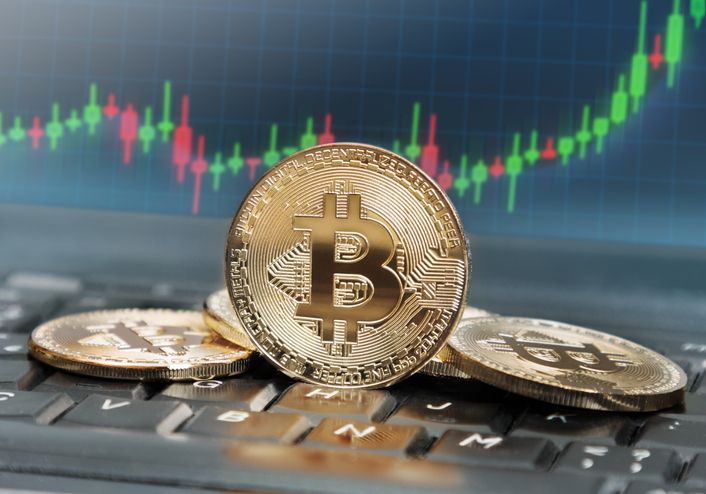
While volatility is basically a given across all different types of cryptocurrency, given the general air of legal, political, institutional technological uncertainty that floats around them, it’s most noticeable with Bitcoin.
Not only is Bitcoin the most valuable cryptocurrency, it’s seen as a flagship for the whole space and the one taken most seriously by government, companies, and financial institutions.
Bitcoin is increasingly an investment, speculation tool, and savings vehicle for millions of everyday people. But before investing in cryptocurrency like Bitcoin or any other type of cryptocurrency, a smart investor may want to seriously consider its volatility.
SKapl / istockphoto

There’s a reason that nearly anyone well-versed in cryptocurrency will caution novice investors to invest no more than you’re willing to lose. With a highly volatile asset like Bitcoin, an investor’s overall portfolio value could suddenly shoot much higher or much lower than they expect or are prepared for based on big changes in its price.
rockdrigo68 / istockphoto

Bitcoin isn’t the only asset with unclear “intrinsic value” to see big price swings, that lead, overall, to large price increases. Let alone other cryptocurrencies, including more established ones like Ethereum and literal jokes (no, really!) like Dogecoin.
There are a few reasons why Bitcoin’s price is so unstable.
David Shares on Unsplash

Liquidity is a concept in financial markets that relates how much a given purchase or sale of an asset will move its overall price. Liquidity, in general, supports overall asset values. If you have something with a price of $500 but when you need to sell it, there’s no one to buy it, the $500 it’s worth isn’t worth that much. Low liquidity may be rendering the price of Bitcoin unstable.
Andre Francois on Unsplash
One concern with Bitcoin is that a huge portion of all the Bitcoin circulating in the world (over 18.5 million, with a grand total of 21 million that will ever be mined) is not going to be bought or sold by anyone. This could be because it’s stranded in wallets for which the private keys have been forgotten or because they’re held by investors who will never sell, no matter the price.
Jirapong Manustrong / istockphoto

By shrinking the amount of Bitcoin in circulation beyond the limits built into the system, liquidity for Bitcoin can dry up. This means that movements to buy or sell could quickly influence the price, driving it up or down violently.
peterschreiber.media/istockphoto

One of the biggest debates regarding Bitcoin and cryptocurrency is what exactly it’s for—and why people are buying it.
For individuals who live in countries with unstable or despotic governments, Bitcoin can be a lifeline of stable value and resistance to seizure, but for many people, it is not an especially convenient payment mechanism compared to fiat currency of existing banking systems.
peshkov/istockphoto
And yet many people are buying Bitcoin and willing to pay ever-higher prices for it. The main reason seems to be that they expect the price to get even higher in time. Some people think the price will go up because Bitcoin is uniquely protected against inflation due to its 21 million coin cap.
Some expect wider adoption of it as a payment protocol. And some expect it to become a widely used store of value for institutions that generate large amounts of cash.
Stanislav Palamar/istockphoto

Essentially, interest in Bitcoin is generated by the idea that other people are going to buy in the future, at a higher price than it’s selling for today.
This expectation is fed by near-daily headlines about a company or celebrity buying into Bitcoin and the massive profits people are generating from Bitcoin they bought years—or even weeks—ago. Speculation like this often leads to volatility, because the price can turn down as sharply as it turns up.
Cemile Bingol/istockphoto
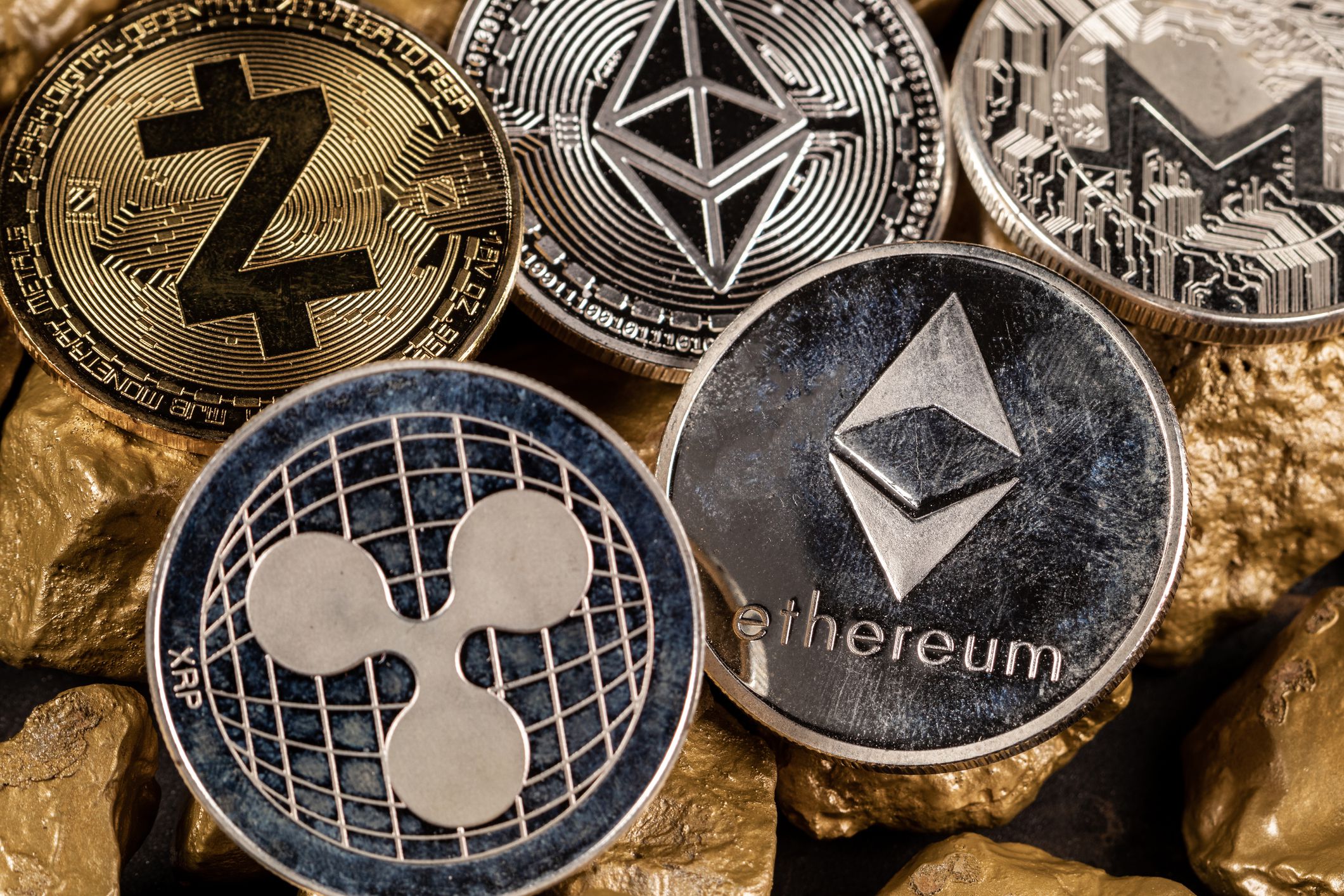
Analysts have said that it’s precisely the speculative nature of Bitcoin that right now that puts it at risk of falling from its current high prices. If a big portion of the buyers are largely trying to get in front of buyers that will come in later, an asset’s price is likely to swing.
That’s because the buyers who are eager to buy immediately may quickly dump the asset if they’ve made a quick profit or no longer think the cavalry will come in and buy up what they’ve just bought into.
24K-Production / iStock

Bitcoin’s volatility can be tied to a few things—its potential low liquidity, and the highly speculative nature of this cryptocurrency. As a result, investors and anyone who follows the news are aware of shocking highs and lows in the value of this well-known crypto.
Learn More:
This article
originally appeared on SoFi.comand was
syndicated by MediaFeed.org.
Crypto: Bitcoin and other cryptocurrencies aren’t endorsed or guaranteed by any government, are volatile, and involve a high degree of risk. Consumer protection and securities laws don’t regulate cryptocurrencies to the same degree as traditional brokerage and investment products. Research and knowledge are essential prerequisites before engaging with any cryptocurrency. US regulators, including FINRA , the SEC , and the CFPB , have issued public advisories concerning digital asset risk. Cryptocurrency purchases should not be made with funds drawn from financial products including student loans, personal loans, mortgage refinancing, savings, retirement funds or traditional investments.
SoFi Invest
The information provided is not meant to provide investment or financial advice. Investment decisions should be based on an individual’s specific financial needs, goals and risk profile. SoFi can’t guarantee future financial performance. Advisory services offered through SoFi Wealth, LLC. SoFi Securities, LLC, member FINRA / SIPC . SoFi Invest refers to the three investment and trading platforms operated by Social Finance, Inc. and its affiliates (described below). Individual customer accounts may be subject to the terms applicable to one or more of the platforms below.
1) Automated Investing—The Automated Investing platform is owned by SoFi Wealth LLC, an SEC Registered Investment Advisor (“Sofi Wealth“). Brokerage services are provided to SoFi Wealth LLC by SoFi Securities LLC, an affiliated SEC registered broker dealer and member FINRA/SIPC, (“Sofi Securities).
2) Active Investing—The Active Investing platform is owned by SoFi Securities LLC. Clearing and custody of all securities are provided by APEX Clearing Corporation.
3) Cryptocurrency is offered by SoFi Digital Assets, LLC, a FinCEN registered Money Service Business.
For additional disclosures related to the SoFi Invest platforms described above, including state licensure of Sofi Digital Assets, LLC, please visit www.sofi.com/legal. Neither the Investment Advisor Representatives of SoFi Wealth, nor the Registered Representatives of SoFi Securities are compensated for the sale of any product or service sold through any SoFi Invest platform. Information related to lending products contained herein should not be construed as an offer or pre-qualification for any loan product offered by SoFi Lending Corp and/or its affiliates.
Third Party Brand Mentions: No brands or products mentioned are affiliated with SoFi, nor do they endorse or sponsor this article. Third party trademarks referenced herein are property of their respective owners.
Financial Tips & Strategies: The tips provided on this website are of a general nature and do not take into account your specific objectives, financial situation, and needs. You should always consider their appropriateness given your own circumstances.
ipopba / istockphoto
Featured Image Credit: SKapl / istockphoto.