
This article was reviewed by Felix Gussone, MD.
Lift heavy and regularly, and you’ll grow huge muscles—and chiseled, built men surely have sky-high testosterone levels, right? Well, not quite: Working out in order to increase testosterone naturally may be, in part, a gym myth that’s flexing without evidence.
Exercise can boost testosterone, but the process of kickstarting some kind of hormone explosion isn’t as simple as doing a few bicep curls and waiting for your levels to change. Certain factors play a role, like how you’re training, how you’re recovering, and how the rest of your lifestyle stacks up.
Below, get detailed intel about the relationship between exercise and testosterone, and what you can really expect from your T levels as a result of your fitness routine.
Image Credit: Jacob Wackerhausen/Istockphoto.
The Link Between Exercise and Testosterone

Certain forms of exercise have been shown to boost testosterone, at least temporarily, following the activity. But by how much and for how long depends on a few factors.
The biggest influences include the type of exercise in question, your age (older men may get less of a post-exercise testosterone spike), and your current fitness level.
In general, resistance training and high-intensity workouts tend to produce the most noticeable hormonal response in men. But, even in these modalities, the testosterone level effects aren’t permanent following a single workout: A spike might last for 15 minutes to an hour after you’re done working out. So, just don’t go into the gym expecting an eternal boost after one lift sesh.
That said, you can encourage an ongoing elevation in your testosterone and better overall hormone balance by—you guessed it—working out on a regular basis.
In fact, one study found that men who regularly exercise experience statistically significant higher testosterone levels on a long-term basis compared to a control group of sedentary males. Why? Testosterone levels are influenced by many factors beyond exercise, such as diet, sleep, stress, and overall health. Men who work out regularly often tend to adopt healthier lifestyle habits, which can support hormone balance and may slightly boost testosterone production.
Other studies back up these findings, with some concluding that higher testosterone levels from being physically active is also associated with better reproductive health in men.
Image Credit: dolgachov/istockphoto.
The 3 Best Types of Workouts to Increase Testosterone
Not all workouts are equally optimized for building muscle mass, endurance gains, or even hormone support. So, what are the best exercises to increase testosterone levels?
Your best bet is to incorporate into your workout plan movements that challenge your muscles and push your body with intensity. For instance, large, compound movements and high-intensity bursts are a good bet.
Here are some ideas:
Image Credit: twinsterphoto/Istockphoto.
1. Resistance Exercise and Strength Training

Weight lifting is among the effective ways to increase testosterone, according to some research. One study concluded that men had a more significant boost in total serum testosterone after a 30-minute weight-lifting session compared to women.
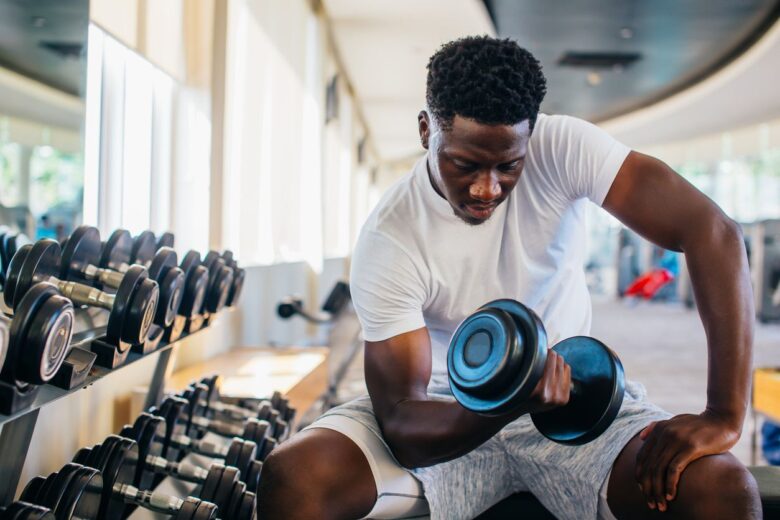
While you’re in the gym lifting weights, keep in mind that compound exercises that activate multiple large muscle groups (like squats, deadlifts, bench presses, and rows) stimulate hormone production more than isolated movements (like seated bicep curls).
Consistent strength training supports more ongoing improvements in testosterone levels over time. This appears to be especially the case when you’re opting for heavier weights and lower rep counts.
New to strength training? Start with bodyweight exercises or resistance bands and smaller dumbbells, increasing weight levels as you grow stronger.
Image Credit: djiledesign/Istockphoto.
2. High-Intensity Interval Training (HIIT)

HIIT involves short bursts of intense effort followed by brief rest periods. It leaves you breathless, and your hormones love it. Studies have concluded that HIIT can increase testosterone in men (better than a more sustained exercise, no less) while also improving insulin sensitivity and cardiovascular health.
Interestingly, one study found that you’re more likely to get T gains from doing HIIT workouts that are less structured and repetitive, and instead more randomly organized.
Some great HIIT options include doing cycling intervals on your bike or signing up for an intense circuit or bootcamp-style workout class.
Image Credit: Arsenii Palivoda/Istockphoto.
3. Sprinting and Explosive Movements

Short, intense bouts of running as fast as you can may temporarily affect testosterone levels. Examples of these may include explosive bodyweight exercises—like jump squats, plyometric push-ups—or doing “sprints” on the rowing machine.
Image Credit: Akarawut Lohacharoenvanich/Istockphoto.
Exercises That Don’t Increase Testosterone

Now that you have a list of exercises to prioritize for testosterone support, it’s also helpful to know what workout formats are less likely to support your hormonal goals—or even have detrimental effects.
The main thing to remember is that constantly going balls-to-the-wall with your workouts may make you feel invincible for a hot second, but it’s not going to benefit you in the long run.
Some of the approaches that are unlikely to give you a T-boost are:
Image Credit: PeopleImages/istockphoto.
Chronic Endurance Training

If you’re a cardio nut, this is your reminder to change it up a bit every now and then (if increasing testosterone is also a goal of yours).
While running and biking have fantastic heart, lung, and muscular benefits, overdoing endurance exercise may actually lead to reduced testosterone over time. (It’s worth noting the study was conducted on endurance athletes and might not apply to the general population.)
This higher risk of low T may be due to the high physical stress from a ton of aerobic exercise, especially if you’re not resting enough.
Image Credit: nd3000/Istockphoto.
Low-Intensity Activities

While there are absolutely benefits to activities like taking walks around the block or doing a gentle yoga class, they won’t typically trigger significant increases in testosterone. But these activities may not hurt your levels, either.
In fact, including these forms of activity in your routine can help keep cortisol levels (the stress hormone) in check, which indirectly supports hormone balance. And it really is all about balance.
Image Credit: fizkes/Istockphoto.
Overtraining

Just like you can’t survive on, say, apples alone, exercise (a good thing) in excess (a bad thing) can do more harm than good.
When your body doesn’t have time to recover, cortisol goes up, and testosterone can take a hit. Plus, you likely end up feeling like trash.
Regular exercise is about quality over quantity, guys. Lift smart, sprint hard, go for variety, and don’t skip rest days.
Image Credit: Zorica Nastasic/Istockphoto.
Why Exercise Can Trigger a Testosterone Spike: What’s Happening in Your Body

-
You’re having a hormonal response to physical stress. Your body interprets intense physical activity as a form of stress (who wouldn’t?). In response, your endocrine system releases a cascade of hormones to help you perform, adapt, and recover. One study found that both a single strength training session and a four-week training program caused measurable changes in how much testosterone left the body through urine. Short sessions reduced how much testosterone (and estrogen) was excreted, while long-term training boosted testosterone and muscle strength. This suggests an adaptive hormonal response to ongoing resistance exercise.
-
There’s temporary inflammation that requires repair. Intense workouts cause tiny tears in muscle fibers (this is how muscles are rebuilt stronger). When this happens, your body is signaled to start repair and recovery efforts. There’s some evidence that testosterone may be released and has anti-inflammatory mechanisms.
-
Your energy and metabolic demands shift. HIIT and sprinting require quick energy, so your body sends more anabolic (muscle growth) hormones like testosterone to optimize recovery. Additionally, these exercises can enhance insulin sensitivity and body fat loss, which are associated with healthier testosterone levels.
The reason certain types of exercise, like the ones we listed above, can lead to a spike in testosterone comes down to how your body responds to physical stress, muscle activation, and hormonal signaling.
Here’s what’s going on internally:
Image Credit: PeopleImages/istockphoto.
Other Lifestyle Factors That Influence Testosterone

Exercise is important, but it’s just one piece of the testosterone (and overall health) puzzle. Your daily habits can either support healthy hormone levels or possibly work against them.
Here are some key lifestyle factors that also play a major role in a guy’s testosterone production:
-
How you sleep. Testosterone levels rise during sleep, especially during deep rapid eye movement (REM) cycles. Long-term poor sleep or chronic sleep deprivation can significantly lower testosterone, even in young, healthy men. Aim for seven to nine hours of quality sleep per night.
-
How you eat. Healthy unsaturated fats (like those from avocados, nuts, and olive oil), adequate protein, and key micronutrients are essential for testosterone production and reproductive health. Don’t fall for quick-fix diets; eating a variety of nutrient-dense foods and minimizing ultra-processed items is best.
-
How your body stores fat. It’s not uncommon for guys to notice a little more fluff around the midsection as they get older. However, obesity and more abdominal (visceral) fat are often associated with lower testosterone.
-
How you handle stress. Stress raises cortisol, which acts on the privates and can directly suppress testosterone. Ongoing mental or physical stress (from work, life, overtraining, or otherwise) can sabotage your hormonal health over time. Implementing stress management practices like yoga, journaling, playing basketball with the guys, or meditating are all good tools to have in your belt.
-
How much you drink. Regular excessive alcohol consumption may lower testosterone, disrupt sleep, and impair liver function. None of these are perks, and each can further affect hormone metabolism.
-
Whether you smoke or use risky substances. Tobacco use and recreational drugs can negatively impact hormone levels, sperm quality, and overall health.
-
Your environmental toxin exposure. Endocrine disruptors, like bisphenol A (BPA) from plastics or phthalates in personal care products, can interfere with natural testosterone production. It’s challenging to avoid all of them, but a good first step is to be more aware of what’s in the products you’re using on yourself and in your home.
-
Your intimate life. A healthy intimate life may help with maintaining balanced testosterone levels. Intimacy stimulation has been linked to short-term T increases in some studies.
-
How much sun you get. Natural sunlight helps the body produce vitamin D, which plays a supportive role in testosterone regulation. More isn’t better, though, as practicing sun safety is also critical to prevent skin cancers. Consider getting your vitamin D levels checked and ask your healthcare provider about taking a vitamin D supplement.
In other words, healthy testosterone levels aren’t just about lifting heavier weights, but making improvements to your overall lifestyle.
Image Credit: Marcos Elihu Castillo Ramirez/Istockphoto.
Exercise and Testosterone: The Takeaways

The answer to “does working out increase testosterone?” is “not necessarily.” Exercise isn’t a magical testosterone switch, and pumping more iron isn’t always better.
Being physically active has many benefits and can support healthier hormone levels, especially when combined with smart lifestyle choices. The key is knowing how to train, recover, and fuel your body for optimal results.
Here’s what to remember:
-
Resistance training and HIIT are your best bets for boosting testosterone naturally, especially when done consistently with proper recovery.
-
Too much exercise can backfire, especially if you’re not sleeping well, eating enough, or managing stress.
-
Your overall lifestyle matters just as much as your workout plan when it comes to supporting long-term testosterone health.
-
If you’re a guy who has true low testosterone levels, exercise alone probably isn’t going to be enough to significantly move the needle — getting professional medical support is important.
If you’re feeling low on energy, strength, or motivation, and you suspect low testosterone could be part of the issue, consult a healthcare provider for proper evaluation and personalized guidance.
Related:
Like MediaFeed’s content? Be sure to follow us.
This article originally appeared on Hims.com and was syndicated by MediaFeed.org
Image Credit: Ridofranz/istockphoto.