
Chilling urban legends that locals still swear are true
“A creepy guy, on Halloween, dressed oddly, throwing hatchets at people. It’s just too bizarre to possibly be true,” Fairfax County archivist Brian Conley told Washingtonian in 2015. “But it is.”
That is the problem with the stories below. A few of them have police reports underneath.
Seven follow. Where a documented event sits under the legend, we say so.
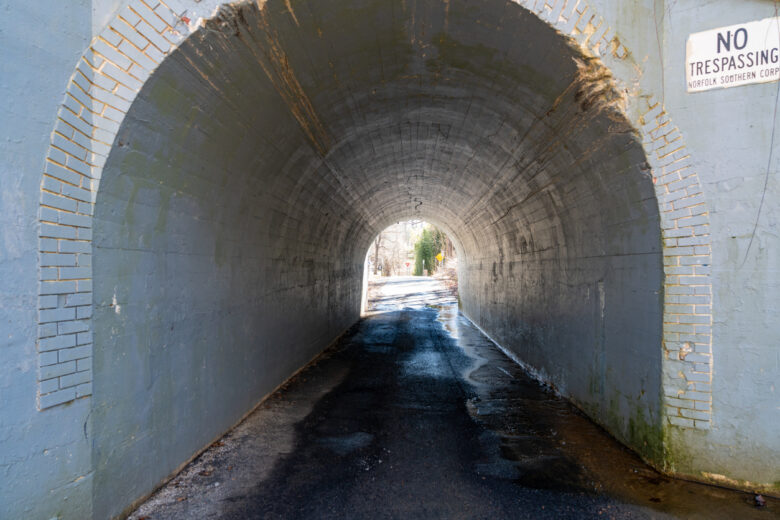
The Bunny Man, Fairfax County, Virginia
Start here, because this one has records. Brian A. Conley, Historian-Archivist at the Fairfax County Public Library, went looking for the origin and found two incidents ten days apart in October 1970.
In the first, an Air Force Academy cadet named Robert Bennett and his fiancée were parked on the 5400 block of Guinea Road, near his relatives’ house, after the Air Force-Navy football game. A man ran out of the bushes shouting that they were on private property and he had their tag number, then threw a wooden-handled hatchet through the car window. Eleven days later, a construction security guard named Paul Phillips met a man on the porch of an unfinished house in the same subdivision, who told him, “You all trespass around here.”
More than fifty people then contacted police saying they had seen him. The Washington Post ran the story under headlines including “Man in Bunny Suit Sought in Fairfax” and “Bunny Reports Are Multiplying.”
Conley’s own reading is almost mundane: all three encounters involve accusations of trespassing or dumping, suggesting someone is upset about the development going up around him.
The escaped-asylum version is the part that is demonstrably untrue. Conley notes there has never been an asylum for the insane in Fairfax County, and that Lorton Prison did not exist until 1910.
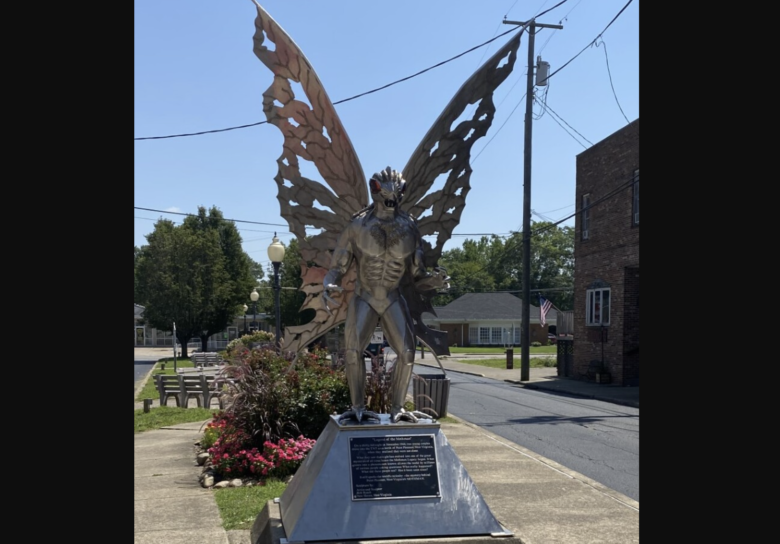
Mothman, Point Pleasant, West Virginia
On November 15, 1966, two young couples from Point Pleasant, Roger and Linda Scarberry and Steve and Mary Mallette, told police they had seen a large winged creature whose eyes glowed red in their headlights.
A West Virginia University biologist, Robert L. Smith, offered reporters an explanation at the time: a sandhill crane, nearly as tall as a man, with a seven-foot wingspan and reddish circles around its eyes, possibly off its migration route.
Then, on December 15, 1967, the Silver Bridge between West Virginia and Ohio collapsed during rush hour and 46 people were lost. Afterward, many locals connected the sightings to the disaster, and the creature became an omen rather than a bird.
Point Pleasant now holds a festival for him every September.

The Bell Witch, Adams, Tennessee
John Bell Sr. moved his family to Robertson County in 1801, and the trouble reportedly began in 1817, when he reported seeing an animal in his yard with the head of a rabbit and the body of a dog.
The story reached a wide audience through an 1894 book by a newspaper editor, Martin V. Ingram, titled An Authenticated History of the Bell Witch, which collected what were presented as firsthand accounts from the family and their neighbors.
That book is the foundation of nearly everything written since, which is worth remembering when people call this the best-documented haunting in America. The documentation is largely one book, published 77 years later.
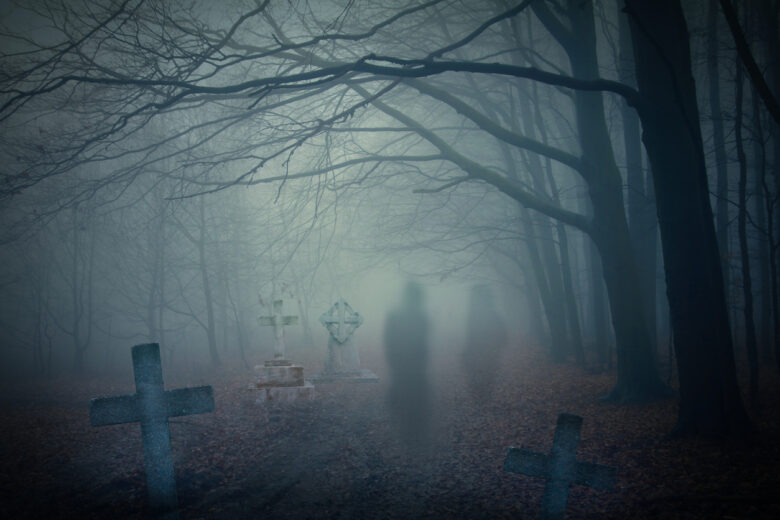
Resurrection Mary, Chicago
A young woman in a white dress asks for a ride along Archer Avenue, and disappears from the car near Resurrection Cemetery. Sightings have been reported since the 1930s.
The vanishing hitchhiker is one of the oldest story shapes, and versions of it turn up worldwide. What makes the Chicago version stick is specificity: a named road, a named cemetery, and several real women proposed over the years as the original.
None has ever been confirmed.
The Spook Light, near Joplin, Missouri
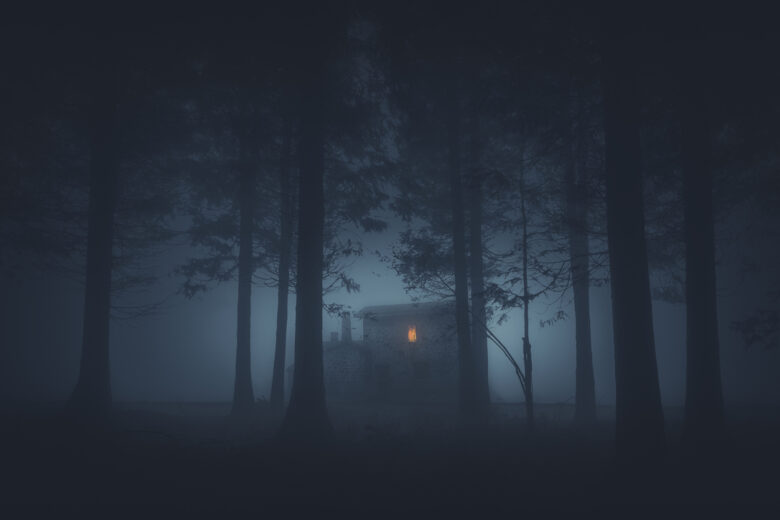
A single light appears along a rural road on the Missouri-Oklahoma line, usually described as floating and sometimes changing color. Locals have blamed spirits, and later, aliens.
Researchers have offered the obvious explanation: refracted headlights from a distant highway. The light has kept appearing anyway, and people keep driving out to argue about it in the dark.

Bloody Mary, everywhere
The mirror ritual keeps getting attached to historical figures: Mary I of England, a woman called Mary Worth, an executed witch. None of those attributions have ever been established as the origin.
Documented twentieth-century folklore shows the game circulating on its own, independently of the historical names later pinned to it. The explanation came after the ritual, not before.
The Bell Witch summoning game
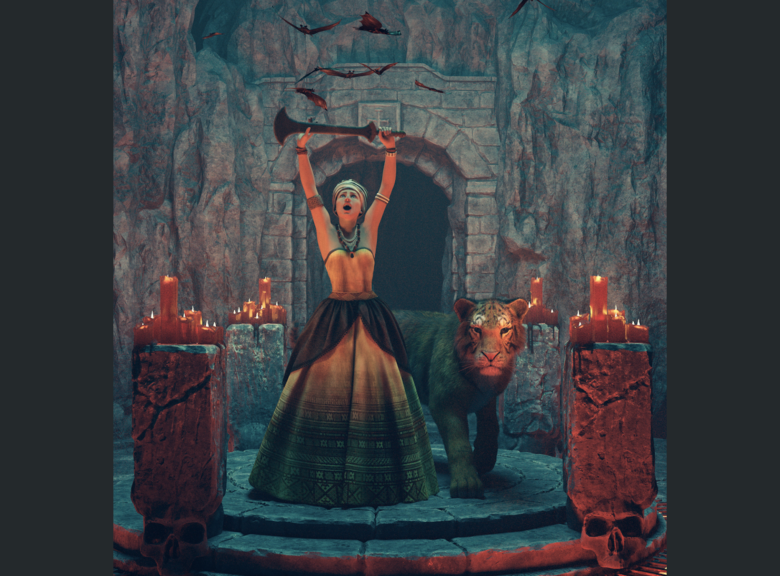
Worth a separate mention, because it shows how these things merge. By the 1970s, the mirror ritual had tangled with the Tennessee legend, and the Southern version involved repeating “I don’t believe in the Bell Witch” three times.
Two separate stories, two hundred miles and a century and a half apart, folded into one dare.
The bottom line
Fairfax County’s archivist traced the Bunny Man to two trespassing incidents on Guinea Road in October 1970, and more than fifty people reported sightings afterward. The Bell Witch story rests largely on a single book published in 1894.
Ask us! What questions do you have about content, strategy, pop culture, lifestyle, wellness, history or more? We may use your question in an upcoming article!
Related:
- Household rules from the ’40s that sound unbelievable now
- 8 places and discoveries where exploration has limits
Like MediaFeed’s content? Be sure to follow us.
This article was syndicated by MediaFeed.co.