
Vintage household products that ’60s moms used
One had a chick on the label. Another needed to be “burped.” A third promised to polish the furniture while you dusted.
Household products had their own ways of making themselves memorable. A familiar package helped. So did a slogan that stayed in your head long after the television was switched off.
Not every mother used these brands, and most were older than the decade. But their histories run through the kitchens, cleaning cupboards, and shopping lists of mid-century America.
Here are six you might recognize.
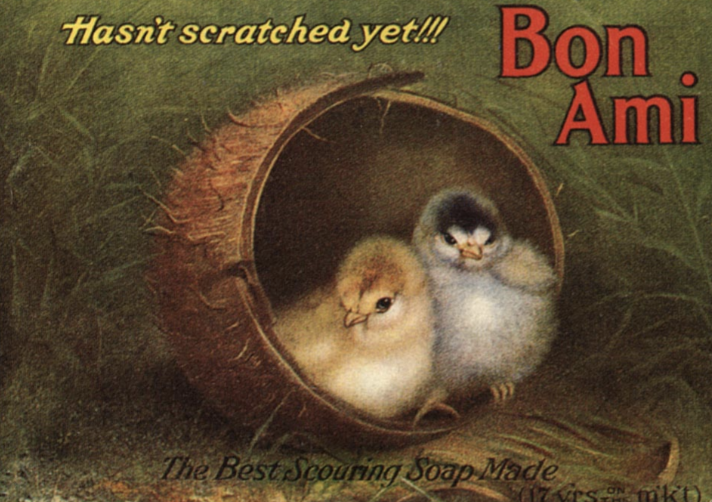
The cleanser with the little chick
The chick was not there because the cleaner contained eggs.
Bon Ami’s familiar bird was a visual joke. According to the company’s account of its packaging, newly hatched chicks do not scratch for food the way older chickens do. That made one a useful mascot for a cleanser sold with the promise “Hasn’t Scratched Yet!”
The product used feldspar, a softer mineral than the quartz used in some competing scouring powders. The little bird gave shoppers a way to remember the distinction without needing a geology lesson.
By the 1960s, this was already an old household name. The chick had been appearing in Bon Ami packaging and advertising since the late 1800s.
Small bird. Long career.
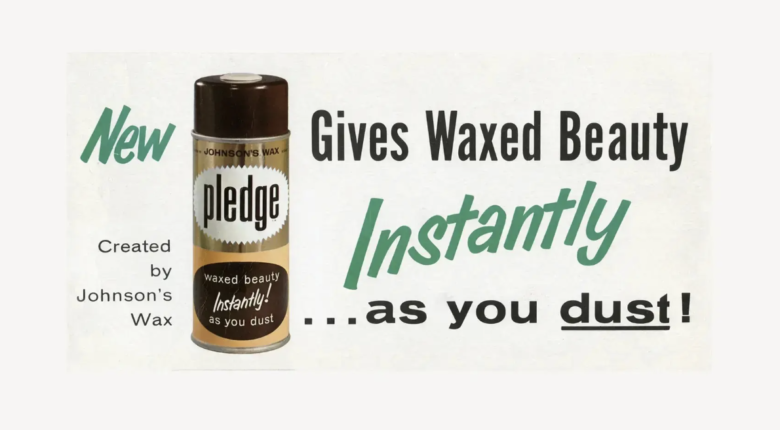
The furniture polish that did two jobs
Dusting and polishing were separate chores. Pledge’s sales pitch was that they did not have to be.
Introduced in 1958, the product promised “waxed beauty instantly as you dust.” The brand’s history credits SC Johnson chemist Erland Muoio with developing the polish in the company’s research tower, designed by Frank Lloyd Wright.
That is a surprisingly elaborate pedigree for something kept with the cleaning cloths.
The appeal was less architectural: one product, fewer steps. By the time the 1960s began, Pledge was offering a shortcut to the polished-furniture look.
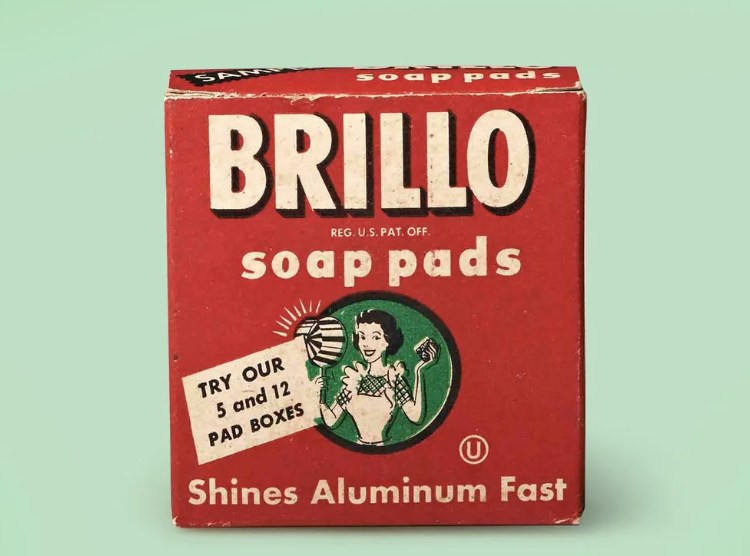
The steel wool with the soap already in it
A Brillo pad was not much to look at. That was not its job.
The product grew out of the problem of cleaning blackened aluminum cookware. Its early developers combined fine steel wool with soap, and the Brillo name was patented in 1913. According to a centenary history in The Columbus Dispatch, early packages supplied the pads and a cake of soap separately. The company began putting the soap into the pads in the 1930s.
So the version a 1960s household knew was already an improvement on an older cleaning tool.
The innovation was not that someone had invented scrubbing. It was that you no longer had to apply the soap separately.
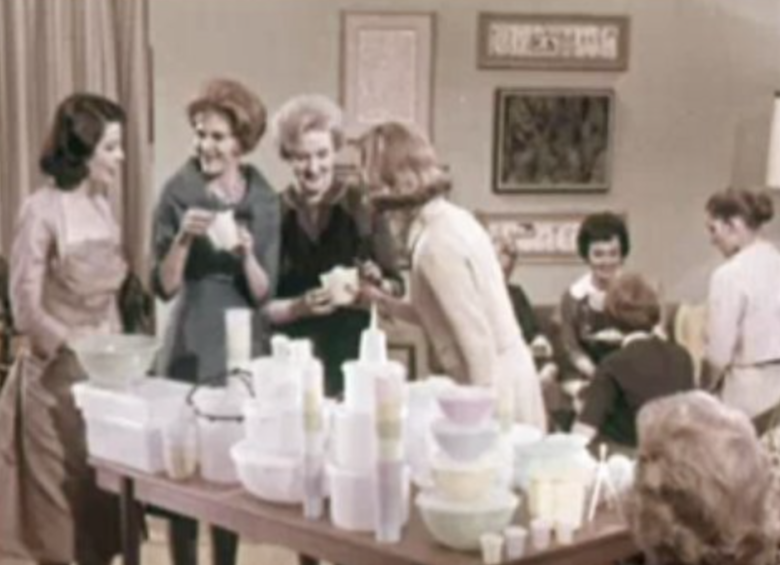
The plastic bowl you had to “burp”
Recognizing Tupperware was only half the test. You also had to know how to close it.
The containers’ airtight seal was a selling point, but shoppers needed to see how it worked. The Smithsonian’s history of Tupperware parties describes demonstrations that taught customers how to “burp” the lid correctly.
Earl Tupper developed the containers. Brownie Wise helped build the selling system around them, becoming vice president of Tupperware Home Parties in 1951.
The parties made a demonstration into a social occasion. They also gave women a way to earn money selling the products themselves.
The bowl held leftovers. The gathering could start a business.
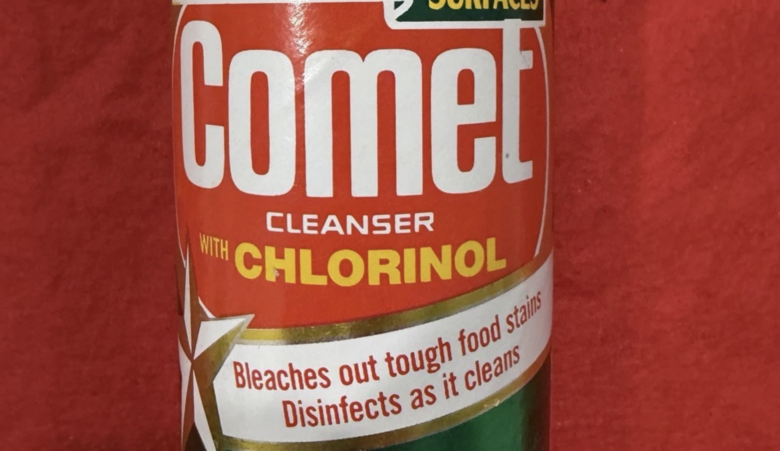
The scouring powder called Comet
This one arrived just before the decade.
Procter & Gamble introduced Comet in 1956, making it a relatively recent addition to the cleaning cupboard when the 1960s began. It supplied the cleaning material as a scouring powder rather than as soap embedded in a pad.
It belonged to the same broad household category as Bon Ami, but the names took different approaches. One offered a friendly little chick. The other sounded as though it had come from outer space.
Either way, somebody still had to clean the sink.
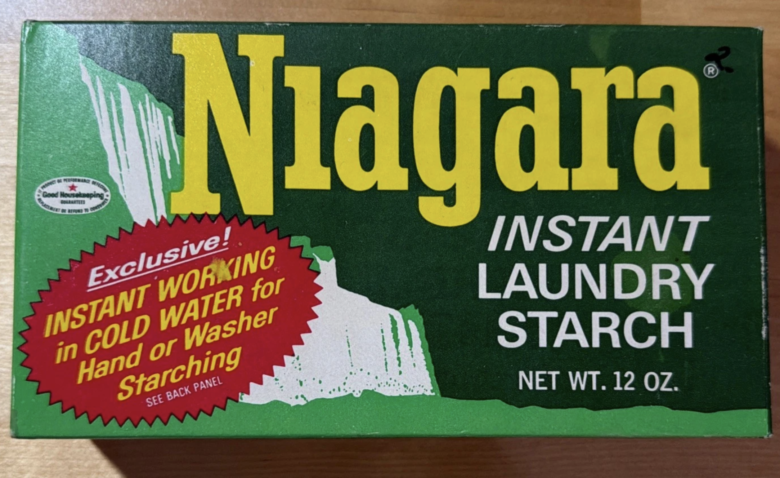
The starch beside the ironing board
Not every household product lived under the kitchen sink.
Niagara belonged with the laundry supplies. The brand dates its fabric-care history to 1887, making it another name that was well established before the 1960s. Its spray starch became part of the familiar ironing-board lineup.
Here the distinction matters: the age of the brand is not the invention date of the spray can. An old name could appear in a newer, more convenient package.
That was a recurring promise in household advertising. Keep the result people wanted; make the work sound easier.

The bottom line
Some of these products were already decades old by the time a 1960s mother put them on a shopping list. Others, such as Pledge and Comet, had arrived in the late 1950s.
Their selling points were different: a gentler abrasive, soap built into a pad, a lid that sealed, two chores combined into one.
The packages were memorable. The work behind them was ordinary, repeated, and rarely finished for long.
Ask us! What questions do you have about content, strategy, pop culture, lifestyle, wellness, history or more? We may use your question in an upcoming article!
Like MediaFeed’s content? Be sure to follow us.
This article was syndicated by MediaFeed.co.
Ask us! What questions do you have about content, strategy, pop culture, lifestyle, wellness, history or more? We may use your question in an upcoming article!
Like MediaFeed’s content? Be sure to follow us.
This article was syndicated by MediaFeed.co.