
This article was reviewed by Lynn Marie Morski, MD, JD.
Key Takeaways:
- ADHD and menopause symptoms can overlap, and one condition might exacerbate the other.
- Fluctuating estrogen in menopause can make focus, mood, and memory harder to manage.
- Menopause and ADHD can both cause brain fog, forgetfulness, and emotional swings.
- Hormonal changes might alter how your symptoms present and how ADHD treatments work — a healthcare provider can explore treatment options or adjustments.
For women with attention-deficit/hyperactivity disorder (ADHD), menopause can bring a whole new set of challenges. Many notice changes in focus, memory, and emotional regulation during perimenopause or menopause, making daily life feel a little more difficult to manage.
If you’re wondering whether these shifts are part of aging, a flare in your ADHD, or something else entirely, you’re not alone.
Ahead, we’ll break down how hormonal changes can influence ADHD symptoms. We’ll also share practical strategies, from everyday habits to medical treatments, to help you feel more grounded and in control.
How Estrogen Impacts Brain Function
Estrogen does more than regulate the menstrual cycle. It also plays a key role in how your brain functions, influencing things like mood, focus, and memory.
For women with ADHD, this connection is especially relevant. Estrogen interacts with brain chemicals like dopamine, which help regulate attention, motivation, and impulse control — the same systems often affected in ADHD.
Here’s a closer look at why estrogen matters for ADHD:
- Estrogen may help regulate dopamine. While more research is needed to understand the details, it’s thought that estrogen helps regulate dopamine. So, with stable estrogen levels, dopamine systems might function more smoothly, supporting focus and emotional balance.
- Low estrogen might affect cognitive function. As estrogen levels decline, dopamine activity and communication between brain regions that manage decision-making, working memory, and self-regulation might be further disrupted.
- Hormonal shifts might exacerbate ADHD symptoms. For people with ADHD, whose brains already have a more delicate dopamine balance, these changes can hit harder. Tasks may feel more overwhelming, and coping strategies that once worked might feel less effective.
ADHD Symptoms in Menopause: How They Overlap
Menopause is defined as going 12 consecutive months without a period. But the transition often starts much earlier, during a phase called perimenopause — a time marked by significant hormonal changes.
During perimenopause, estrogen levels begin to fluctuate and eventually decline. Since estrogen may be involved in regulating neurotransmitters like dopamine, it’s not uncommon to notice shifts in how ADHD symptoms show up.
Symptoms of menopause and ADHD can also overlap, making it hard to tell which changes are due to hormones, ADHD, or simply aging.
According to Jessica Yu, Ph.D., clinical psychologist and senior director of clinical excellence and outcomes at Hims & Hers, this can create a frustrating feedback loop.
“During menopause, the levels of hormones that help control attention and memory decline. That means ADHD symptoms are likely to worsen,“ Dr. Yu explains. “At the same time, increased difficulty with attention and memory can make it harder to engage in the behaviors that help manage ADHD.“
ADHD Perimenopause Symptoms
Here’s a closer look at how some common ADHD-related symptoms may appear or intensify during perimenopause and menopause.
Inattention and Focus Challenges
One of the most noticeable shifts is difficulty holding your attention and what you may hear referred to as brain fog.
As Erika, a Hers customer, describes it, “I can’t get words correct. At work, this is becoming problematic when I try to present at meetings.“
So, you might lose your train of thought mid-conversation, reread the same sentence a few times without registering the words, or struggle to finish simple tasks. Distractions may also feel more pronounced.
Impulsivity and Emotional Dysregulation
Mood swings can feel more intense during menopause, with things like irritability, anxiety, tearfulness, and impulsive reactions surfacing more easily. Emotional regulation — already a challenge with ADHD — might become harder as estrogen fluctuates.
In fact, up to 70 percent of adults with ADHD report this symptom, and up to 45 percent of children report it.
Memory and Organizational Difficulties
Misplacing your keys or forgetting an appointment once in a while is normal. But menopause can make memory, time management, and organization feel noticeably harder. Challenges with executive functions might also require more effort for those with ADHD.
Sleep Disturbances
Hot flashes, night sweats, and insomnia are common during menopause. For women with ADHD — who might have irregular sleep patterns to begin with — these disruptions can magnify symptoms like inattention, irritability, and low motivation.
Recognizing how these experiences intersect is a critical step toward finding relief and support.
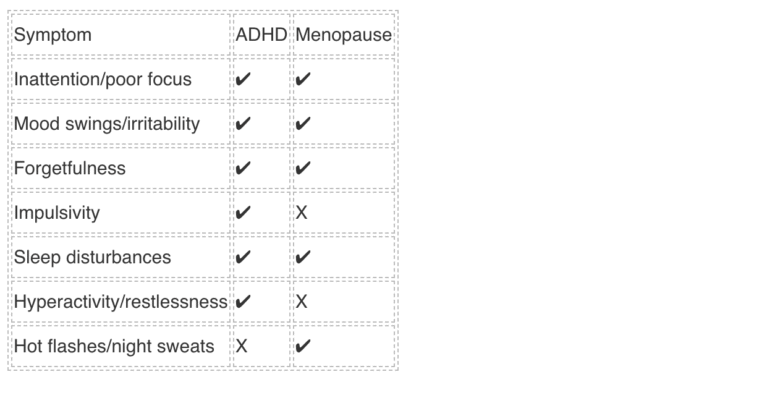
Menopause vs. ADHD Symptoms
This chart offers a side-by-side comparison of ADHD and menopause symptoms.
Other Factors That Can Influence ADHD in Midlife
Beyond shifting hormone levels, midlife also brings a mix of physical, emotional, and lifestyle changes that can all influence how symptoms appear.
Other contributing factors to elevated symptoms of ADHD during this time can include:
- Stress and emotional load. Perimenopause can be demanding, physically and emotionally. Symptoms like hot flashes and poor sleep can increase stress, while life transitions like caring for aging parents or career changes can add more pressure. This could interfere with focus, organization, and emotional regulation, too.
- Lifestyle and routine changes. Maybe your schedule becomes less predictable, exercise routines seem to fade away, or social connections shift. These subtle changes can remove the external supports that once helped you stay organized and grounded.
- Physical health changes. Underlying health conditions or midlife changes (like sleep disruptions, mood disorders, and vascular risk factors) can affect mood and cognitive performance. These issues may overlap with ADHD symptoms, making it harder to separate what’s going on.
- Medication adjustments. If you take ADHD medication, changes in metabolism or hormone levels during menopause may alter how your body responds to it. Work with your healthcare provider to reassess dosage or timing.
The upside of this life stage is that it often brings perspective and space to rebuild routines and seek treatment.
ADHD Treatments During Menopause
Though many people are diagnosed in childhood, ADHD is a chronic neurodevelopmental condition — and its symptoms can shift with hormonal changes throughout adulthood.
“ADHD is considered a lifelong diagnosis,“ Dr. Yu explains. “Someone may be first diagnosed in adulthood, but it’s very likely the case that they’ve experienced symptoms since childhood and have been able to manage those symptoms just enough to get by or have simply been considered inattentive, forgetful, or hyper throughout their life.“
For some people, menopause might be the first time ADHD comes into focus. Either way, getting an evaluation from a clinician who understands both ADHD and women’s health can make a world of difference in targeting your needs holistically.
Let’s go over a few treatment options for both ADHD and menopause.
ADHD Medications
For many women, menopause is the first time ADHD symptoms feel unmanageable — or the first time they recognize them for what they are.
If you haven’t been formally diagnosed with ADHD, or if you’ve managed without medication until now, talk with a healthcare professional about whether medication could help.
Common brand-name ADHD stimulant medications include:
- Adderall®
- Concerta®
- Dexedrine®
- Ritalin®
- Vyvanse®
A non-stimulant option is Strattera®.
Also, some women taking ADHD medications report that during perimenopause or menopause, their usual dose seems less effective or side effects feel stronger.
Research suggests that declining estrogen may influence how the brain responds to stimulant or non‐stimulant treatments in women. Working with your healthcare provider to reassess dosage, timing, or medication type can help align treatment with your changing hormonal and metabolic profile.
Hormone Replacement Therapy (HRT)
While HRT isn’t a direct treatment for ADHD, it may play a supportive role by stabilizing estrogen levels.
Systemic HRT works by delivering hormones, primarily estrogen and sometimes progesterone, to restore those levels. It’s one of the most effective treatments for menopause symptoms like hot flashes and dry, thinning vaginal walls (vaginal atrophy).
Hormone treatment may also help ease brain fog, mood swings, and cognitive sluggishness. As Dr. Yu points out, “There is some conflicting research out there, with some studies noting that HRT has beneficial effects on cognition and mood and others noting otherwise.“
Behavioral and Lifestyle Interventions
Medication and hormone therapy can be important tools, but they work best alongside daily habits that support your brain and body. Lifestyle changes are the foundation of managing ADHD during menopause — even small, consistent shifts may make a real difference.
Here are some lifestyle changes to try:
- Prioritize sleep. Menopausal symptoms like night sweats and insomnia can disrupt rest, which, in turn, worsens ADHD symptoms.
- Move regularly. Physical activity boosts mood, focus, and energy while helping regulate stress.
- Eat to support your brain. A balanced diet with protein, fiber, and healthy fats helps stabilize blood sugar, which can prevent attention crashes and mood dips.
- Manage stress. Mindfulness, yoga, or deep breathing can calm your nervous system and improve emotional regulation. You can also explore talk therapy, like cognitive behavioral therapy (CBT), to manage stress and learn healthy coping mechanisms.
- Add structure. Use planners, reminders, or digital tools to track appointments and to-dos. Creating consistent routines can also help give your brain fewer decisions to juggle.
Last but not least, give yourself grace. This is a period of profound transition, not failure. Self-compassion, realistic expectations, and support — whether from clinicians, peers, family, or online communities — can make this chapter feel more manageable and far less isolating.
The Bottom Line: Managing ADHD During Menopause
Navigating ADHD during menopause can be hard, but understanding how hormonal shifts influence brain function can help you make sense of what’s happening.
These changes may intensify or bring about symptoms like inattention, emotional swings, and forgetfulness. But they’re manageable with the right strategies.
A thorough medical evaluation and, if needed, adjusted or new medication can help restore balance. Pairing that with supportive lifestyle habits — sleep, movement, nutrition, and stress management — can make a meaningful difference so you can move through this transition with clarity and confidence.
FAQs
See answers to common questions about ADHD and menopause.
Can menopause cause ADHD in women?
No, menopause doesn’t cause ADHD. However, the hormonal shifts during this time can unmask previously mild or unrecognized ADHD symptoms. For some women, menopause is when ADHD finally comes into focus, as lifelong coping mechanisms become less effective under the added strain of hormonal and lifestyle changes.
Does ADHD medication still work during menopause?
ADHD medication can still work during menopause, but some women notice changes. Emerging and small studies show that hormonal fluctuations might change how your body metabolizes medication, which may affect how well it works or how you experience side effects. If your usual dose feels less effective, talk with your prescribing clinician.
Is hormone replacement therapy safe for women with ADHD?
Hormone replacement therapy is generally safe for women with ADHD. For some, HRT can help stabilize estrogen levels, which may ease cognitive and emotional symptoms that overlap with ADHD.
Talk to your healthcare provider to learn more about HRT. Make sure to discuss your menopause symptoms and ADHD symptoms, as well as your personal health history and risk factors.
How can I tell if brain fog is from menopause or ADHD?
It’s not always easy to tell whether brain fog is a symptom of menopause or ADHD. Menopausal brain fog can show up as word-finding difficulties and a general sense of mental slowing, while ADHD-related issues typically involve trouble sustaining attention, organizing tasks, or managing impulses. Since the two can overlap, an assessment from a qualified clinician is the best way to pinpoint the cause — and tailor treatment accordingly.
Related:
Like MediaFeed’s content? Be sure to follow us.
This article originally appeared on ForHers.com and was syndicated by MediaFeed.org.