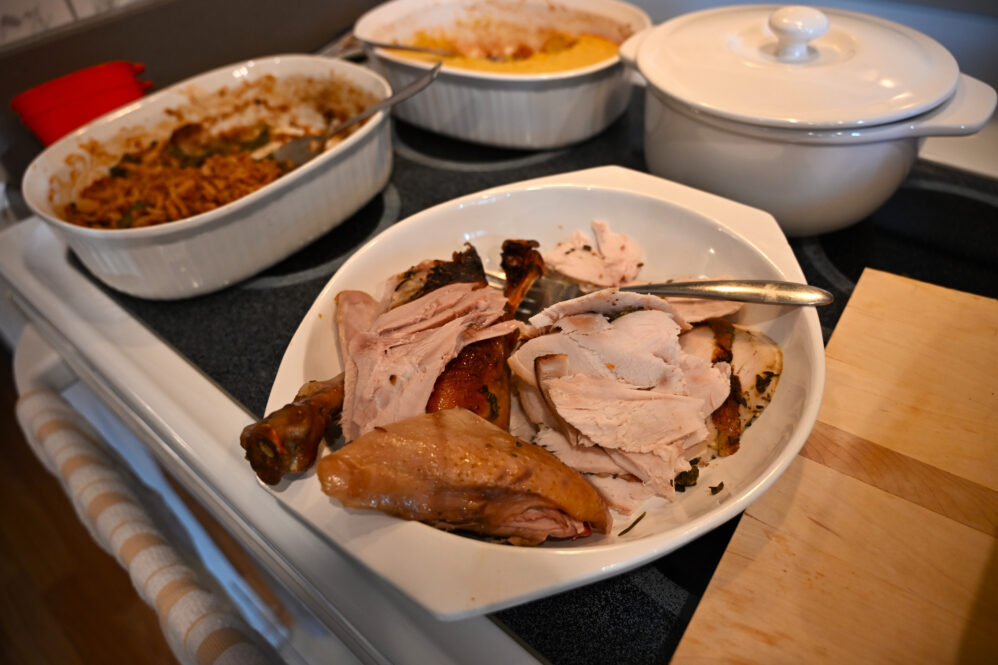
Thanksgiving side dishes we make out of obligation for our Gen X relatives
The Boomers inherited their obligatory dishes from corporate test kitchens of the 1950s. Gen X inherited theirs from the convenience era that followed, which means the recipe usually starts with a box.
Nobody at the table will admit to preferring these. Everyone notices when they are missing.
Seven follow, with the documented origin of each.
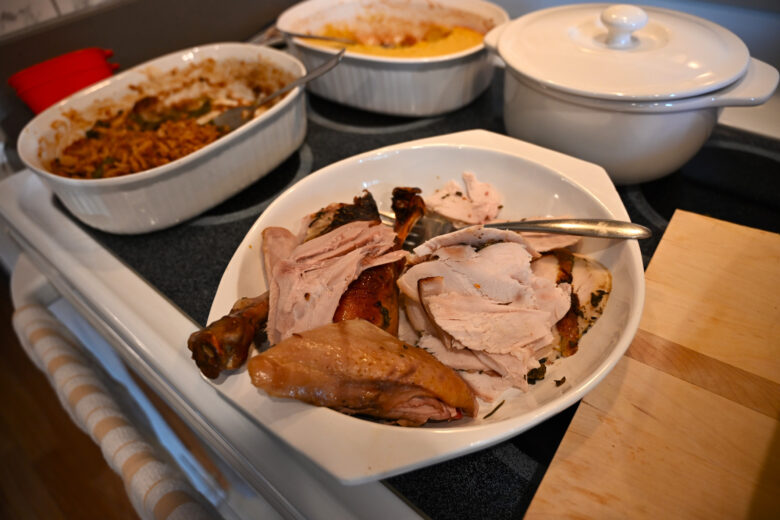
Stove Top stuffing
A Purdue home economics graduate named Ruth Siems worked out the one thing that made instant stuffing possible: the dimensions of the bread crumbs. Get the size right, and the dried, seasoned pieces puff back up when you add boiling water and butter. Get it wrong, and you have wet bread.
She developed it at General Foods in 1971; it reached shelves in 1972, and the company patented the crumb size in 1975. Siems is listed first among four inventors on the patent, ahead of Anthony Capossela Jr., John Halligan, and C. Robert Wyss, per Purdue.
She spent nearly 35 years at General Foods and died in 2005. Kraft now sells roughly 60 million boxes a year.
The argument over whether it counts as real stuffing has been going on for fifty years. It won’t be settled at your table.
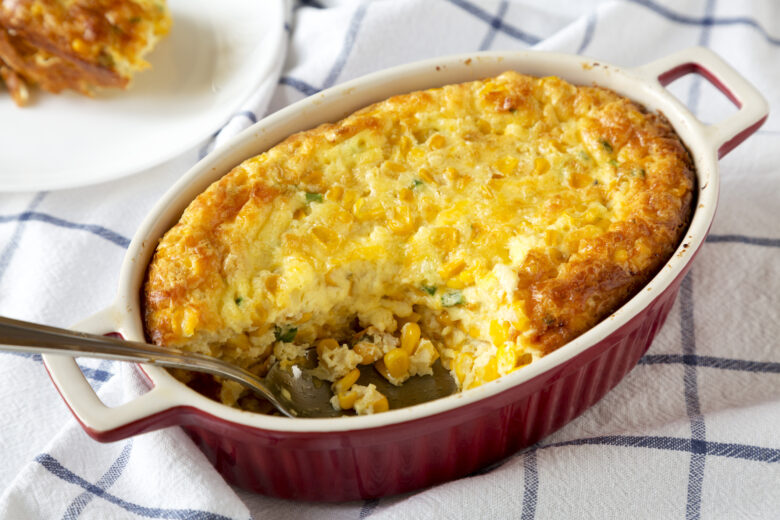
Jiffy corn casserole
A box of corn muffin mix, a can of creamed corn, a can of kernels, sour cream, melted butter. It takes five minutes to assemble, which is exactly why it exists.
The mix comes from the Chelsea Milling Company in Chelsea, Michigan, where Mabel White Holmes created America’s first prepared baking mix in 1930 and named it Jiffy because it was quick. Corn muffin mix followed in 1950 and now holds something like 90 percent of its category.
The casserole itself was a company recipe. It first circulated in the 1960s on tear-off sheets in grocery stores, under the name Corn Bowl, and was renamed Spoonbread when Jiffy published its first recipe book in 1976.
Worth mentioning to whichever relative insists it came from their grandmother.
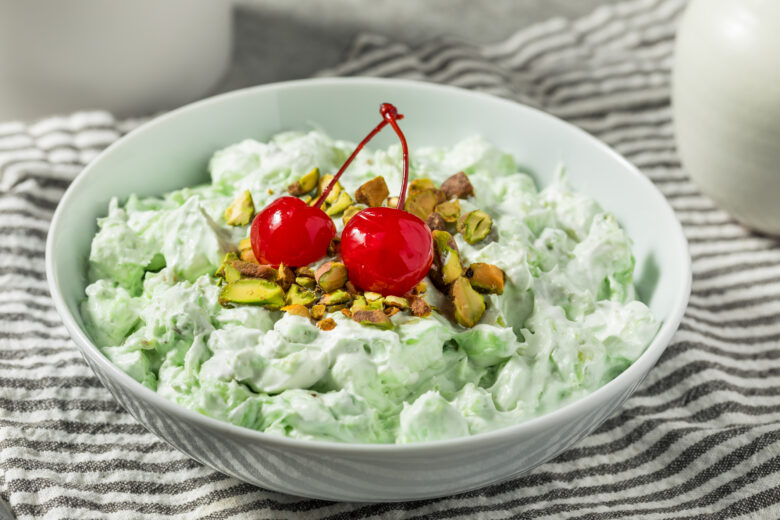
Watergate salad
Pistachio pudding mix, canned pineapple, mini marshmallows, pecans, whipped topping. Bright green. Served as a side.
Kraft developed the recipe in 1975, the same year it released pistachio pudding mix, and called it Pistachio Pineapple Delight. An unnamed food editor in Chicago started calling it Watergate salad in her column, and that name won.
Nobody has ever established why.
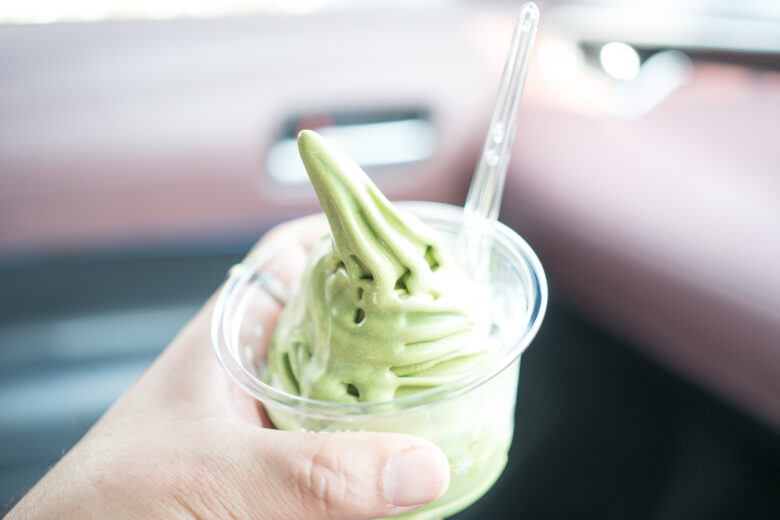
Anything held together by Cool Whip
General Foods introduced Cool Whip in 1966, and its advantage over real whipped cream was logistical rather than culinary: it could be frozen, thawed, and refrozen without falling apart, which made it easy to ship and store.
William A. Mitchell invented it, the same food scientist responsible for Tang.
Once a stable whipped topping existed, an entire category of dishes followed. Fruit, marshmallows, pudding mix, something crunchy, all bound together and filed under salad.
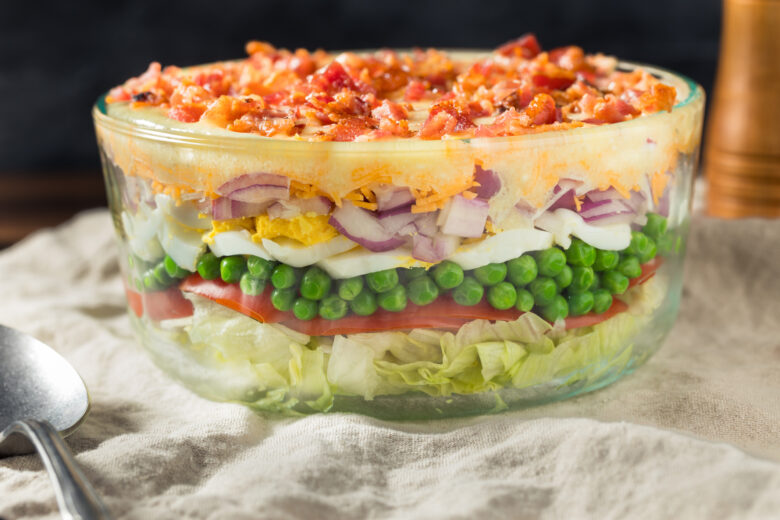
Seven-layer salad
Iceberg lettuce, tomatoes, cucumbers, onions, sweet peas, hard-boiled eggs, sharp cheddar and bacon, sealed under a thick layer of mayonnaise, sometimes cut with sour cream.
It came out of the South, originally as seven-layer pea salad, and variations run to eight or nine layers, depending on the household.
The engineering is the point. The dressing seals the top, so you can make it the night before and the lettuce survives. That mattered enormously in a decade when the cook also had a job.
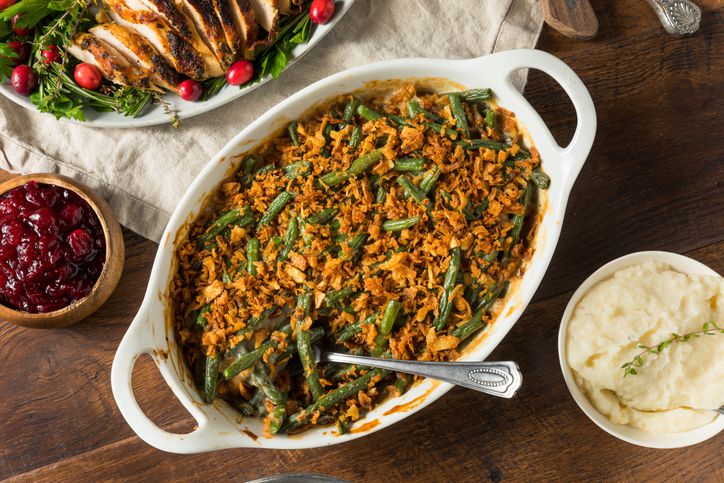
Green bean casserole, the canned-onion version
This one crossed generations. Dorcas Reilly created it in the Campbell’s test kitchen in 1955, making it a Boomer dish by birth, but Gen X never knew Thanksgiving without it.
The fixed elements are green beans, cream of mushroom soup, milk, soy sauce, black pepper, and crisp fried onions, half mixed in and half on top.
Try substituting fresh beans and homemade onions. Somebody will notice, and they will not be pleased.
Crescent rolls from the tube
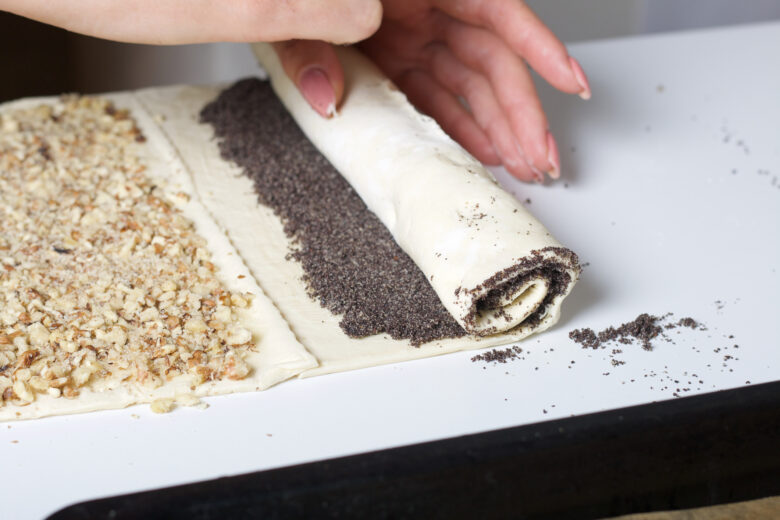
The ones that come in a cardboard cylinder you peel open and that pops, which was itself a small event in any 1980s kitchen.
They are not better than real rolls. They are, however, exactly what the person who grew up on them is expecting, and that is the whole governing principle of this list.
The bottom line
Ruth Siems developed Stove Top at General Foods in 1971, and General Foods patented the crumb dimensions in 1975. Jiffy’s corn casserole began life as a grocery-store tear-off sheet called Corn Bowl.
Ask us! What questions do you have about content, strategy, pop culture, lifestyle, wellness, history or more? We may use your question in an upcoming article!
Related:
- Household rules from the ’40s that sound unbelievable now
- 8 places and discoveries where exploration has limits
Like MediaFeed’s content? Be sure to follow us.
This article was syndicated by MediaFeed.co.