
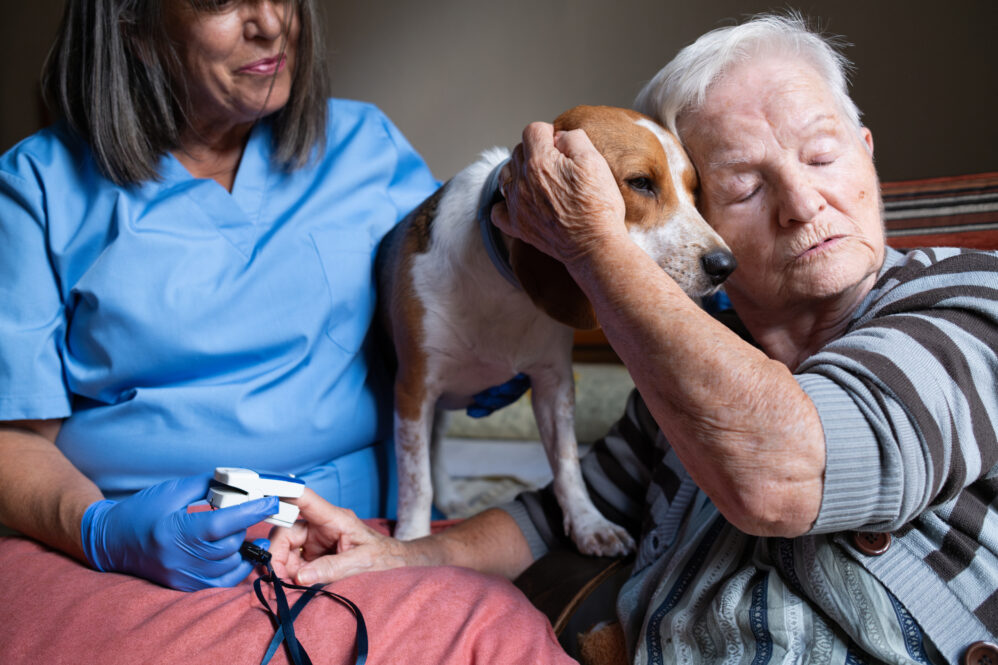
Will my dog know I’m putting it down? And will it forgive me?
Losing a dog is one of the quietest griefs there is. It’s also one of the heaviest.
When a pet dies, owners can feel grief on a par with losing a person, a review of the research found. About two-thirds of U.S. households have a pet. Yet people grieving one are often told “She was only a cat,” Social Work Today notes. Researcher Kenneth Doka has a name for it: disenfranchised grief, a loss that others don’t fully recognize.
Some cultures solve that by giving grief a date. In Mexico, Día de los Muertos, on November 1 and 2, is a time when families welcome back the dead, laying out petals, candles, and offerings to help them find the way home, per UNESCO. Many families set out a lost pet’s photo, toys, candles, and treats, too, Adopt-a-Pet notes. In recent years, some families have also set aside October 27 for pets, one guide says.
Customs vary from town to town, and we don’t speak for any of them. But something is worth noticing. The tradition says the loss is real, and it gives that loss a place at the table.
Most of us don’t have a holiday. We have a quiet kitchen and a question we’re afraid to say out loud. One reader sent us theirs after our recent piece, “10 signs your deceased pet is still with you”: “I now have a sick feeling,” they wrote. If our dogs are still with us, will they know we chose to have them put to sleep? Will they remember that we gave up on them? Will they blame us?
That question is grief wearing guilt’s clothes. It belongs to people facing the decision now, and to people who made it years ago. So we’ll answer it the way you’d answer a friend. Gently, and honestly.
No, a dog doesn’t understand euthanasia. And as far as anyone can tell, a dog doesn’t hold it against you.

Why this one hurts so much
Part of it is how close we were. Part of it is the choice. With a pet, we often have to decide whether to end suffering, Hospice SLO notes. That decision can turn missing them into doubting ourselves.
The research offers reassurance, too. When Hawaiian researchers surveyed pet owners, grief reactions were common. Major disruption was not: under 5 percent, National Geographic reported. Heavy grief isn’t a sign something is wrong with you. For most people, it’s a sign of how much you loved.

Your dog doesn’t know what the vet is doing
This is the first fear under the grief, so let’s start there. It applies whether the day is ahead of you or years behind you.
Veterinarians say it directly. Pets do not understand euthanasia as a concept, and they don’t know why a vet is visiting, per hospice vets at Lap of Love.
The first step is a sedative. Your dog becomes calm and sleepy. By the time the final medication is given, your dog is unconscious and feels no fear or pain. A quick pinch from a needle or catheter is the most a dog may notice, Paws into Grace notes.
Afterward, you may see a twitch or a last deep breath. Those are reflexes. They don’t mean your dog is aware or hurting, according to one in-home veterinary service.

What your dog does know is you
Dogs are tuned in to the people they love. If you’re crying, speaking softly, or sitting closer than usual, your dog may notice. Some dogs get more affectionate.
That isn’t a bad thing. “Don’t hold back your tears—your dog won’t be distressed by them,” says veterinarian Dr. Lori Gibson. She says a dog feels most like the person they love, which is all they’ve ever needed.
If your dog is sensitive to new places, doing it at home can feel more familiar. Stroke the favorite spots. Talk in your usual voice.

Will they forgive me?
Here’s where we have to be careful, because no one can read a dog’s mind.
Dogs do have real memories. A 2016 study found they recall events in a way that resembles human episodic memory, Science reported. Researchers argue over whether dogs hold grudges. Some, like animal-emotions writer Marc Bekoff, think they can, he wrote in Psychology Today.
But a grudge needs a wrong. The dog would have to understand that someone chose to hurt it. Nothing suggests a dog connects a gentle, sedated goodbye with a decision you made. What dogs remember is mostly how things felt, one veterinary guide explains.
And how it felt was calm. Warm hands. A familiar voice. Sleep.
Researchers also describe dogs as built for bonding, with brains that reward closeness and repair, ScienceInsights notes. From your dog’s side, as far as anyone can tell, there was nothing to forgive.
“We gave up on them”
You didn’t give up. You made the hardest decision.
Veterinarians use tools to help people see that moment more clearly. One is Dr. Alice Villalobos’s quality-of-life scale, a tool from a pioneer of pet hospice. It scores pain, appetite, hydration, hygiene, happiness, mobility, and whether there are more good days than bad, per Veterinary Partner. When bad days outnumber good ones, quality of life may be compromised.
Villalobos wrote that the scale is meant to relieve guilt, in her own handout. A peaceful goodbye can mean sparing a dog the last of its hard days.
Making room for them
You don’t need a holiday to do what Día de los Muertos does. You can make room for them yourself.
Grief counselors suggest simple things: a memorial service, a memory box or scrapbook, a donation to a shelter in your pet’s name, Hospice SLO notes. Research on keeping a bond with a pet after it dies suggests the right kind of bond can ease grief and provide support, the review found.
So pick a day. The day they came home. Their birthday. November 1 or 2, if that feels right. Set out a photo, a candle, and a bowl of fresh water. Say their name.
Whether our pets continue after death is a question of faith, not science. We can’t tell you what’s true, and no one can prove it either way. If you hold that hope, hold the dog who loved you. Nothing we know about dogs suggests they were keeping score.
If the grief is heavy
You don’t have to carry it alone. Cornell’s Pet Loss Support Hotline (607-218-7457) is staffed by trained veterinary students. Cornell notes it’s not a mental health line, and its hours vary. Tufts’ helpline, 508-839-7966, takes calls Monday through Thursday evenings Eastern, and you can leave a voicemail, per a pet-loss directory. The Association for Pet Loss and Bereavement runs free online chat rooms at aplb.org.
If the grief ever feels like more than you can carry, you can call or text 988 in the U.S.

The bottom line
Your dog never had to know what the vet was doing. Your dog only had to feel you there.
Ask us! What questions do you have about content, strategy, pop culture, lifestyle, wellness, history or more? We may use your question in an upcoming article!
Related:
Like MediaFeed’s content? Be sure to follow us.
This article was syndicated by MediaFeed.co.