

The most disturbing urban legend from every corner of America
April 1, 1987. Steve Cook, a DJ at WTCM in Traverse City, Michigan, slipped a tape of his own song between two innocuous records. It was a joke. He’d made it all up.
The phones started ringing.
Folklorist Jan Harold Brunvand has a rule about stories like that: “People tend to remember only the dramatic part and retell it as fact,” he told the Las Vegas Sun. Six legends follow, one from each corner of the country. Each has a documented origin: a disease, a hoax, a joke, a book. We show the record next to the story.

In 1892, a Rhode Island village dug up a girl
Mercy Brown wasn’t a legend. She was a 19-year-old from Exeter, Rhode Island, who died of tuberculosis on January 18, 1892. The disease had already taken her mother and a sister, and her brother Edwin was sick.
Neighbors pressed her father, George, to let them dig up the dead. On March 17, local doctor Harold Metcalf reluctantly oversaw it. He told them Mercy’s body was in normal condition. They burned her heart and liver on a rock anyway, and Edwin was given the ashes in water. He died within months, per Horror Obsessive.
Folklorist Michael Bell has documented more than 80 such rituals in New England. A clipping about an American vampire case was reportedly in Bram Stoker’s papers. Nothing in his hand ties “Dracula” to Exeter, one account notes.

The Jersey Devil was a kangaroo, at least once
January 16 to 23, 1909. Hoofprints in the snow. Winged shapes over South Jersey. Schools closed, mills shut, and hunting parties went into the Pine Barrens.
The Philadelphia Zoo reportedly offered a $10,000 reward. Then a Philadelphia museum put a “captured” Jersey Devil on display. Its publicist, Norman Jeffries, was the prime suspect in the hoax. His obituary called it “a cleverly disguised kangaroo.”
The 1735 origin story, Mother Leeds and her cursed 13th child, has no contemporary record, ScareSagas notes.

Nobody wrote about the Bell Witch until 1894
The Bell family was real. John Bell, a Tennessee farmer, died on December 20, 1820. Beyond that, the legend gets thin.
“There are no contemporary sources for the legend,” North Carolina’s archives note, and the earliest mention is from 1886. Newspaper publisher Martin Van Buren Ingram wrote the first full account in 1894, and the diary it’s based on has never surfaced.
Andrew Jackson’s famous visit comes from the same book, secondhand. His own papers don’t mention it, the Lynchburg Times reports, and there’s no evidence he ever went.
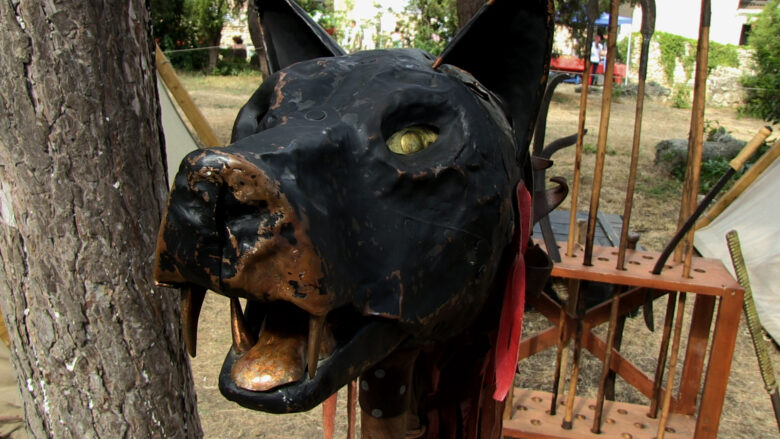
The Michigan Dogman was a joke
It started with Cook’s song, “The Legend.” He made up a dog-headed creature that showed up in years ending in seven, beginning with an 1887 logging camp sighting. All of it was fiction.
“I made it up completely from my own imagination,” Cook told Skeptoid, per Northern Michigan History. The song became the station’s most-requested, and listeners called in with their own sightings. He’s since received more than 100 reports.
In 2010, “MonsterQuest” revealed the famous “Gable Film” of the Dogman was a hoax, made by a fan of the song, per the Dogman wiki.

La Llorona was crying before the Spaniards arrived
In the Southwest, children are told to stay away from the river at night. A woman in white is there, weeping for the children she drowned, Britannica notes.
Her roots go back further than the legend’s best-known form. In the 16th-century Florentine Codex, Bernardino de Sahagún recorded a weeping woman heard in Tenochtitlan’s streets at night, one of the omens before the Spanish conquest. By the 18th century, chroniclers were calling her La Llorona.
It’s not one story. It changed with each telling, The Dark Threshold notes. Folklorist Bess Lomax Hawes found a version in a California juvenile hall in 1968.

Nobody has ever stepped forward with a missing kidney
A man wakes in a bathtub full of ice. There’s a note, or a phone, and a scar. One kidney is gone.
Snopes found the story circulated by 1991. The National Kidney Foundation asked anyone who’d had a kidney stolen to contact it. Nobody has, as far as the record shows. Brunvand traced the first newspaper appearance to the late winter of 1991, with the incident reportedly in New York. Las Vegas was added later.
By 1997, the foundation’s chairwoman, Wendy Brown, called it “an urban myth run amok” after the story went around the Internet.

The bottom line
Steve Cook made up the Michigan Dogman for an April Fools’ joke in 1987. The National Kidney Foundation is still waiting for a single victim to step forward.
Ask us! What questions do you have about content, strategy, pop culture, lifestyle, wellness, history or more? We may use your question in an upcoming article!
Related:
- Your cozy (or spooky!) Halloween movie, according to your horoscope
- Halloween hauntings at famous movie sets
Like MediaFeed’s content? Be sure to follow us.
This article was syndicated by MediaFeed.co.