
Odd facts about the human body that sound completely impossible
Turn off the lights and hold still. You’re glowing. It’s about 1,000 times too faint for your eyes to catch, but in 2009 a camera that can count single photons caught it on five volunteers.
The body is full of facts like that, the kind that sound like a typo until you check. Six follow, each tied to a named person, a date, and a record you can look up. Where scientists still disagree, we say so.

An iron bar, 13 pounds
On September 13, 1848, Phineas Gage, a 25-year-old railroad foreman in Cavendish, Vermont, was in a mine. A blast drove his 3-foot-7-inch tamping iron through his left cheek and out the top of his head, according to the University of Akron’s research site.
He was talking within minutes. He rode to the doctor in a cart. Dr. John Harlow treated him, and Gage went home 10 weeks later. He lived about 12 years more, and died of seizures.
Harlow wrote that Gage was “no longer Gage,” per VTDigger. Harvard’s Warren Anatomical Museum holds his skull and the rod.

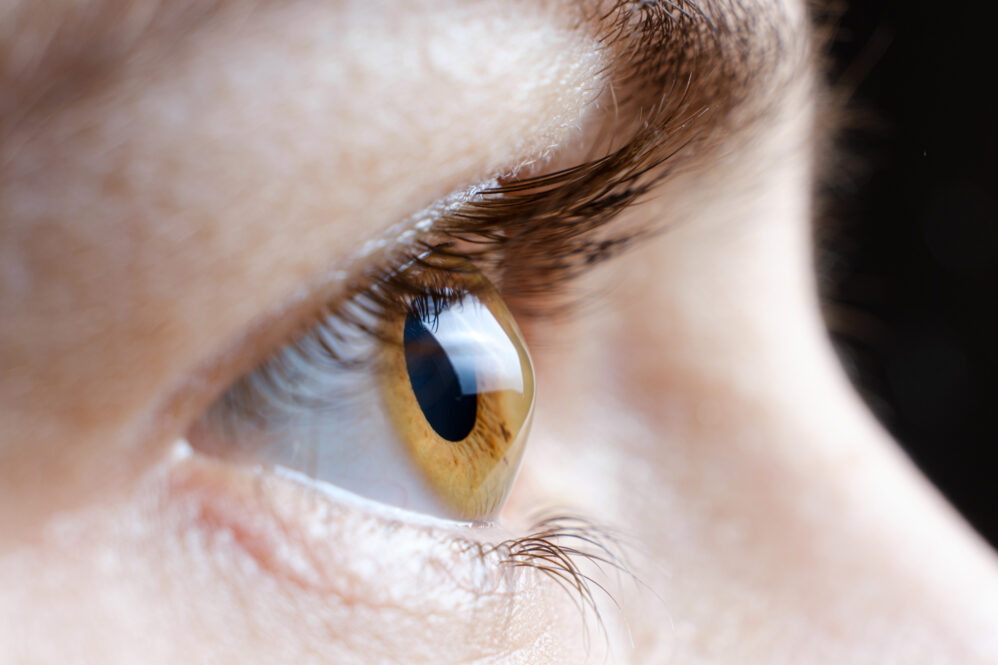
A cornea that breathes air
It has no blood vessels. When your eyes are open, oxygen dissolves in your tears and diffuses into the cornea. No blood, because blood would blur your vision.
That’s why the cornea became the first transplant to work. In 1905, surgeon Eduard Zirm replaced the cornea of Alois Glogar, a 45-year-old farm laborer who had been blinded by lime while cleaning a chicken coop 16 months earlier. It came 49 years before the first kidney transplant.

Hiccups, 1922 to 1990
On June 13, 1922, an Iowa farmer named Charles Osborne was hanging a 350-pound hog when he fell. He started hiccupping and didn’t stop for 68 years.
The rate started around 40 a minute and slowed to about 20, according to Today I Found Out. He married twice and had eight children. Dr. Terence Anthoney, who treated him, suspected a tiny blood vessel had burst at the base of his brain when he lifted the hog.
They stopped in February 1990, with no explanation.
Where did the “second brain” come from?
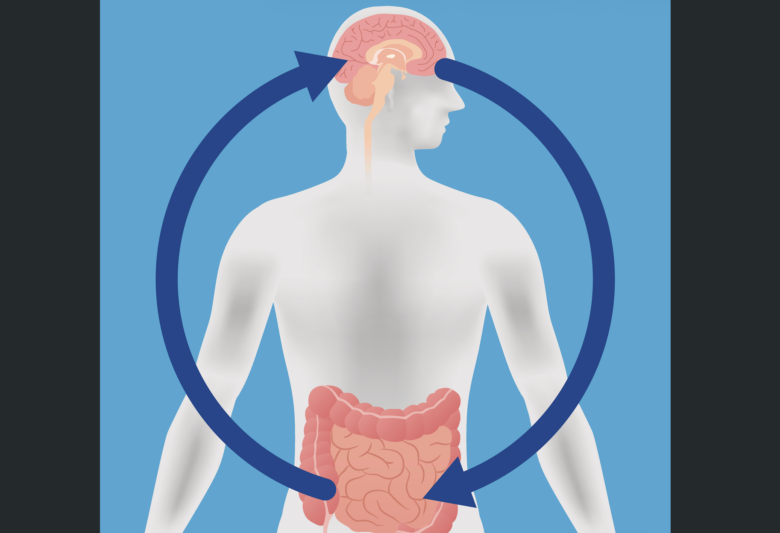
From Michael Gershon, a Columbia University anatomist who wrote “The Second Brain” in 1998. He named the nerve network lining your gut the enteric nervous system because it can act without orders from the head.
How many neurons? That depends on who you ask. Gershon says about 100 million, more than your spinal cord. Stanford neuroscientists say 100 to 600 million, about as many as a fruit bat’s brain.
Gershon is clear it doesn’t do the thinking. “The brain is like the CEO,” he said, and the gut is the worker.

A trillion smells, or 10,000
In 2014, a Rockefeller University team led by Leslie Vosshall reported that people could tell apart at least 1 trillion different smells. The old estimate, 10,000, had never been tested.
Not everyone bought it. In 2015, Richard Gerkin and Jason Castro said the same data supported a number anywhere from 10,000 to a trillion. The real answer is still unknown.

The glow peaks around 4 p.m.
Back to the dark room. Masaki Kobayashi’s team at Japan’s Tohoku Institute of Technology put five healthy men in a light-tight room for three days and photographed them for 20 minutes every three hours. Their faces, necks, and cheeks glowed brightest in the late afternoon, as ScienceAlert reported.
It’s real, but small in every sense. Five men. And it’s not a glow anyone could see, as ScienceBlog stresses.

The bottom line
Gage lived about 12 years after the rod, and Osborne hiccupped for 68. Nobody can yet say whether you can tell 10,000 smells apart or a trillion.
Ask us! What questions do you have about content, strategy, pop culture, lifestyle, wellness, history or more? We may use your question in an upcoming article!
Related:
- Historical “discoveries” that turned out to be elaborate hoaxes
- Some of the most surprising record deals in music history
Like MediaFeed’s content? Be sure to follow us.
This article was syndicated by MediaFeed.co.